Sunday, April 22, 2007

MIA: Fritillaria Persica

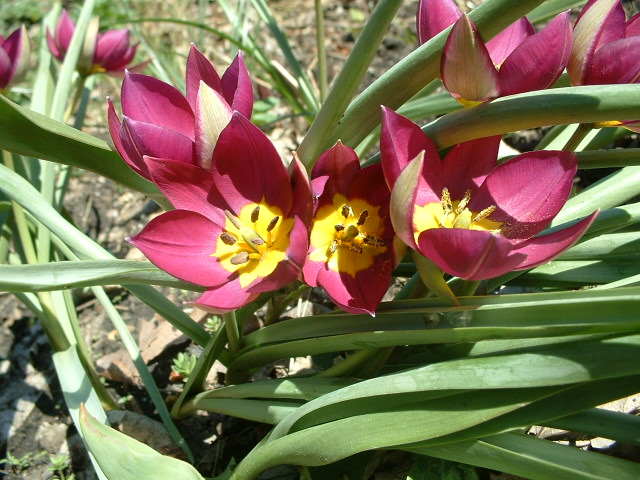
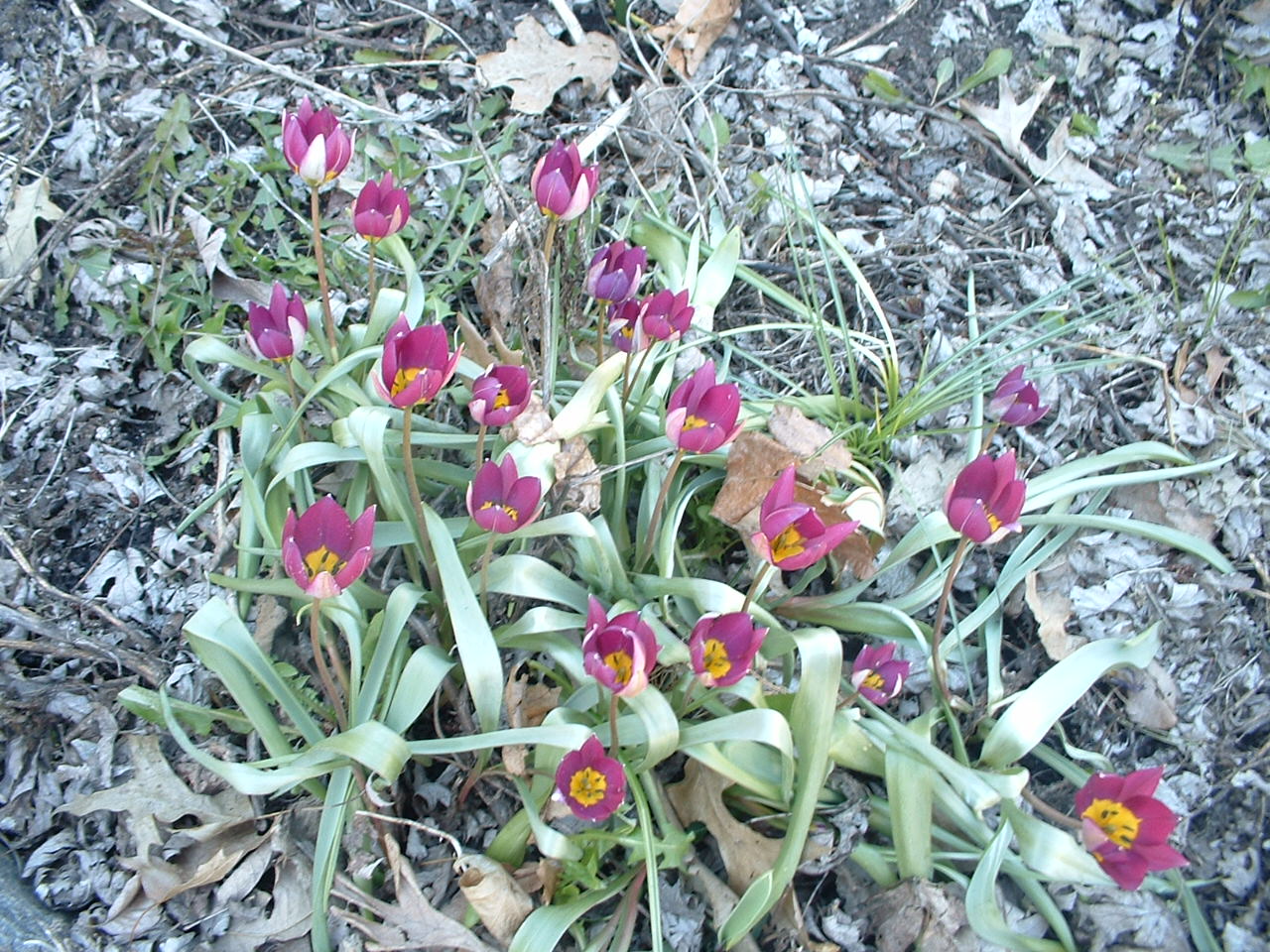
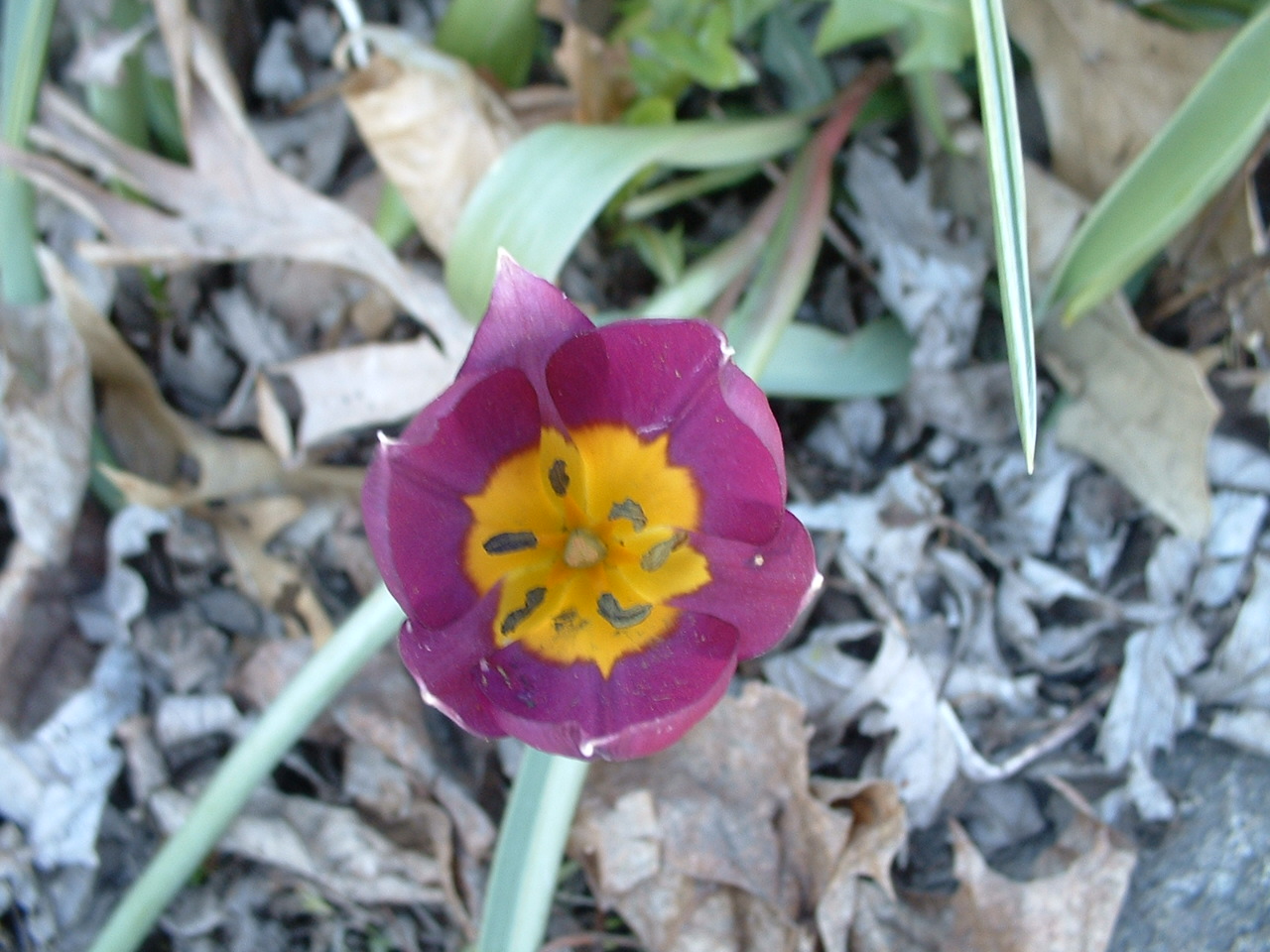
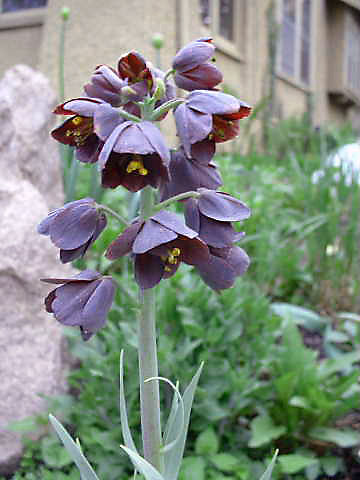
Here's the other species, Persica, that has not appeared yet this year, and perhaps won't .... One of the more unusual shades, Persica appears to range from deep, dusty purple to an almost chocolaty maroon color, depending highly on the light conditions in which you view it.

Like the Crown Imperials with which it often seems to be lumped in the bulb catalogues, it's one of the taller Fritillarias which, in its native habitat in Turkey, apparently grows on mountain slopes in relatively rocky terrain. And to honor that lineage, we've planted it relatively close to the signature "finger rock" near the front of the boulder perennial bed in front of the house. It put on quite the impressive show last year (in its first year blooming), but alas, we fear it won't be doing an encore this year. Our hope is that it is just taking a rest and will be back about a year from now, better than ever, and carrying on its impressive display ...
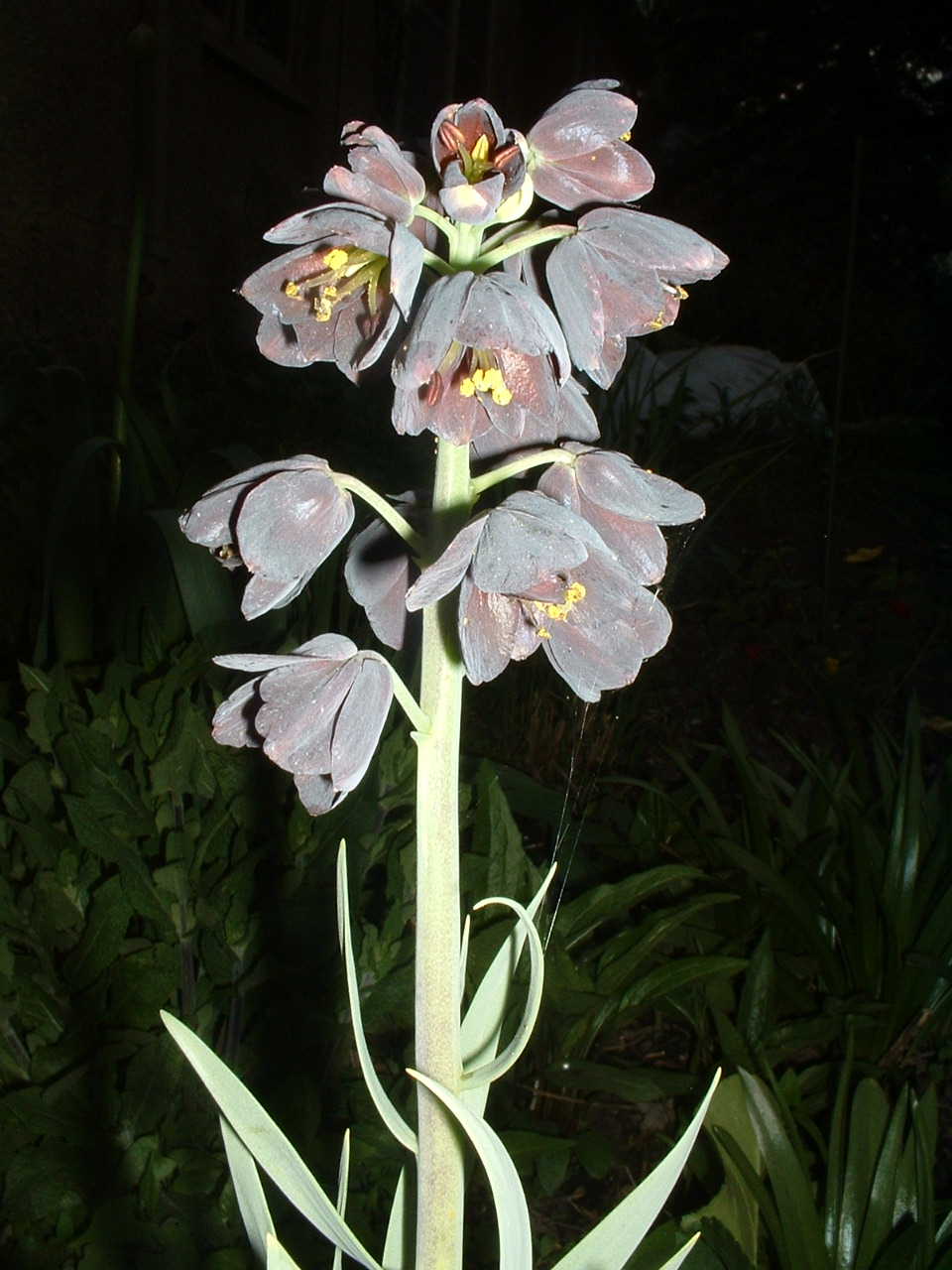
The first shot was taken in natural sun, showing its rich purplish hues. The second, taken with flash near dusk, gives an interesting detailed view of its inner bits, and shows off the "dusty" texture of the petals.... However you choose to view it, it counts as one of our new favorites among the spring bloomers. We're missing Persica this year, and should we yet be surprised, you'll see it here!

For very detailed species information and growing instructions, check out this link, since the Wikipedia link to it is mysteriously quite dead.

Tuesday, April 17, 2007

One final sunny bouquet! (For now)

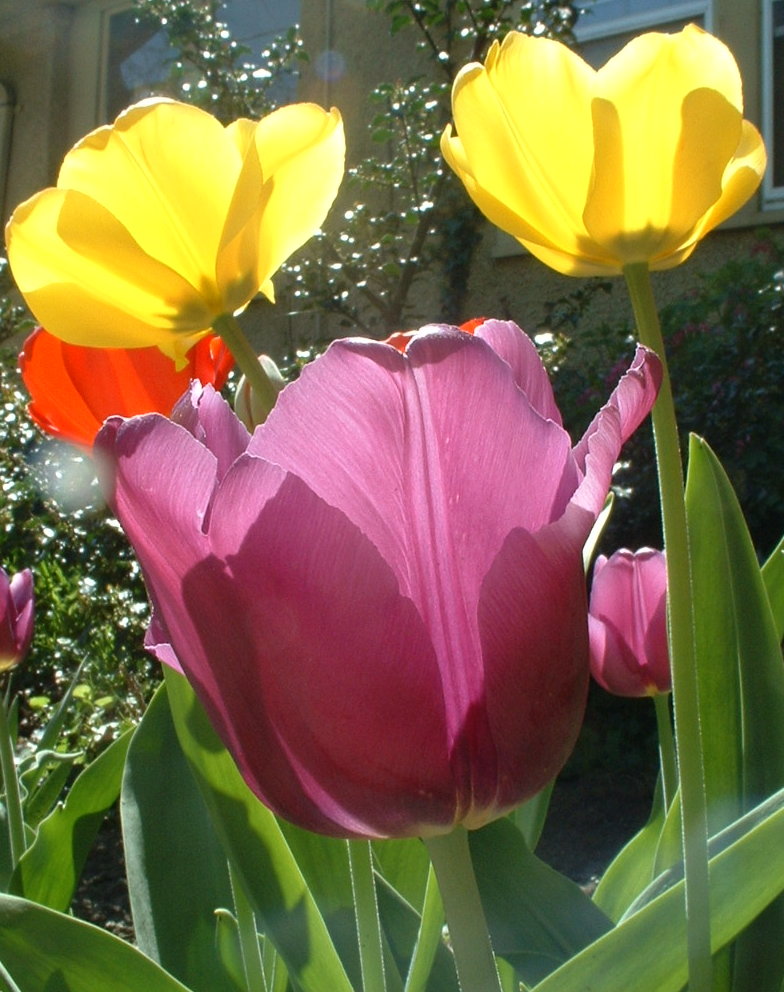
We'll just wrap up this particular phase of tulipidolatry for now with a nice, illuminated quartet of color (again from April, 2006), showing off the diverse range of truly outstanding shades the
Darwins offer us ... If I haven't sold you by now on the many virtues of the Darwin varieties, I hope this last shot will really make you stop and take notice! They truly are remarkable flowers, and well worth the expenditure of effort it takes to get them going,

In the next few days I'll try to present some contrasting shots from this year, since it appears we will have some (albeit stunted) blooms after all ... not perfect by any means, but real miracles that they are going to be here at all this year!

So stop by again for those and some other surprises coming soon ... we have some exciting shots of a recently planted perennial about to burst forth in bloom in our woodland shade garden ...

... To be continued ...

Support Inner Bit Diversity!

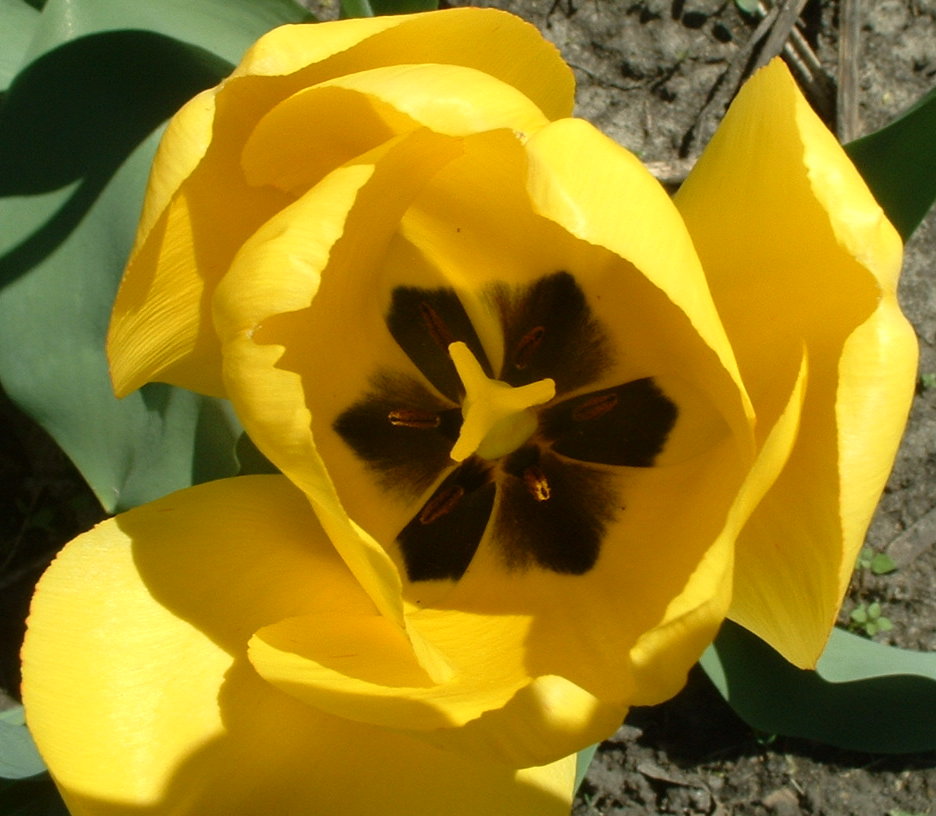
And here we have the last few examples of Darwins to wind up our mini-series of tulip inner bits as captured last April, when the tulips were at their spring best ... And given the current terrain out there (as of today), these magnificent specimens were indeed in their prime blooming mode ....
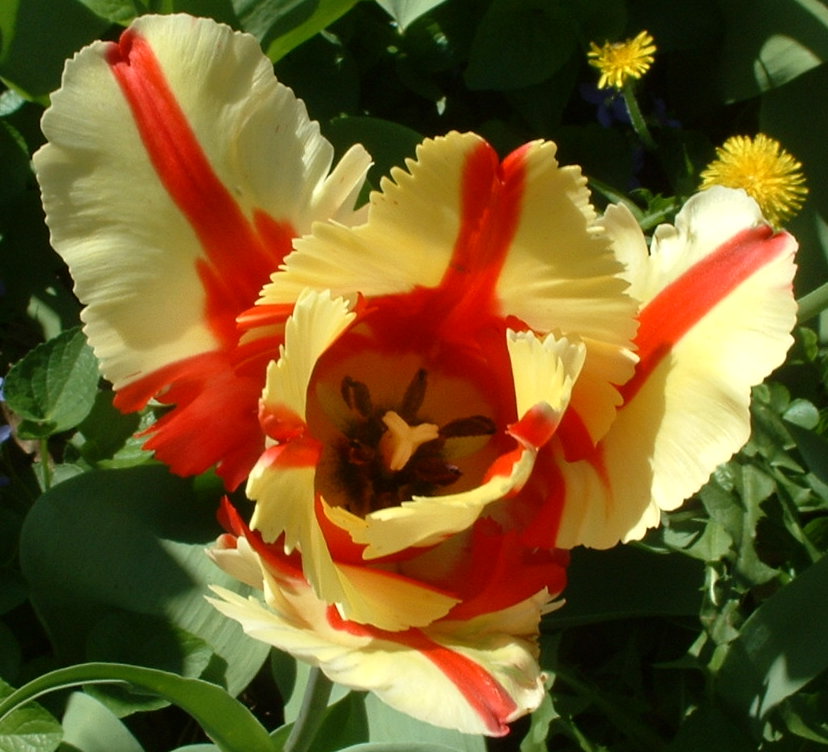
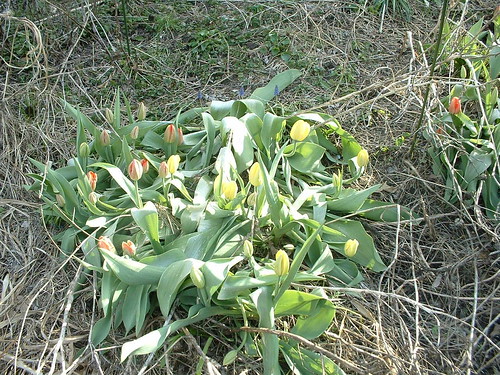
Though this year's tulips are trying valiantly to put on a show this year (see the bottom photo taken today), it's clearly not going to be anywhere near as show stopping as we achieved last year. So we'll have to content ourselves with some prime specimens from last April (2006) ... From the top we have an example of a simple (if that adjective could justifiably be applied to this flower!) basic yellow Darwin ... closely followed by one of the constantly dwindling Parrot Feather varieties that was planted among those first bulbs mentioned in a previous post ... and finally --just for Olivia, of course-- a dirty pink Darwin, one of a mix that I planted along the line of the sidewalk leading to the street.

Of course I'm especially partial to the yellows ... and I may be tempted to get a few more of the Parrot Feathers to replenish the stock, because though they are a fancy variety, the textures they exhibit are just far too fascinating to dismiss casually (as I tend to do with such cultivars). I particularly relish the "pinking shears" effect on the petals, not to mention the mysterious inner bits this particular tulip offers up ... just primed for an enterprising bee to explore and pollinate....

And to my eye, the brilliant yellow (above) edged in inky black just screams bumblebee mimicry ... an inviting landing and collection pad just waiting to be used on a warm, sunny spring day, the likes of which we hope have finally arrived this year to banish the last of the winter woes we've had recently in the garden.

And, as sad testimony to the damage caused by our recent freezes, as well as the tenaciousness of these Darwins, I've included a shot of one of the masses of reds and yellows we have out in the main boulder bed. As you can see, they're doing their best to give us some blooms, but nothing close to what they've achieved in the past couple of years ... In any case, we plan on feeding them before they disappear for the season, in the hopes of better performance next year, weather permitting ....

Mesmerizing Olympic Flame Tulips

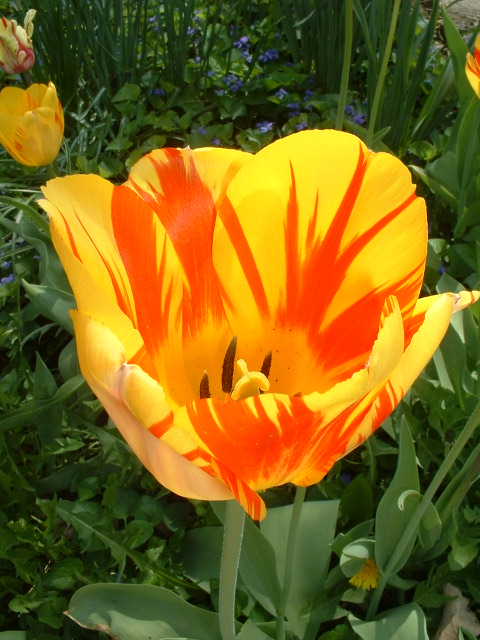
As much as I praise and love the Darwin varieties, it's Tulipa, "Olympic Flame" that truly embodies for me the perfect combination of sun and fire ... and what better variety to liven up a sunny spring day! And that this particular strain belongs to the Darwins is only testament to its dazzling staying power ... These are some of the original tulips we first planted in the small bulb bed out front, our first foray into planting spring bulbs back in about 1999. Way back then, we quickly filled this bed with various varieties of tulips, fancy and otherwise, as well as daffodils, snowdrops, crocus and Fritillaria michaelovski specimens. Certain ones have come and gone (mostly the fancier tulips, who never seem to last over time ... as I keep preaching) and a few remain, the most faithful bloomers of which are these lovely examples. There are also a few remaining "Parrot Feather" tulips (more on them soon), but for the most part, those tulips whose pictures originally dazzled and seduced us (such as the "Blue Tulips" that turned out to be mauve!) have moved on and just quit appearing over time.

Ok, you can see this coming, so I'll say it just one more time ... if you're going to go to the trouble of planting tulips, make the effort worth it! Darwins are by far the best way to go for years of dependable color ... go ahead and plant those hybridized poodles of the tulip world for a few years of unusual splash if you want, but you'll always come back to the Darwins in the end. I guess it's kind of like the old saying ... you date the flashy ones, but will eventually marry the Darwins. Well, that is, if you have what's commonly referred to as a "lick of sense" in your head. Barring unforeseen catastrophes (such as our disastrous recent cold spell), they will return to reward you and delight you for years to come ... long after the last ruffled petalcoat has left town.
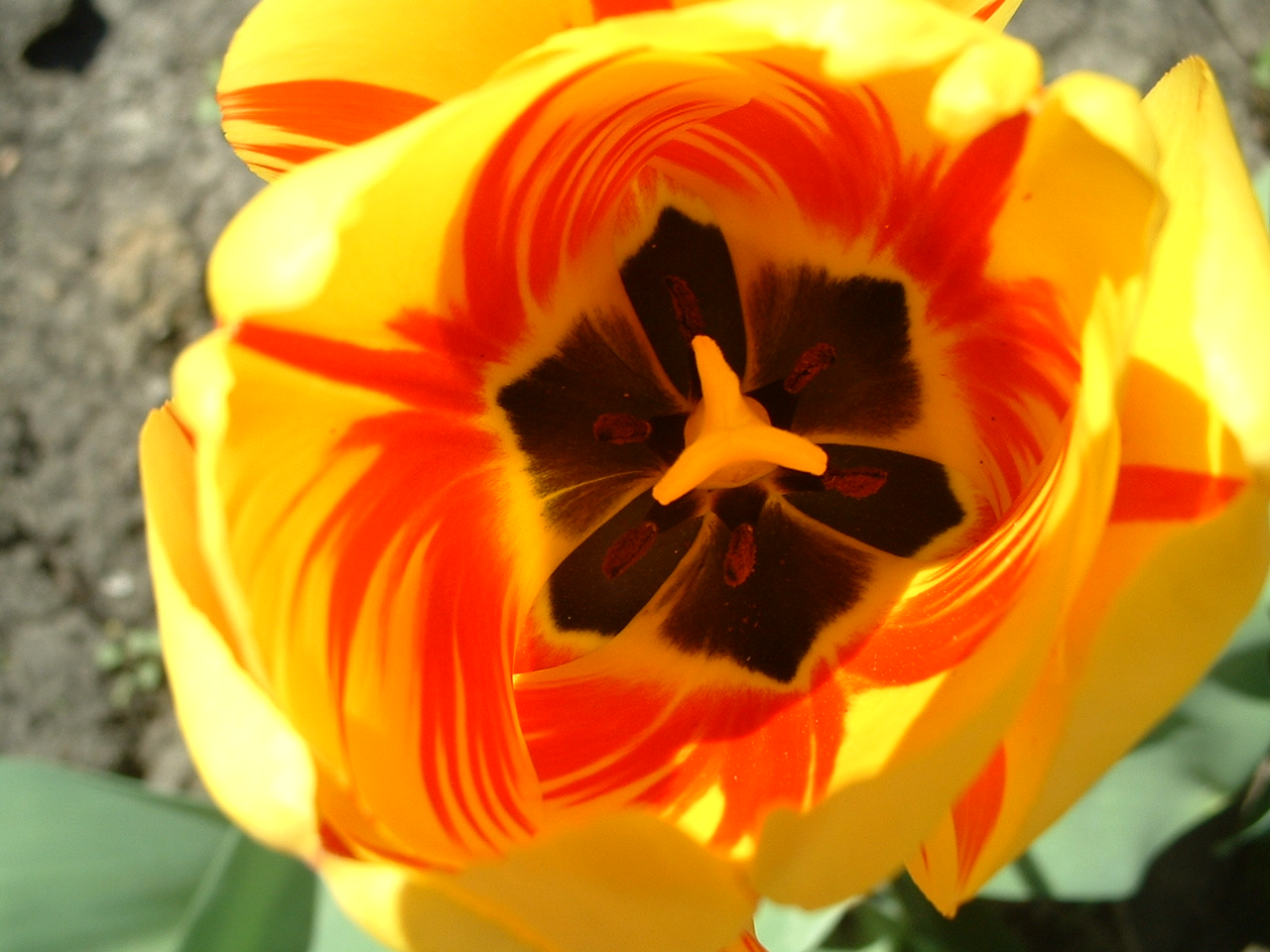
These three shots were taken last year (4-22-06) on a gloriously sunny day, which really helps to show off the true range of fire you can get with Olympic Flame, thus justifying its rather high-falutin' moniker. All pretentions aside, they remain one of my all time favorite varieties ... so go ahead, click to enlarge them (or right click "view image" in Firefox) and get lost in the mesmerizing patterns of their striking inner bits!

I'll have some more different varieties up soon for you to compare with these so you can get a flavor of just how intricate the private regions of tulips can really be ... (Stay tuned, Olivia!)

And since this post was originally conceived of as a joint garden blog post, give a click here to see what Olivia has been doing with one of these!

Monday, April 16, 2007

Persian Pearls Redux ... April, 2006

Tonight, I thought I'd just give a quick glimpse back to last year's more glorious bulb extravaganza with a shot of some of the Persian Pearl dwarf tulips I posted yesterday .... just as a point of comparison to allow you to judge just how much prettier they can be when they are blooming under more favorable conditions. Given the right weather, a nice sunny day and a less discouraged gardener, these little guys just positively shine! This shot was taken on April 12, 2006 (already much earlier than this year's "show") on their very first go round at blooming. Not bad for a group of tulips who just took up residence in this spot in the fall of 2005, eh?

Note fully open centers of these flowers ... which Olivia (in comments on Monday) likened to the eager, open mouths of baby birds. I'd never thought of them quite that way before, but she definitely has a point there, n'est-ce pas?

Sneak Inner Bits Preview

I couldn't resist sneaking just a wee preview of things to come soon from last year's archives! So here's a tulip, the likes of which we're unlikely to see this year in the garden ... one of our beloved Darwin oranges. I got a bit snoopy and penetrated the inner depths of this one just to see what kind of effect I could get, and I was rather delighted to see the results here!

Recently Olivia suggested that I do a series of inner bits shots from various tulips, just to compare the variations in patterns they each exhibit, so this will be the first in a short ongoing project here. It is amazing to see how different they can be, depending on the hue and variety of tulip .... and those who know me constantly hear me preach, the Darwin varieties are by far the best of your basic tulips. They remain true to form for years and don't tend to poop out in a few years, nor do they tend to disappear or revert to previous forms much like the fancier varieties often do. And if any tulip justifies the "perennial bulb" moniker, it is surely the Darwins, since they bloom faithfully every year and even can spread over time (so I've read but not witnessed yet). If you're wanting to plant some resplendent tulips that you only have to really deal with once (planting!), and who come in amazing ranges of colors, then look into purchasing a good quantity and planting them in masses ... surrounded by Muscari ("Grape Hyacinth") or Scilla siberica OR Scilla hispanica ("Woodland Hyacinth") and you can't go wrong. As I like to remind my bulb intimidated friends ... all the hard work happens once, then you sit back and patiently await their arrival in the spring! And success with these beauties only breeds a fervent desire for more ... just ask us if you don't believe me on that one!

A couple of garden notes: Earlier, after I posted the other entries, I took another walk around to survey the garden and the inevitable devastation. The good news is that it looks as though the Columbines are going to recover and are putting on new growth ... the primroses are hanging in there and I think will bloom still, albeit late ... Woodland Hyacinths are springing up all over and thanks to their later emergence, don't seem to have suffered from the recent cold. BUT, the most exciting thing I discovered was that the two red Trilliums we first planted last year are up, budding out and getting ready to bloom! I'm really anxious to be able to share those with you, as you will be seeing them bloom for the first time, just like us ... The peonies have emerged as well, and though short still, they look unscathed. And though our iris out front were early to emerge, they seem to have weathered the cold pretty well and look to be working their way up to a great show this year ... as long as they don't immediately get beaten down by a hard rain, as was the case last year. I'll be really thrilled to get them up here when the time comes .... So, all in all, there may be hope yet for the garden, and for any dedicated gardener, there's always some way to find hope that things green and floriferous will find their ways to right the world, even if we humans are unable to do so.
And speaking of Irises ... Olivia has some lovely shots of molested blooms up now ... so hop on over and take a look at these luscious finds from the florist's!

Sunday, April 15, 2007

Plucky Hyacinths

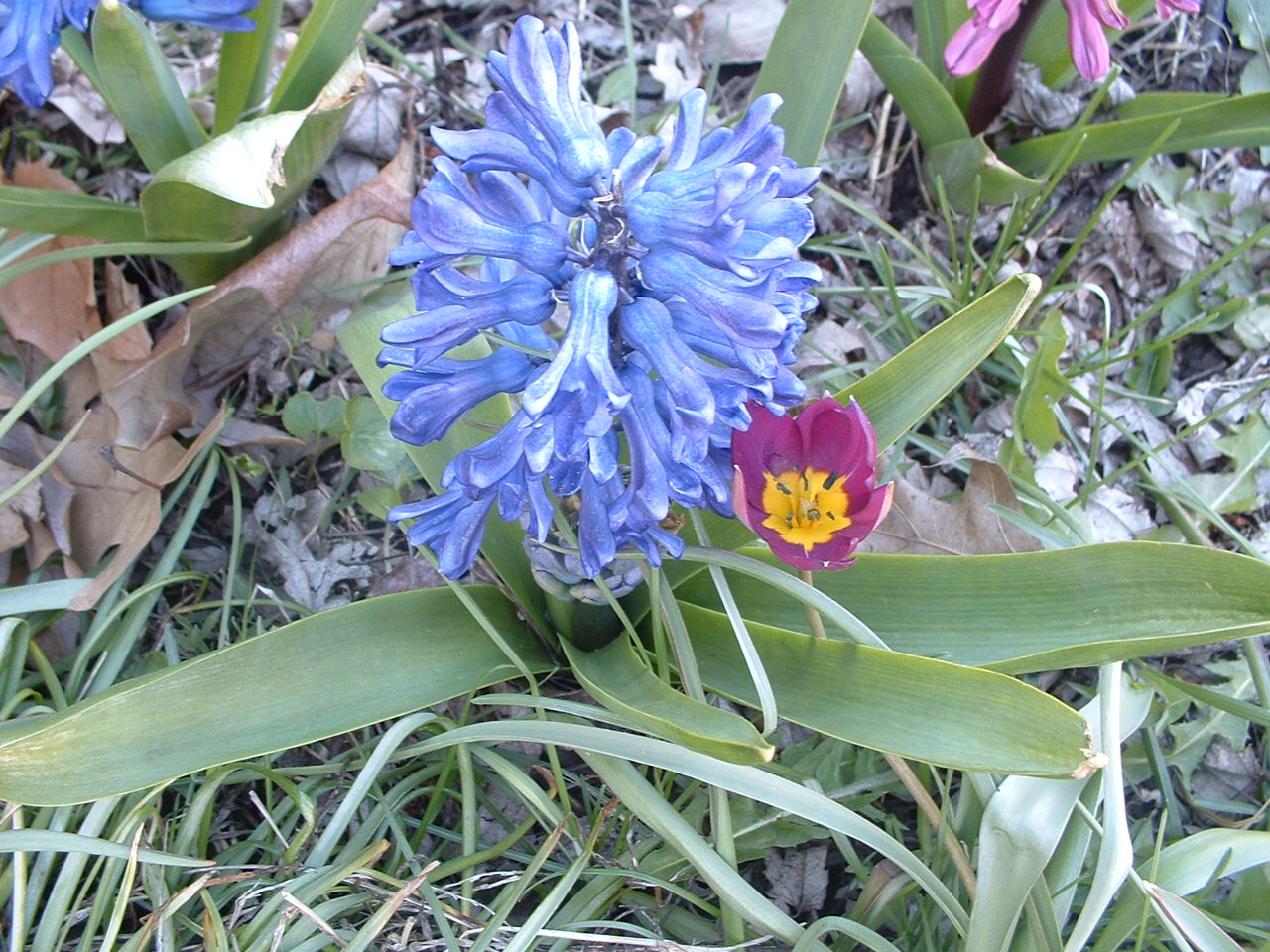
Or maybe I should say Courageous Hyacinths, given what they've had to endure these past couple of weeks! As I noted earlier, these are the only ones we've seen break ground so far, even though it is rather late for them at this point in spring, but it's been anything but a normal spring so far this year. These shots demonstrate how stressed even these valiant flowers are ... what looks blue should be a deep violet color (var. Peter Stuyvesant), and believe it or else, what appears pink should actually be a brilliant red! I just count myself lucky that they are even blooming, though they are only about half the size they should be, and look a bit washed out as you can see....

And you can see a friendly little companion Persian Pearl tulip snuggling in for the close up ... they're doing their best under bad circumstances, and I can only laud their courageous will to bloom despite all odds!

SURVIVORS: IVG Garden 2007

Well folks, those who've been listening patiently to my wailing and moaning the past few weeks know only too much about the recent very cold snap we've been having here. Right after I got going on posting the first spring bulbs, our weather took a very cold turn (lows in the low teens at night!), and what at first looked to be a banner year for the tulips, daffodils and other bulbs soon turned out to be a near washout. Or freeze-out, I should perhaps say... The front garden especially has taken a pretty bad hit and we're not sure how it's all going to turn out, despite the recent (e.g. yesterday and today!) upturn in the weather. I'm just not sure at this point how much we will be able to save, though the late emerging bulbs look to be coming out of this relatively unscathed.

To wit ... our bleeding hearts were up about a foot before the record cold set in ... and now they look like spent, limp spaghetti. Same with the columbines .... even the sea holly is looking rather worse for wear,
but I do think they will eventually pull out of it ... I hope. And, with the recent arrival of better weather, I hope to be able to report more positive news in the coming weeks.

But for today ... the real tough survivors are the dwarf tulips (Tulipa, "Persian Pearl") and some of our hyacinths... these are the only ones I've seen up yet, though there are about 9 others on the north side I've not seen emerge yet. So here's what I got today ... these dwarf tulips are really fun to have in the garden, and unlike their bigger cousins, you don't have to plant them so deep it takes a shovel... and they appear to spread a bit, as I swear there are more there this year than there were last! Unfortunately, they don't last as long as the Darwins we prefer, but for sheer diminutive stopping power, these little guys are hard to beat! They're a perfect planting companion for Muscari ("Grape Hyacinths"), and also look pretty kicking with the hyacinths too! And since they all bloom at about the same time, and with a little imaginationyou could get some really interesting color combinations!

And of course, what would a tulip post be without the ubiquitous inner bits for Olivia? They may be a bit on the waning side of things, but they're alive! And that's what really is counting for us of late ...

In the next few days I'm going to be posting some of last year's spring glories (for obvious weather related reasons), so stay tuned for even more brilliant color. Olivia and I are going to be doing a joint posting soon on one of my very favorite tulips ... "Olympic Flame" so do check back soon for that in a day or so!

It looks like our Crown Imperial fritillarias may not make it this year ... but I'll keep you posted, so to speak!

Wednesday, April 04, 2007

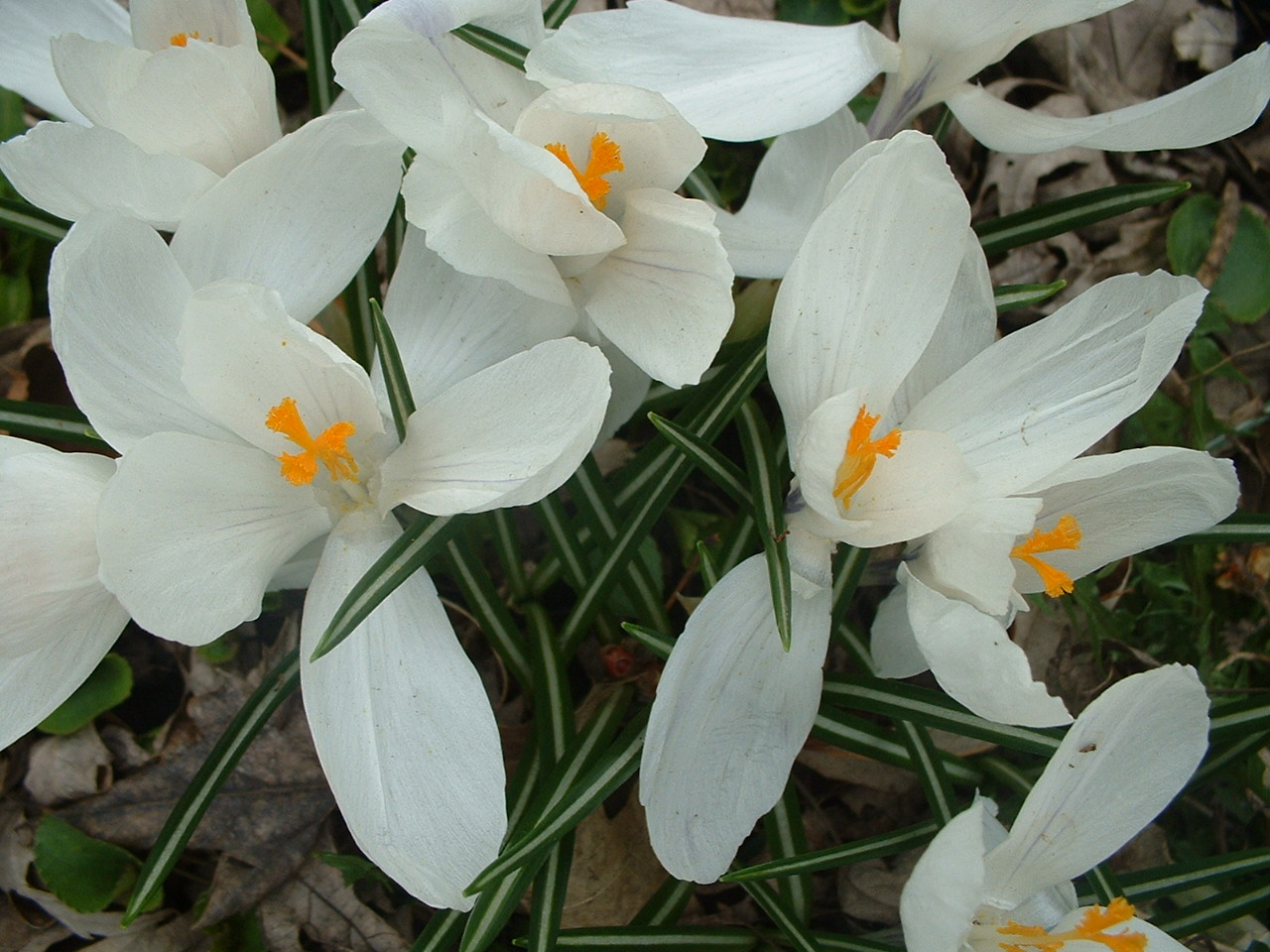
Inner Bits for Olivia: Giant Crocus Edition

And finally, some long-promised inner crocus bits for my dear gardening cohort in Ottawa Olivia, who has been having a few bunny issues with her crocus thus far this spring.

Though these lovely giant Dutch crocus have since departed the scene due to excessive rains and winds, they did put on a delightful show a week or so ago in the front gardens ... And though they don't last as long as the snow crocus do, the giants are truly wonderful to see thrusting their bold flowers forth when their time arrives!

So here's to Olivia ... winter can't last that much longer, and with a Bunnyvac 6000 brought on site, you may yet see the crocus grace your garden! Well, at least we can wish and dream for that, can't we?

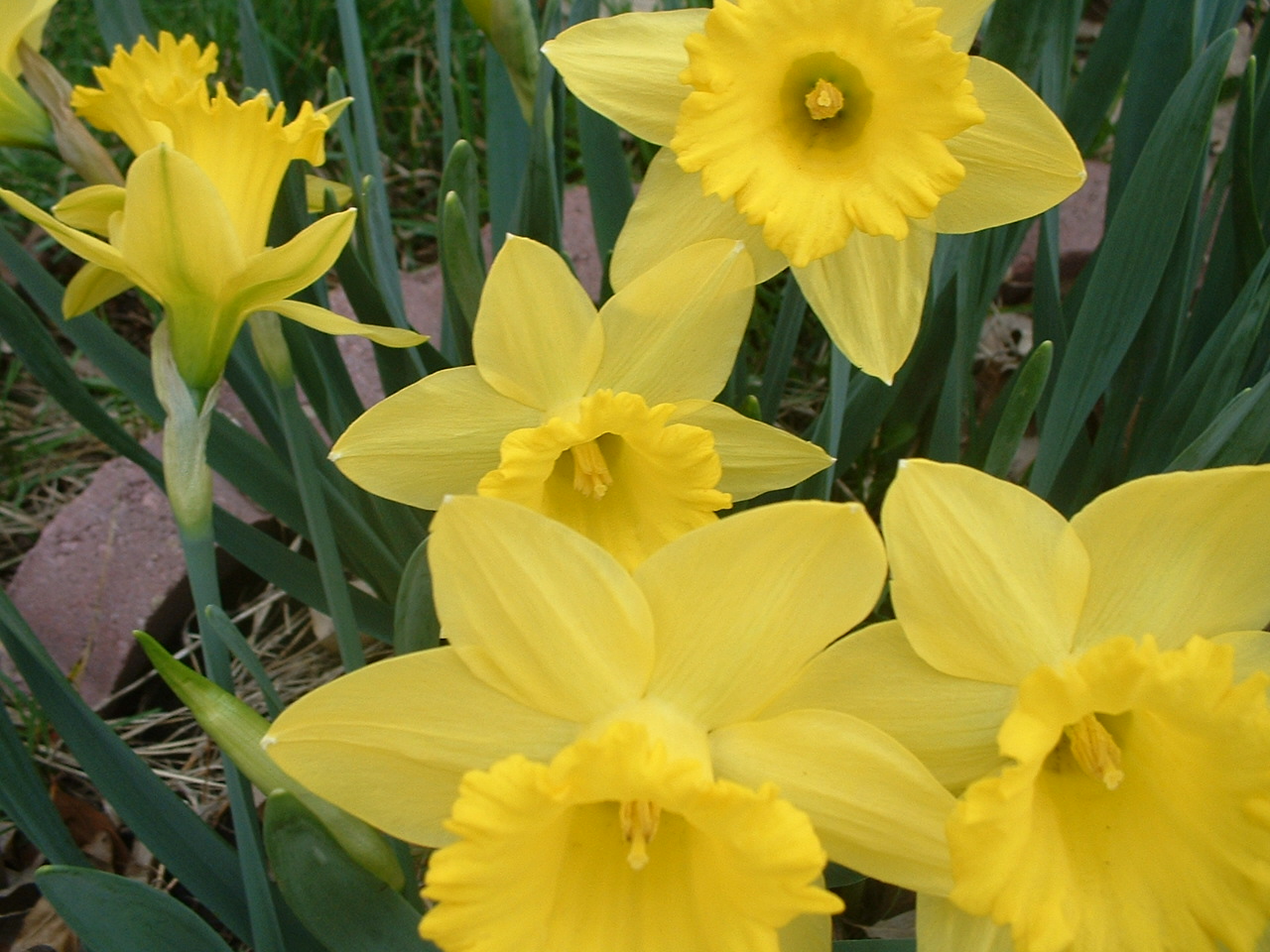
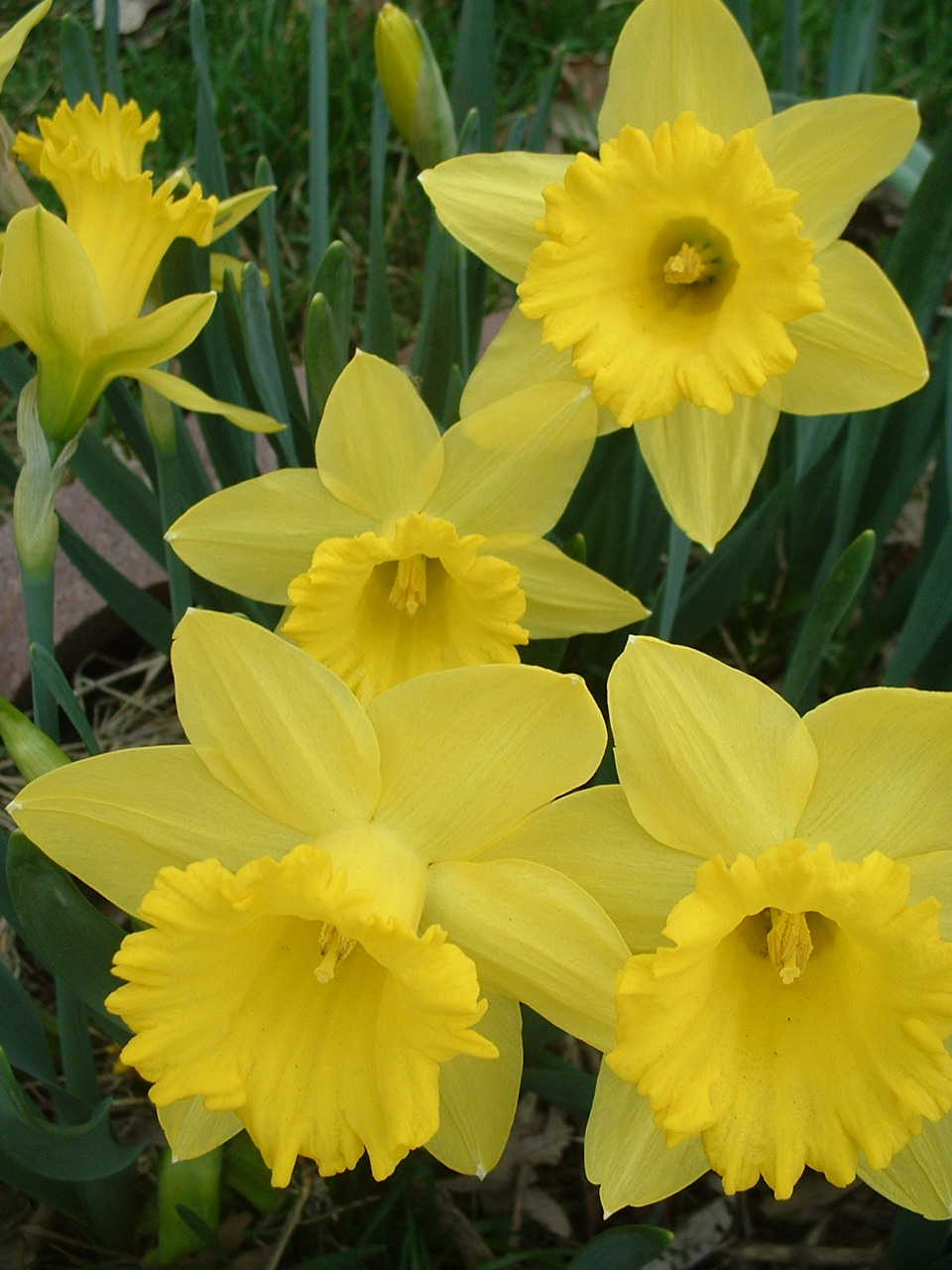
Everybody's Favorite: DAFFODILS !!!

It's got to be a hard-hearted, cold and ruthless person who doesn't just instantly cheer up and smile when they see a mass of daffodils in bloom! And when you're looking for real bang for your buck when planting bulbs, you can never go wrong by buying as many daffodils as you can and are willing to go to the effort to plant.

Like any of the larger spring bulbs, Daffodils need to be planted relatively deep (about 6"- 8"), so the initial planting can be a chore. But the rewards are so ample and brilliantly hued that it's all ultimately worth the effort. I'd personally recommend buying the naturalizing plain yellow varieties because they will colonize over time ... those fancier, mutant-y hybrid varieties don't bloom true for many years and eventually just revert to a strange, vulgate form of Narcissus that's really not the most attractive to have in the garden. Just our own personal flower snobbery in this regard, but if you want the true, old-fashioned forms, it's best to go with the simplest yellow, naturalizing variety you can find.

And as a side note to those who have deer problems in the garden ... Daffodils are widely known to be a deer repellant plant (one among many we seem to have instinctively planted in our garden), so they fulfill another useful garden function as well. I'm not sure what other critters they may repel, but since we have many daffodils planted among the tulips, I wonder if they also have rabbit chasing properties as well... so many here tell me that the rabbits devour their tulips in spring, yet ours remain untouched ... I may have to do some more research on that, but for now, enjoy these happy yellow faces while they last!

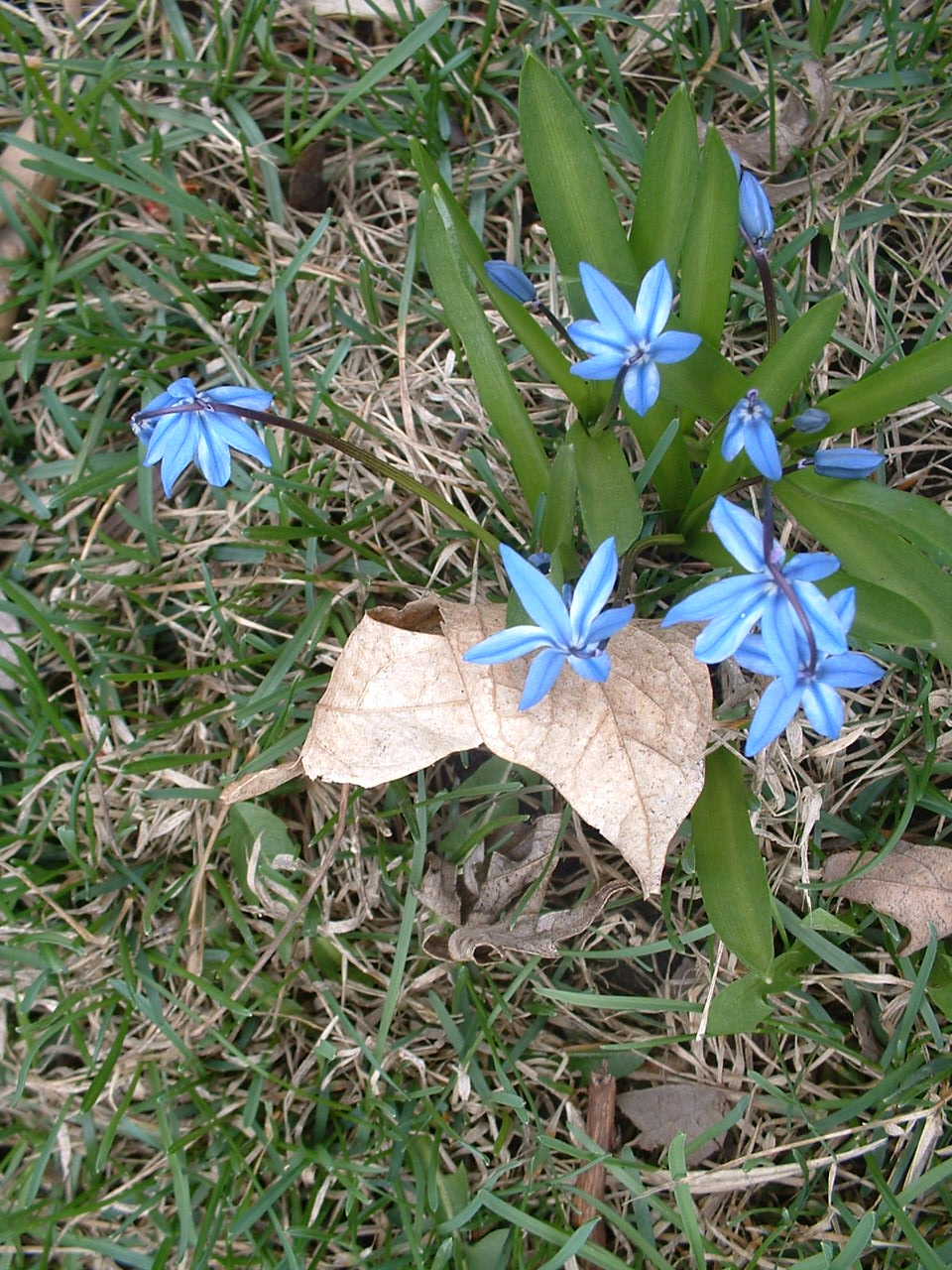
Desirable Early Spring Blues

It's not always bad to have the early spring blues this time of year. Especially if said blue is provided by Siberian Squill (Scilla siberica), an absolute must have in any garden's bulb planting areas. Aside from the Snow Drops, Crocus and the Glory of the Snow (featured previously), Squill is an essential early bloomer that signals spring has truly arrived.

These tough little plants do indeed hail from colder climes and are hardy as far north as Zone 3 ... and they're busy colonizers when planted right down there in the lawn. If you give them a few years, they will spread out to form cheery blue clumps that will enlarge over time. And for those who prefer their bulbs virtually maintenance-free, Squilll is a perfect choice... once planted, there's nothing else to do ... they will return year after year, increasing gradually and when they're done blooming and putting on the little bulblets that help to propagate them, it's time to mow the grass and they disappear into the lawn until the following spring.

Cultivation is pretty similar to that of Crocus, Snowdrops and Glory of the Snow, in that they're smallish bulbs that don't have to go down very deep, prefer a sunny location and well drained soil. Our dream is to eventually have the parking out front carpeted in blue from Squill, much like a house we see in town where it's been established for decades.

I'll have more on the Scilla species later on this spring when our other variety Scilla hispanica aka, Wood Hyacinth blooms... it's a larger variety with more developed bloom stalks, but still in the delectable blue-violet range that makes them such welcome additions to the early spring yellows and whites ... if you're looking to expand your bulb varieties, you must consider planting Squill ... though they are not particularly cheap, they are worth the investment, if for no other reason they provide some welcome blue early on to chase away the last of winter, and they like to set up housekeeping even in a lawn planting situation....

Thursday, March 29, 2007

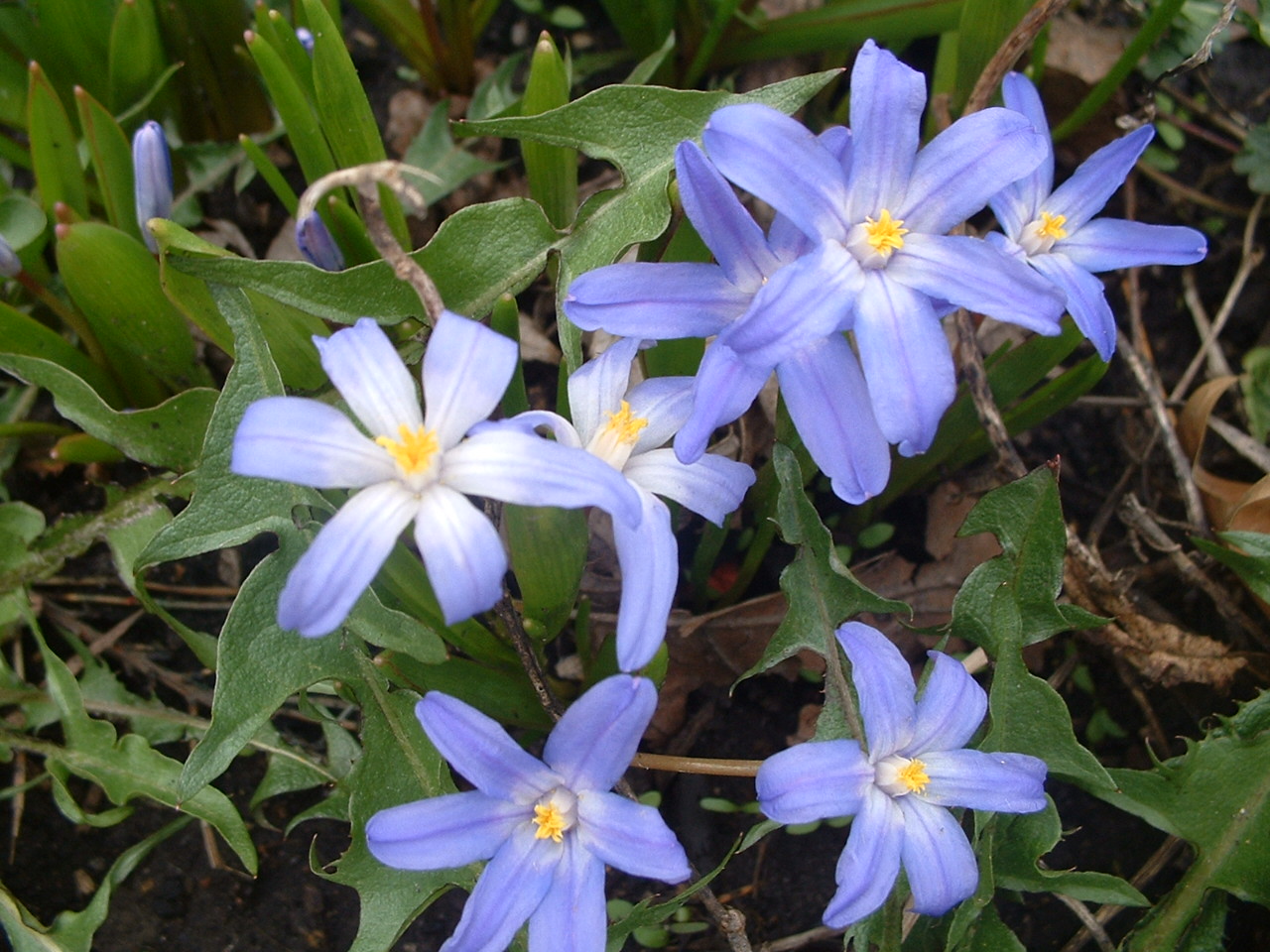
Glory of the Snow

I finally managed to get a brief rainless tour out front tonight after work, and was quite excited to see that the Glory of the Snow (Chionodoxa) had arrived --albeit post-neige-- this year. I'm sure they were just biding their time underneath all the piles of snow until the recent thaw, and with some of the real warm-up days we've had of late, they came rushing up to brighten the early spring garden.

With their unique hues of blue and warm golden inner bits, these diminutive flowers were a real delight to discover on a damp, mostly overcast (the norm of late around here) late afternoon. As for growing them, they could hardly be easier to establish in a sunny spot near the front of your perennial border. The biggest drawback is that they are not that widely accessible (these were internet buys a few years ago) and are relatively pricey for one of the smaller bulbs.
But that disadvantage aside, they recommend themselves eminently as one of the more unusual of the early spring bloomers. And as bulbs go ... they could hardly be easier to plan t... they don't go very deep (unlike tulips, daffodils and other larger bulbs), and all they require is a sunny spot in fertile, well-drained soil, a chilly winter and the early warming rays of the sun to bring them forth to catch the eye of the observant early spring garden observer. They also appear to naturalize quickly and our three plantings have been increasing in width every successive year ... what's not to like?

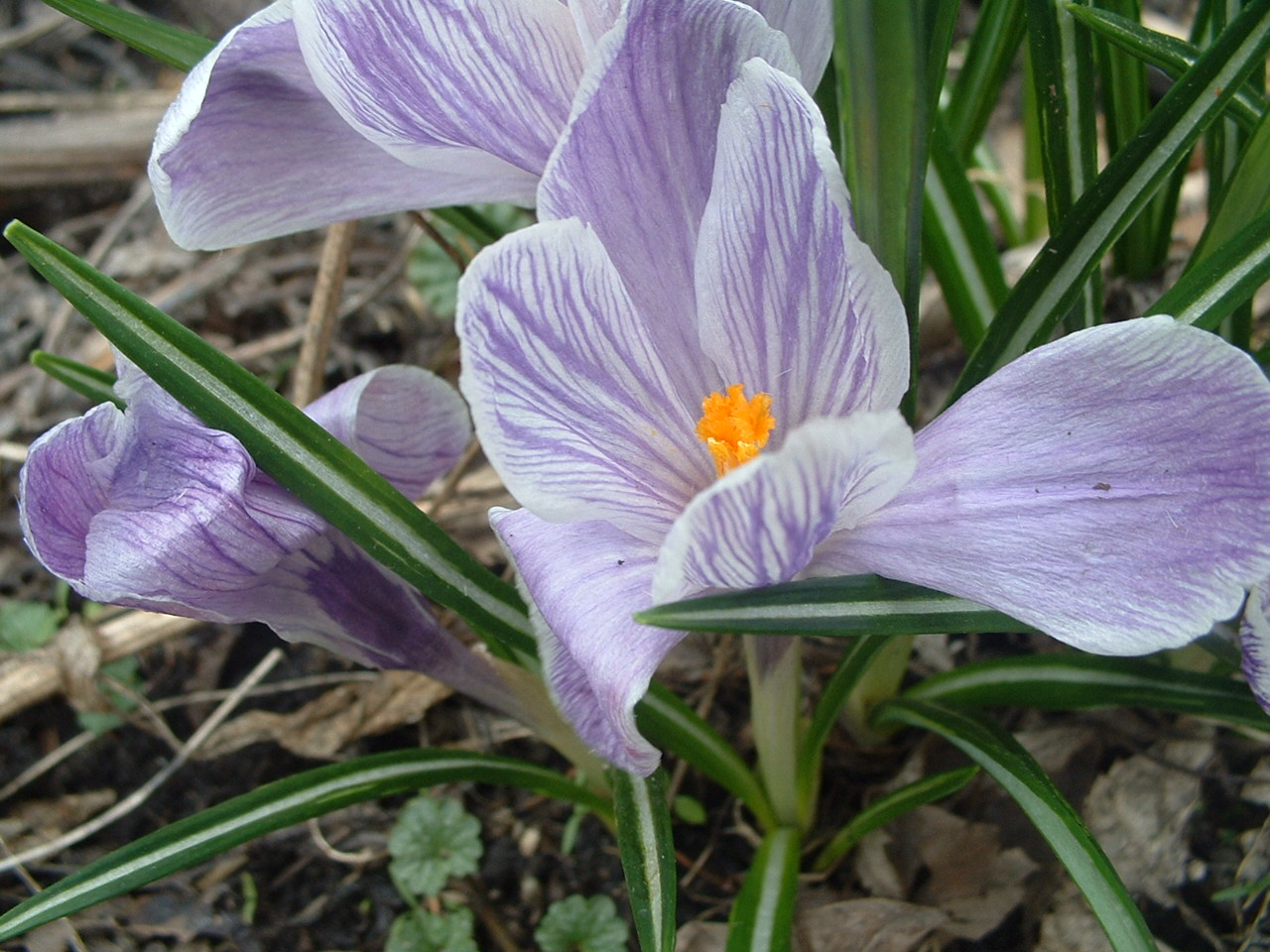
And finally, why not a quick bonus crocus! This variety is called Pickwick and is one of the "giant Dutch crocus" varieties. We're particularly fond of the purple veining in this one, and it's a shame that they don't last as long as the earlier snow crocus ... our giant crocus have been battered by the wind and rain this past week, so most of them are already a bit past their prime. I actually really liked how the folded texture came out on the petals of this one, even if it would have been perkier a day or so ago ... But still... even slightly bedraggled, they still bring a wonderful splash of color here and there in the big perennial border ... I'll have a few more soon in another post, complete with detailed inner bits for Olivia ...

Tuesday, March 27, 2007

Sweet Harbingers of Spring

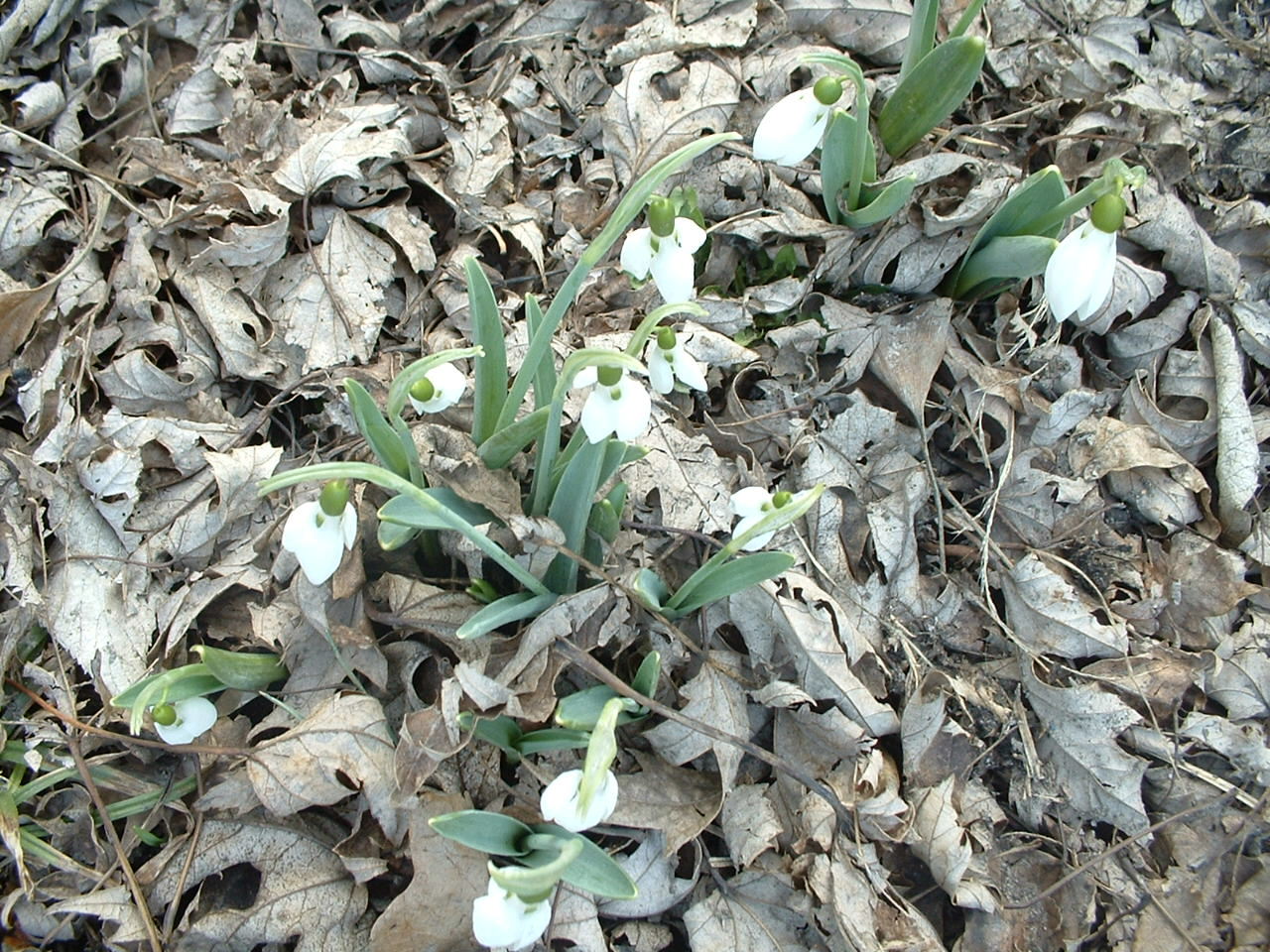
Here are the first of this year's snowdrops from out front in the original bulb bed. Almost as soon as the snow cover began to melt, these cheerful late winter troopers emerged to begin the annual bursting of the bulbs festival around Casa IVG.
In fact, Snowdrops (galanthus sp.) often will indeed poke their heads out from under the snow and surprise you, but this year, given the enormous cover we had for over a month, they really didn't get a chance until the big thaw started to happen the week after the last ice/snow festival ... the one that claimed the Ranger, as you'll recall.

There's a lot to recommend these little guys for any garden, especially if you just can't stand how winter drags on and you crave to see some proof that flowers will indeed return soon! They
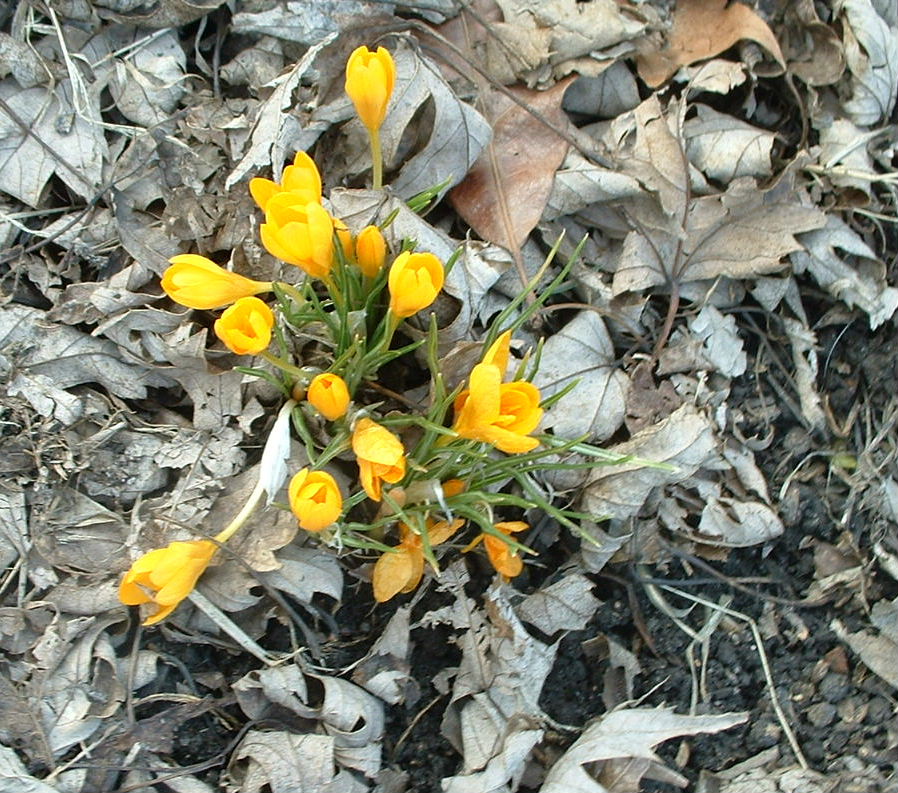
are virtually carefree once planted (and since they're small bulbs, that's not too big of a task initially), they naturalize nicely after a few years and return faithfully every year, usually around the end of February for us, (though as noted, it was significantly later this year). Once we see Snowdrops nodding their graceful white heads, we know the crocus can't be far behind ... as you can see in the following photo taken the same day (17 March, 2007). The simplest of all crocus (to my mind), the "snow crocus" varieties are among my very favorite flowers ... due in large part, I think because I've always associated them with the early heady days of spring when you know that aside from a few isolated minor incidents, the snows are either receding or gone completely from the garden.

Since these were taken a whole host of others have popped up and are blooming in shades ranging from deep purples, yellow, white and striped varieties ... Unfortunately I've not been able to get any pictures yet due to weather ... no more snow, but increasingly frequent rains and overcast days ... Sunday was a glorious high of 82, however with the sustained spring winds of 30-40 mph, it was a bad day to try to get flowers to stand still ... so you'll have to hope (as I am) that there are sunnier, calmer days ahead later this week, so I can capture them and bring them to a gardening blog near you...

... Stay tuned ...

Objects in the mirror ...

As the saying goes, are much closer than they may appear ... and here's the result of our great car shopping expedition. Enjoy this brief moment of IVG car obsessiveness, because they don't come around often ... so here's the skinny:

2006 Pontiac Vibe (which we learned is the same thing as a Toyota Matrix, made in the same plant in CA), low mileage, all wheel drive and loads of nifty gewgaws and buttons. Oh, and a sunroof too. Much kinder gas mileage than the Ranger, though a bit more limited on the hauling capacity. But we think we made an acceptable compromise given the incredible space you can open up inside this deceptively small looking little wagon.


In short, we're loving it. And the ride is .... well, much comfier than anything we ever expected from the Ranger. Oh, and we can actually transport other humans without cramming them into fold down seats in the so-called "back seat" of the truck. It was a good deal, even though we had to finance some of it, but at least we're all covered warranty wise until 2011, so we think it was worth it.


This was taken on 17 March, 2007 not long after we brought it home, and you'll note there is no more snow, no more ice ... in fact the first crocus and snowdrops are almost visible in that little corner of the bulb bed you can see near the right front tire. Some of those will appear in a post here very soon...
And finally, here's a view --a mocking self-portrait in fact-- from inside the passenger side.
I managed to get what I was going after ... that ubiquitous warning .... the cool reflections were a nice bonus, I thought.


So there you have it ... some of the reasons of many things have been relatively dormant around here of late, but on the uptick again now that spring has truly arrived.

... Now, back to our regularly scheduled spring floral programming ...

When the Flying Fickle Finger of Fate Hits you ...

You know that your trivia knowledge of catchphrases past extends back perhaps a few more years than you'd like to admit. Or maybe the ice just got the best of you.

Well that second big ice/snow storm we had from March 1-3 this year got us. After four years of successfully maneuvering the slick roads and snows, our beloved Ford Ranger met its match in the form of a traffic pole at an intersection. On the way home from work on a day when it got really bad, we fishtailed through an intersection at a relatively low speed (about 10 mph) and found ourselves just barely missing several cars ... only to watch, in that gut wrenching variety of slow motion vision not to be envied by anyone, ourselves slowly hurtling toward a pole and no way to stop it.

Long story short. No one injured. Not even a pole! Airbags didn't even deploy! Yours truly did manage to push the truck away as C maneuvered and we limped home. Insurance called. Several days later, truck totalled. Check issued. Not a bad thing after all. Rental rented. Much visiting of cars.com and a few visits to dealerships
and test drives later, we settled upon a new vehicle.

... to be continued ...

Monday, February 05, 2007

Curmudgeonly Flower

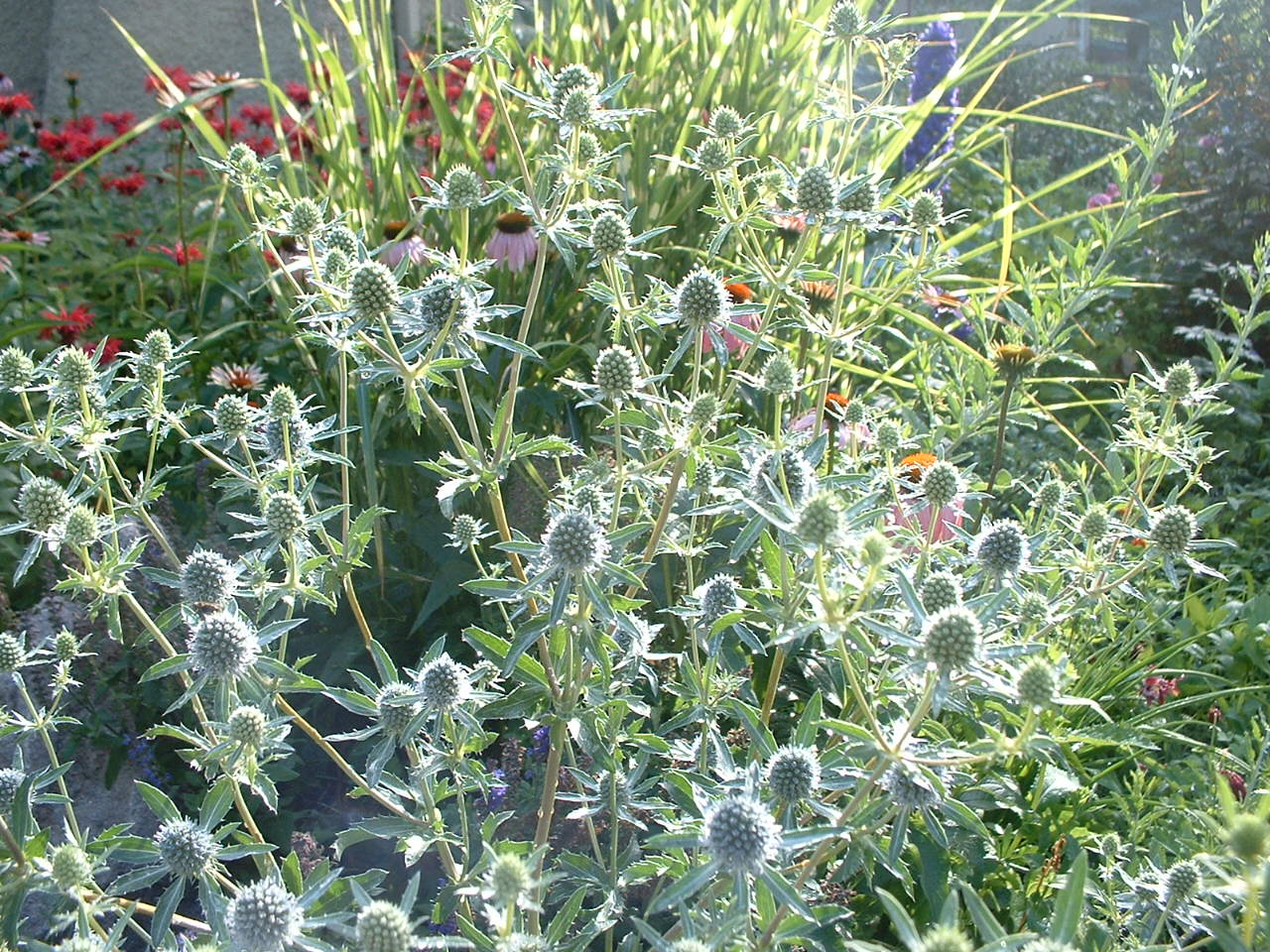
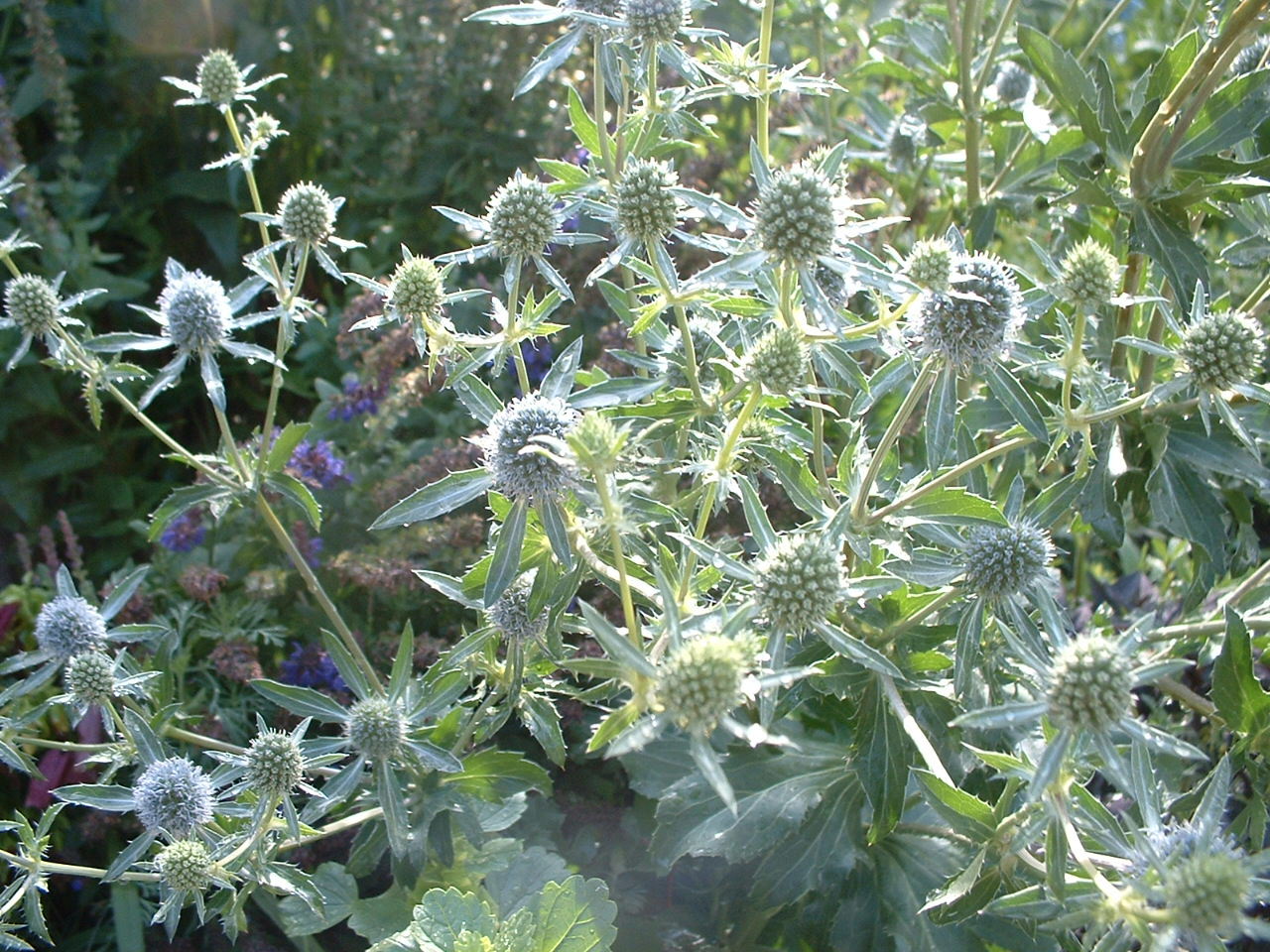
Here ya go Olivia ... a curmudgeonly flower I came up with from the archives. Ok, so I brazenly swiped Olivia's idea as mentioned in her comments today, and I hope she doesn't mind too much! Though this clump of Sea Holly (Eryngium maritimum) may look intimidating and downright prickly, it's really a pretty friendly (and as those who know me always hear me say) and absolutely unique and dazzling perennial for the front of the border. And with the blazing sun of late June captured here, it gives one of the best depictions of ephemeral blue haze of these masses of "flowers" (they're actually bracts). The best approximation we've come up with for the hazy blue is something akin to "gunmetal blue," though even that doesn't truly cover the range you see in these ... it's all dependent on how the light catches them. And for the naĂŻve or just plain flower ignunt folks, it's quite often mistaken for a mass of thistles, for which the analogy is apt, if incorrect.

So here's a bit of summer past to brighten up the dreary cold of our present arctic blast .... If you look closely in the first shot, you'll also see Bee Balm and Coneflowers peeking through, along with one of the later Delphiniums and the Porcupine grass planted behind "Finger Rock...."

It's making me itch for spring and summer to arrive already ... and given the volumes of seed and plant catalogues I've been receiving lately, I guess they're on other gardeners' (and suppliers') minds as well!

Sunday, February 04, 2007

One more ... with love to Janet

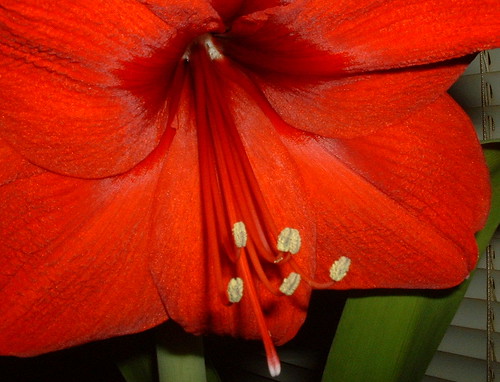
I know it's not pink, but believe me, if I had a pink one, her name would be Janet!

Still, red does pack a lot of punch, like you do .... and you know what people say about red and passion ...

Just an affectionate post for someone I think very highly of, who deserves a bit of pizzazz of the floral type right about now.

Hope you see this, hon.

Amaryllis, encore ...

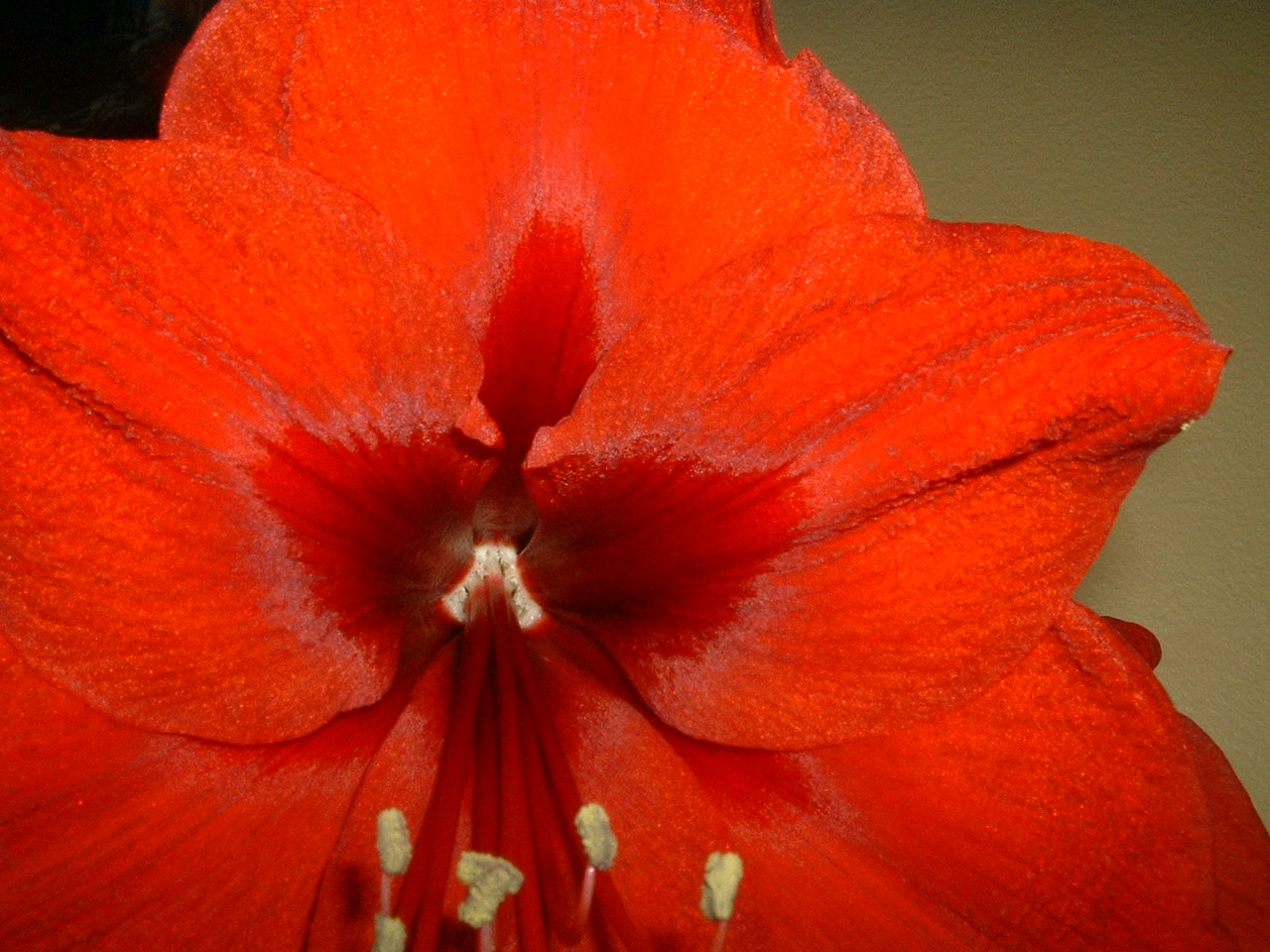
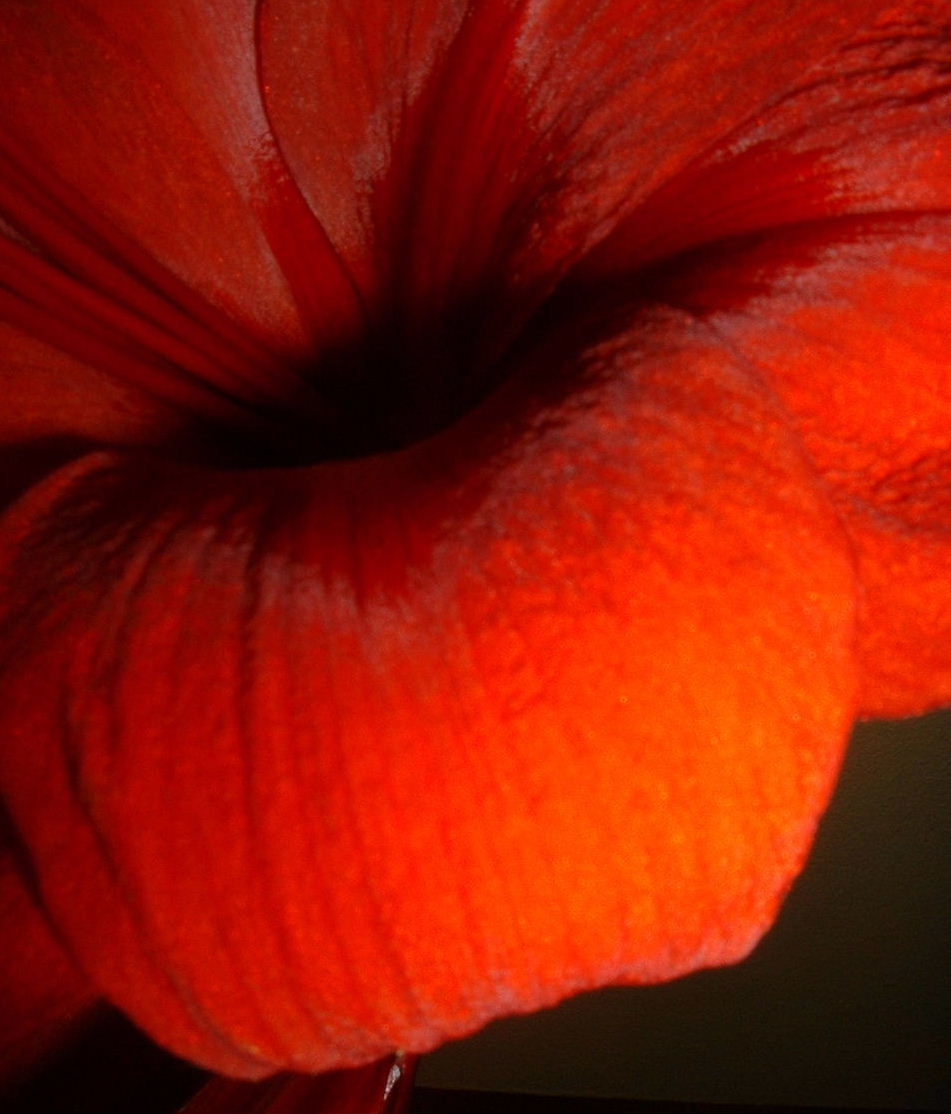
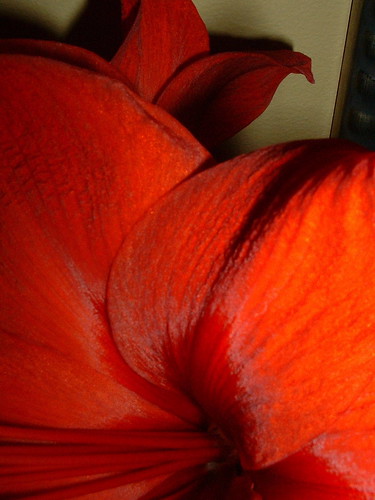
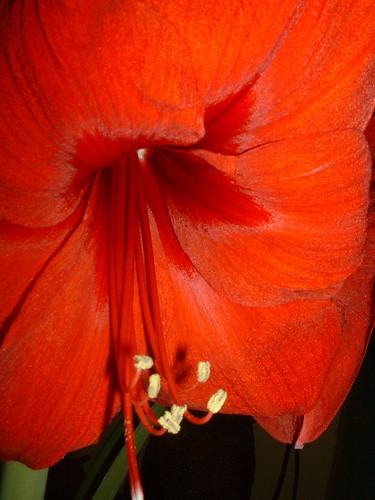
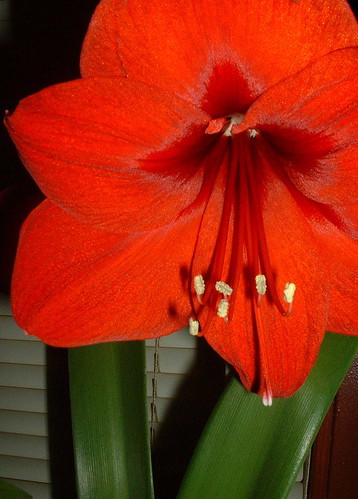
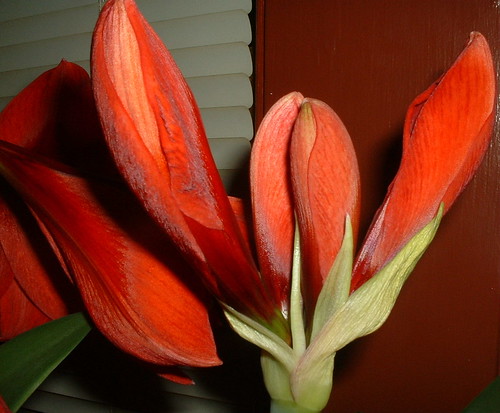
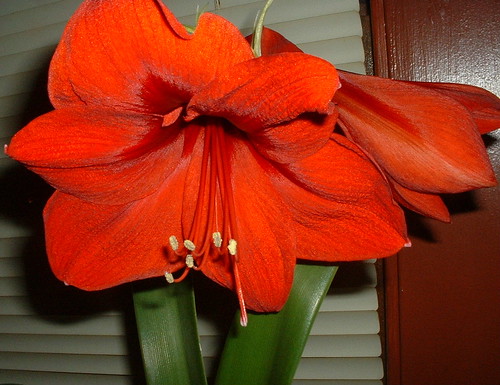
The great Amaryllis bloom-off is still underway, and only increasing the past few days (now up to a total of 8 open blooms on 2 plants). Tonight's shots were actually done on February 1, and thanks to Fernymoss for having done the honors with the camera. I think he got some pretty cool close ups of the fabled inner bits as well as some more arty abstractions of the flower.

I did a bit more research on Amaryllis tonight and learned that they're native to areas of South Africa, which generally translates into our USDA Hardiness zones of 8-11, far beyond the reach of most of our humble gardens. (Though I wonder if Far could get by with a heavy mulch where he is, now that he told me they are now officially Zone 8, according to that Arbor Day Foundation link I used in a previous post.)

Anyway, apparently around the turn of the last century there was quite a heated debate on how to classify this species (Amaryllis belladonna) ... much hubub about nomenclature. I suppose the meta-debates can be found in any field, botany included! The upshot is that the belladonna faction won out and this is what we now call them today. (The poor hippoastrum folks got shut out.)

There is also a hardy variety of Amaryllis we have in our yard (as do many around these parts) that most people refer to as "Surprise Lilies." (I also heard them called "Naked Ladies" when I was a kid.) I'm sure most readers know these ... they put up a lot of leaves in the spring, almost resembling Daffodil leaves ... they grow vigorously for a while then die back. Then in the midst of summer, (usually around late July or early August), surprise! You'll go out one day and see a group of stalks with medium pink flowers (very similar to the belladonna species, only smaller) .... they're so determinate in their bloom phase, that you can be assured if yours are up and blooming, so are everyone else's in town. Fun while they last, which is usually only a week or so, then they disappear again, only to return in the spring and repeat the cycle.

No matter which variety you might choose to grow, they're really easy once you know the growing basics ... let them bloom, let them go dormant and rest, then repeat. I guess cold weather gets me to thinking about the life cycle of bulbs, given that we have well over 1000 of them planted outside, just waiting patiently for their right moment to occur so they can burst back into bloom. I was rather worried earlier this winter with our long stretches of relatively warm weather that some would jump the gun, but from all I can tell, they are biding their time and with this current cold snap, should stay there until their appointed time in late February or March ... there will be many brilliant spring flowers here when that happens ....

Wednesday, January 31, 2007

Flaming Amaryllis

Well, here it is, the end of January, and the Amaryllis are just now bursting into bloom in our dining room! You're probably familiar with these striking blooms, since they appear most often in the big box stores just before the holiday season, packaged as inexpensive gifts. Though they're heavily marketed as a Christmas flower, they rarely seem to bloom on demand for the holidays unless you really get a head start on them. I found these at Lowe's in early December, and though I started them right away, they are just now coming into their own, which is fine by me, with the dreary, snowy and cold days of January coming to an end ... And they really add a lot of delicious red punch to any room where you might choose to grow them, provided you can give them a fair amount of sun (these are by the north window shelf in our house), ample water and a reasonable temperature (this room stays at about 60 degrees in winter).

If you've never grown Amaryllis, or if you're just plain intimidated by growing bulbs indoors, let me assure you that they are probably the easiest bulb you could ever dream of forcing into bloom! Unlike spring bulbs, which require an extended period of cold and darkness before blooming, Amaryllis can be brought into bloom several times a year if you play your cards right! The only real "trick" you need to master is to give them a rest for 3-4 months in a dark place (such as in a paper bag in the basement or closet) before bringing them into the light again and replanting them ... Just let them bloom their hearts out as long as they want, then remove the spent blooms and stalk ... then allow them to retain their leaves for at least a month or two (or as long as they look green and healthy) to let them store up food and energy for the next cycle of blooms. When the leaves start to look a bit on the wane, gradually decrease the water until they begin to die back. Eventually you'll want to just plain stop watering them ... I know it seems cruel, but all Amaryllis (whether winter hardy or not) require this particular step at the end of their bloom season. When the leaves dry up, simply cut them back to the top of the bulb base, remove the bulb from the potting medium and place it in a box or paper bag and put it in a dark, dry place ... and forget about them for the next 3-4 months!

Once they've completed their resting period, take them back out and repot them in the medium of your choice (I generally use peat moss), making sure that the top of the bulb is above the soil level. Give them a good watering, put them in a sunny window and within a week or so, you'll see the new leaves emerge ... and within about 5-6 weeks, you should have another glorious cycle of blooms burst forth! As the bulbs age and get larger, you'll often find that they may put up more than one bloom stalk per season, so you can get doubly rewarded if you treat them right .... In our experience, we've found that we can keep the bulbs for at least 3-4 years until they finally peter out and die. But for the meager investment you'll need to put into growing them (I usually find bulbs for $5 or less!), they give a lot more back than they require from you ... and once they start blooming, you can be virtually guaranteed a good 3-4 weeks of glorious flowers! Amaryllis come in a variety of colors, but we prefer the brilliant red varieties. (And yes, Olivia, they do come in pink variants, though we've never grown those.)

I'll probably continue taking more pictures of these over the coming weeks, so I can follow their progress ... at present we have 4 separate bulbs going in the dining room, so we're hoping we have flowers right up until March!

So, stop back for more views as the weeks pass ... even though we're still in the dead of winter, there are plants of interest still to come around our house. The hibiscus is currently in a resting phase, but is starting to put on more buds, so there should be some of those to come soon ... and with any luck, I'll have the long-promisid shots of the holly and berries up sometime!

Sunday, January 28, 2007

Winter's Finally Here

Yes, I know it's been well over a month since I last posted, and I no longer have the holidays to blame for my slackerly behaviour. I've had many good intentions to start posting some film reviews (and they will happen soon, I promise!) but honestly, it's been a rough start to the new year for me. I won't go into long, whiny dissertations as to why, but suffice to say, I've just not been energized to keep up with things around the blogosphere. I've heard others say they need a blogging break from time to time, so let's just leave it at that.

On other fronts, however, we had such a mild December that we thought winter would never make it out here ... but au contraire, since January hit, we've been feeling it on a regular basis. From a New Year's Eve snow (we barely missed hitting a record for the lowest snowfall ever in December for our area), to present day, we've been having much more seasonal weather around the IVG homefront. And honestly, I've been rather glad we have. Olivia had told me back a few weeks ago that friends of hers in Toronto had daffodils coming up, which led me to panic that our bulbs would be trying to come up prematurely ... but fortunately, they are still apparently biding their time and staying below ground. And with the last few weeks' cold and snow, I'm not worrying about them trying to emerge before their appointed times.....as I write this, it's about 1 F with a windchill of -20 outside, some of the coldest weather we've had in quite some time.

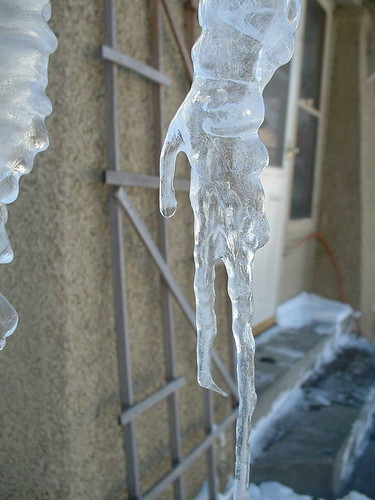
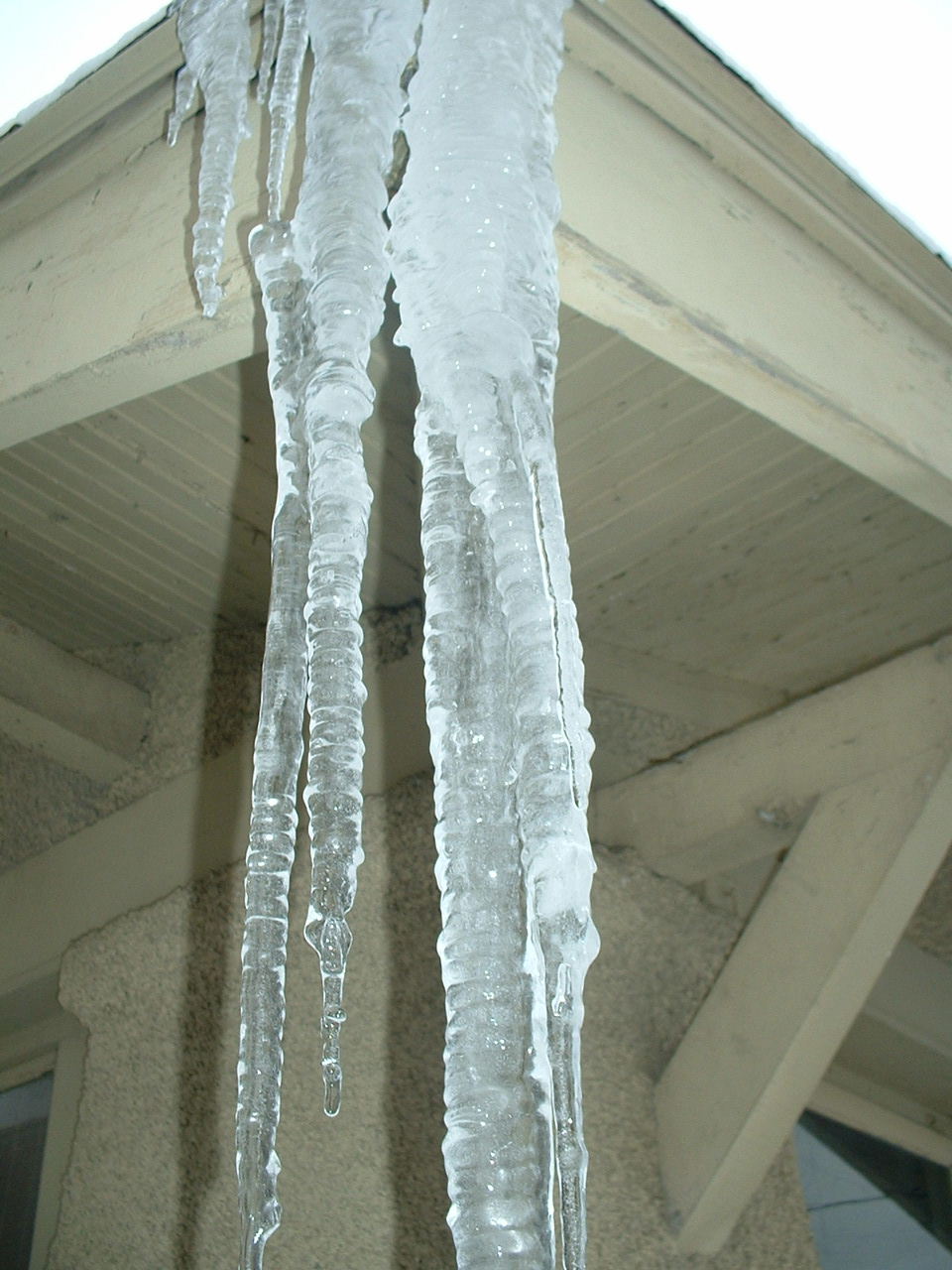
So, with all our recent snows, the icicles are sure to come round... so this post will give you a sense of what has been dripping and freezing off the roof by our driveway... you can thank Fernymoss for the photos, since he's been around more during the day than I have, so he was able to capture this megacicle before it finally broke off and smashed itself into the driveway on Friday, when it got all the way up to 44 here. I'm sure there will be more soon, since we've plunged back down into the deep freeze... but hey, January may be almost done, but that doesn't mean there won't be many more snows. In fact, some years, February is snowier for us than January ... What will happen this year yet remains to be seen, but if the past few weeks are any indication, the groundhog will see his shadow on his appointed day.

And, you know, even if it does mean we have an extended winter, that's not such a bad thing. Since many of our plants do need a long cold period to complete their cycles, far be it from me to criticize, just because I don't want to have to dress warmly and just plain deal with winter, it's all part of the climate cycle that needs to happen for things to stay in balance.

Shameless plug here: our truly and honestly elected president in 2000 (we wuz robbedI) has been warning about such change for quite some time. And I'm thrilled that An Inconvenient Truth has been nominated for two Academy Awards! If you still haven't seen this alternately depressing, yet ultimately hopeful film, then get your butt out and either buy it or rent it as soon as possible! Fair minded people of any political stripe should be able to see, just from the evidence presented, that we are currently undergoing some major climatic changes that will affect our way of life in the near future. And if they can't acknowledge these simple truths, then perhaps we, as a species, don't really deserve to survive after all. Yep, that was harsh, but take a look at this map from the Arborday Foundation and see just how much our growing zones have changed in just the last 16 years! You don't have to be a weather geek like me to see that some profound changes are happening.

And the longer this delusional administration refuses to acknowledge the problem, the closer we skate toward the eventual abyss. Impeachment is not merely an option, it is a moral imperative! For our survival, and our future generation's survival, this evil puppet must be stopped!

Oh, and by the way, I hope you all had a happy new year's celebration ... Now it's time to get down to work and turn this country around and head us into a more positive direction. Let's make that our project for 2007 ....