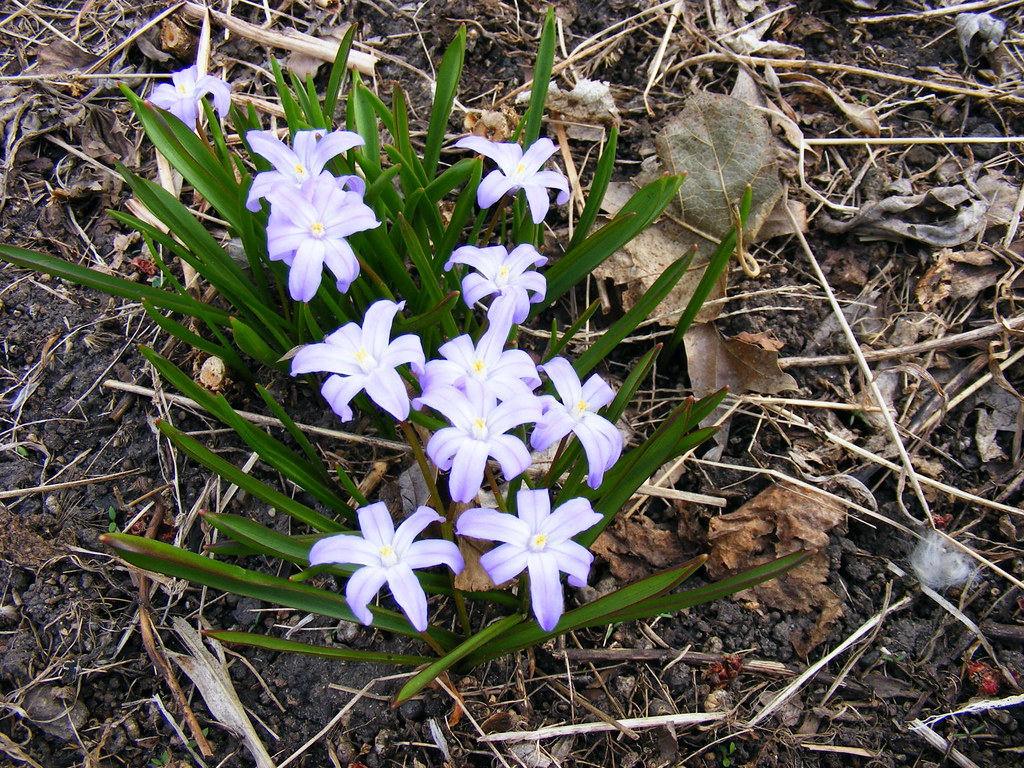
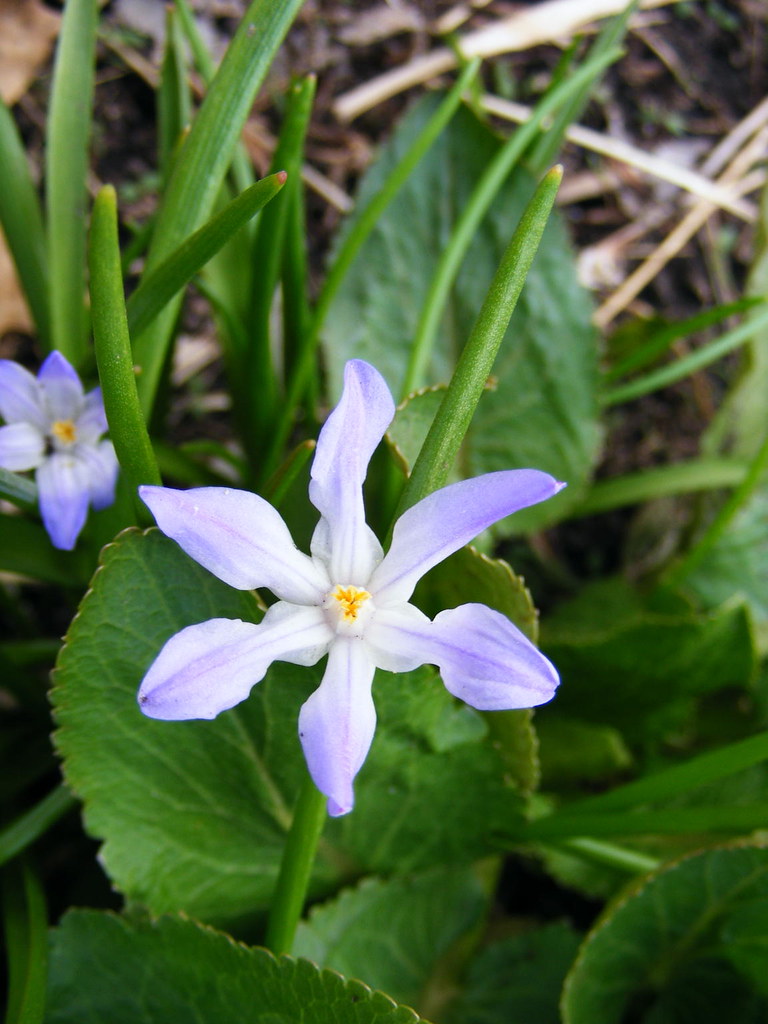
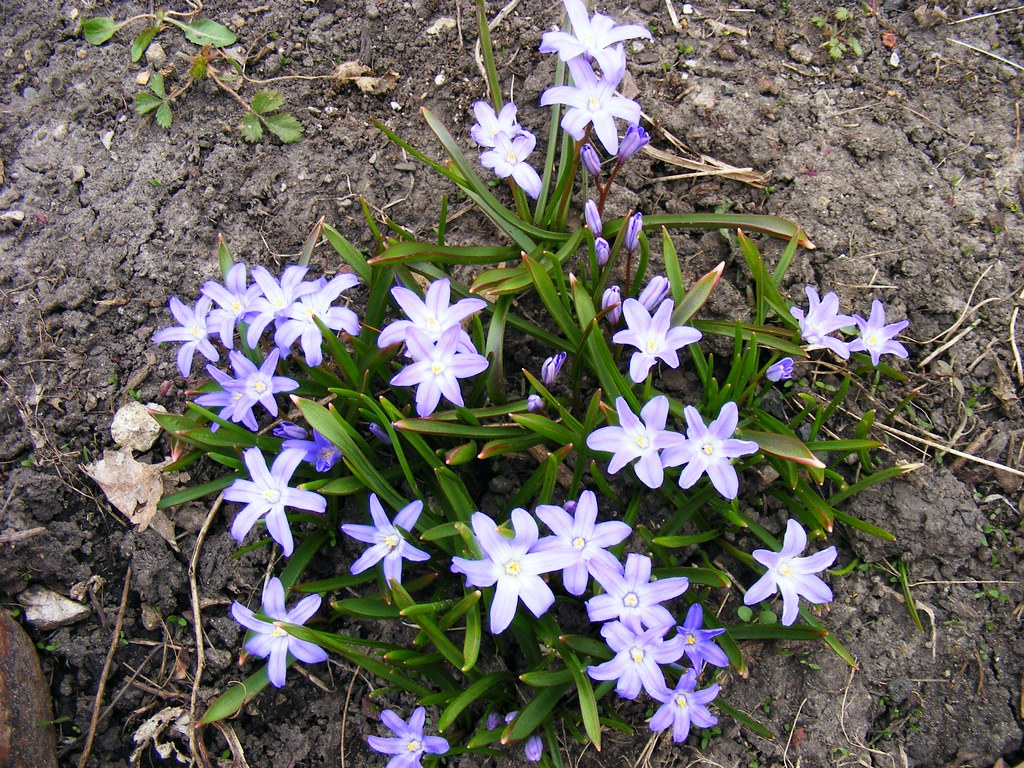
 It may be the 'Glory of the Snow,' but for the amateur flower photographer, it might as well be nicknamed Le désespoir des photographes ('Photographer's Despair') because of its stubborn refusal to be captured accurately (color wise) by the camera in most situations! As I mentioned in my previous post, for some reason I have a terrible time getting the right shade of true blue from this gorgeous little ephemeral that graces the front boulder bed every spring. Of course, yesterday was insufferably cloudy and it was late afternoon before we got home and I could get out with the camera, but still ... to my eye, it was its usual glorious blue! So I said what the heck, these won't be the best photos I'll get, but I need to get things chronicled one way or another, so here's one of the shots I got of the several colonies we have established out in the front boulder bed. As you can see, it looks a little bleached out and more lavender than blue, but this was in natural light with no flash (which would have made them look even worse!) ... so go figure. I'll try again later this week when the sun is supposed to return at least briefly and maybe I'll inadvertently discover the holy grail....
I'll just mention one more time that this is a great early spring bulb -- gorgeous, inexpensive, very hardy (Zones 3-6), and a great naturalizer that multiplies very quickly. (These were planted in clumps of 5-6 back in 2005 and at this point have almost tripled in number.) If you don't have this little beauty in your garden currently, you'd do well to consider a few mass plantings with your spring bulbs ... they're small, about the size of snow crocus, don't have to go down too deep and you can plant a good number in a short amount of time. I've been thinking about getting 50-60 more of these in the Fall and doing a couple of big plantings with assorted crocuses, since finding a real blue in crocus is a challenge ... think how lovely a 2-3 foot space filled with all of these would be ... a real spirit booster after a long winter!
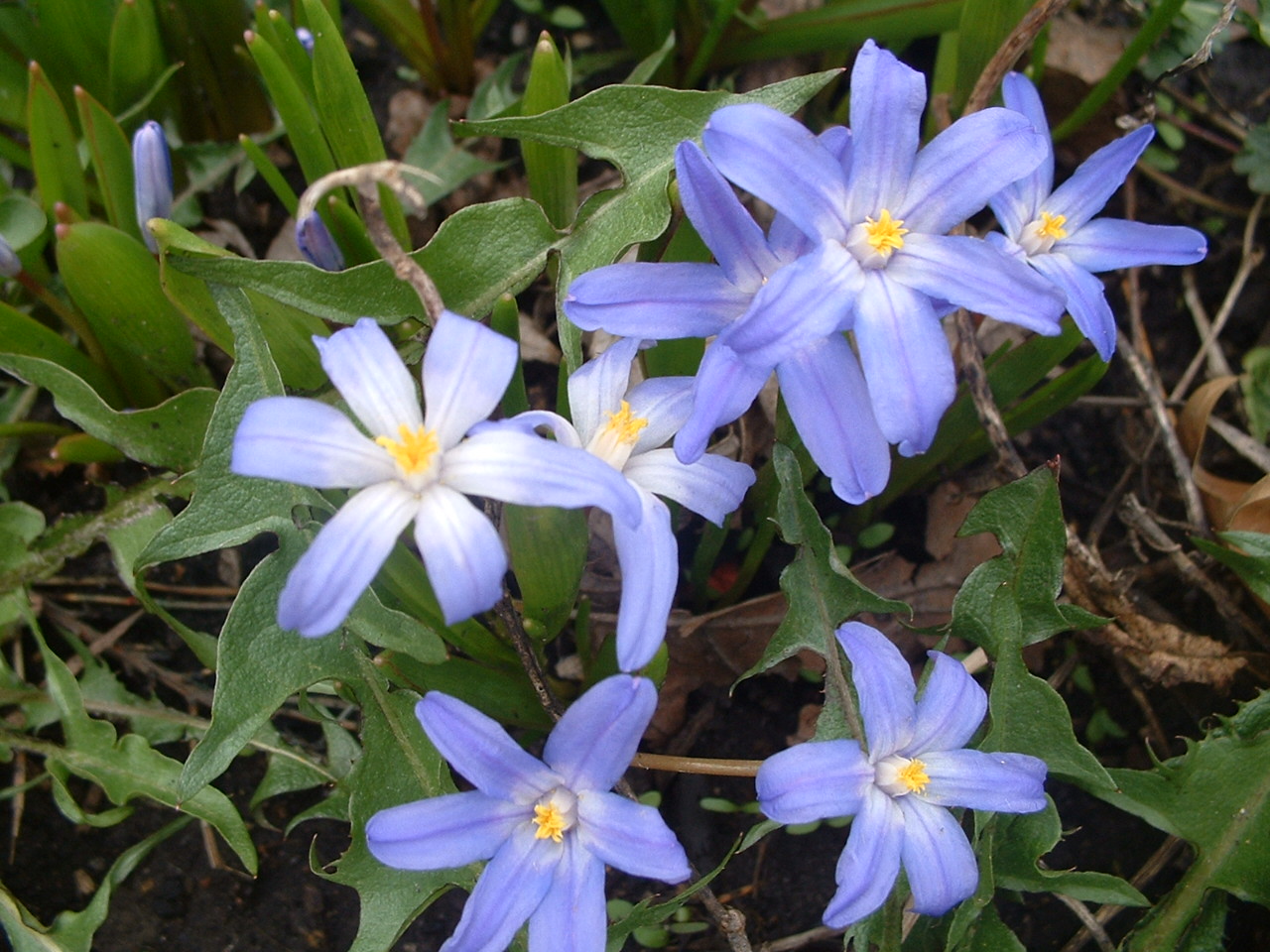
 Here we have another one of our very favorite early spring ephemerals, Scilla siberica 'Spring Beauty,' commonly known as Siberian Squill. It's another of the truly blue spring bulbs you can plant, with lots of great features: it's incredibly hardy (Zones 3-9), it naturalizes freely over time (though not as fast as we would like) and is just a joy to behold for the brief time it is on the stage. This particular clump was not intentionally planted here amongst the tulips ... well, I mean we didn't purchase these bulbs and put them there deliberately, though I suspect that Fernymoss had a hand in this particular planting. (I think he plucked some mature bulblets from other plants and tossed them over here a few years ago ... à la Fernymoss Squilly Bulb.) You see, Scilla siberica has a great naturalizing strategy ... after the blooms have faded, they turn into litlle "bulblets" that eventually weigh down the stem and fall to the ground and work their way into the soil (well, usually we give them a bit of an assist by digging a little hole for them) where they can advance out from the parent plant.and come up the following year. That's how you sometimes see, in fortunate gardeners' yards and gardens, huge drifts of blue appear when they bloom. That's what we have been aspiring to since we first planted them, and at present, we do have a pretty good colony going out in the front parking. Right now, they are just starting to bloom, but I'll feature them soon when they are a bit more prominent ... but we've had to be patient, because the soil in the parking is very poor and hard, so I think it has slowed them down a bit. They're an outstanding spring bulb to introduce to your garden if you don't already have some planted ... we also have over 100 of their larger cousins Hyacinthoides hispanica (formerly known as Scilla Hispanica or 'Spanish Bluebells') planted around the garden and they are starting to come up in droves right now, though they probably won't bloom until early May. I spotted some substantial clumps coming up yesterday and was thrilled to see that they have yet again multiplied their numbers over those we had last year, so you'll be seeing those when they burst into bloom....
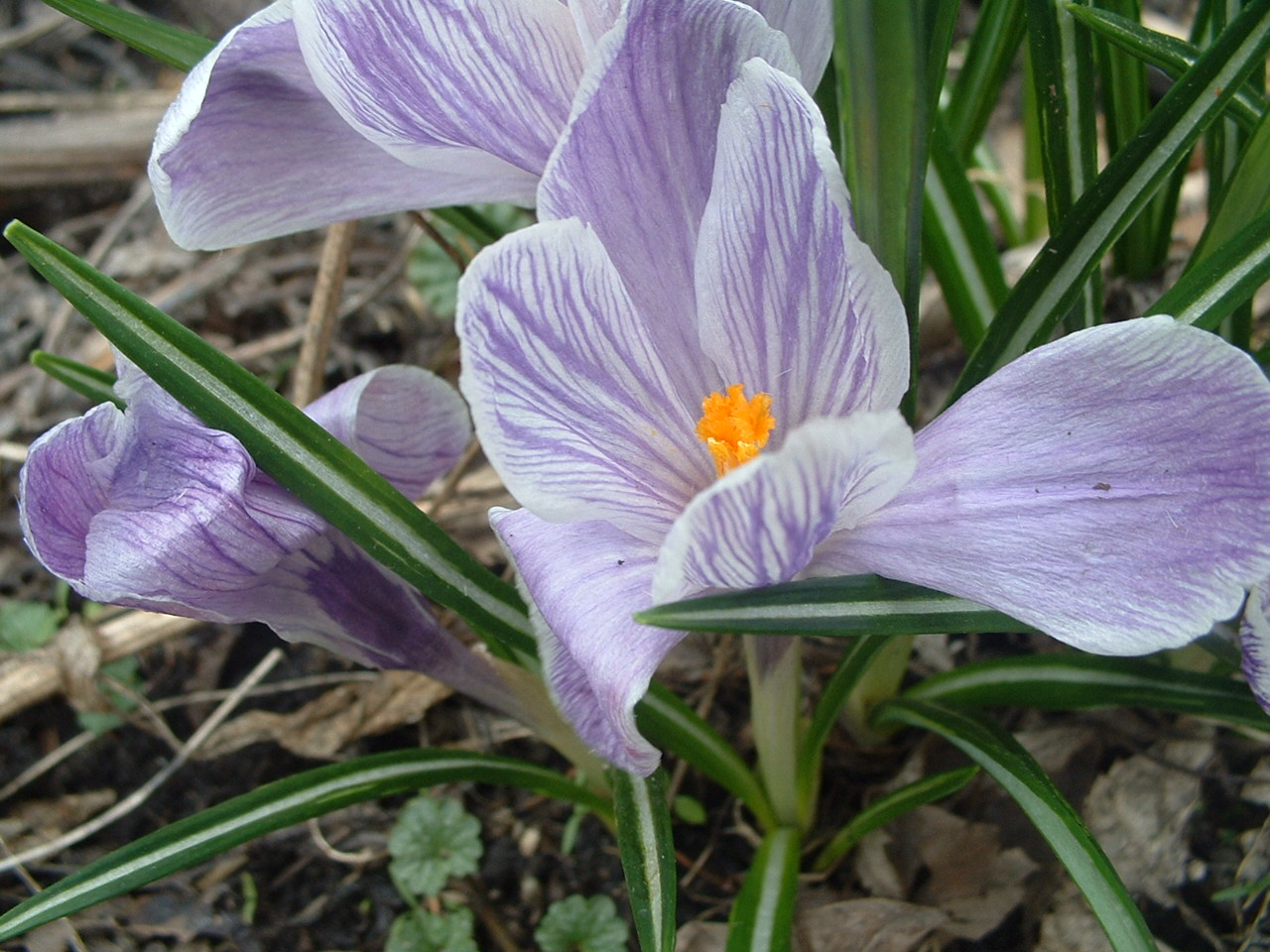
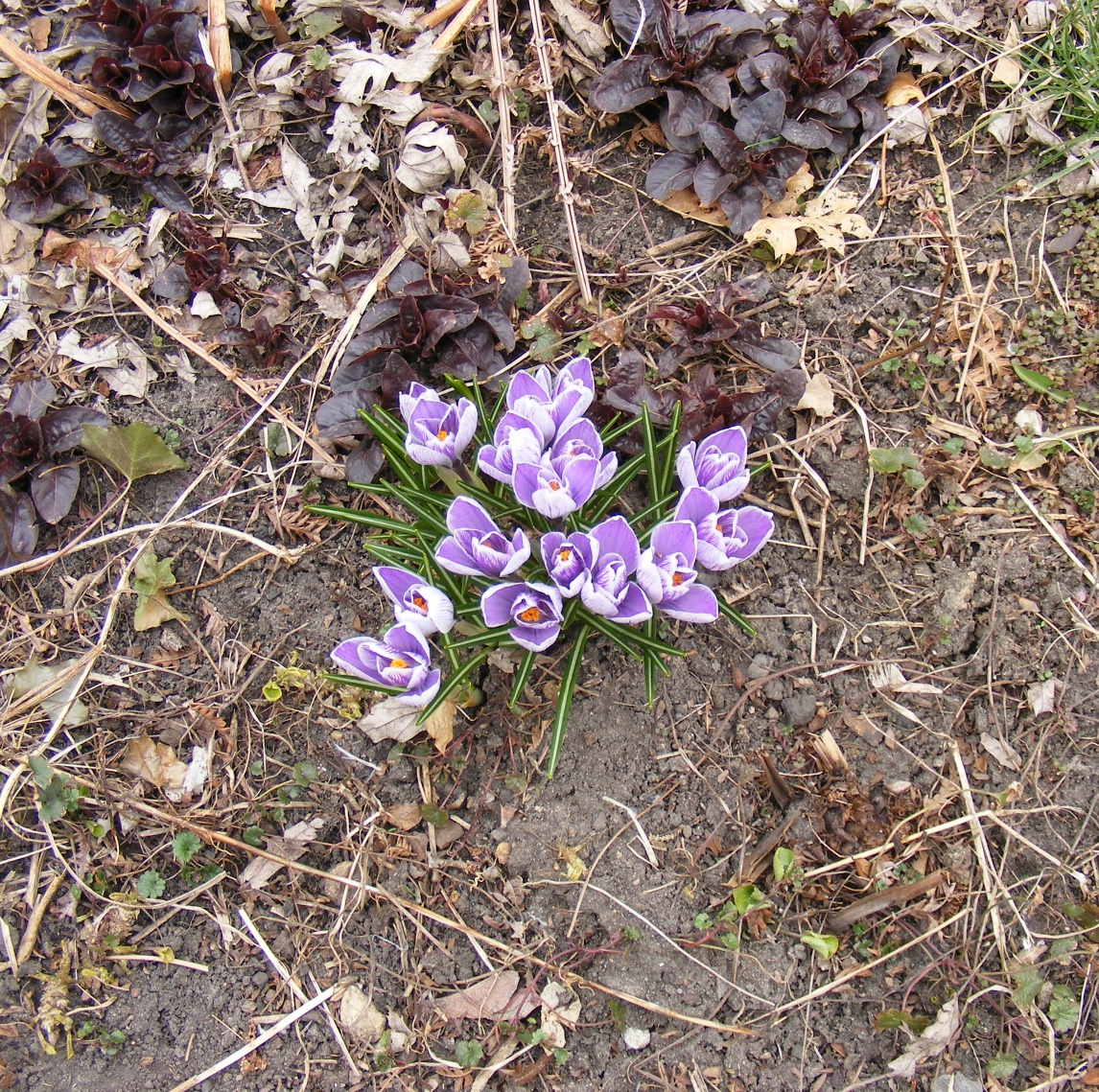 Finally, here's another planting of Crocus 'Pickwick' (which I've featured previously), which though obviously not happy with yesterday's weather, was hanging in there despite the cold and wind. I think this clump was planted about 2-3 years ago, due to its placement and the number that have come up this year ... we're seeing more and more of the crocus on the northern exposures blooming now (where it stays colder and less sunny than elsewhere in the front), so the season's show is far from over at this point! Consider this post just a snapshot from some very cloudy days, looking forward to more sunshine that will bring the rest of our spring friends into bloom ... I guess we're just having to be ultra patient this year, given Winter's stubborness about leaving. Patience is just one of those traits that the gardener has to cultivate, otherwise we just set ourselves up for infinite frustrations!
 And speaking of patience on another front ... I finally (after a 1 month+ wait) got my new glasses late last week (first pair in 10 years) and I'm having to really be patient adjusting to them. I had to get bifocals (my first pair since 2nd grade) again and though it's great to see clearly at distances again, the up close work has been challenging so far, but give me a few weeks to adjust and I hope I'll be back to as good as I can be (with my complicated prescription). I know one thing: it's going to be less of a crap shoot when I take pictures now! I'm looking forward to that....