skip to main |
skip to sidebar
 Again, I'm a bit late in posting these, especially as they're taking a break from blooming right now, but better late than never I hope!
I deadheaded them last weekend, and since the plants still look very perky and willing to bloom, I hope to be able to catch a second blush of flowers sometime soon. When that happens, you'll hear about it here ...
These are probably familiar to most of you, given they've become almost ubiquitous potted flowers who appear in early January in floral departments. Often they take up residence briefly in office spaces, only to languish slowly as they bloom, then perish with the typical neglect most office plants are doomed to endure. Let's face it, Primula polyanthus, or the common Primrose, just really aren't cut out to be long-term indoor flowers. Most years I try to buy a couple and keep them alive in the house until it's safe to plant them outdoors, but that particular experiment has only yielded limited success in the garden. We've had some who came back for a couple of years and then vanished. The varieties commonly sold appear unable to tolerate our hot summers and quickly disappear when the real heat sets in.  There are, however, truly hardy varieties to be had for our gardening zone, and last year I finally invested in buying some of them. I'm happy to report that despite the bone chilling spell in April (during which these had already emerged and were beginning to bud out), they have persevered and put on a dandy showing for their first year in their new homes. They did suffer quite a bit for a week or two, then greened right back up and proceeded to pick up where they had left off in their bloom cycle. I've been really grateful they made it, and I look forward to more years of early spring color to come from this grouping.
Primroses generally want a nice loamy soil, kept evenly moist, and appreciate a partly shaded exposure to do well, and if it's an area prone to drying out in the hotter months of the summer, it's wise to give them regular waterings while the foliage is still growing. I put these in relatively late last year (late May) but was careful to make sure they never dried out too much and they stayed green well after frost. If they're happy (as these appear to be!) they'll be up pretty early in the spring, along with the crocuses and galanthus and will start blooming in late March or early April. They do best during the cooler parts of the spring, but depending on where they are growing, they can sometimes bloom well into late May or even June.
 Primroses are most probably prized for their colorful early flowers, though I particularly love them for the almost rose-like fragrance some varieties offer ... most notably the yellow cultivars. But whether or not they are pleasing to the nose, they are always --no matter the variation-- likely to please the eye, especially when not much else is blooming in the flower garden. Depending on the year and the weather, bloom time may last more than a month, and in less gentle years they may only appear briefly to grace their spot with a welcome burst of color. They make great companions to other early spring cool season flowers such as pansies and violas, who complement their hue of colors magnificently. But even as a grouping --or even better, a mass planting if you can afford it!-- can bring a lot of beauty to wherever they are well established. They ask only for some diligent care during drier times so that they don't get too dessicated and die back prematurely. As I learn their ways more intimately I'll pass along what I've found ... since I'm still a bit of a novice at growing them ... for me, the fact they return and reward me with their blooms is reason enough to keep at it ....
These pictures were taken on or about April 29, 2007, and appear to promise more to come now that the initial phase of blooming has ended. When I can get some better photos, they'll be likely to make a return appearance here. But even if they don't, I'm more than happy that they have made a spectacular showing this spring, given all the challenges they have faced weather wise!

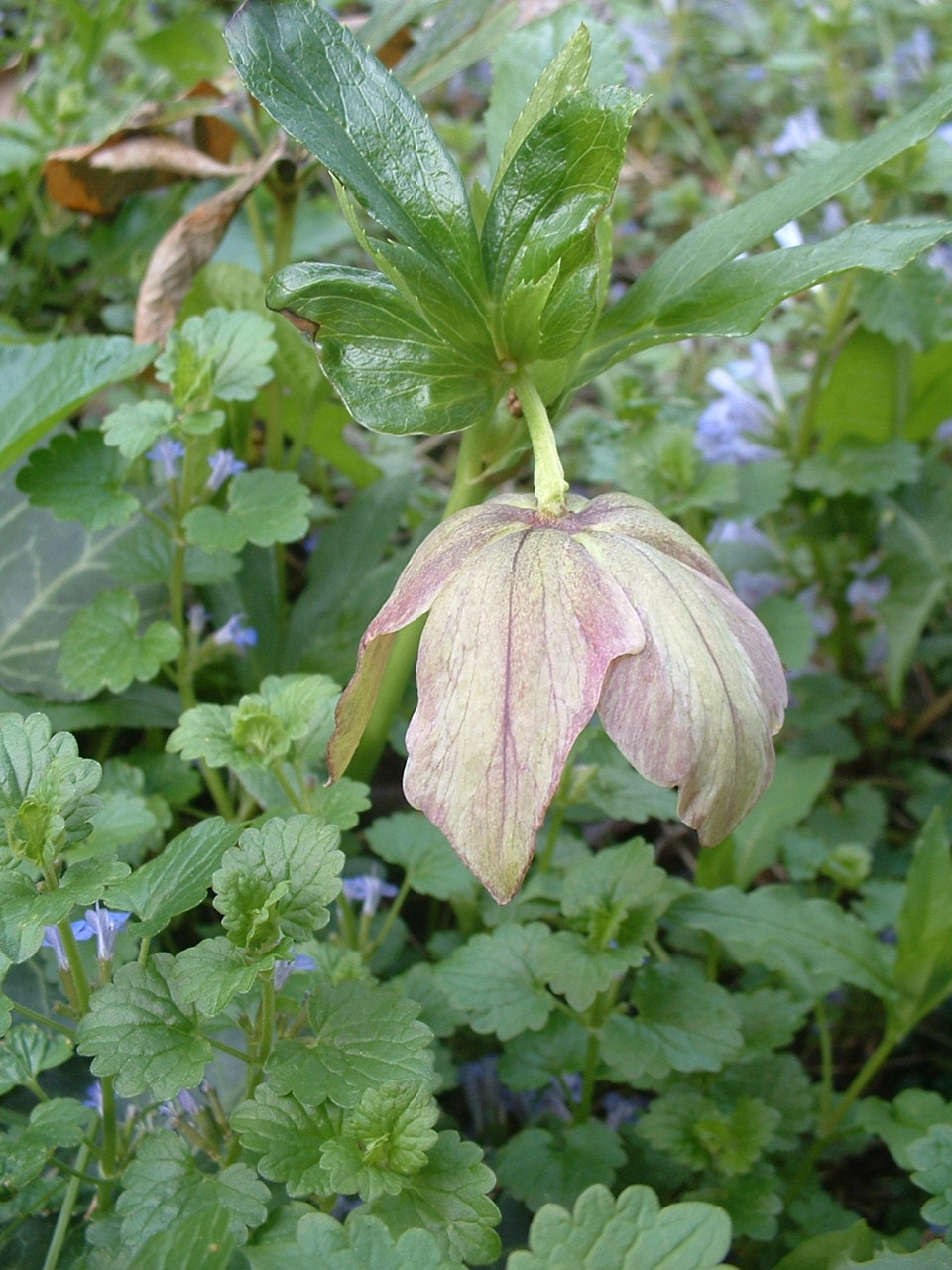
 Hellebores (Helleborus) are a genus I knew nothing about until several years ago. Back when I was an avid Martha Stewart Living viewer, I saw Martha singing their praises on a gardening episode, and I thought, wow, these look really cool and we should try some in our woodland garden.
We planted our first hellebore (one of the Royal Heritage series) in the fall of 2005, and last year we got a good price on some mail order specimens and planted four more, one of which is the one featured in these photos. And, on a brief plant shopping expedition last Sunday (during which we got some really cool new stuff you'll be seeing soon) we found another nice specimen at the reasonable price of $8.99. If that sounds pricey to you, let me just add that finding good specimens can be an expensive proposition, especially if you venture beyond the mixes and go for specific species ... I've seen some priced at over $20 each for some of the more exotic ones, so any time we see a nice one under $10, we tend to snap it up.
Hellebores are, once established, really tough plants and often can remain green all through the winter. They're often called "Lenten Rose" because apparently (though not here yet) they will bloom in late February -- early March even if winter still has its grip on the garden. Given that we still don't get a lot of blooms from them, it does seem that they take their time to get settled into their shady spots and get ready to put on a real show. So it was a pleasant surprise a week or so ago when I was out looking at things in the garden when I discovered this unobtrusive bloom almost hiding near the holly where it's planted. I'm not sure about the color of this one and what to really call it ... most hellebores have rather odd shades of pinks, lavenders, purples and dusky reds, and given what little I know about the "Royal Heritage" mixes, we're not sure what we'll get, though I'm really hoping for some purple myself. Time will tell, and many times with mixes of plants, the anticipation of finding out its true color is half of the fun growing them. In our experience so far, they are pretty easy to grow ... they like a mostly shady spot where a bit of sun is tolerated, and appreciate the loamy, moist and well-drained area where we have them planted. In any case, they make a really woodsy addition to the shade garden and also boast deer and critter repellent properties.
I ran into a reference the other night (see above link) with the myth and folklore of Hellebores, in which I learned that they have been reputed to have magical properties ... among which a certain witches' application of using them to summon demons! We don't plan on any of that around here, but it's often fun to research certain plants to see what people in the past have thought about them ... you can learn some really surprising things that way!
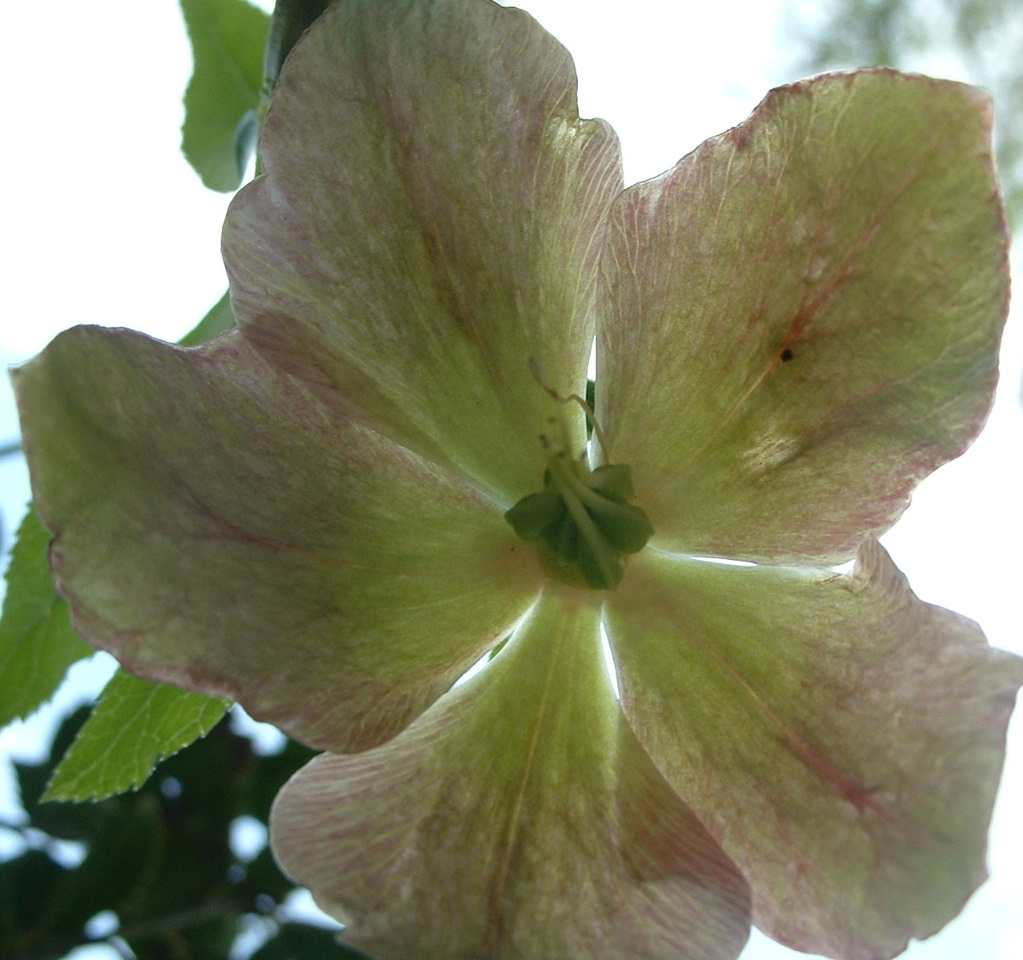
The first photo shows the bloom in its usual nodding position (which tends to remind me of antique lampshades) ... the second (courtesy of Fernymoss) is a fortuitous from below P&S shot that actually turned out quite well. We knew Olivia would be demanding inner bits so we tried to head her off at the bloom, so to speak. We were both delighted that one turned out so well! Tell me what you think ...
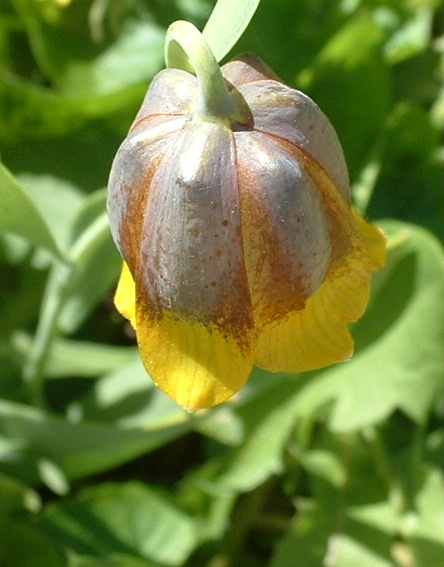
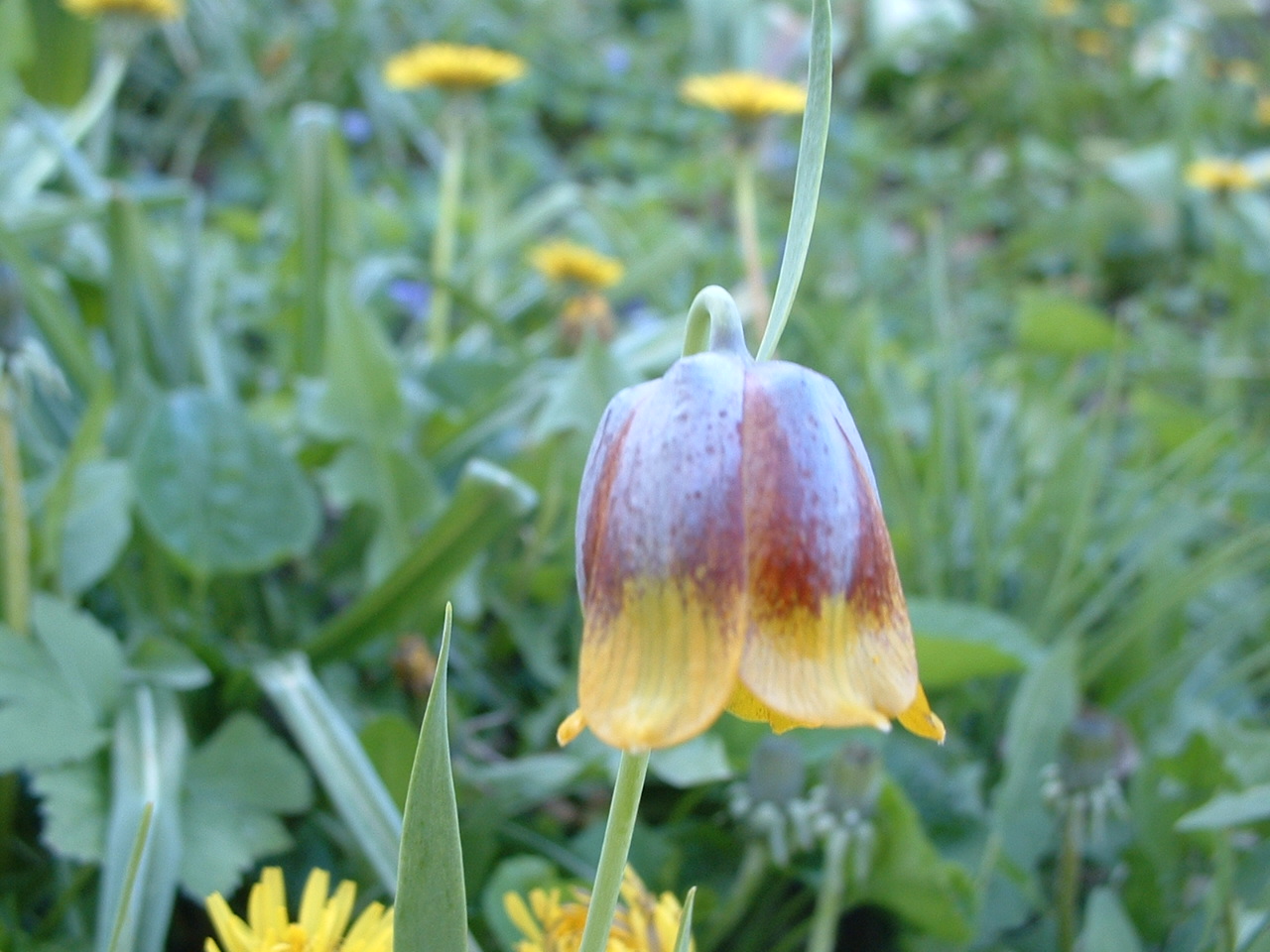
 I'm a bit late getting this post up, as these little ones have already done their thing and moved on for the season ... if you're a regular reader you'll recall I was lamenting the non-appearance of our larger Crown Imperial Frtilliarias back in April. But our dwindling, if faithful, colony of Fritillaria michailovskyi (for some scant growing information go here) did manage to put on a nice little show this year.
These examples have been where they are for at least six or so years, and haven't naturalized to the extent we would have liked, but they're going to be moved over the course of the summer into a newly constructed bulb bed, where we hope they will be happier.
These fritillarias are pretty cold hardy, and people seem to plant them a lot in rock garden type spaces, though we prefer to just let them have their spot toward the front of the bed, where though not the splashiest of flowers, they do attract attention!
 More diminutive than their larger cousins the Crown Imperials, these fritillarias originally native to Turkey and Iran definitely deserve their place in the serious bulb collector's garden where they make a perfect complement to the Snowdrops (Galanthus) who usually precede them by a couple of weeks. Again this year was an exception and they appeared later, but we were just happy to see them return! If you're interested in a good source for these, and other fritillarias, the following link will take you to a good supplier who has a lot of great species (at reasonable prices too).
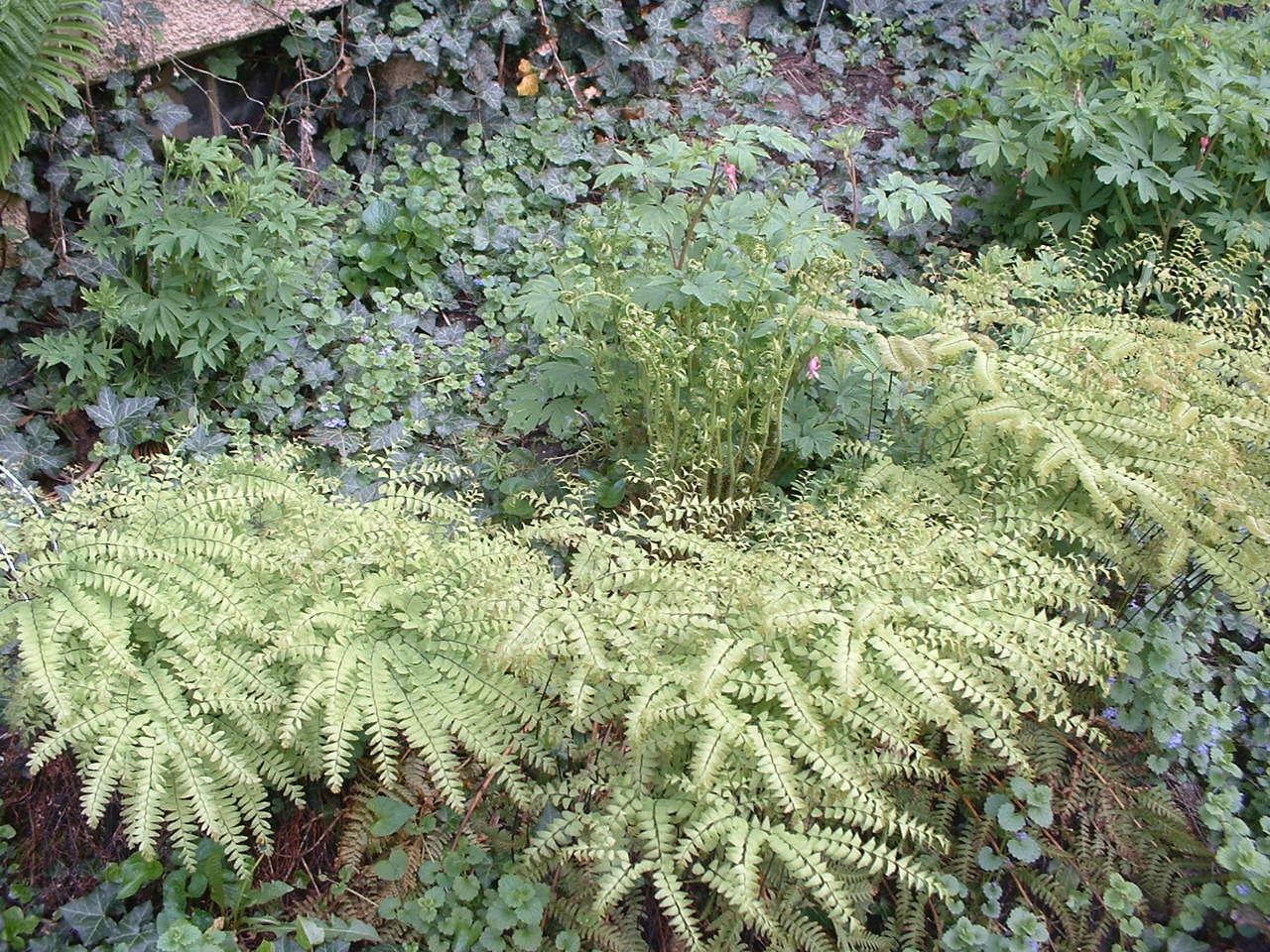
 We're on a real fern kick around here lately, what with all the greenery shooting out of the ground in the woodland garden. So I thought I'd post a follow up on some of the ones I posted previously in their more emergent forms.
The most predominant species you see in this particular shot is the common woodland Maidenhair Fern (Adiantum pedatum) which is one of our favorites, due to its delicate architecture and unique growing habit. The fronds spread out fan-like, supported by a network of incredibly thin, yet sturdy stems, lifting it about a foot up from the garden floor. As long as they remain well watered throughout the hotter months, they just keep on going right up to frost, when they die back completely and disappear until the following spring. We've had these particular specimens in this location for about four or five years now, and they've really managed to spread out quite a bit in the intervening time. They're a great choice to mix in with other shade lovers, and ours share the space with Bleeding hearts, Ligularia, Holly, Ivy, Leatherwood ferns and a few stray Lupines. Like most ferns, they don't want a lot of direct sun during the course of the day, and do quite well where they are receiving morning and a bit of late afternoon sun. Of course, this part of the woodland garden stays pretty cool and moist most of the time (we do have to water in July and August though), which is pretty much all Maidenhairs require. For even more information on maidenhair ferns, here's the Wikipedia Entry.
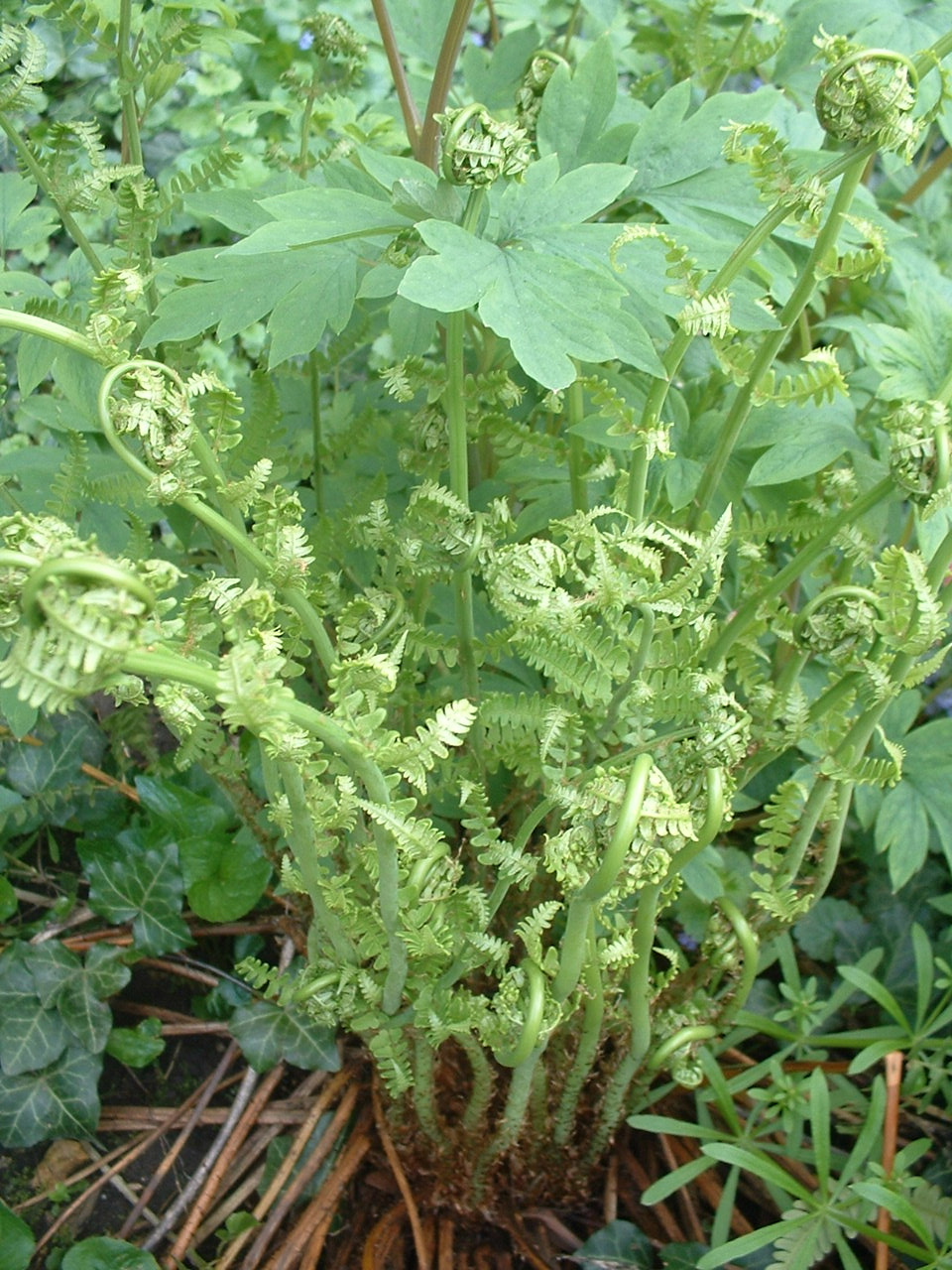
Our second shot is of a Leatherwood fern -- previously seen as an emergent in my previous post. It has since unfurled even more than this photo reveals, but I really liked how the fiddles look all cork-screwy in this shot. 
These are tough little guys, especially when they get all splayed out in their ferny glory, and definitely have earned their common name. With their tough fronds and woody stems, it's no wonder they're a stock item in many pricier floral arrangements. But as I said previously, there is no way they ever get cut from our garden ... that's just plain fern heresy! Leatherwoods can take more sun than most of the more delicate members of the family and in milder winters, they have even remained semi-evergreen. Once the ground really freezes though, they drop flat on the ground where they lie all winter until the center of the crown comes back to life in early spring. If you look at the base of the plant, you can still see the stems from last year ... we really don't bother to cut them back and they do just fine. Besides we like to allow them to gradually decompose back into where they came from, and the ground they do keep covered manages to fend off weeds ... always those nagging pests we can't keep up with in the garden!
Family Man commented the other day that he didn't normally think of ferns as particularly pretty plants (which of course shocked me, fern addict that I am), so I hope if I keep working on him a bit, I'll have won him over to the ferny side of the garden ....
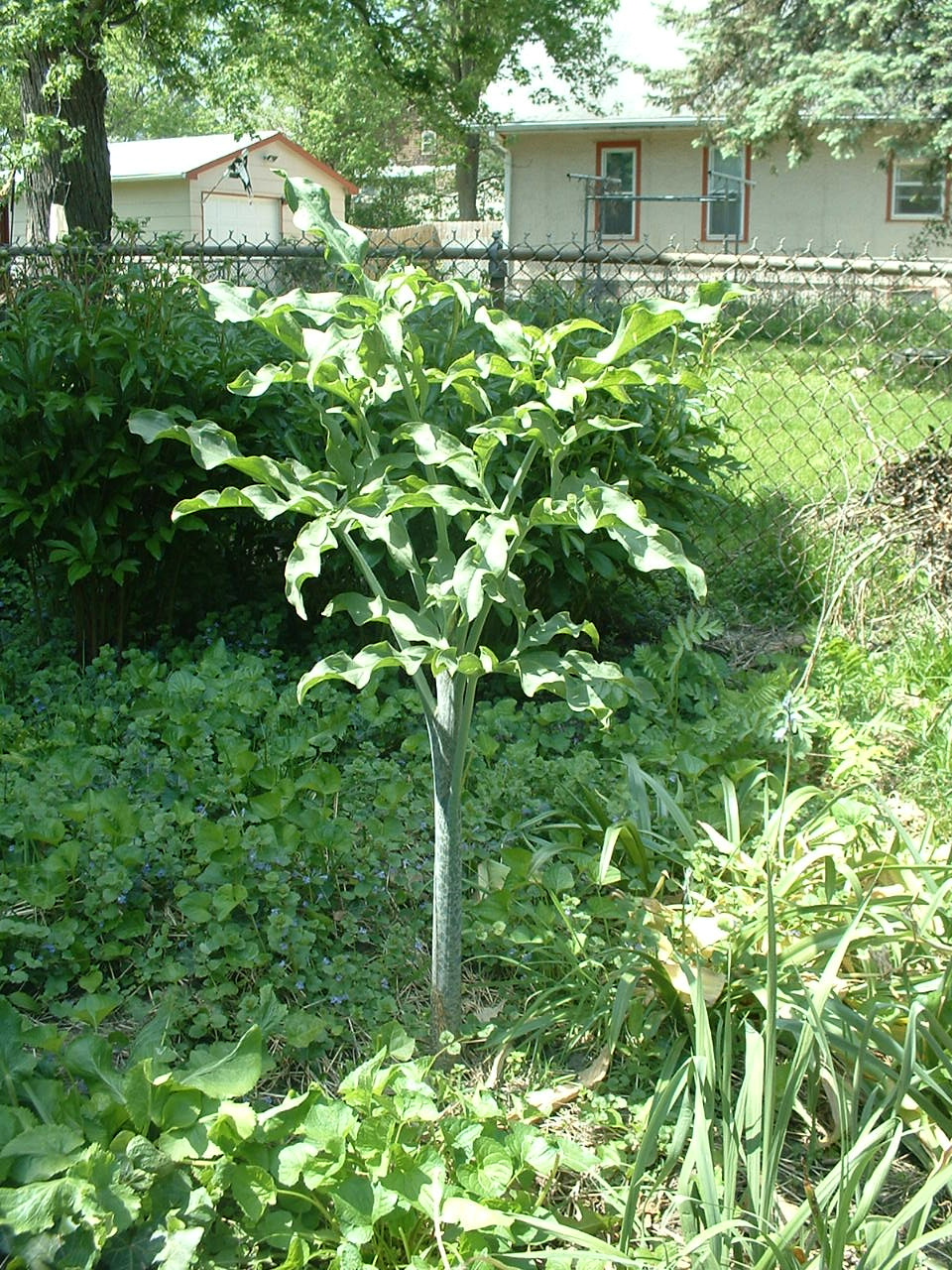
 I posted an earlier photo of this plant a while back, inviting guesses as to what it is, but didn't really have any takers on it. So let's give it another whirl and see if it provokes some more interest this time around!
A few more hints ... it's of Mediterranean origin, has a common name that sounds pretty ferocious and is from a genus of bulbs known not only for their odd flowers, but even stranger scents. This specimen is already twice as big as it got all last season and we're pretty sure it's going to reward us with blooms this year ... and of course, you'll get the picture and the whole descriptive write up then.
If you'd like to see one of its more distant and dramatic cousins, check out this link! This entry is from my dear old grad school alma mater, the UW-Madison, where they have a magnificent specimen!
More to come ....
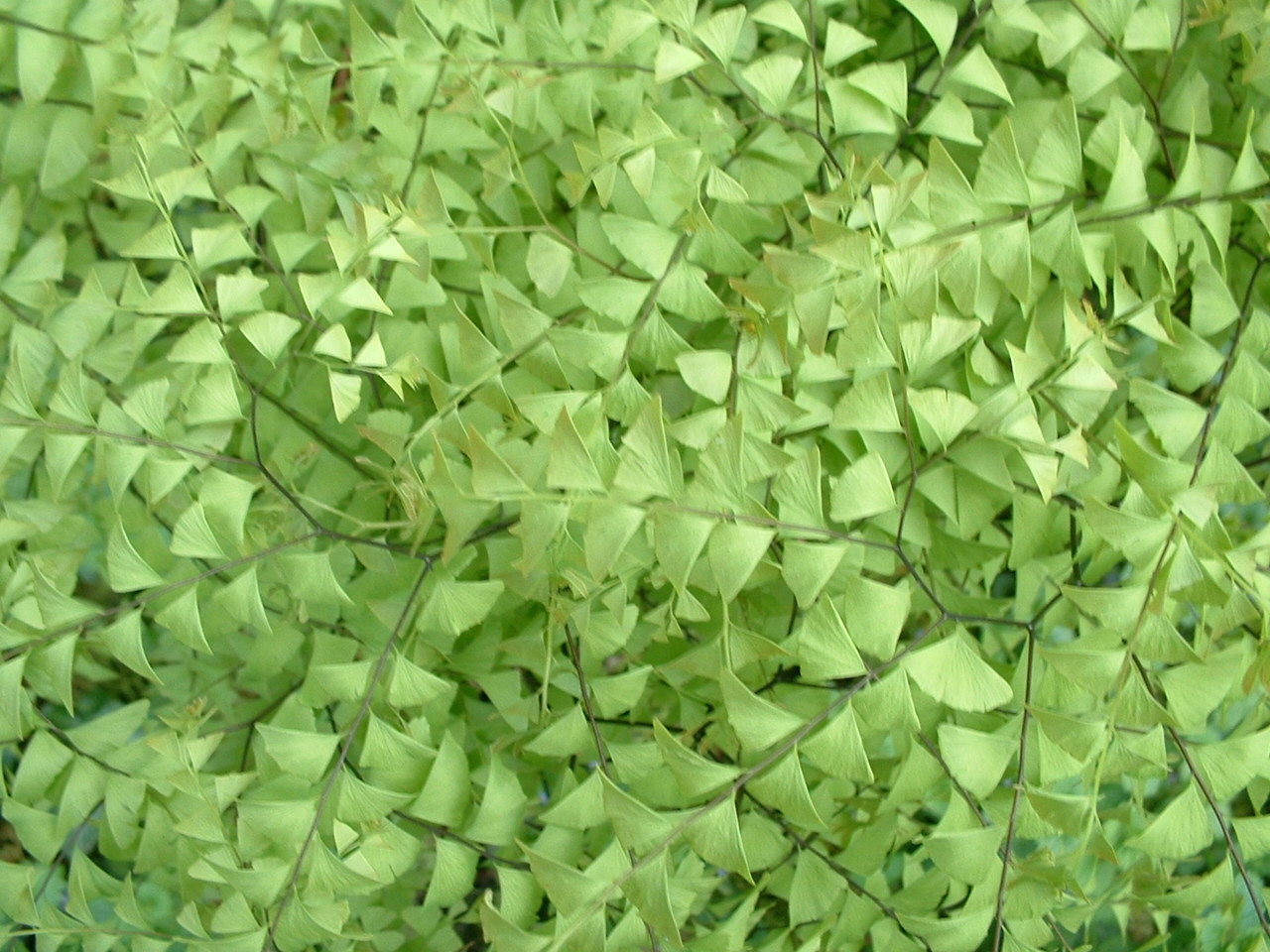
 There are times when you just need to lose yourself in one of nature's wonders, and just shut out the rest of the world from your inner thoughts ... with the greater aim of trying to recapture that sense of awe at the complexity of one of our simpler plant denizens. Ferns ... simple in origin, yet complex in their architecture, allow me to do just that. I took this shot on a whim the other day and was pleased with how it turned out ... and the more I look at it, the more I find aspects at which I must marvel.
So, given the complex stew of thoughts currently bubbling in my mind, I decided to post this shot of some Maidenhair Ferns growing together in the Woodland Garden. There are more to come, with commentary, but for now, I'll just leave you with this luscious one as a teaser.
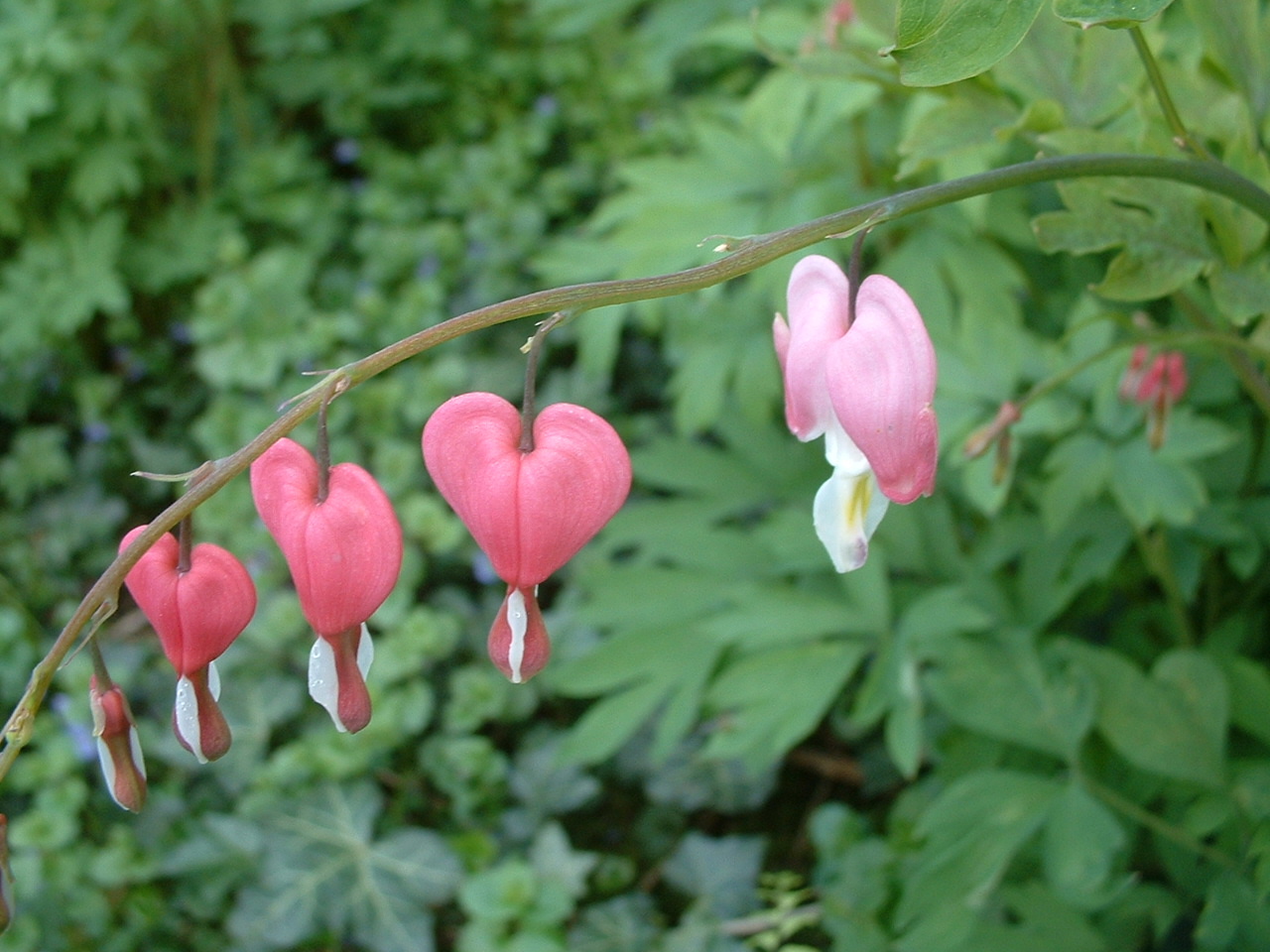
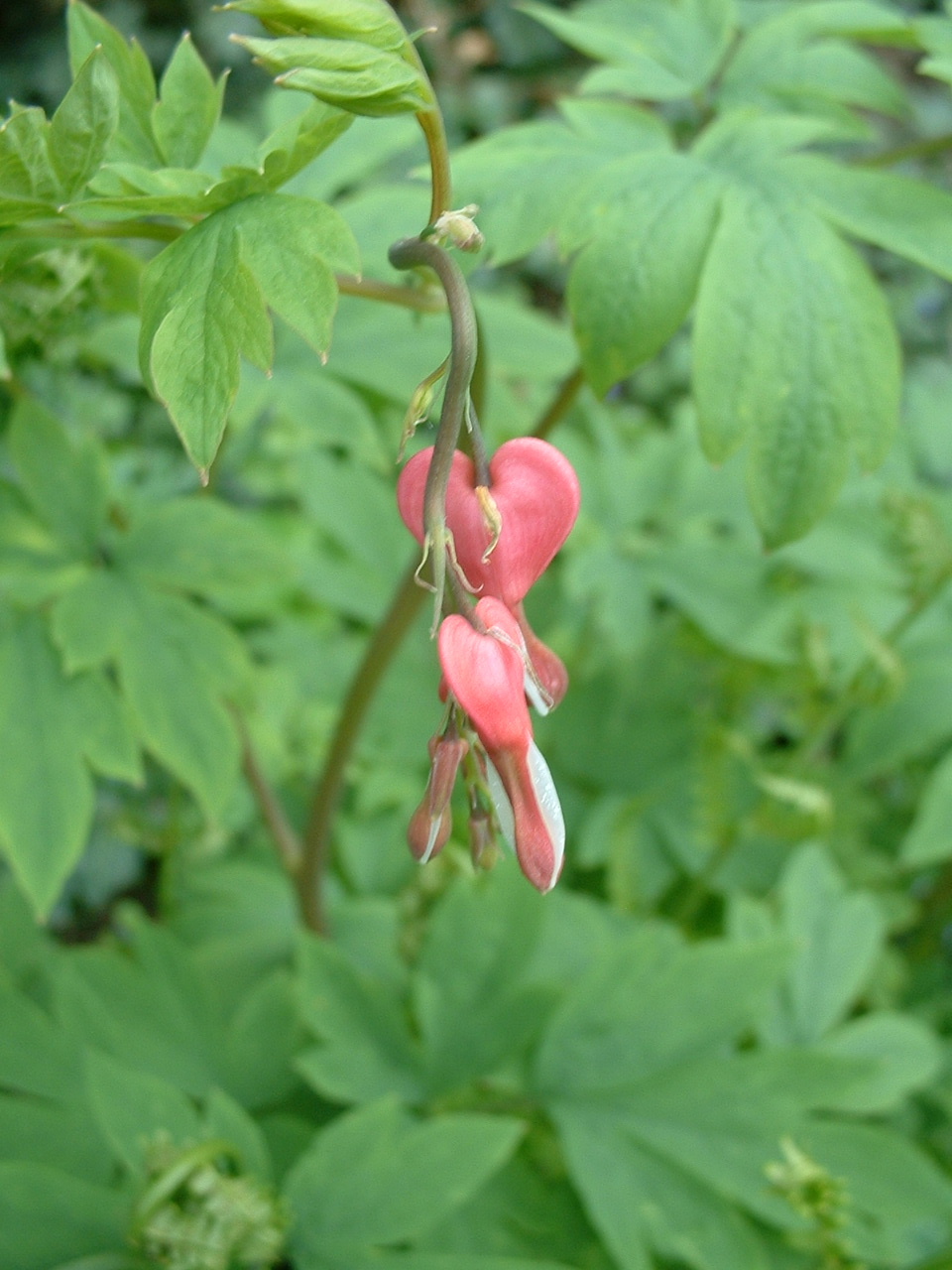
 A favorite species in generations of gardens from probably the Victorians onward, the apparently delicate Bleeding Heart (Dicentra spectabilis) is an absolute must-have for any serious perennial gardener! And as much as I hate to keep repeating it, this is another flower that suffered greatly during the recent deep freeze period ... in fact we weren't sure that they'd even recover, after going from thriving 1-1/2 foot plants to a mass of what looked like limp spaghetti, they have finally re-emerged, a bit smaller, more stunted, but still determined to bloom. Believe me, when we saw them coming back, there was significant rejoicing around Casa IVG! These specimens were among the very first perennials we planted back in spring 1999, and have a bit of a reputation in the neighborhood for their ability to reach nearly gigantic heights... most years they top out at about 3-1/2 - 4 feet tall! I doubt they'll get that big this year, but just seeing them survive a very harsh period is testament alone to the tenacity of this old-fashioned favorite.
Ours are planted among maidenhair and leatherwood ferns toward the back of our Woodland garden, where they create a lush backdrop for the other shade perennials planted nearer the sidewalk. If you look closely at other photos of this part of the garden, you'll likely see Dicentra lurking among the other flora.
Cultivation is really pretty simple ... just give them a mostly shady position (early morning light is ideal) in moist, well-drained loamy soil, and once established they are practically indestructible. (April 2007 was proof of that!) Ours have created such a thick crown of growth over the past eight years that if we even tried to divide them, we'd probably end up ruining a shovel or destroying their territory. So we leave well enough alone, and if we have a few too many volunteers (which does happen, thanks to self-seeding!) we just move them or give them as a gift to another gardener who will appreciate them. As my sister has learned the hard way, the worst thing you can do to Dicentra is to plant it in a too sunny spot (e.g. full southern exposure) where it is subject to heat and lack of moisture ... though it will take a year or two to kill them that way, they will not bloom long each spring and will disappear at the first hint of June heat. Give them the cool shade they crave, and the foliage and even a few sporadic blooms will last well into the summer. Once they start turning yellow and dying back, you can safely cut them back and let them rest until the following spring, where they will come back to reward you with masses of blooms once again.

 Even though for the next few weeks I'll most likely be posting sporadically, (due to my insane workload at work), I did manage to get out for a bit tonight after work and take a few shots of some flowers just coming into bloom. Despite the damage caused by the late cold spell in April, a lot of things are really springing back into life and taking off!
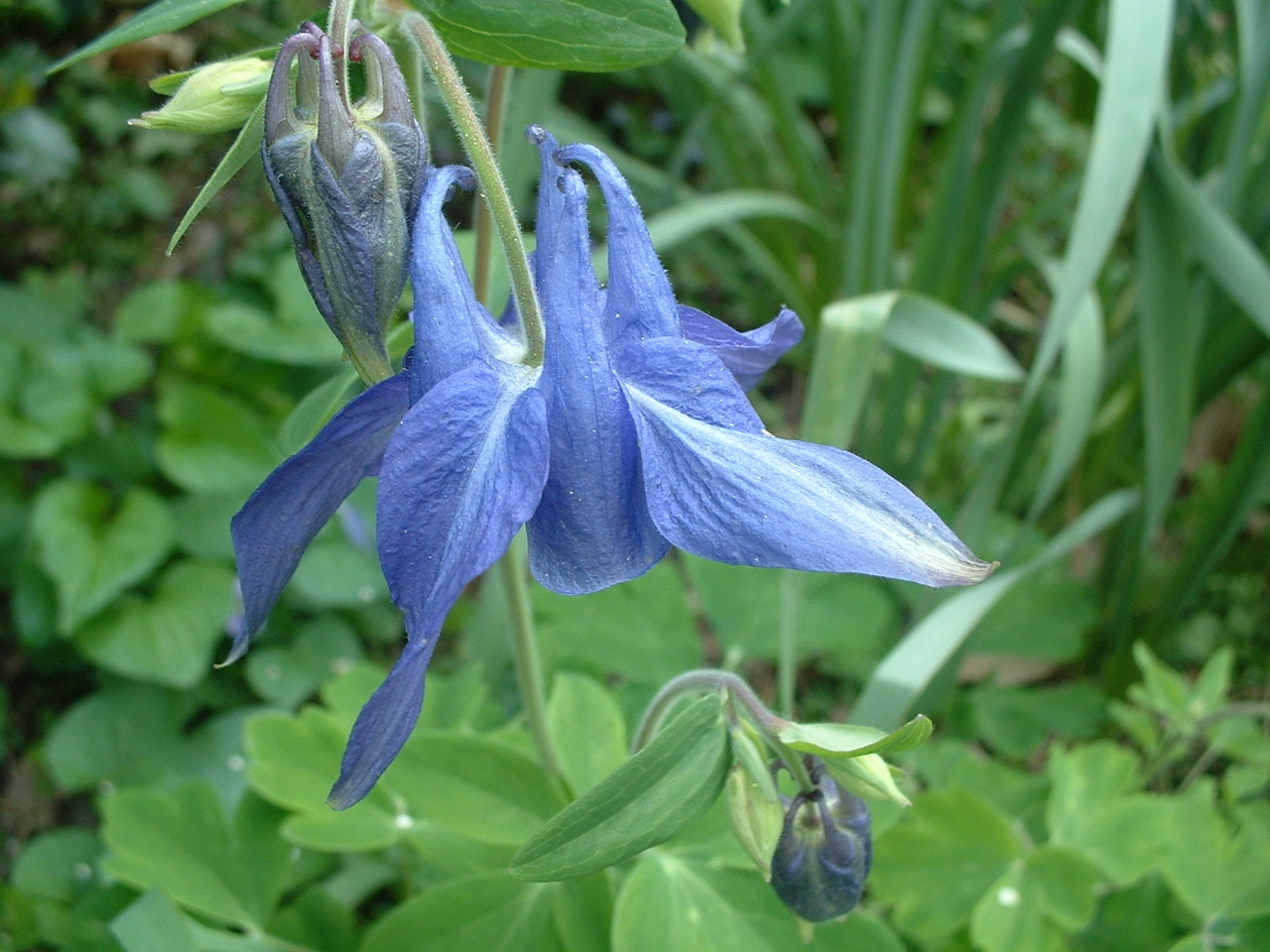
This striking, almost true blue beauty is one of our Alpine Blue Columbines (Aquilegia alpina), a species we discovered several years ago in one of the better local garden centres. Since our success with Columbines has been sporadic over the years, and we've come to the sad conclusion that the genus is relatively short-lived, we tend to try to plant a few new ones every year. Though they are reputed to be good self-seeders, they also have the habit of fraternizing freely with other species of Columbine, so plants from seed won't necessarily return true to the original parent. That's by no means to intimate that any volunteer sports would not be welcome --how could you ever have too many Columbines?-- but if you want the blues to remain blue, it's probably best to keep them planted a fair distance away from other colors you might have planted elsewhere in the garden. In our experience, they have a very extended bloom period (provided they don't get scorched in the heat of July and August) and there have been years where they have bloomed non-stop right up until frost. But that's been the exception, rather than the rule, so we just content ourselves with enjoying the show while it lasts.
If you're a fan of Columbines, you owe it to yourself to seek Alpina out and give it a prized spot in your woodland garden or a semi-shaded position elsewhere in the border. In a normal year, they come up early and start blooming very quickly, though of course this year that has been delayed by a few weeks. Our four specimens are just beginning to bloom now, so we're hoping for another extended bloom time this year ... though that remains to be seen, we're nonetheless delighted to see that they survived the deep freeze and are thriving now ...
P.S. Make sure you click on the second photo if you really want to get up close with this one ....
P.P.S. Just realized that this is officially post #100 here at Urban Oasis ...
 This is what happens when Daddy decides to take a break and lets me find the keys to the blog ... it's all about me, Queen Pepa (Approximately), guardian of the garden universe. So, as I keep watch over the domain from my throne on the front porch, please direct all tribute ... biscuits, Beggin Strips, Puperoni and other tasty treats to yours truly ... I'm always hungry and will show my appreciation enthusiastically.
There will probably be more flowers soon here, so come on back .... Dad told me he was thinking about doing something about these blooms, but I forget what they were called, so I'll just give you a quick peek and let him fill in the details later.
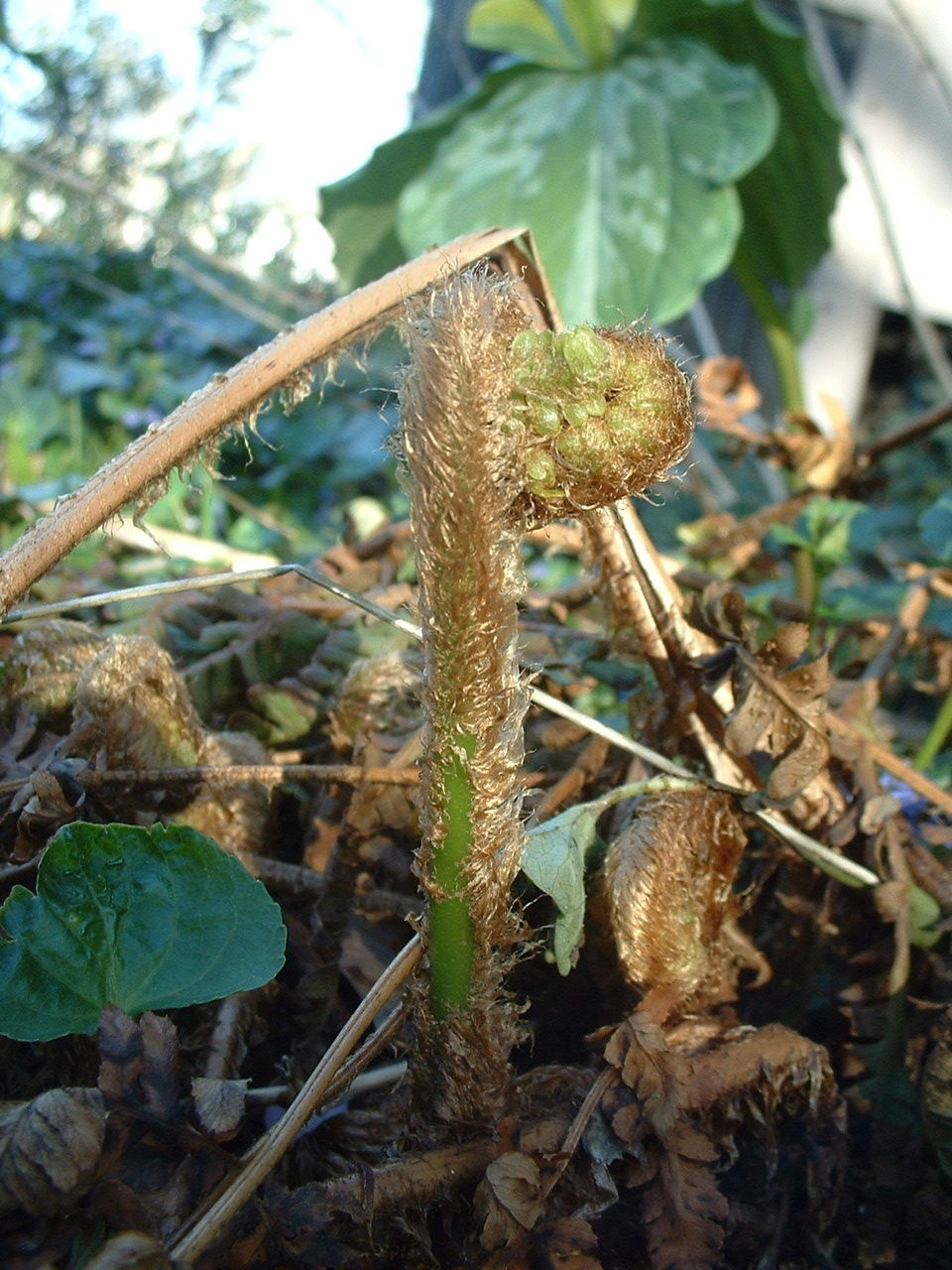
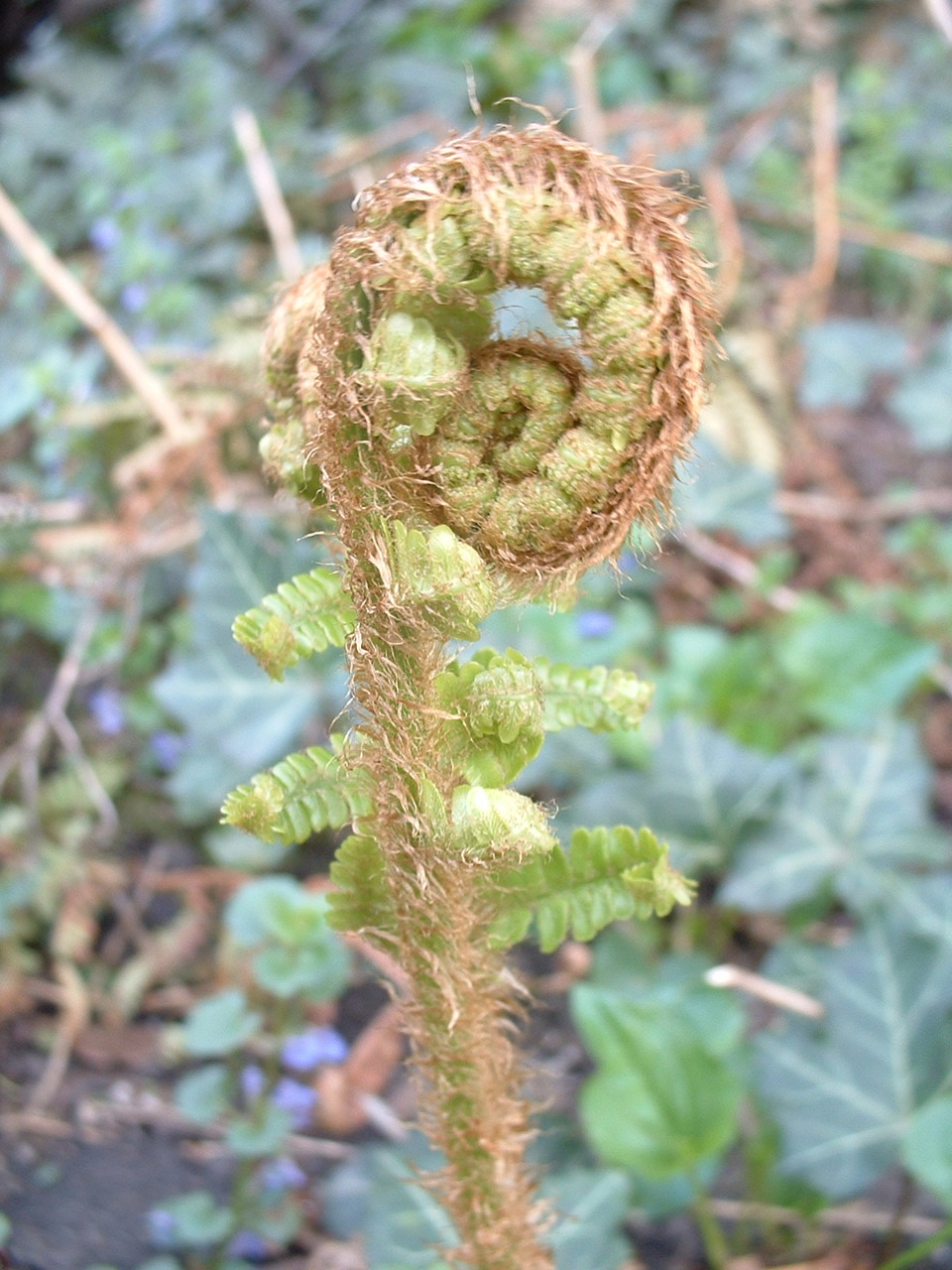
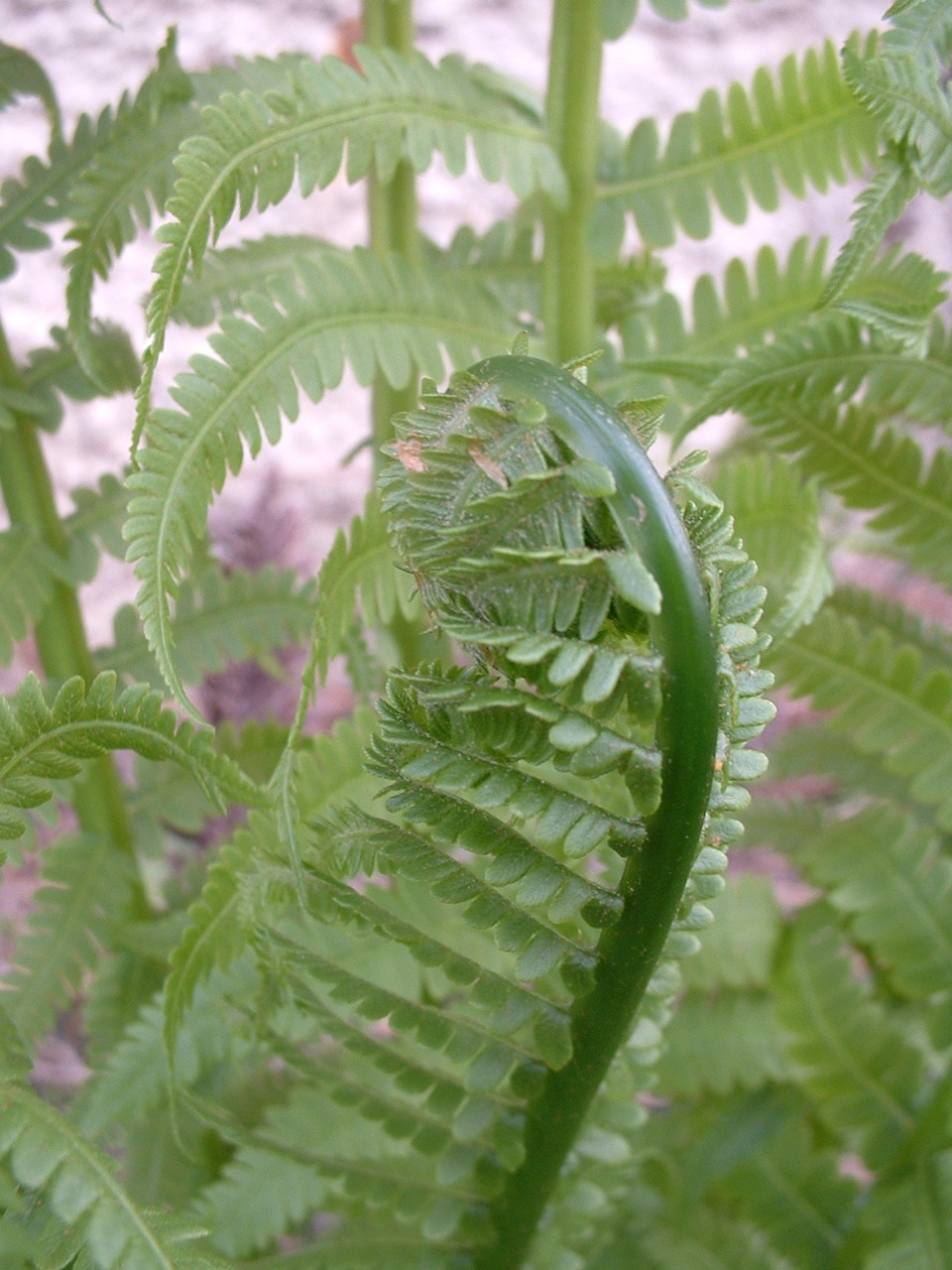
There's been a lot of recent activity growing on in the Woodland garden on the north side of the house in the past week or so ... warmer weather, followed by several days of significant spring rains and the ferns have just started bounding up from the ground. Though we have several varieties growing amongst the Bleeding Hearts, Hellebores, Ligularia, Heuchera and other shade lovers, I've chosen these two examples primarily because they've both been putting on quite the dramatic and enthusiastic re-emergence in recent days.
The first two shots are of the fiddleheads of the "Leatherwood" or "Marginal Woodfern" (Dryopteris marginalis), not only one of our favorites but also prized by florists who often incorporate the woody fronds in their arrangements. Luckily our specimens never meet this fate, and are allowed to pursue their natural habit of forming a relatively asymmetric clump of fronds over the course of the summer which then flattens out after a hard freeze in the fall. They do remain somewhat evergreen over the course of the winter, and even if they're not at their most attractive, they retain some of their green through even the coldest of months. The fiddleheads start emerging in early spring and quickly unfurl into the rich, dark green fronds they will retain until late fall or early winter. We have noticed that they do put on a lot of spores in late summer, though thus far, we've not seen them spread significantly ... even though we would be delighted to see that happen. Maybe over time (these specimens are about seven years old at this point) they will, but until that point we just continue to enjoy the distinct woodland touch they contribute to their neighbors in the cooler, damper shady spots they call home.
 Our other specimen (third photo) is the rather common, though lovely, Ostrich Plume fern (Matteuccia struthiopteris), which has definitely ranked up there as one of my favorite ferns from my childhood. To my young imagination, these ferns just typified the sort of plant that would have abounded during the time of the dinosaurs ... I have fond memories of seeing them grow in older, well established flower beds near old houses. This seems to be one of those ferns that had a real vogue at a certain time, but has since fallen somewhat out of favor. Part of that could be (I theorize) because as ferns go, they are a bit invasive, and will colonize quickly and move outward from an area where they have already established themselves. We've already seen them take over their original space and multiply, but we're happy to just dig them up and re-plant them in other areas where we'd like them to take over.
Ostrich plumes tend to thrive near the foundations of houses and don't mind deep shade, and as long at they get sufficient water during the drier months, they will reach heights of about four feet ove r the season. One thing I really appreciate about the Ostrich Plumes (along with their easy, generous nature) is the smell ... to my nose they just typify a clean, woodsy scent that evokes a woodland planting. And mixed in with their neighbors in our garden (Angelica and Lily of the Valley) they're right at home, providing their signature lush, jade like green all season long. There's a gardening sharing story behind our specimens ... we inherited these really plain, generic Hostas in the spot they occupy ... we didn't like them and wanted ferns there instead, so we traded the Hostas with a neighbor who had just acquired these ferns from a friend and hadn't found time to plant them. A more opportune trade could not have been made ... not only did we rid ourselves of the boring Hostas, we got a good starter supply of Ostrich Plumes that continues to thrive and multiply! In fact, I spotted a few renegades last night who will be moving to other spots this spring, so they can join their other compatriots in filling in those difficult shady spots! To my mind, they're a shade garden essential, and should they start to overrun their space, you're more than likely to find willing volunteers who will give the upstarts a new home ...
Guest photos courtesy of Fernymoss
 Just a quick May Day appearance by her highness Queen Pepa (Approximately) to let everyone know that she's quite delighted to have her summer porch throne restored to her at long last. This is the place you'll often find her in the warmer months when we spend evenings on the porch either enjoying the rain that comes through (and frequently floods our intersection) or just watching the world go by from our little garden perspective ...
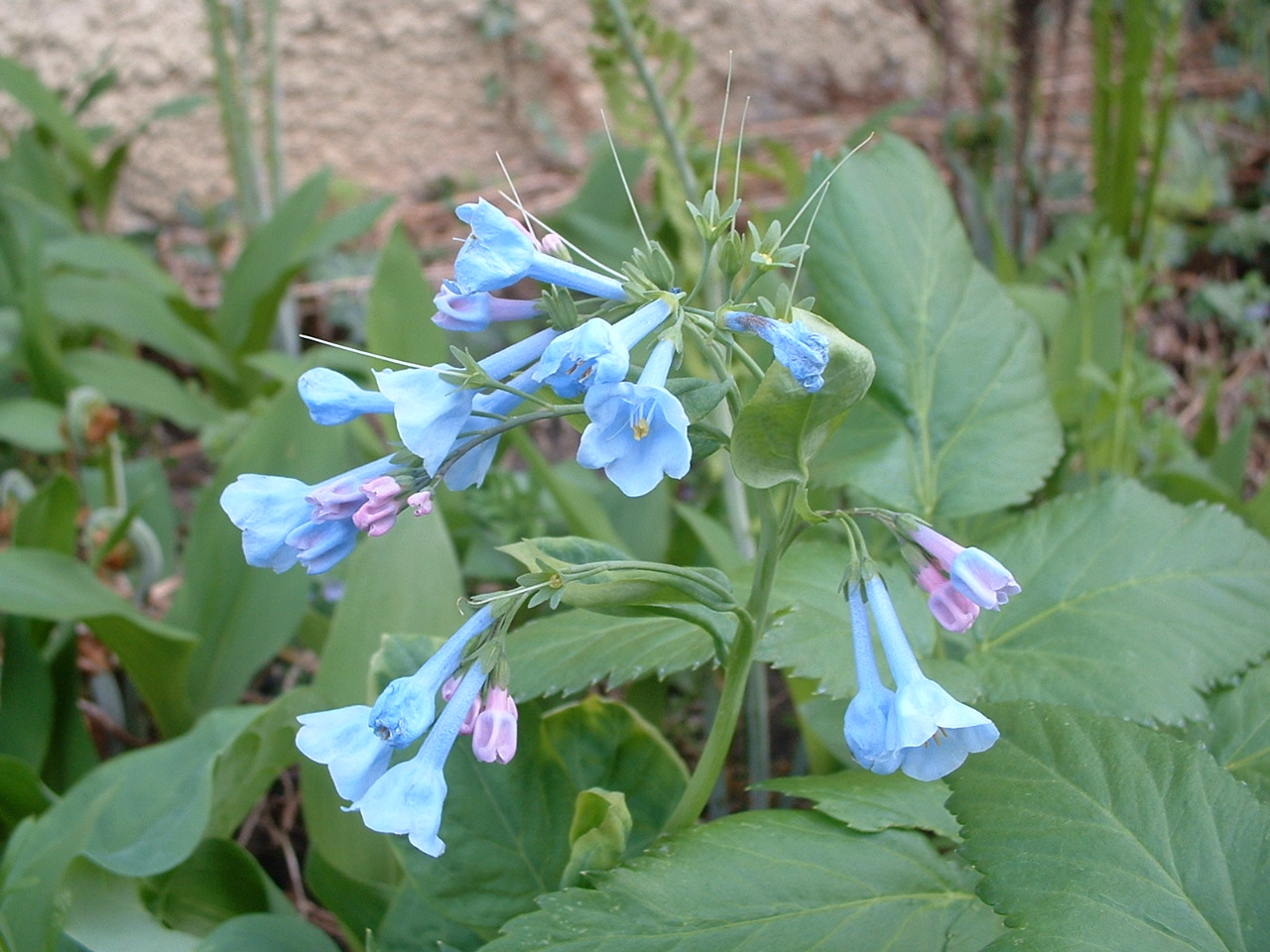
 Virginia Bluebells (Mertensia virginica) have long populated my earliest memories of falling in love with spring flowers ... along with deeply hued purple wood violets (as weedy and invasive as they can be), Lily of the Valley, and yes, even the humble, yet brilliant dandelion. These were the kind of flowers I collected on spring walks to take home to mom ... or to adorn the May baskets we used to deliver on May Day ... in sum, they just plain heralded the arrival of warmer weather and the promise of even more colorful flowers to come.
Where I spent my childhood, we had several fairly extensive stands of them underneath the ancient grape vines planted decades before by our house's previous (spinster) owners ... and each spring I can remember waiting for the Bluebells to bloom ... and apparently the vines were just the perfect spot for them, since we never lacked an abundance of these ephemeral spring beauties.
These days however, in the midst of the city, Bluebells aren't as common as they used to be, though we know of several spots where they abound freely, which always gives us ideas of clandestine nighttime raids with trowels to liberate a few of them from their patches along the street and give them a more expansive home in the woodland portion of our garden. But theft of flora, bad karma as it is, has always prevented us from actually taking action on that idea.
Our gardening philosophy strictly maintains that gardening means sharing. In other words, for us, a flower freely given in the spirit of increasing its reach and population means that a plant shared usually means a better outcome for the plant, as well as the gardener(s) involved. And as much as we would love to exponentially increase our humble population of Bluebells, we resist the temptation to purloin them, and instead content ourselves with our small, yet gradually increasing numbers. The two or three small stands we have originally came to us from our gardening sensei Frank, who has also established other flowers in our gardens (notably the pink papaver somniferum poppies that abound in late spring). Though you can readily purchase Bluebells from garden centers and nurseries, it seems to us that such a native should really come to the garden from a place nearby where they have thrived ... and that's probably the reason we never have dug them or bought them, because knowing that the ones we have came from Frank originally means more than just sheer numbers of flowers to us. So ... we patiently tend to the few we now have and look forward to more of them increasing over time, as have so many of the original plants we have planted here.
To our mind, they typify one of the most prized denizens of a woodland setting, thriving in semi-shade among ferns and other shade lovers ... and the plant pictured is happily at home amidst Ostrich Plume Ferns, Lily of the Valley and Angelica. Technically referred to as an ephemeral plant, they don't last long after blooming, and the foliage is usually gone by the end of May, if not sooner. But if you know where to look, at the right time in spring, you can always find them again when they return ... when they signal the promise of more greeness to come in short order.
Photo Courtesy of Fernymoss
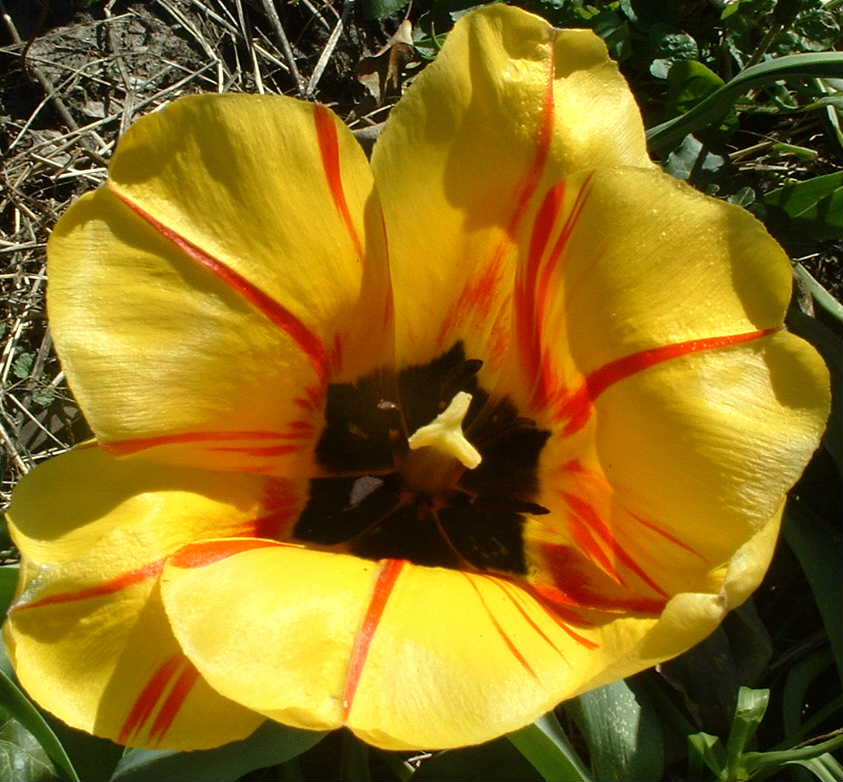
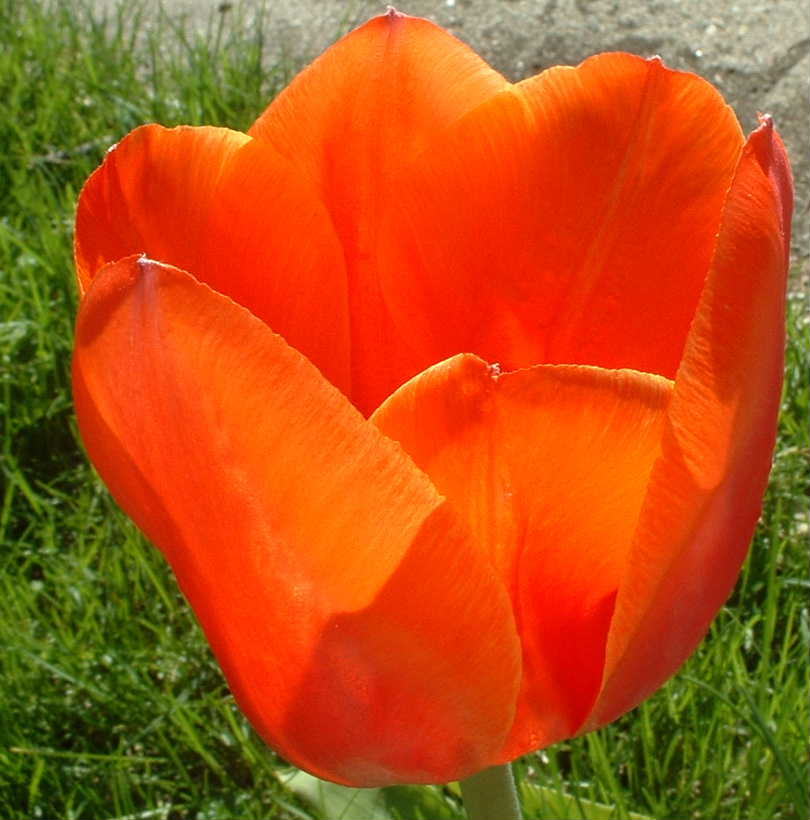
 Though they started out this year with all odds against them, many of the tulips did make a good stand at providing an abbreviated late spring show. Dashes of bright color, amongst all the damaged daffodils and other victims of the recent freezes, they carried on in spite of it all ... I'm afraid these represent most of the better examples that managed to bloom this year ... our regular masses of yellow and red were pretty much decimated ... first by the cold and then by the recent heavy rains. And as the regular perennials start to make their presences known, it seems that the tulips were resigned to cede the show much more quickly this year, though through no fault of their own.
 These two are from Darwin mixes that we have
 planted over the years ... the orange one has been around for at least five years and the yellow one (very close to an Olympic flame type) was planted two years ago during the big bulb planting fest. I'll refrain from my usual Darwins sermon ... just remember they're the best for naturalizing!
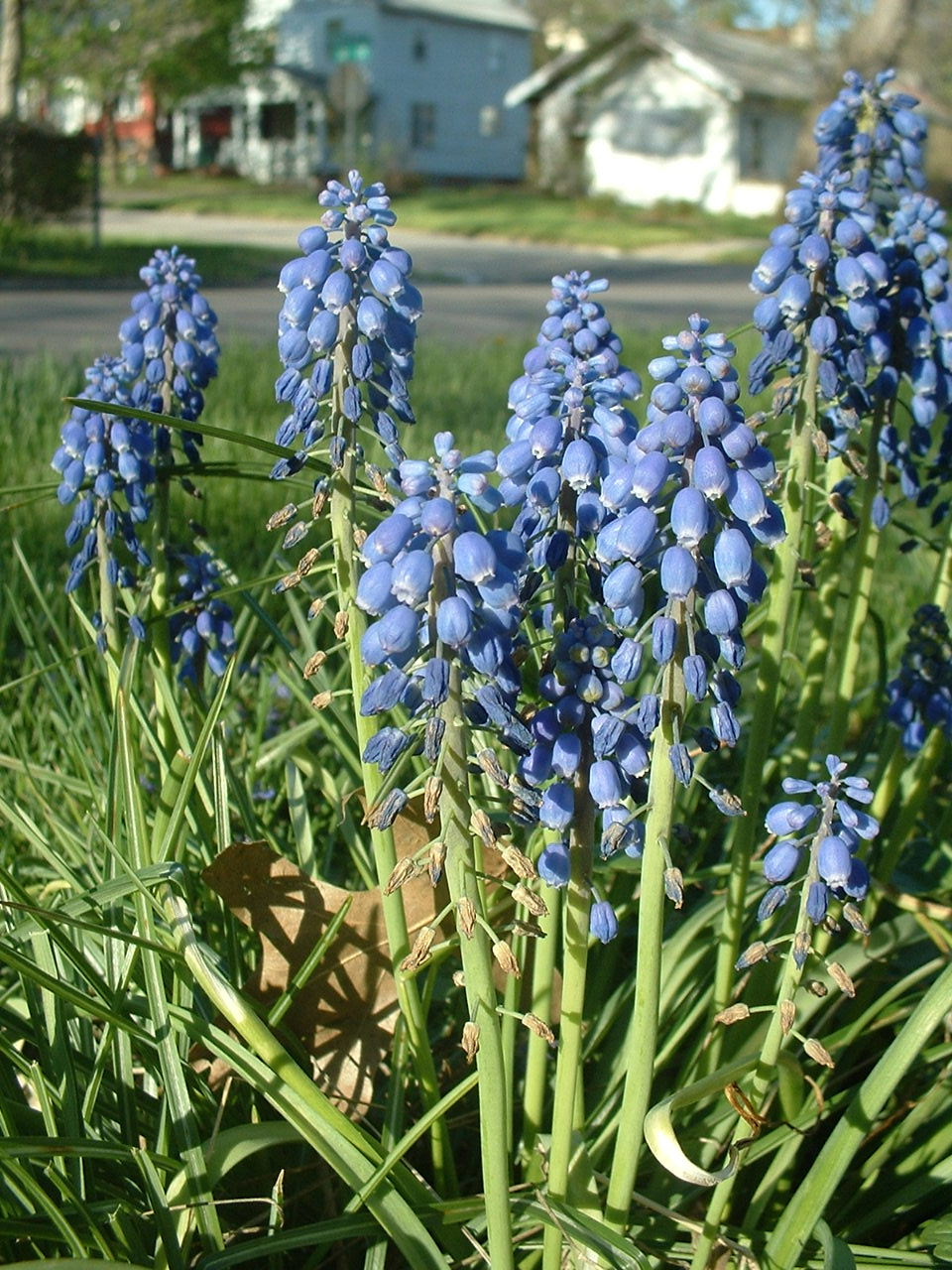
Finally (photo courtesy of Fernymoss), we've got a nice little stand of Muscari (Grape Hyacinth) along the walk ... also planted two years ago ... when I planted these, I alternated clumps of snow crocus (long since gone this year) with Muscari, as well as Scilla hispanica (Wood Hyacinth) all along the walk. Obviously I was really going for the blue, and as you'll see soon (when they bloom), the Scilla really carry on the show once the Muscari have packed it up for the season.
All three species of bulbs are great naturalizers, and my intent was that eventually the whole edge along the walk would be populated richly every early spring ... from a procession of crocus ... to Muscari and on to the Scilla providing at least two month's worth of changing blue hues. Of course, this year, everything is at least two weeks behind and these Muscari should have long since departed the scene ... but at least they weren't up very far when the freeze hit so they managed to bloom relatively unimpeded this year. And that's a good thing, since they've long been one of my favorite spring bulbs ... Related to neither grapes nor hyacinths, whatever we call them, they clearly deserve their place in anyone's garden ... especially along with tulips who they complement so well.
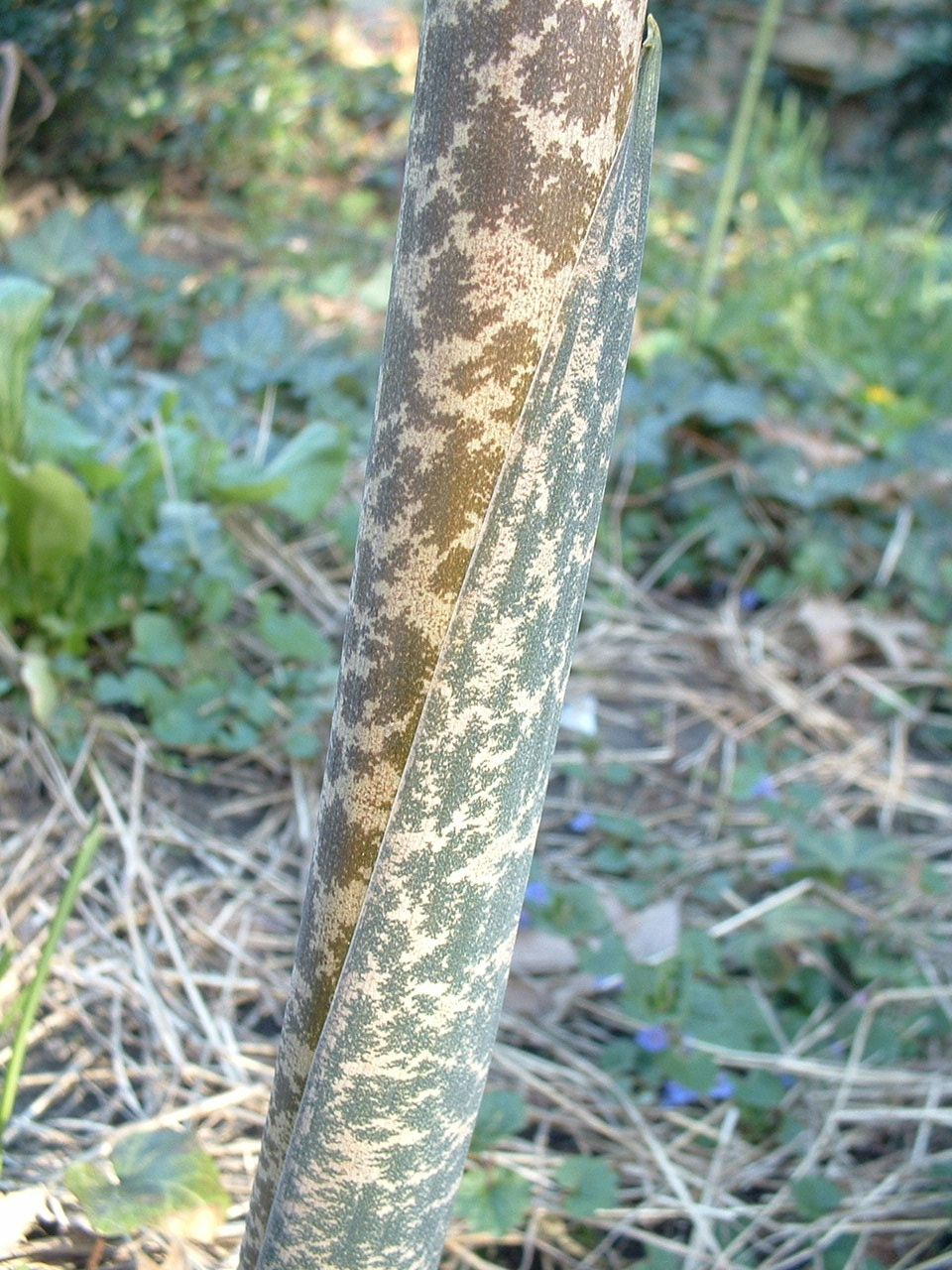
 I thought I'd just pop up a sneak preview of a plant I'll be highlighting in the coming weeks ... so here it is! Obviously this is a detail of the stalk, but Fernymoss thought it would make an interesting subject, and after seeing the resulting photo, I really had to agree. Though it may resemble somewhat snakeskin, rest assured it truly is a member of flora rather than fauna ...
Anyone want to venture a guess as to what this is? (Olivia, no fair spilling the beans, ok?) I will say that it is one of the more exotic plants we have planted in recent years, and that's all I'll say for now, other than you will be seeing more of this plant as it progresses in the next few weeks!
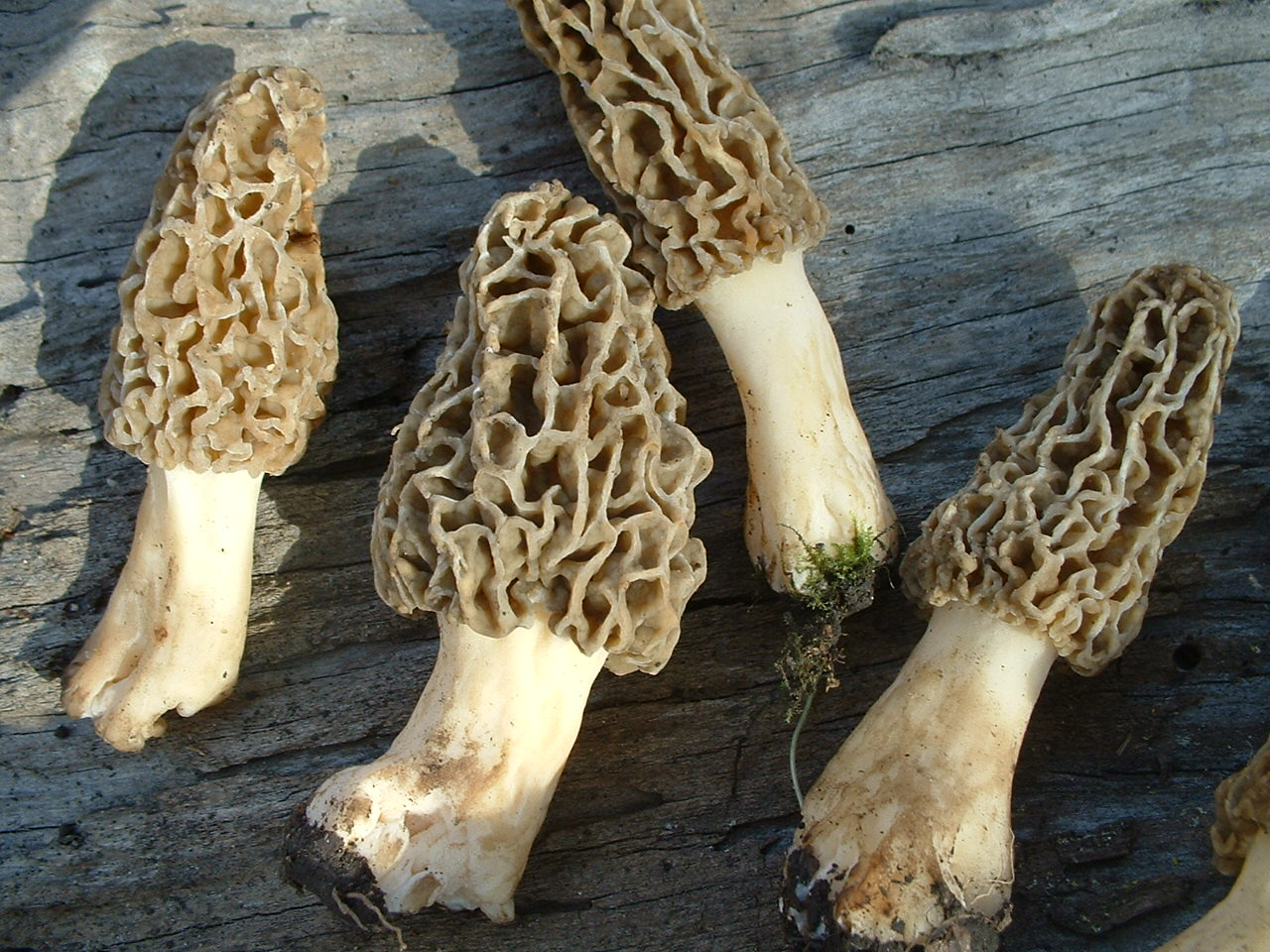
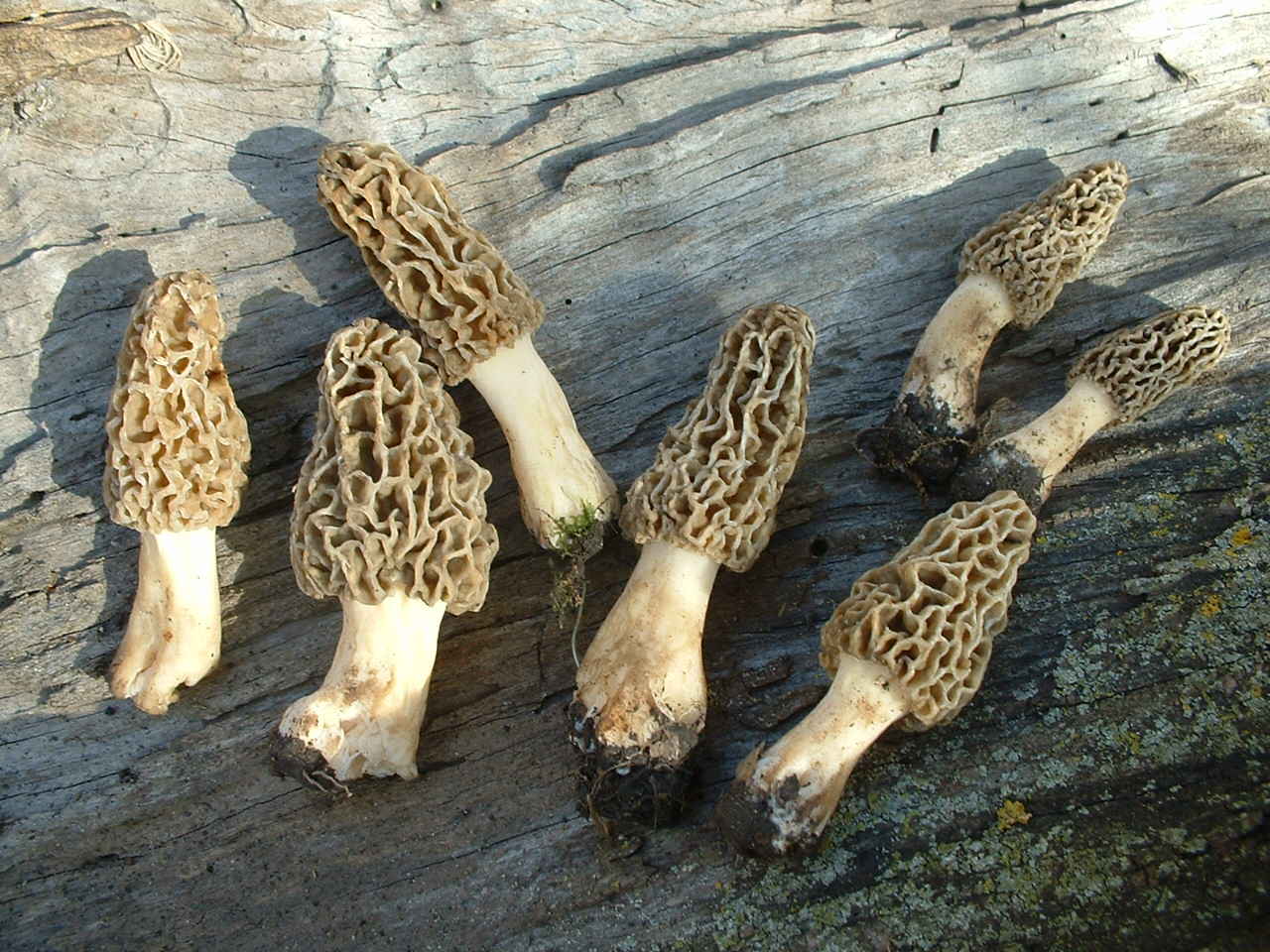
 Here in Iowa, there's nothing quite like the Morel season in late April, early May ... depending on the year, they might be plentiful or they might be scarce ... but one thing is sure, they tend to appear in that in between time from early spring to early May. Prized by those who appreciate and savor their earthy flavors, they are a much sought commodity around these parts come this time of year. If you can find them at the local grocery store, you can expect to pay between $20-25 a pound for these short-lived delicacies. And if you're even luckier, you might just find them yourself on an afternoon trek through the timber on a warmish day in the mid to upper 70's. Though maddeningly elusive when hunting them in their habitat, Morels are an immensely rewarding find, and generally, once you've found one or two, you quickly see more ... But, great irony of hunting, the harder you look for them, the less likely you are to find them.
However, when you can successfully nab them (as C did today during an excursion in an undisclosed location), there's nothing quite like the excitement preceding their inevitable rendez-vous with the frying pan, some bread crumbs and a lot of butter.
Morels are legendary around these parts, and there are almost as many ways to eat them as there are recommendations to find them ... but if you're lucky enough to find them fresh and intact, there's little doubt that the true afficionados will soon be enjoying them as we will today. And by the time most may have read this post, they will likely be consumed .... Time to go hunting for more!
Update: 4-29-07 9:20 p.m.
What remains of these delectable morsels ... these photos ... They were damn tasty though! Wish Morel season came more often and lasted longer ... but that's what makes these brief visitors so prized ... they come quickly and leave as soon, not to return until the following year (if we're lucky).
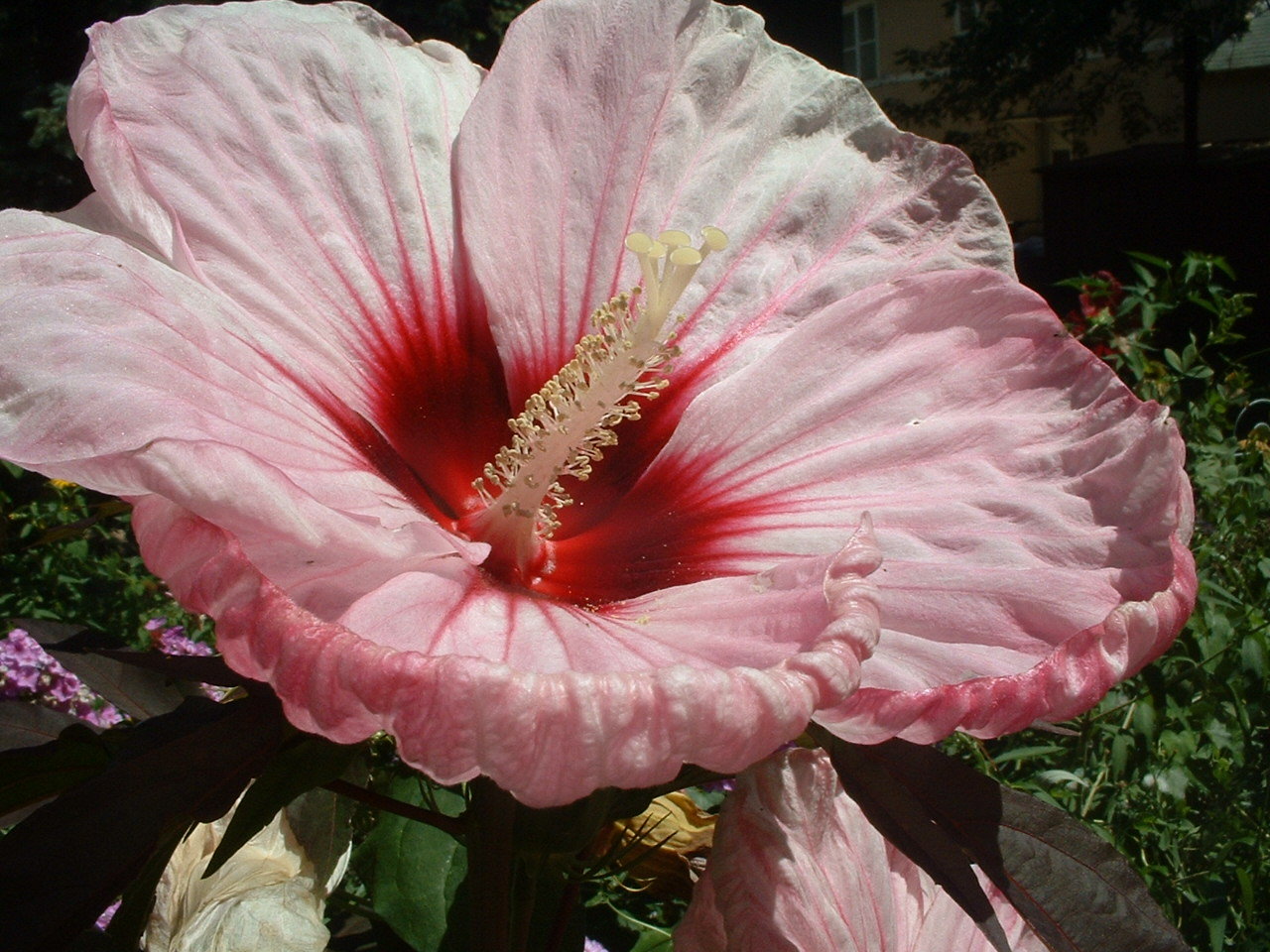
 Just because I'm a space case and rarely remember birthdays (and assiduously avoid my own!), here's a nice bit of inner bits for my good gardening friend Olivia, who just recently avoided a birthday.
From the archives ... 30 July, 2006 (umm, my birthday, prime Leo I am) ... here's an interestingly crumpled looking shot of Hibiscus moscheutos "Kopper King" --- inner bits on full display! This is the plant in our back garden we've named "Olivia," in honor of our Canadian contingent in the gardening clan.
Kopper King is a magnificent Hibiscus Moscheutos hybrid with wonderful bronzy foliage reminiscent of a maple ... and the flowers speak for themselves! Amazing ... same easy upkeep as other Moscheutos varieties ... what could be easier?
Anyway ... sorry about spacing it out Olivia! Just think... it's warming up and soon the last of the winter funk will dissipate!
Happy Earth Day, despite the recent abnormal weather! 
After a gloriously sunny, warm and windy day Saturday, today brought frequent thundershowers, wind and rain ... welcome rain, I might add, since I spent several hours out yesterday cleaning up about half of the front boulder beds. It was the perfect capper for all the flowers just getting going after a really cold last few weeks, just the thing to get them out from under their wraps (now removed thanks to my efforts yesterday) and ready to take on the season.
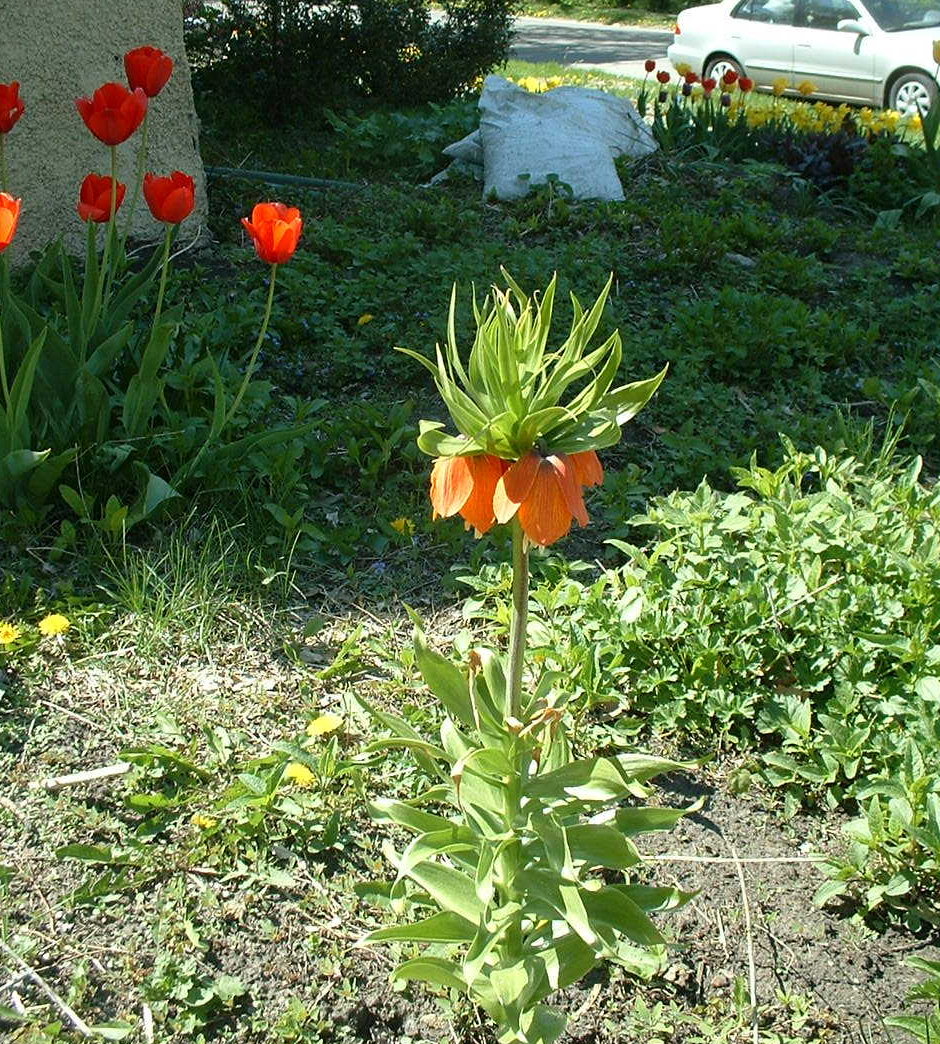
But, as you've no doubt seen me lament recently, the bulb extravaganza just was unable to equal last year's display ... even though most of the tulips are bravely blooming, they're stunted and fallen down, nowhere near their usual potential. And there are a few flowers just plain missing in action this year, notably among them, two of our recently acquired Fritillaria Imperialis species. This one is Rubra, a rich orange to red variety that starts out and finishes looking a bit like some very stalky kind of pineapple. The joys of Fritillarias are addictive ... we've just begun collecting them a couple of years ago, and already have several more species we hope to add next fall.  As the larger bulbs go, they're pretty easy to get established, though that two weeks of deep freezer weather seems to have put them down for this year. Although we may yet be surprised, we've pretty much given up on seeing any blooms from them. So these two shots are from exactly a year ago today ... 22 April, 2006, where they were enjoying near perfect blooming conditions.
Though their bloom span is relatively short (about a week or so depending on the heat factor), they're hard to beat for sheer eye-catching power! No wonder they're commonly referred to as "Crown Imperials," because the majesty of the flowers and the sheer size of the plant (this one made it to about 24") just beg royal comparisons I guess. No matter, they're a great treat when they bloom and leave you wanting more ... in fact, the whole Fritillaria family has such a variety of sizes and blooming habits, (not to mention unusual coloration), that every serious gardener should consider making room for them in a prominent spot in the perennial border ... even though their appearance is brief each year, it is far from mundane.
For further information on the Fritillaria genus, here's the link to the very worthwhile Wikipedia entry on them.
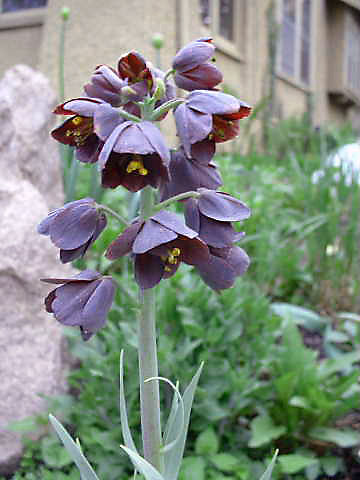
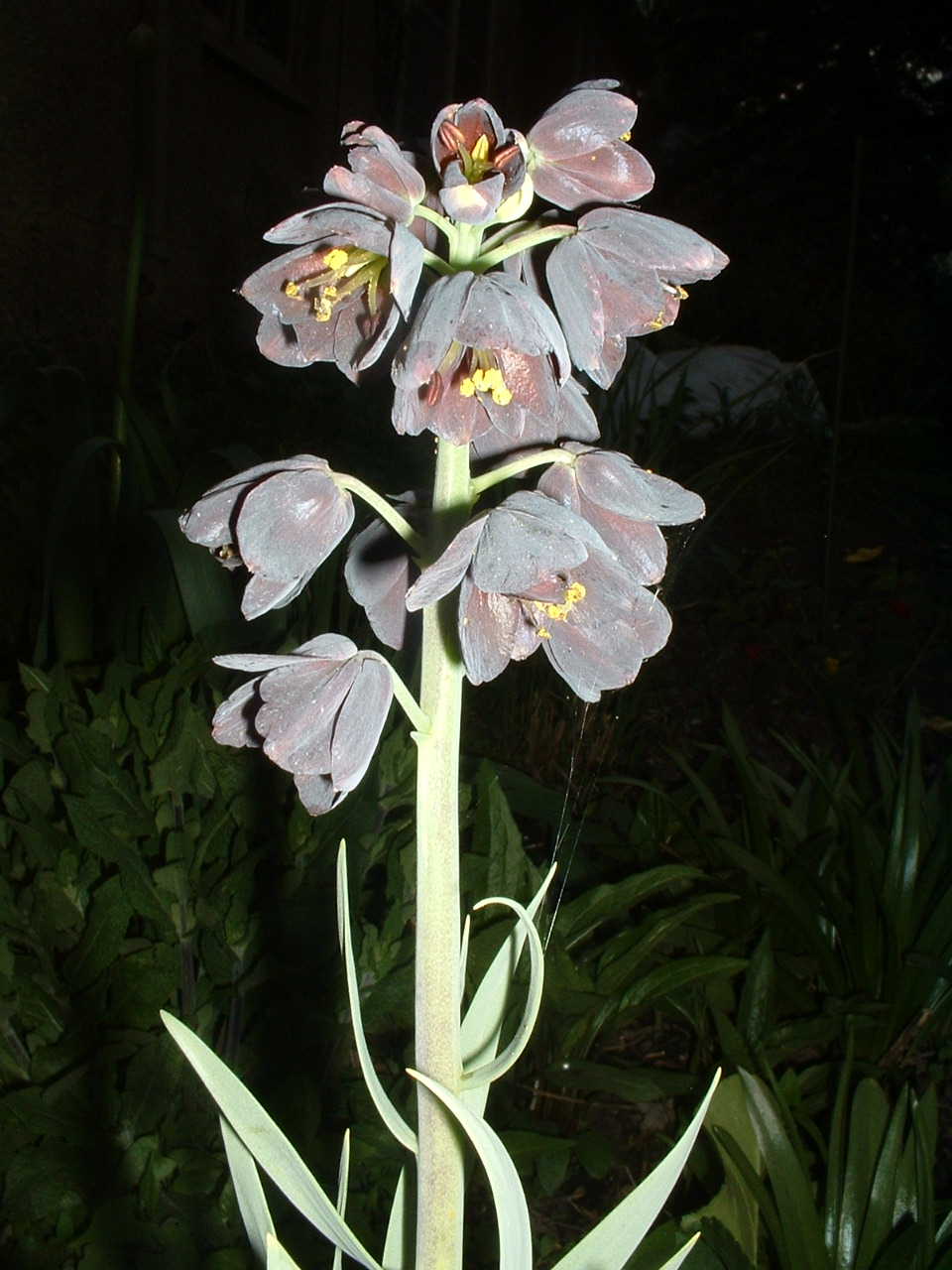
 Here's the other species, Persica, that has not appeared yet this year, and perhaps won't .... One of the more unusual shades, Persica appears to range from deep, dusty purple to an almost chocolaty maroon color, depending highly on the light conditions in which you view it.
Like the Crown Imperials with which it often seems to be lumped in the bulb catalogues, it's one of the taller Fritillarias which, in its native habitat in Turkey, apparently grows on mountain slopes in relatively rocky terrain. And to honor that lineage, we've planted it relatively close to the signature "finger rock" near the front of the boulder perennial bed in front of the house. It put on quite the impressive show last year (in its first year blooming), but alas, we fear it won't be doing an encore this year. Our hope is that it is just taking a rest and will be back about a year from now, better than ever, and carrying on its impressive display ...
 The first shot was taken in natural sun, showing its rich purplish hues. The second, taken with flash near dusk, gives an interesting detailed view of its inner bits, and shows off the "dusty" texture of the petals.... However you choose to view it, it counts as one of our new favorites among the spring bloomers. We're missing Persica this year, and should we yet be surprised, you'll see it here!
For very detailed species information and growing instructions, check out this link, since the Wikipedia link to it is mysteriously quite dead.
 We'll just wrap up this particular phase of tulipidolatry for now with a nice, illuminated quartet of color (again from April, 2006), showing off the diverse range of truly outstanding shades the
Darwins offer us ... If I haven't sold you by now on the many virtues of the Darwin varieties, I hope this last shot will really make you stop and take notice! They truly are remarkable flowers, and well worth the expenditure of effort it takes to get them going,
In the next few days I'll try to present some contrasting shots from this year, since it appears we will have some (albeit stunted) blooms after all ... not perfect by any means, but real miracles that they are going to be here at all this year!
So stop by again for those and some other surprises coming soon ... we have some exciting shots of a recently planted perennial about to burst forth in bloom in our woodland shade garden ...
... To be continued ...
And here we have the last few examples of Darwins to wind up our mini-series of tulip inner bits as captured last April, when the tulips were at their spring best ... And given the current terrain out there (as of today), these magnificent specimens were indeed in their prime blooming mode .... 
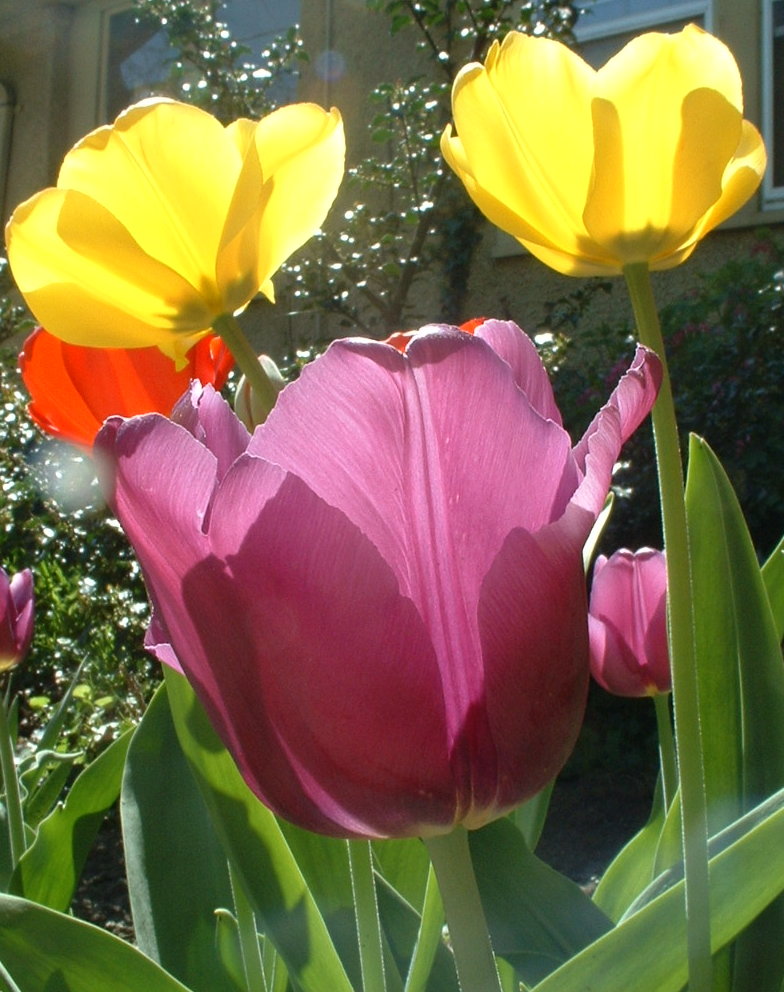
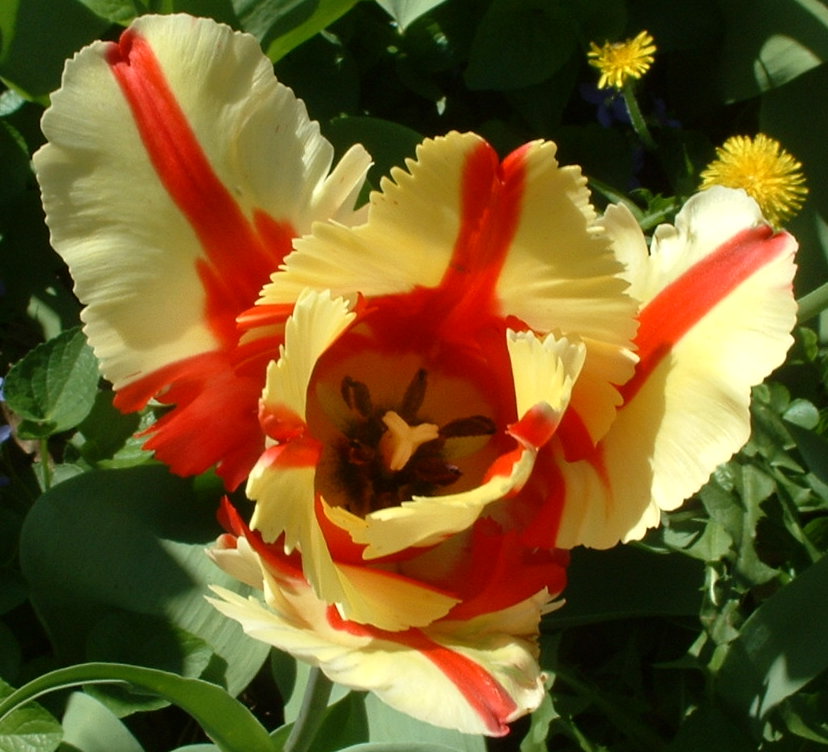
 Though this year's tulips are trying valiantly to put on a show this year (see the bottom photo taken today), it's clearly not going to be anywhere near as show stopping as we achieved last year. So we'll have to content ourselves with some prime specimens from last April (2006) ... From the top we have an example of a simple (if that adjective could justifiably be applied to this flower!) basic yellow Darwin ... closely followed by one of the constantly dwindling Parrot Feather varieties that was planted among those first bulbs mentioned in a previous post ... and finally --just for Olivia, of course-- a dirty pink Darwin, one of a mix that I planted along the line of the sidewalk leading to the street.
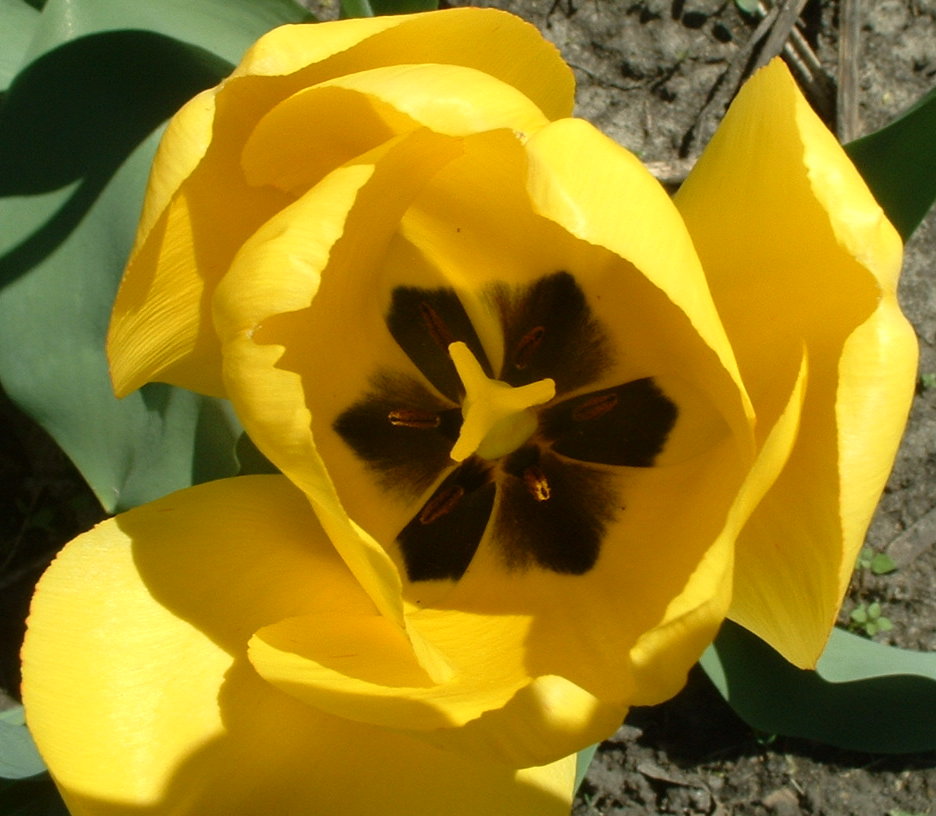
 Of course I'm especially partial to the yellows ... and I may be tempted to get a few more of the Parrot Feathers to replenish the stock, because though they are a fancy variety, the textures they exhibit are just far too fascinating to dismiss casually (as I tend to do with such cultivars). I particularly relish the "pinking shears" effect on the petals, not to mention the mysterious inner bits this particular tulip offers up ... just primed for an enterprising bee to explore and pollinate....
And to my eye, the brilliant yellow (above) edged in inky black just screams bumblebee mimicry ... an inviting landing and collection pad just waiting to be used on a warm, sunny spring day, the likes of which we hope have finally arrived this year to banish the last of the winter woes we've had recently in the garden.
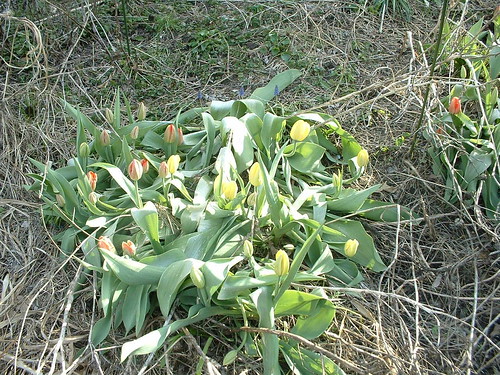
 And, as sad testimony to the damage caused by our recent freezes, as well as the tenaciousness of these Darwins, I've included a shot of one of the masses of reds and yellows we have out in the main boulder bed. As you can see, they're doing their best to give us some blooms, but nothing close to what they've achieved in the past couple of years ... In any case, we plan on feeding them before they disappear for the season, in the hopes of better performance next year, weather permitting ....
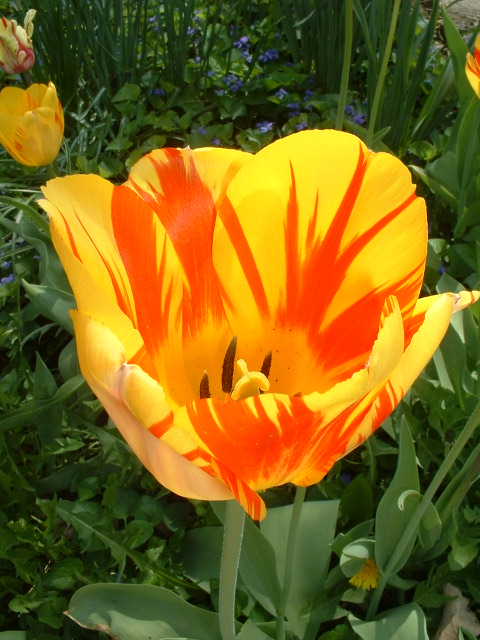
 As much as I praise and love the Darwin varieties, it's Tulipa, "Olympic Flame" that truly embodies for me the perfect combination of sun and fire ... and what better variety to liven up a sunny spring day! And that this particular strain belongs to the Darwins is only testament to its dazzling staying power ... These are some of the original tulips we first planted in the small bulb bed out front, our first foray into planting spring bulbs back in about 1999. Way back then, we quickly filled this bed with various varieties of tulips, fancy and otherwise, as well as daffodils, snowdrops, crocus and Fritillaria michaelovski specimens. Certain ones have come and gone (mostly the fancier tulips, who never seem to last over time ... as I keep preaching) and a few remain, the most faithful bloomers of which are these lovely examples. There are also a few remaining "Parrot Feather" tulips (more on them soon), but for the most part, those tulips whose pictures originally dazzled and seduced us (such as the "Blue Tulips" that turned out to be mauve!) have moved on and just quit appearing over time.
 Ok, you can see this coming, so I'll say it just one more time ... if you're going to go to the trouble of planting tulips, make the effort worth it! Darwins are by far the best way to go for years of dependable color ... go ahead and plant those hybridized poodles of the tulip world for a few years of unusual splash if you want, but you'll always come back to the Darwins in the end. I guess it's kind of like the old saying ... you date the flashy ones, but will eventually marry the Darwins. Well, that is, if you have what's commonly referred to as a "lick of sense" in your head. Barring unforeseen catastrophes (such as our disastrous recent cold spell), they will return to reward you and delight you for years to come ... long after the last ruffled petalcoat has left town.
 These three shots were taken last year (4-22-06) on a gloriously sunny day, which really helps to show off the true range of fire you can get with Olympic Flame, thus justifying its rather high-falutin' moniker. All pretentions aside, they remain one of my all time favorite varieties ... so go ahead, click to enlarge them (or right click "view image" in Firefox) and get lost in the mesmerizing patterns of their striking inner bits!
I'll have some more different varieties up soon for you to compare with these so you can get a flavor of just how intricate the private regions of tulips can really be ... (Stay tuned, Olivia!)
And since this post was originally conceived of as a joint garden blog post, give a click here to see what Olivia has been doing with one of these!
 Tonight, I thought I'd just give a quick glimpse back to last year's more glorious bulb extravaganza with a shot of some of the Persian Pearl dwarf tulips I posted yesterday .... just as a point of comparison to allow you to judge just how much prettier they can be when they are blooming under more favorable conditions. Given the right weather, a nice sunny day and a less discouraged gardener, these little guys just positively shine! This shot was taken on April 12, 2006 (already much earlier than this year's "show") on their very first go round at blooming. Not bad for a group of tulips who just took up residence in this spot in the fall of 2005, eh?
Note fully open centers of these flowers ... which Olivia (in comments on Monday) likened to the eager, open mouths of baby birds. I'd never thought of them quite that way before, but she definitely has a point there, n'est-ce pas?
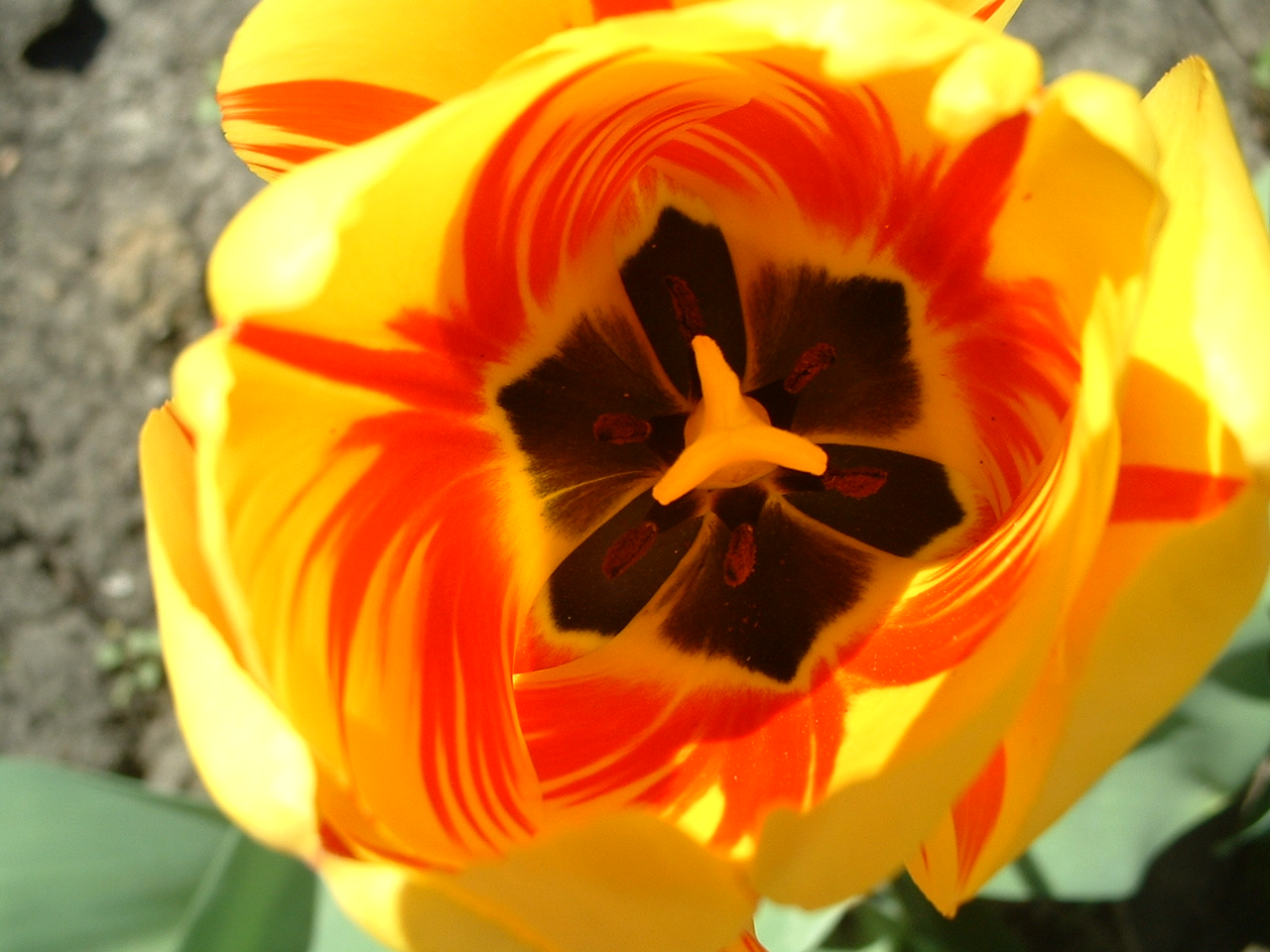
 I couldn't resist sneaking just a wee preview of things to come soon from last year's archives! So here's a tulip, the likes of which we're unlikely to see this year in the garden ... one of our beloved Darwin oranges. I got a bit snoopy and penetrated the inner depths of this one just to see what kind of effect I could get, and I was rather delighted to see the results here!
Recently Olivia suggested that I do a series of inner bits shots from various tulips, just to compare the variations in patterns they each exhibit, so this will be the first in a short ongoing project here. It is amazing to see how different they can be, depending on the hue and variety of tulip .... and those who know me constantly hear me preach, the Darwin varieties are by far the best of your basic tulips. They remain true to form for years and don't tend to poop out in a few years, nor do they tend to disappear or revert to previous forms much like the fancier varieties often do. And if any tulip justifies the "perennial bulb" moniker, it is surely the Darwins, since they bloom faithfully every year and even can spread over time (so I've read but not witnessed yet). If you're wanting to plant some resplendent tulips that you only have to really deal with once (planting!), and who come in amazing ranges of colors, then look into purchasing a good quantity and planting them in masses ... surrounded by Muscari ("Grape Hyacinth") or Scilla siberica OR Scilla hispanica ("Woodland Hyacinth") and you can't go wrong. As I like to remind my bulb intimidated friends ... all the hard work happens once, then you sit back and patiently await their arrival in the spring! And success with these beauties only breeds a fervent desire for more ... just ask us if you don't believe me on that one!
A couple of garden notes: Earlier, after I posted the other entries, I took another walk around to survey the garden and the inevitable devastation. The good news is that it looks as though the Columbines are going to recover and are putting on new growth ... the primroses are hanging in there and I think will bloom still, albeit late ... Woodland Hyacinths are springing up all over and thanks to their later emergence, don't seem to have suffered from the recent cold. BUT, the most exciting thing I discovered was that the two red Trilliums we first planted last year are up, budding out and getting ready to bloom! I'm really anxious to be able to share those with you, as you will be seeing them bloom for the first time, just like us ... The peonies have emerged as well, and though short still, they look unscathed. And though our iris out front were early to emerge, they seem to have weathered the cold pretty well and look to be working their way up to a great show this year ... as long as they don't immediately get beaten down by a hard rain, as was the case last year. I'll be really thrilled to get them up here when the time comes .... So, all in all, there may be hope yet for the garden, and for any dedicated gardener, there's always some way to find hope that things green and floriferous will find their ways to right the world, even if we humans are unable to do so.
And speaking of Irises ... Olivia has some lovely shots of molested blooms up now ... so hop on over and take a look at these luscious finds from the florist's!
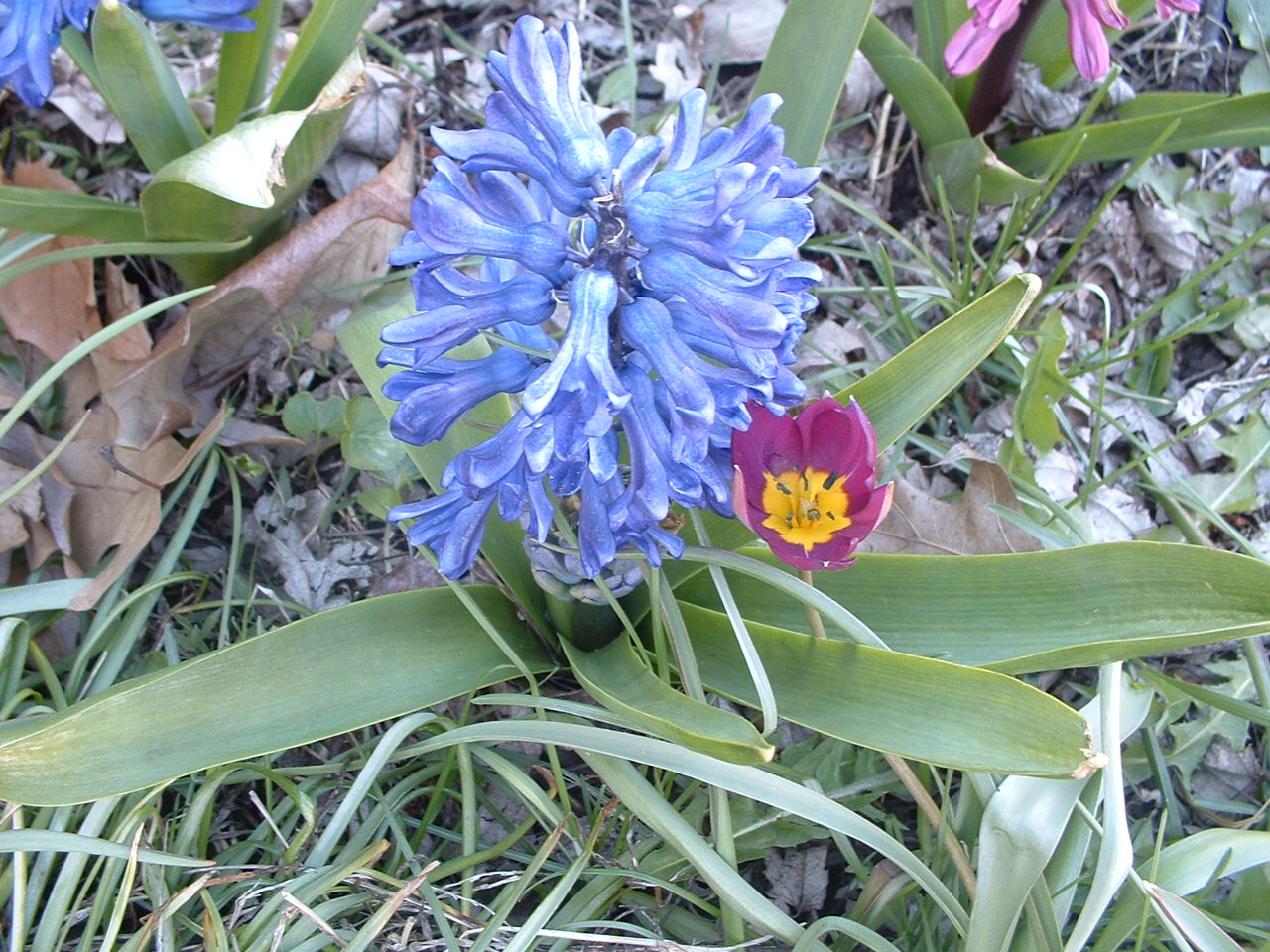
 Or maybe I should say Courageous Hyacinths, given what they've had to endure these past couple of weeks! As I noted earlier, these are the only ones we've seen break ground so far, even though it is rather late for them at this point in spring, but it's been anything but a normal spring so far this year. These shots demonstrate how stressed even these valiant flowers are ... what looks blue should be a deep violet color (var. Peter Stuyvesant), and believe it or else, what appears pink should actually be a brilliant red! I just count myself lucky that they are even blooming, though they are only about half the size they should be, and look a bit washed out as you can see....
 And you can see a friendly little companion Persian Pearl tulip snuggling in for the close up ... they're doing their best under bad circumstances, and I can only laud their courageous will to bloom despite all odds!
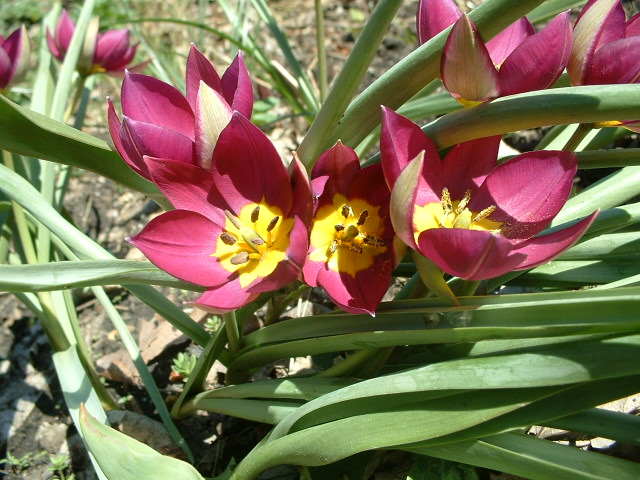
Well folks, those who've been listening patiently to my wailing and moaning the past few weeks know only too much about the recent very cold snap we've been having here. Right after I got going on posting the first spring bulbs, our weather took a very cold turn (lows in the low teens at night!), and what at first looked to be a banner year for the tulips, daffodils and other bulbs soon turned out to be a near washout. Or freeze-out, I should perhaps say... The front garden especially has taken a pretty bad hit and we're not sure how it's all going to turn out, despite the recent (e.g. yesterday and today!) upturn in the weather. I'm just not sure at this point how much we will be able to save, though the late emerging bulbs look to be coming out of this relatively unscathed.
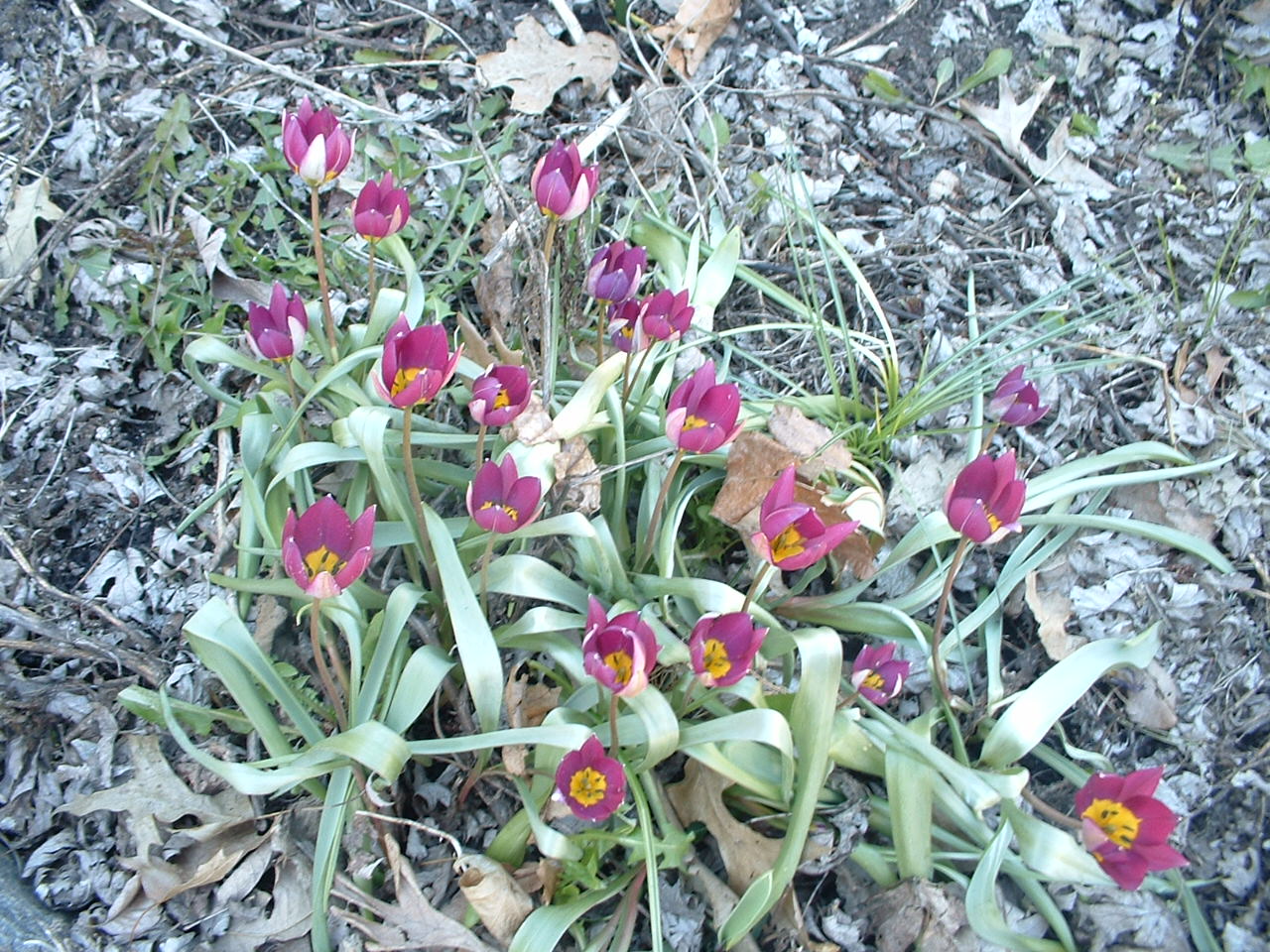
To wit ... our bleeding hearts were up about a foot before the record cold set in ... and now they look like spent, limp spaghetti. Same with the columbines .... even the sea holly is looking rather worse for wear, but I do think they will eventually pull out of it ... I hope. And, with the recent arrival of better weather, I hope to be able to report more positive news in the coming weeks. But for today ... the real tough survivors are the dwarf tulips (Tulipa, "Persian Pearl") and some of our hyacinths... these are the only ones I've seen up yet, though there are about 9 others on the north side I've not seen emerge yet. So here's what I got today ... these dwarf tulips are really fun to have in the garden, and unlike their bigger cousins, you don't have to plant them so deep it takes a shovel... and they appear to spread a bit, as I swear there are more there this year than there were last! Unfortunately, they don't last as long as the Darwins we prefer, but for sheer diminutive stopping power, these little guys are hard to beat! They're a perfect planting companion for Muscari ("Grape Hyacinths"), and also look pretty kicking with the hyacinths too! And since they all bloom at about the same time, and with a little imaginationyou could get some really interesting color combinations!
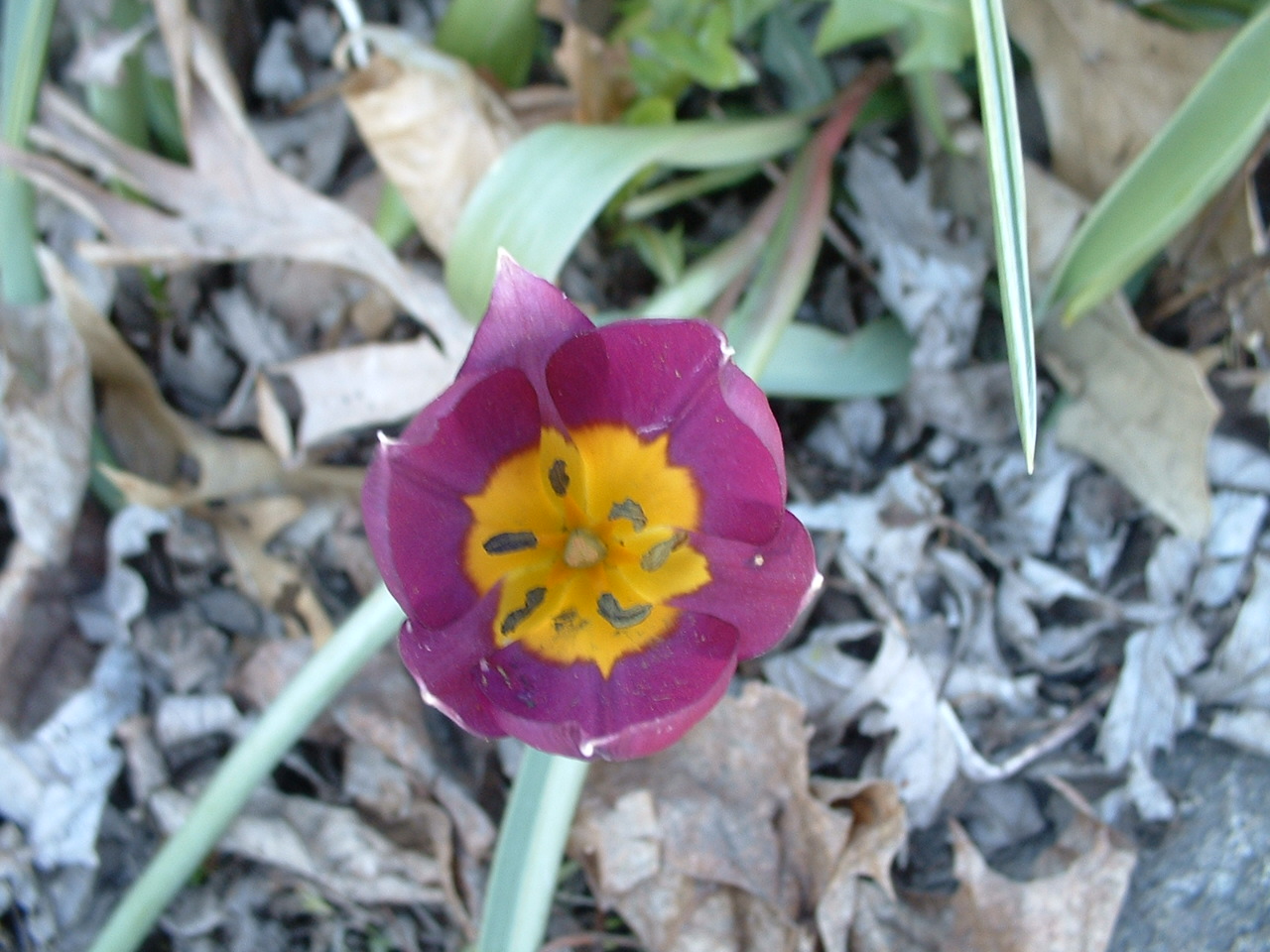
And of course, what would a tulip post be without the ubiquitous inner bits for Olivia? They may be a bit on the waning side of things, but they're alive! And that's what really is counting for us of late ...
In the next few days I'm going to be posting some of last year's spring glories (for obvious weather related reasons), so stay tuned for even more brilliant color. Olivia and I are going to be doing a joint posting soon on one of my very favorite tulips ... "Olympic Flame" so do check back soon for that in a day or so!
It looks like our Crown Imperial fritillarias may not make it this year ... but I'll keep you posted, so to speak!
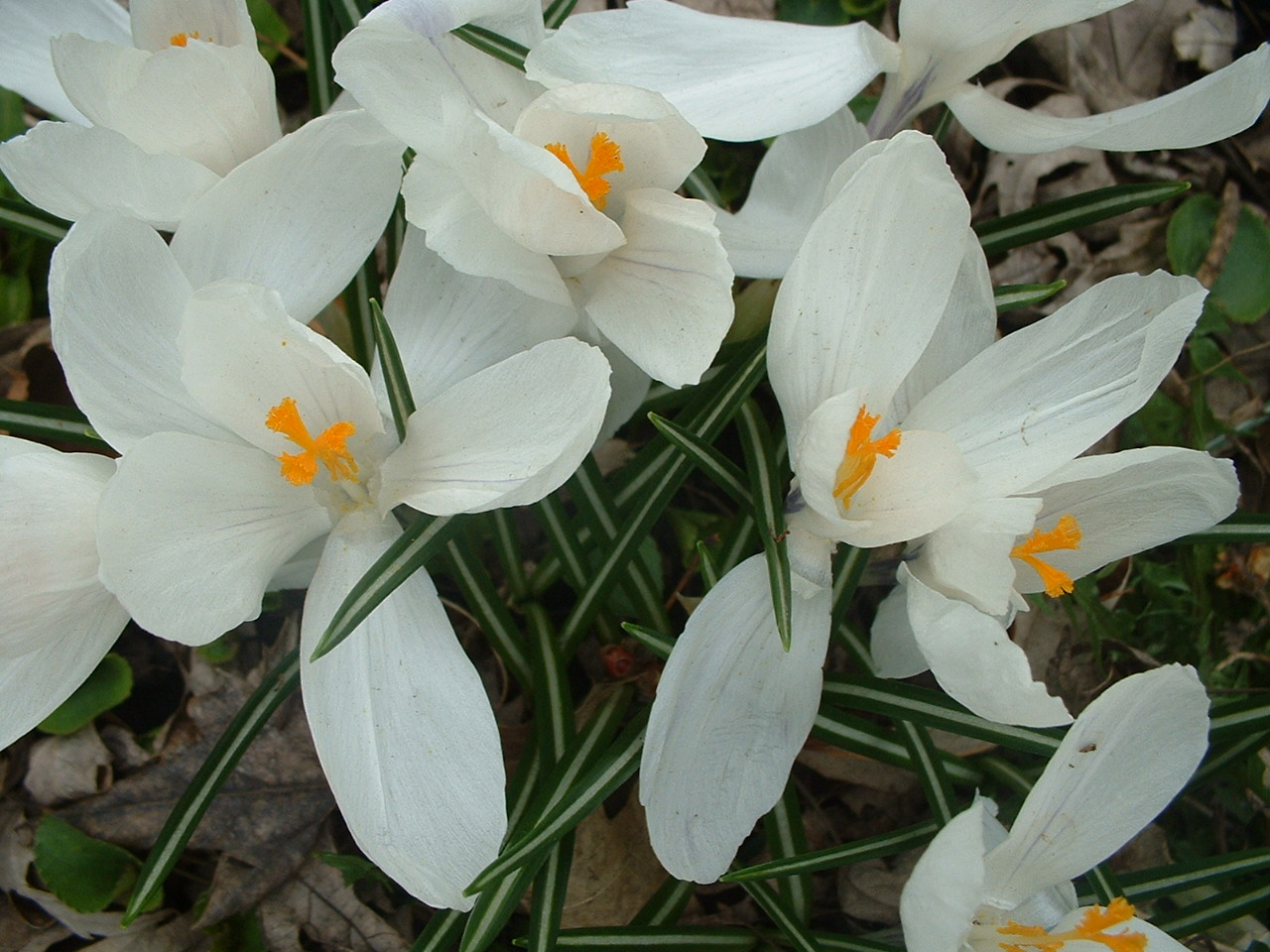
 And finally, some long-promised inner crocus bits for my dear gardening cohort in Ottawa Olivia, who has been having a few bunny issues with her crocus thus far this spring.
Though these lovely giant Dutch crocus have since departed the scene due to excessive rains and winds, they did put on a delightful show a week or so ago in the front gardens ... And though they don't last as long as the snow crocus do, the giants are truly wonderful to see thrusting their bold flowers forth when their time arrives!
So here's to Olivia ... winter can't last that much longer, and with a Bunnyvac 6000 brought on site, you may yet see the crocus grace your garden! Well, at least we can wish and dream for that, can't we?
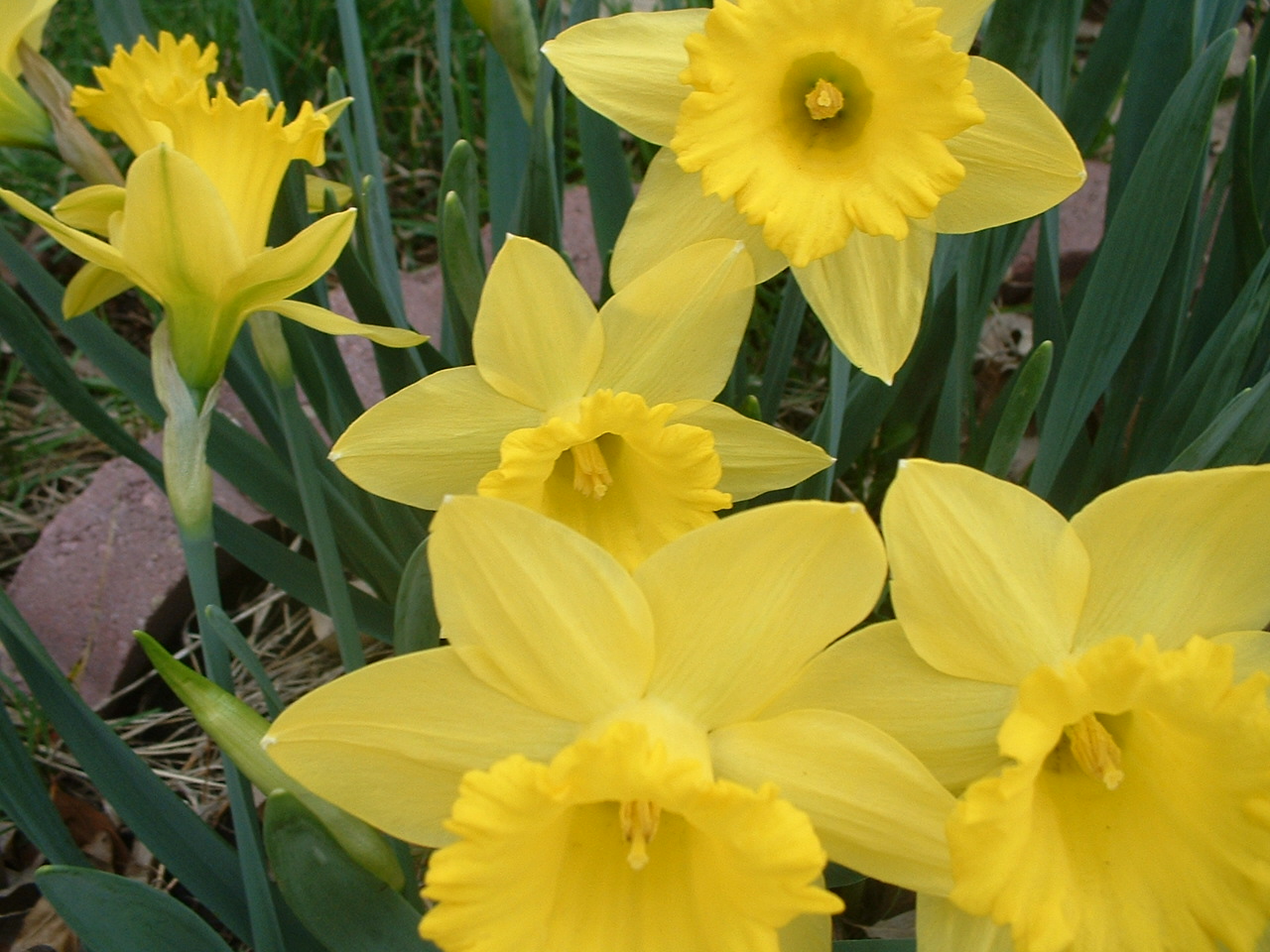
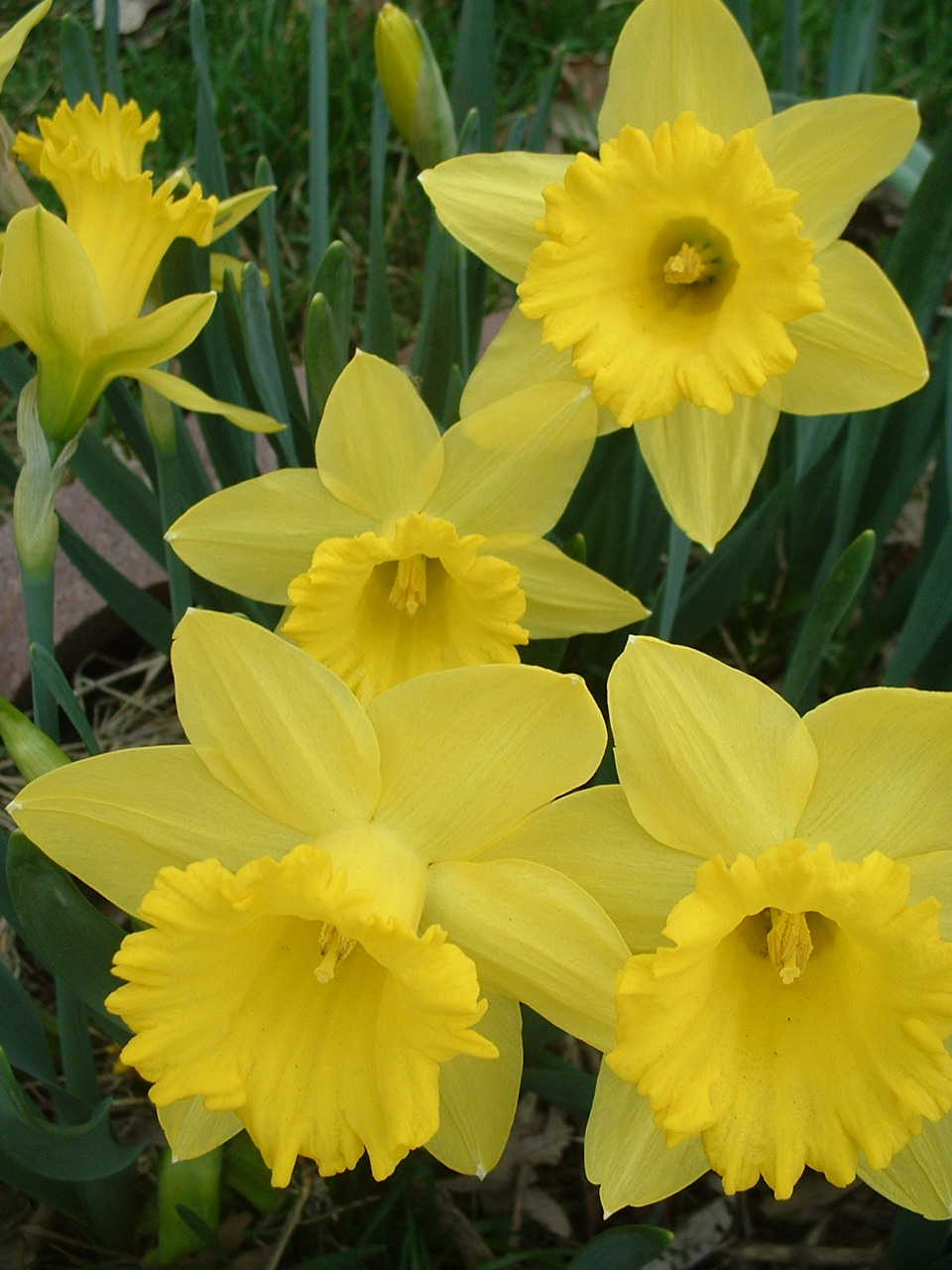
 It's got to be a hard-hearted, cold and ruthless person who doesn't just instantly cheer up and smile when they see a mass of daffodils in bloom! And when you're looking for real bang for your buck when planting bulbs, you can never go wrong by buying as many daffodils as you can and are willing to go to the effort to plant.
Like any of the larger spring bulbs, Daffodils need to be planted relatively deep (about 6"- 8"), so the initial planting can be a chore. But the rewards are so ample and brilliantly hued that it's all ultimately worth the effort. I'd personally recommend buying the naturalizing plain yellow varieties because they will colonize over time ... those fancier, mutant-y hybrid varieties don't bloom true for many years and eventually just revert to a strange, vulgate form of Narcissus that's really not the most attractive to have in the garden. Just our own personal flower snobbery in this regard, but if you want the true, old-fashioned forms, it's best to go with the simplest yellow, naturalizing variety you can find.
 And as a side note to those who have deer problems in the garden ... Daffodils are widely known to be a deer repellant plant (one among many we seem to have instinctively planted in our garden), so they fulfill another useful garden function as well. I'm not sure what other critters they may repel, but since we have many daffodils planted among the tulips, I wonder if they also have rabbit chasing properties as well... so many here tell me that the rabbits devour their tulips in spring, yet ours remain untouched ... I may have to do some more research on that, but for now, enjoy these happy yellow faces while they last!
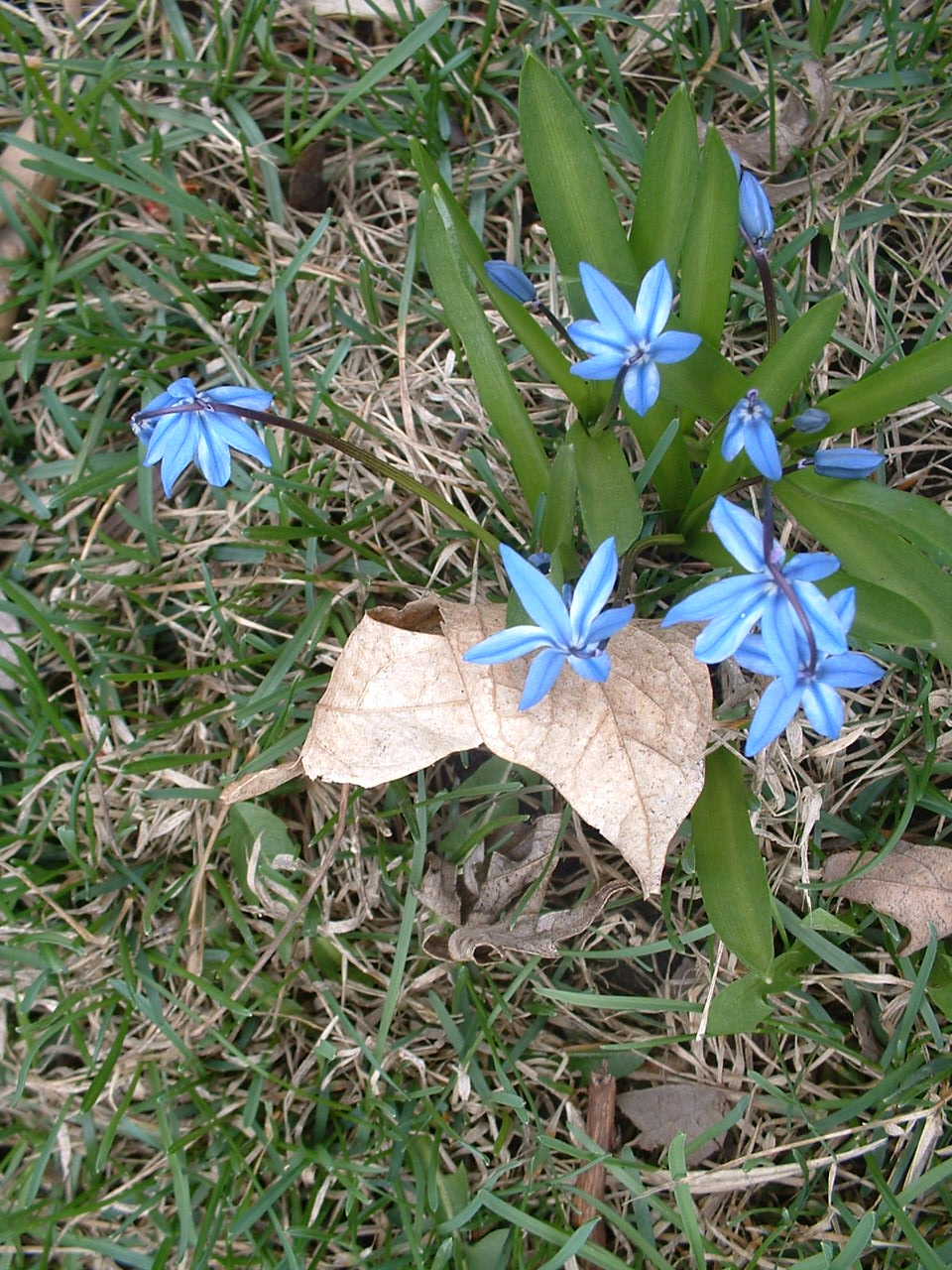
 It's not always bad to have the early spring blues this time of year. Especially if said blue is provided by Siberian Squill (Scilla siberica), an absolute must have in any garden's bulb planting areas. Aside from the Snow Drops, Crocus and the Glory of the Snow (featured previously), Squill is an essential early bloomer that signals spring has truly arrived.
These tough little plants do indeed hail from colder climes and are hardy as far north as Zone 3 ... and they're busy colonizers when planted right down there in the lawn. If you give them a few years, they will spread out to form cheery blue clumps that will enlarge over time. And for those who prefer their bulbs virtually maintenance-free, Squilll is a perfect choice... once planted, there's nothing else to do ... they will return year after year, increasing gradually and when they're done blooming and putting on the little bulblets that help to propagate them, it's time to mow the grass and they disappear into the lawn until the following spring.
Cultivation is pretty similar to that of Crocus, Snowdrops and Glory of the Snow, in that they're smallish bulbs that don't have to go down very deep, prefer a sunny location and well drained soil. Our dream is to eventually have the parking out front carpeted in blue from Squill, much like a house we see in town where it's been established for decades.
I'll have more on the Scilla species later on this spring when our other variety Scilla hispanica aka, Wood Hyacinth blooms... it's a larger variety with more developed bloom stalks, but still in the delectable blue-violet range that makes them such welcome additions to the early spring yellows and whites ... if you're looking to expand your bulb varieties, you must consider planting Squill ... though they are not particularly cheap, they are worth the investment, if for no other reason they provide some welcome blue early on to chase away the last of winter, and they like to set up housekeeping even in a lawn planting situation....
 Again, I'm a bit late in posting these, especially as they're taking a break from blooming right now, but better late than never I hope!
  There are, however, truly hardy varieties to be had for our gardening zone, and last year I finally invested in buying some of them. I'm happy to report that despite the bone chilling spell in April (during which these had already emerged and were beginning to bud out), they have persevered and put on a dandy showing for their first year in their new homes. They did suffer quite a bit for a week or two, then greened right back up and proceeded to pick up where they had left off in their bloom cycle. I've been really grateful they made it, and I look forward to more years of early spring color to come from this grouping.