skip to main |
skip to sidebar
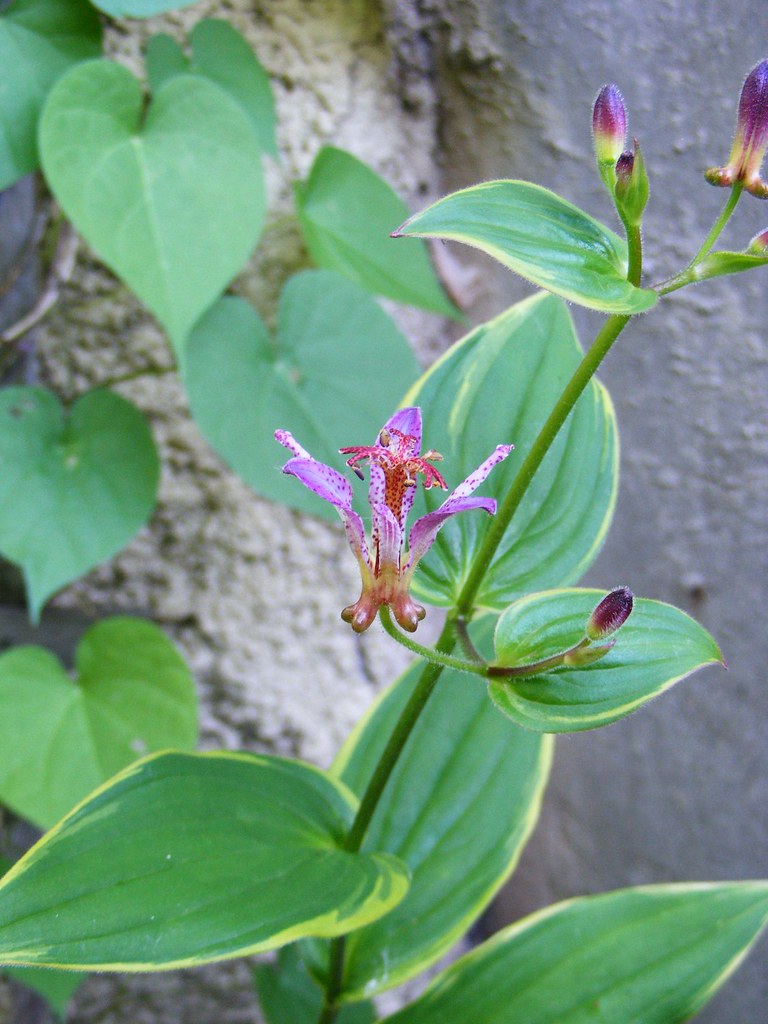 Tonight we have a bit of a potpourri of shots from Saturday and Sunday at Casa IVG ... I don't really have an organized theme here, but if we're lucky, maybe one will emerge! Just some pretty mundane pictures of a Saturday and Sunday spent outside in the garden, weeding and planting more of the remaining perennials in the front Boulder Bed
.
ARACHNOPHOBE ALERT! If you're seriously freaked out by spiders, you should just cruise by photo number 4 (there, Manny, I warned you!)
The dainty purple flower depicted above is a Toad Lily (Tricyrtis hirta), though I've lost the tag with the specific cultivar, so if any Toad Lily fans out there know the cultivar (iaBoy, can you help out?), I'd appreciate hearing it, so I can definitively ID it. Now, aside from being positively lovely, it's really playing a little trick on us, by blooming pretty early for most Toad Lilies (who come into their own usually in September when everything else is done blooming). I planted this particular plant last year in the bed with the primroses (it's right behind them toward the back) and it's really happy where it's growing. Not only did it winter just fine with several feet of snow over it for months on end, but it was up pretty early, bringing some of its offspring with it, and we discovered yesterday that more are on the way. At first, the main plant came up, swiftly followed by an offshoot that has been growing quite rapidly, and yesterday Fernymoss was weeding a bit around it and discovered that it's also putting out a long runner from the base of the plant, which he carefully covered with a bit of dirt so it can do its thing and produce yet another offshoot. Toad Lilies are wonderful colonizers for whom only the meanest gardener (and I don't meet too many of those!) would begrudge them the space they seek to occupy.
Our original plant in the Woodland Garden is currently over 4 ft tall and really gearing up for a spectacular show this year, along with the two other new ones we put in near it last year. Just be patient, and you'll be seeing lots more of them come late August or September. To my mind, Toad Lilies are one of the best kept secrets of the garden, because they're easy to grow (in shade only however!) and spring into action in the garden by producing their delicate orchid like flowers just when everything else in the garden has pretty much packed it in for the season ... and they bloom right up to (and sometimes after) frost! Perfect for deeply shaded, moisture retaining spots in the garden, where they multiply faithfully after the first couple of years. And there are so many varieties that there's bound to be a cultivar for every taste!
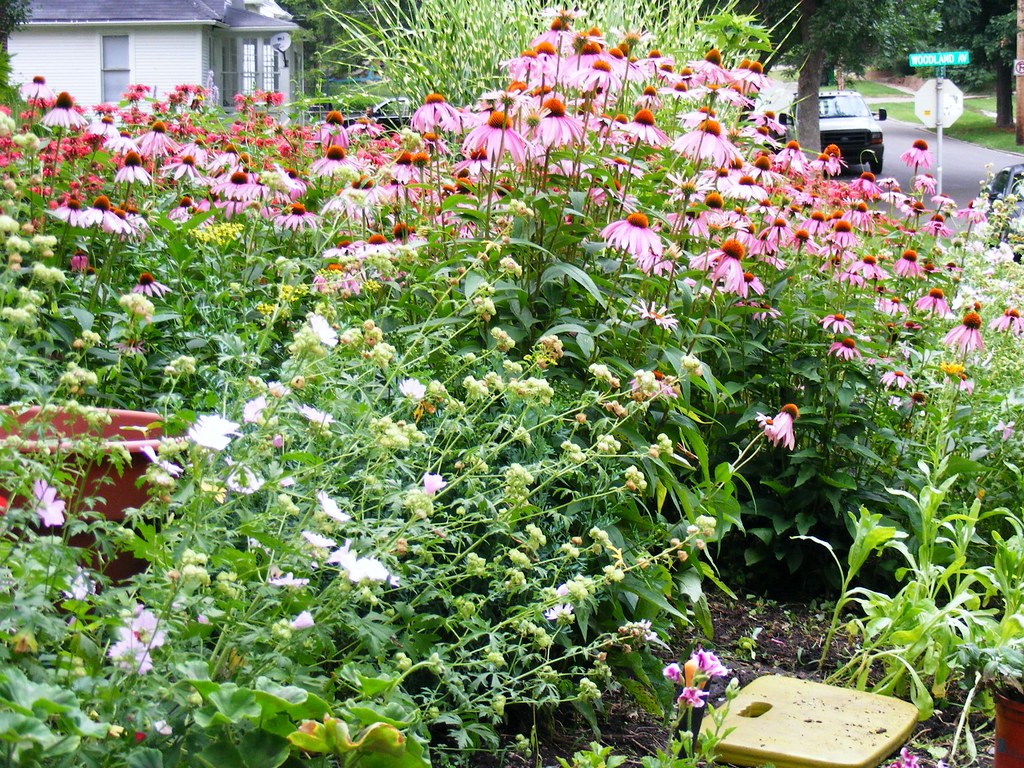 This is a view of where I was toiling in the heat and humidity yesterday, weeding out and rescuing that clump of Calendula that had been overrun by all sorts of weeds. Once I got the area cleared (which itself took quite a bit of time), I planted a couple of small rows of Zinnias by the Calendulas, and some Four O'clock seeds here and there, in the hope that they will take off again somewhere in the garden this year, even if they don't get enormous by fall, at least we'll get some blooms and with any luck, visits from the Sphinx Moths! I planted two Salvia nemorosa 'May Night' nearby, as well as one of my new Hibiscus moscheutos 'Luna Red.' I placed it more or less in line with the 'Lord Baltimore' you can see in the background of this shot (near the front of the line with the Porcupine Grass in the distance). While 'Lord Baltimore' is quite stately, reaching heights of 5-6 ft, 'Luna Red' is one of the newer, bushier cultivars that spreads more, but usually tops out at about 3-4 ft (like the 'Disco Belles' and 'Blue River II' cultivars). Discerning gardener eyes will also spot quite a few other things in this shot ... like the Rue (Ruta graveolens) blooming behind the Coneflowers, a few Calendulas, and in that big pot (hidden from street view) there are three 'Carmencita Rose' Castor seedlings just peeking above the top of the pot. We had some annuals in the pot last year, and never got around to dumping it or moving it, so we just decided to pop a few Castor seeds in it to see what might happen this year ... yeah, one of our many garden caprices that may or may not work out!
  Though Queen Pepa (approximately) was spending most of the afternoon indoors due to the heat and humidity, we heard her plaintively asking to join us out front, so when we decided to take a break for a late afternoon beer, she came out to keep us company, lounging obediently on one of the front steps. I mentioned recently how much of a treat this is for her ... I think it's the equivalent of getting to eat at the grown ups' table for her, because she rarely gets to run free in the front of the house (because our street does have a fair amount --but not insane-- of traffic). So these are special moments for her when she gets to join us on one of our breaks from weeding and planting.
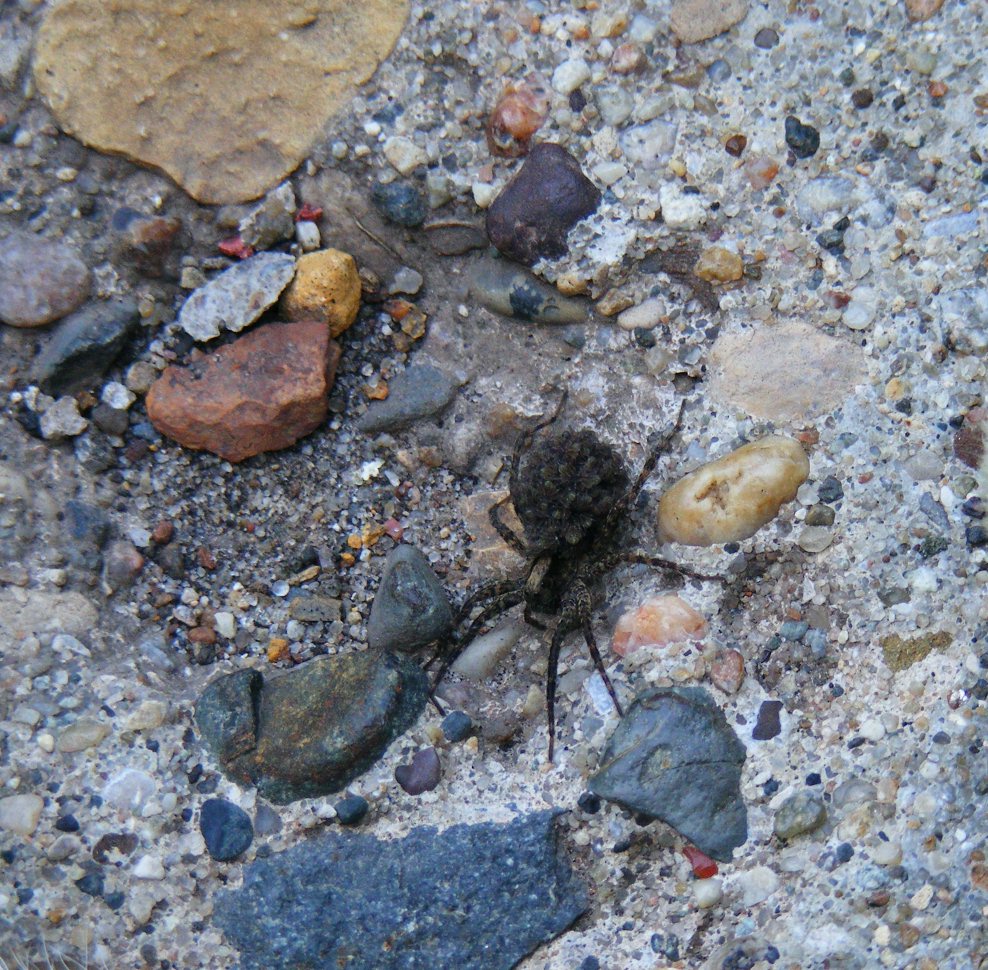 And then, along came a spider ... which literally did sit down beside her, though Pepa was largely oblivious to it, which was probably fortunate for both of them! Fernymoss IDed this as a "thin legged wolf spider," one of the rare species of spiders who don't spin webs. This is clearly a female with her brood (thus the fluffy looking abdomen -- make sure to click for the large version) who happened by. Apparently the females of this species drag their egg sac behind them until the little ones hatch, then they all clamber up on her back and ride around with her until they are big enough to take off on their own.
  Mallow Mania continues unabated around here, with the above shot being the most current bloom from one of my tropical species, 'Brilliantissima Red.' Though the late afternoon light doesn't do it justice in this shot, it's a lovely deep red flower that can arrive in profusion as the summer progresses. Unfortunately I missed the first 'Erin Rachel' bloom of the summer because by the time I actually noticed it, it was getting too dark to take a photo. But she's finally recovering from her winter slump and gearing up for more glory in the sun ....
 This hollyhock may look familiar, as it's the one I showed a while back, growing in the truly wild back corner of our lot (along with the Monarda, Baptisia, Coneflowers and Phlox). It was looking particularly pretty to me today, so I had to shoot it! Don't worry, no flowers were harmed in the creation of this post....
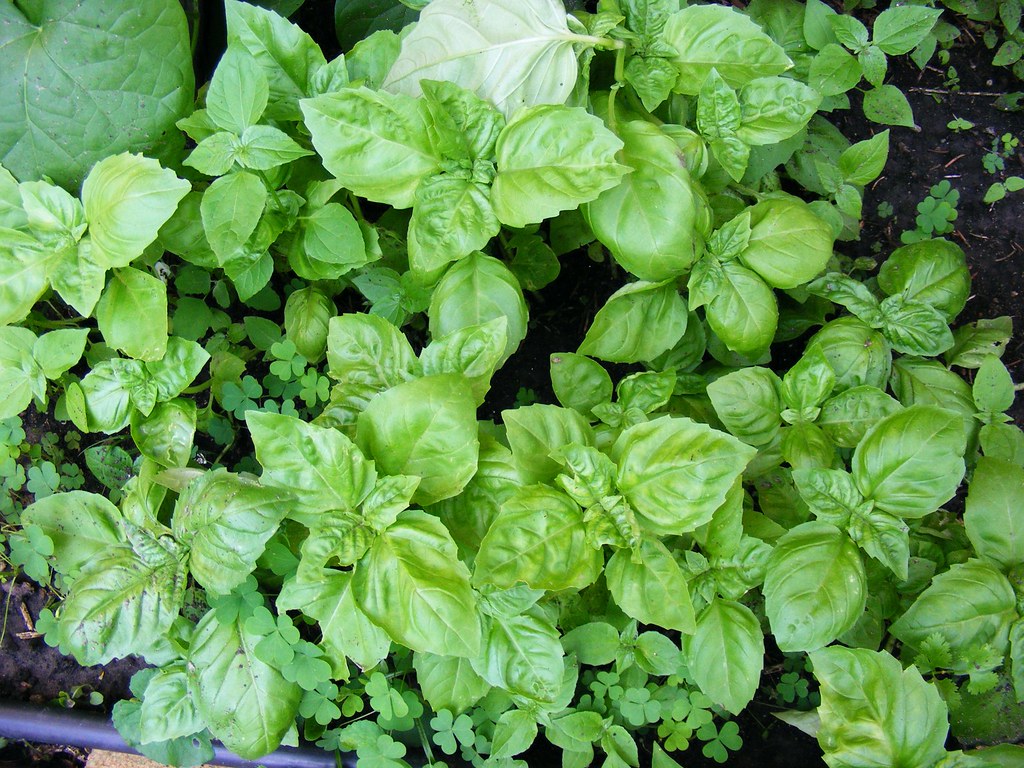 If you remember my herb garden post from a while back, I had showed some of the emerging Basil seedlings, well this is how they looked late this afternoon as I wandered around the back looking for likely suspects to include in this hodge podge post. Aside from needing a good weeding, I also want to thin it a bit (my sister wants some plants, so I'll likely dig a few for her) and give it a good pinching to promote bushier growth. It smells great already, and I'm finding it hard to be patient for the arrival of the first tomatoes with whom it makes such a great companion. One of my favorite tomato season salads is a simple dish of tomato slices, with shredded basil and balsamic vinegar sprinkled over it. And if I have Nasturtium flowers at the time, I throw some of those in as well, and that's (as Alton Brown would say) Good Eats!
 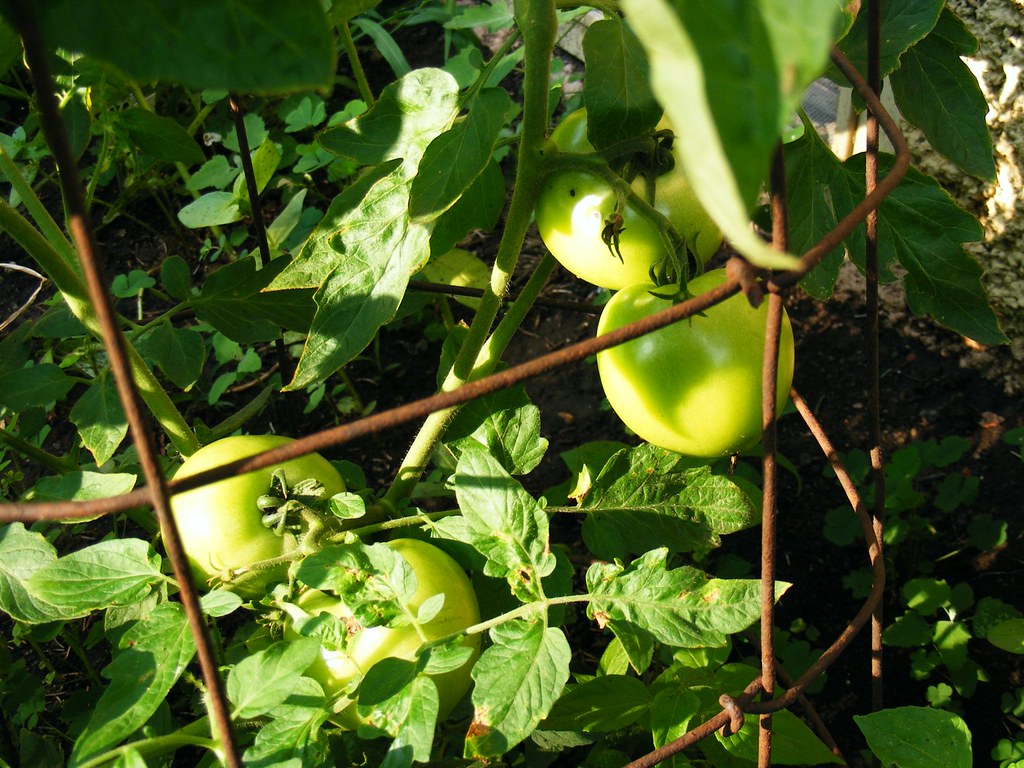 Talk about needing patience! This is the 'Bush Celebrity' tomato I have planted in the herb bed just behind the house. This particular variety never gets as big as other 'regular' varieties, but is a great tomato to grow if you're limited on space you have for them. They'll even grow happily in a big pot on your patio or terrace, which, if you decide to go that way, make sure to sprinkle some Basil seeds around the edges to keep them company. Basil should always accompany tomatoes nearby as they are perfect companion plants! In the garden and kitchen as well!
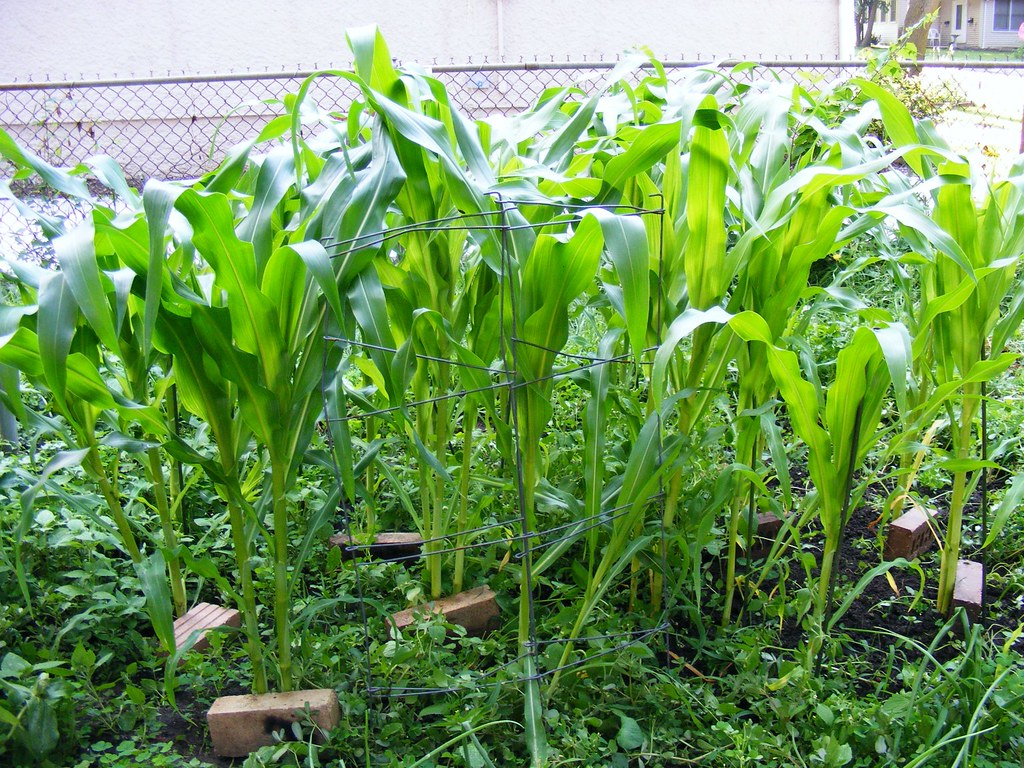 And finally, here's our corn patch today. Yes, it needs a good weeding, but we haven't gotten back that far yet in our never ending weeding sessions ... notice the bricks, tomato cage and stakes? Well, when I first went out back today, I was horrified to see about half the corn laying on the ground, beaten into near submission by those storms we had last night. Fortunately, they weren't snapped, so Fernymoss just hopped in and propped them all up with bricks, rocks and whatever we could find to give them support. The onions also took a bit of a beating, but that's less serious where they're concerned ... And now, I hear thunder in the neighborhood as we prepare for our next round of storms tonight. There are some really nasty ones moving in from Nebraska currently and I actually hope they miss us (supposed to arrive around 2:00 a.m. here). These storms have been producing high winds, large hail and torrential rains, and I think we can do without that. Yes, we needed rain, but with what we've had since Thursday night, Saturday night and now tonight, we can take a few dry days for things to recover a bit. I've really got to get working on that storm diverter to send them down Gail and Annie's ways when we've had our fill, but I'm not making much progress on it. Sorry, my Southern Garden Friends!
To conclude, I'd like to give a hearty shout out to Mr. McGregor's Daughter, a garden blogger in the Chicago area who has a fantastic garden and blog that demands to be visited. In perhaps one of the most informative and useful posts I've read this year on a garden blog, last week she detailed her method of eradicating the vile, pernicious and downright infuriating bindweed, the scourge of our (and others') gardens. I encourage any of you reading this who don't know her blog to stop by, at least for this post, The Squirrelhaven Method of Bindweed Eradication. You'll be glad you did!
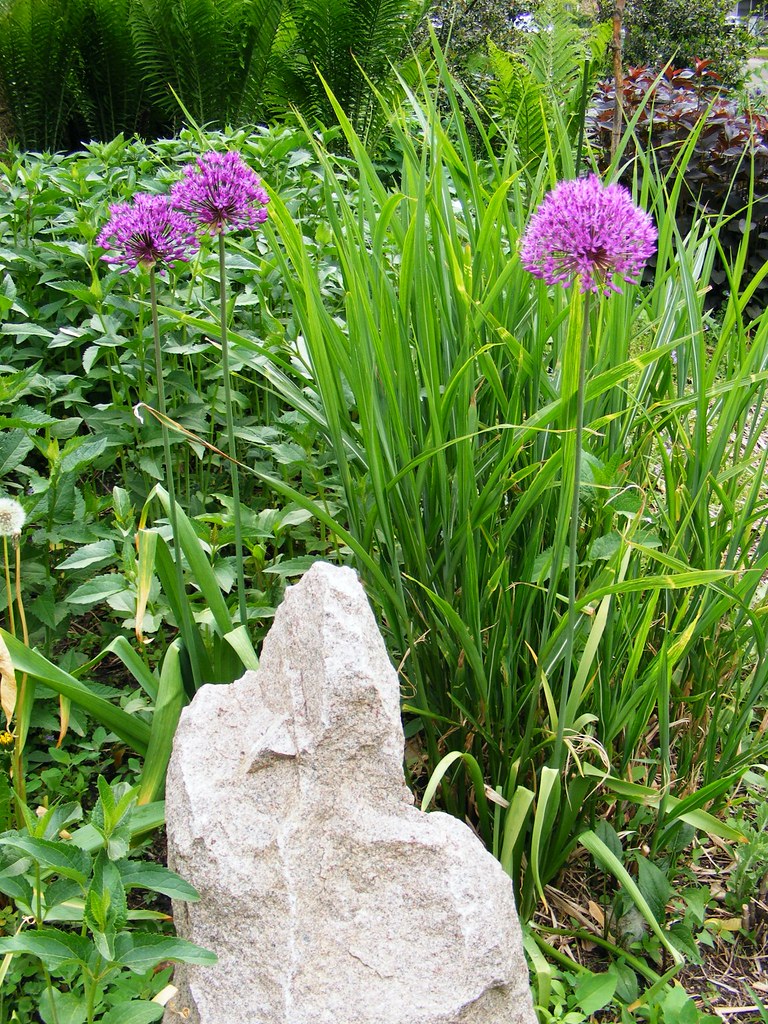
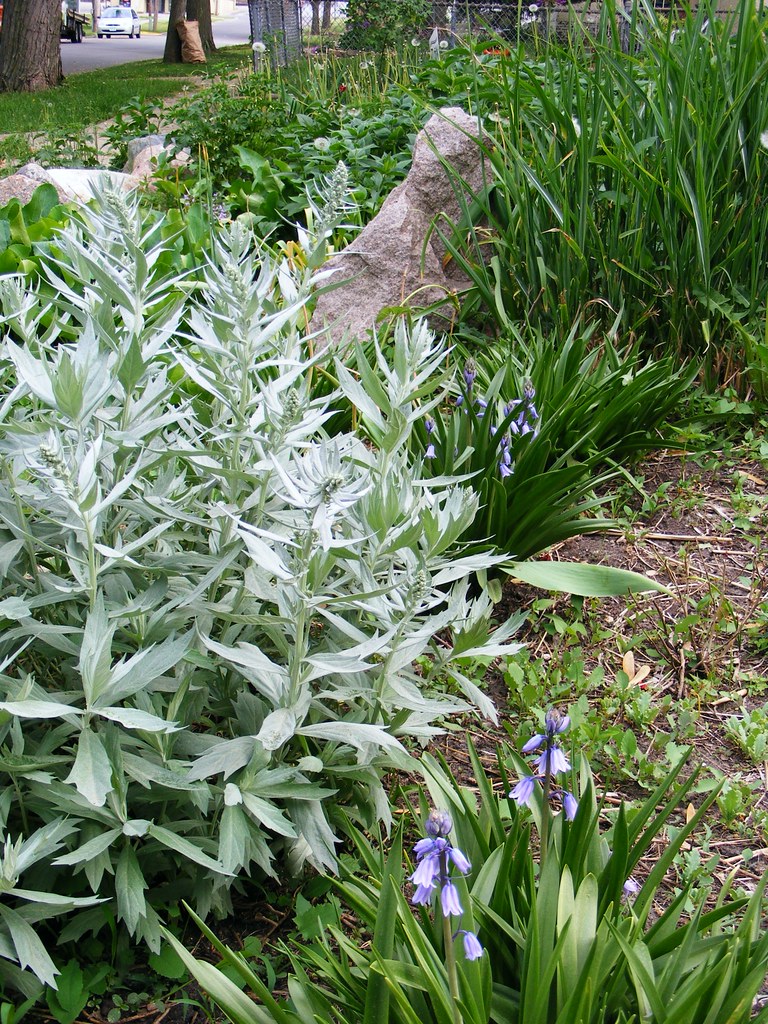 These two photos by Fernymoss, (taken on 22 May, 2008), show a couple of different perspectives of one of (what we consider) the highlights in the front boulder garden: Finger Rock. I think the nickname is pretty self-explanatory, but if not, we call it that because that's what image it summons up for us! When we had that huge pile of boulders and rocks to start with, we saw immediately that a few really had potential as accents in the garden we were building, and this was one of the first we put aside until the appropriate placement emerged in the bed. (Which didn't take too long once we started filling it all in!)
Let's look at them one by one ...
The first photo reveals a lot, first and foremost, the Globe Alliums that are currently demanding attention from behind the rock ... Directly behind it and a bit to the right is 'Porcupine Grass' (Miscanthus sinensis), a vigorous and very attractive tall grass we have really come to love in the past few years. Its only real drawback is that it's really easy to slice yourself up if you're unfortunate enough to get entangled with it (as I did last year when I slipped and fell backwards into it, causing some nasty cuts and lacerated skin), so admire from a distance! That veritable 'field' to the left is 'Bee Balm' (aka Monarda didyma), one of our real show stoppers come mid-June to early July, with its fiery red blooms massed in the ever increasing space it inhabits. This is one of the plants we share freely with interested gardeners because not only can it have a tendency to 'take over,' it actually appreciates and is stimulated by division every couple of years. We just dig up a good sized clump, fill in with topsoil and it's soon populated heavily again. It's a mint, remember ... and all mints have somewhat of an 'enthusiastic grower' reputation (to put it diplomatically!) In the background, you can see our (also ever increasing) stand of Ostrich Plume Ferns (Matteuccia struthiopteris), another of our fond memory favorites. (Boran2 are these the ones you have?) To the right of the ferns you can see Lysimachia vulgaris, a start of which was given to us by a gardening friend who swore it was yellow Bee Balm (though it bears no resemblance to it!) It's beautiful, but a bit of a thug, and we need to tame it a bit and dig a good bit up and get rid of it this year, either to willing takers or to the compost. The foliage is a very attractive reddish-maroon colour, and the profuse yellow flowers it produces in July and August are very pretty indeed. (You'll see more of this as it develops over the summer.)
The second shot is obviously dominated by this quite attractive Artemisia, the name of which I've forgotten,since we didn't save the plant tag that came with it (a common practice here, alas). I haven't had much luck determining exactly what it is, but it's pretty enough we like having it where is right now. It gets a bit unruly (e.g. threatens to take over) after it blooms (which is going to be soon, if you look closely), but we usually just give it a quick pruning (definitely cutting off the flowers, which are nothing to write home about!) and that seems to keep it in line for the rest of the summer. There are tons of seedlings in this shot, namely Zebrina Mallow, Calendulas and our neighborhood favorite, "Frank's Poppies" that are coming up all over the garden, getting ready to wow the passersby again this year. I think I can also spot a few 'Bells of Ireland' seedlings in this shot as well, though they tend to concentrate toward the front of the bed ... additionally you can see the last of our spring bulbs, Hyacinthoides hispanica, or 'Spanish Bluebells' or 'Wood Hyacinth.' These guys have really been spreading the past couple of years and we couldn't be more pleased to see them do that! When I originally planted these in fall 2005, I had purchased them from Park Seed, who claimed they were Scilla hispanica, so I was initially fooled into believing we just had a later blooming species of Scilla, even if they didn't even vaguely resemble Scilla's foliage or bloom type. That sent me to the Google of course, and I soon learned they were really a member of the Liliaceae and more closely related to the Hyacinths, which made a whole lot more sense. But what's in a name? They were a steal when I got them ... I got a box of 100 (yep, a hundred!) for $5, so they're showing up all over the place out front and along the walk. Every year they just seem to bloom better and better, and they were spared last year's late freeze period because they hadn't come up yet when we had that cold spell. And it's kind of nice to know that all the bulbs are definitely done when these bloom ... it provides a nice season changer to know that other flowers are about to claim the 'star' mantle in the display.
One last plant I'd like to point out is the 'Sea Holly' (Eryngium giganteum 'Miss Wilmot's Ghost'), one of our favorites that is close to achieving 'weed status' in its current position, but it's so unusual and pretty (and has the advantage of attracting many beneficial wasps) that I don't have the heart to go after it too aggressively (though Fernymoss has his differences with me on that particular issue!) Again, you'll be seeing more of it in future posts, but if you're curious at this point, just click the 'Sea Holly' label below and you'll get a preview of what's to come.
So that's the state of the garden at this point, and since I have some time off from work this week, I'll be out a few hours every day, weeding and planting our new annuals and perennials, as well as seeds as I get the areas cleared. Today, I cleaned out the small bed with the Primroses, in preparation to planting some coleus, nasturtiums, balsam, lupine seeds. The Toad Lily out there is already looking good in its second year and I expect great things from it come late summer ... so much to get done, but somehow we always seem to pull it off somehow! And with all the plants we got over the past two days, we have our hands full!
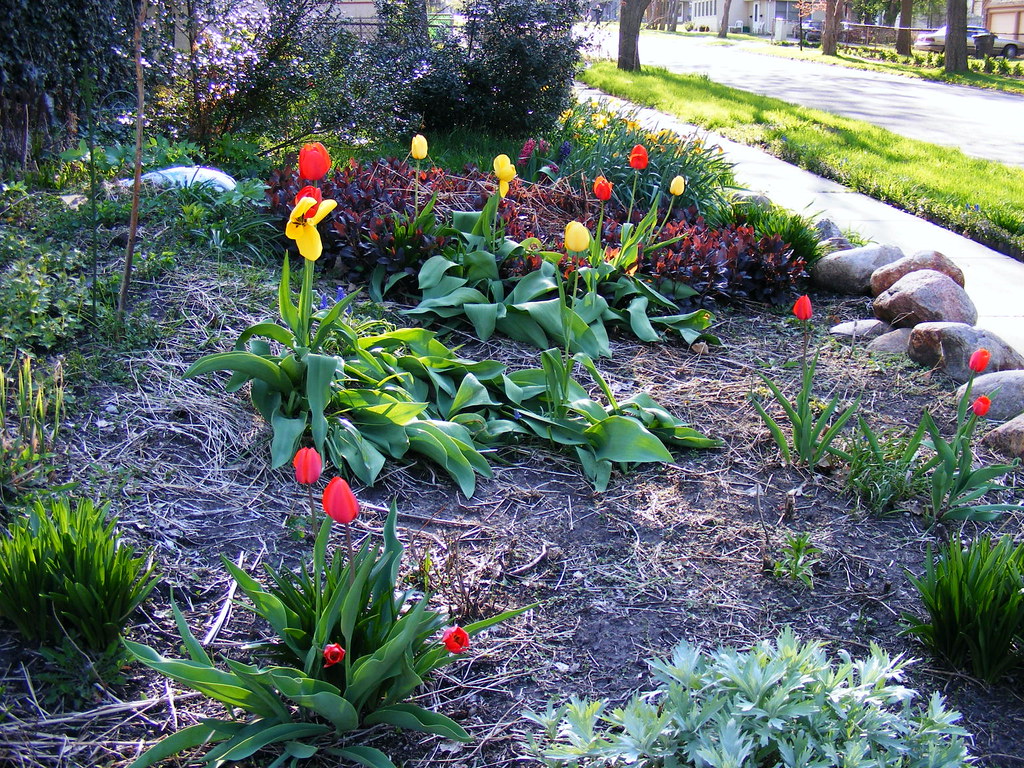 I thought that tonight I'd do something I probably don't do enough here, which is to give a more comprehensive look at the garden from a more global (ok, well maybe it should be continental) view. As regular readers know, I've been lamenting the devastating loss of more than half of the masses of tulips we had planted, so here's partial testimony to the extent of the damage caused by that abnormally long and cold few weeks we had last spring.
The tulips are actually performing a wee bit better than we expected them to in these areas, but keep in mind that where you now see a grouping there were once about 20 bulbs, each mass surrounded by a ring of about 20 grape hyacinths as well. A lot of the grape hyacinths seem to have succumbed as well, so overall, this portion of the front boulder bed is looking more than a bit wan this year.
This shot also affords a good perspective on some of the other perennials in this bed (at least the ones currently up). So here's what we have here, from the bottom left to right ... that crowded and happy looking clump of very green leaves just to the left of the tulips are the ever expanding Wood Hyacinths (Hyacinthoides hispanica) you'll in a few more weeks, as it's one of the very last bulbs to join the show in the late spring. To the right of the red tulips, we have an unknown variety (e.g. we lost the tag) of Artemisia, and the closest I've come (not very) to identifying it online is that it may be Artemisia pycnocephala, but I'm basing that entirely on the less than convincing picture in the Wikipedia entry. The blooms they show look pretty much like the ones on this plant. We planted it mostly for garden textural interest than for the blooms, and it's a vigorous grower that we have to cut back in early summer, lest it overwhelm everything around it. We also lost a few of its cousins this year as well, the 'Silver Mound' variety, Artemisia schmidtiana that I've been patiently tucking into spaces in the rocks out front. I will definitely be replacing those, because they've fast become one of my favorites among the Artemisias.
And to the right of the Artemisia in this photo, you'll find yet another clump of Wood Hyacinths. Directly behind it, and more to center of the bed, you can see a (still) very short plant coming up ... well this is some kind of minor miracle that I really hope pans out this year. It's a (reputedly purple) 'Turk's Cap' lily which I had given up for gone as recently as last year. But here it is! I'm hopeful we'll see something out of it this year, because they are a truly beautiful lily, and that's quite the praise coming from someone who's not really a fan of many of the fancy lilies cultivated today. I am hoping that in this case, the old garden adage of: the first year it sleeps, the second year it creeps, the third year it leaps. This is its third year here and I sure would love to see it do some leaping ...
Further back are tulips, of course and that maroon-purply-red mass of leaves is the ever expanding, and soon to be thinned out Lysimachia a friend gave us back in 2004 telling us that it was 'Yellow Bee Balm,' well that didn't quite pan out obviously once it got going, and now we fear that it may try to rule things out there, so it's soon due to meet the shovel or ax! It does have its merits, growing into a shrub like monstrosity with interesting foliage and very pretty proliferous yellow flowers. Beyond that, you can see the beginnings of the Woodland Garden, with that planting of Daffodils and Hyacinths which should look familiar as it is the one I featured in a post last week. Further beyond, you can see our Hollies (1 Male, 2 Female), behind which is an assortment of ferns, Bleeding Hearts (Dicentra spectabilis) and two species of Ligularia dentata, and Ligularia stenocephala which are now up but far from blooming stage yet. There are also several 'Alpine Blue' (Aquilegia alpina) in front of the hollies and when they're blooming you'll see them here. Of course there's a lot more going on than can be seen in this shot, but I'll plan on trying at least once a week from now on to get a 'documentary' shot up here so we can all gauge the progress over the coming months. Stay tuned ...
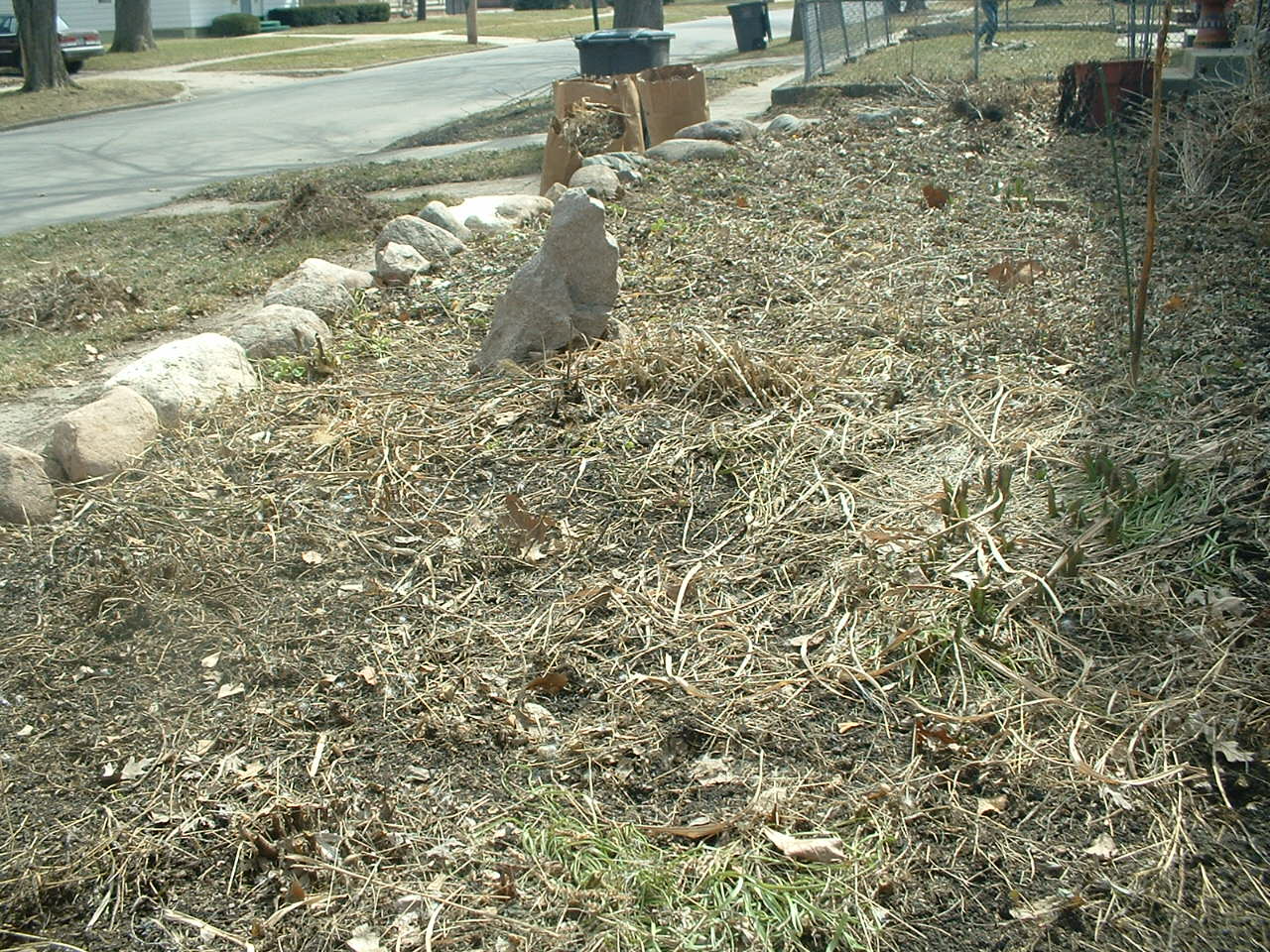 Here's a shot taken of the front bed after we'd had enough of three hours of intensive work cleaning up out front on Saturday. It still looks pretty barren and brown right now, but if you're willing to spend the time examining it, you'll see there's a lot coming up here, especially the spring bulbs! How many can you pick out from this shot?
At least the snow is finally gone (we hope) and the greening of Casa IVG has finally begun this cycle. Keep this view in mind, as I'll update it periodically as the season progresses ... barring any harsh returns to winter, it's looking to be a spectacular spring show this year!
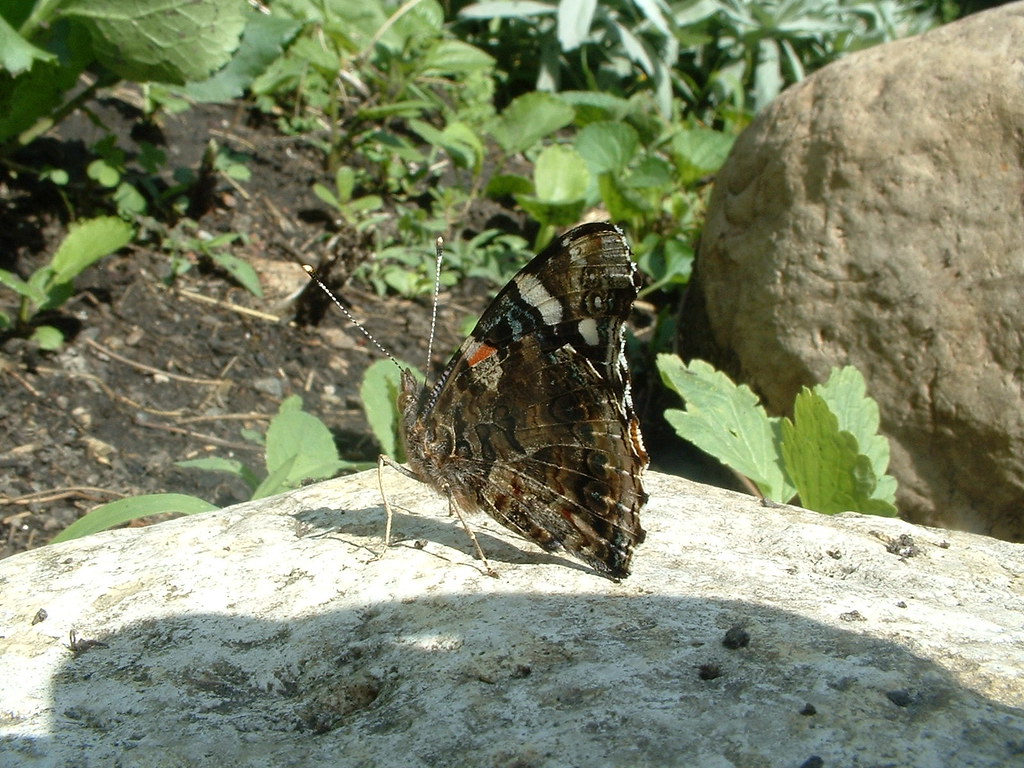 Fernymoss was out working a bit and taking pics in the Woodland Garden on Friday and happened to catch this little beauty taking a break on one of the rocks in the front boulder bed. Though I can't remember the proper name for this species, the common name is Painted Lady, and we see quite a few of them around over the course of the spring and summer. They have fantastic markings on them, especially if you can catch them with their wings spred. Unfortunately this one took off before he could get such a shot, but this one is remarkable for the depth of focus and incredible detail you can see, right up the stripes on the antennae. Make sure you click the larger version. (Right click, open in new tab ... for Firefox users ... and if you haven't made the switch to Firefox yet, get yourself to Mozilla.com and get started! Nothing has so positively changed my internet browsing as moving over to Firefox, and it's a relief to finally be rid of MSIE! That was an uncompensated testimonial there, by the way!)
It's great to have the butterflies becoming more numerous of late, and I hope that's a good augur of things to come this summer in our garden. As more and more plants come into bloom, we should be able to bring more examples to Urban Oasis ... so keep stopping by. Summer has yet to arrive and Spring still has some surprises in store for the garden!