skip to main |
skip to sidebar
 I suspect that by now, any gardeners who happen by here are already quite familiar with the good old Purple Coneflower, Echinacea purpurea, a native prairie flower to a wide swath of states ranging from Zones 3-8. Around Iowa, it's virtually a must have in most perennial gardens, and can even be seen growing wild along country roads, along with various Rudbeckias, a delightful sight to see when driving into the more rural areas.... There's been quite a bit of coneflower coverage on other gardening blogs I frequent recently and Gail had a great post earlier this month about her visit to a Cedar Grove, which included several great photos of the native Tennessee Coneflower, which I'm now itching to get and try out here. This first shot is an overall view of the front boulder bed as seen facing North from the steps in the front of the door ... As you can see, the Monarda is still blooming, though looking a bit rattier for wear in the recent very hot and dry weather ... At least we're getting storms off and on all night and into tomorrow, so the garden will get a good watering. Oh boy, all those weeds I saw out there tonight will be loving that, and I'll be hating pulling them this weekend ....
 Joy! I think these two shots are pretty self-explanatory, given my recent obsessing about our sudden lack of bumblebees around here ... I do love how this almost captures the movement of the wings ... and as you should know by now, bee butt shots are a favorite around these parts ....
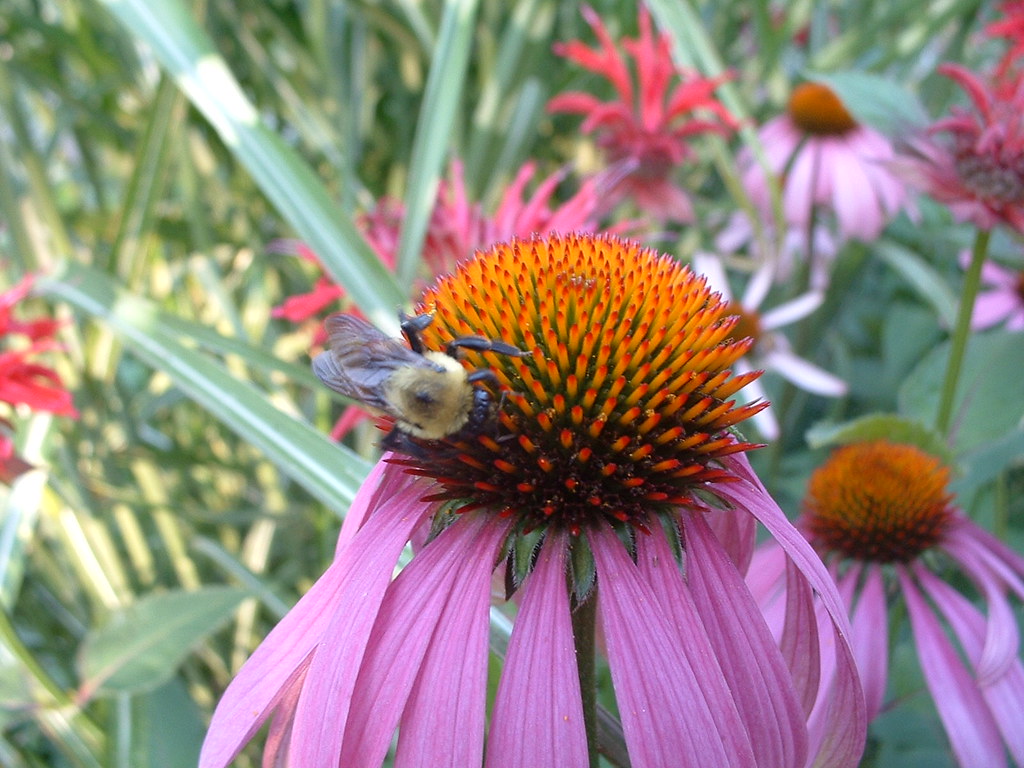
 Yep, more bee butt, but isn't he elegantly posed as he works away? I love the early phases of the Coneflower bloom cycle, when the cones positively glow orange and attract droves of bees and butterflies to them ... I've often wondered what butterflies really get out of Coneflowers, but going over some of the hi-res versions of these photos tonight at various levels of zoom revealed a whole nectary concoction among all those bristles (?) comprising the cone. There's a lot more going on down deep in these flowers that the ordinary eye doesn't begin to document or appreciate. If you grow Purple Coneflowers for no other reason, you should definitely have it in the sunny perennial bed as a great food source for our favorite garden denizens ...
 Here you can really see that glow ... those "bristles" remind me of birthday cake candles for some reason ... and you can begin to get an impression of the nectary concoction down further....
 Here's a bit of a mutant that Fernymoss discovered among the throngs out front ... it has a small "fan" second row of petals emerging, and we'll have to keep an eye on this one to see if it continues to develop this way. Proof that they're ever evolving, even at the most basic level. I don't know about you other gardeners out there, but I'm pretty dubious about some of the newer Coneflower hybrids being developed over the past few years, and most leave me cold, except some of those true orange ones, but what's a Leo to do? Call me a purist or plant Luddite, I think sticking with the tried and true Echinacea is the way to go. Besides, we never lack in Coneflower stock, and have been pulling them lately ... the high price of success sometimes in the overall garden, alas.
So there you have it. The first blush of Coneflower lushness and glory currently in bloom. July is definitely here now: it's often intolerably hot and humid, yet dry. Tonight we're getting a much needed break with some rain, which ironically, was much needed. I think the garden is going to be looking much happier tomorrow (with more rain forecast), which is always a good thing. I think the corn is about 3-4 ft tall now, so with any luck we should have our own corn within a month, as well as the tomatoes, who have been enjoying the blast furnace heat of the last few days. And the pumpkin patch is growing like crazy and may try to engulf areas of the veggie garden ... but we'll put a detour in place, should that happen. Such is the state of things around Casa IVG today ... onward to weeding and planting this weekend. We swear those last few perennials are going in!
Photos by Fernymoss, taken July 17, 2008.
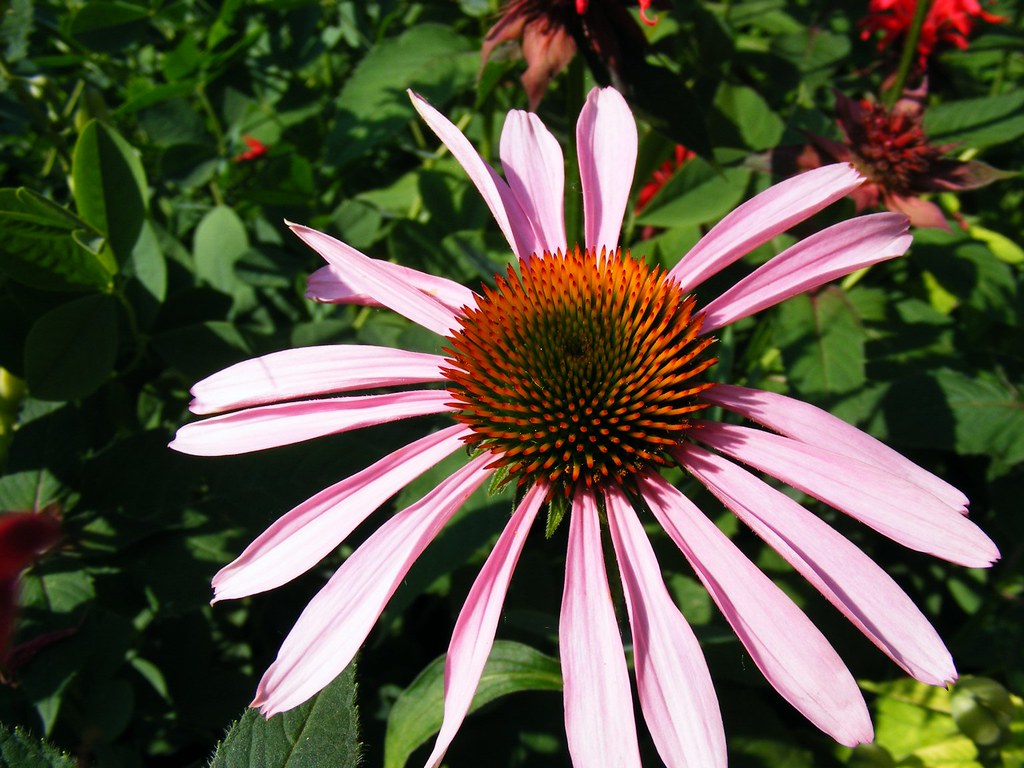
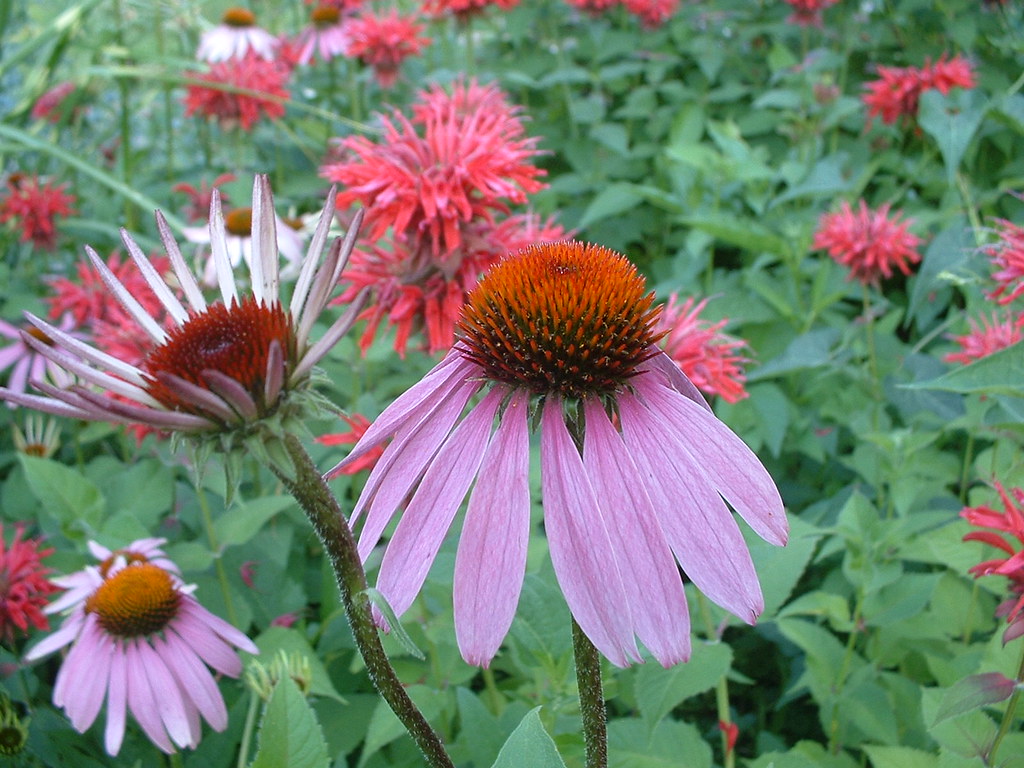
 Tonight I just thought I'd give a preview of Coneflowers to come because they're really starting to pop into bloom all around the garden. I took these two particular shots in the back corner flower bed (the savage --truly-- one) where they grow in amongst the Bee Balm. I never tire of photographing Coneflowers, because they're fascinating at nearly every step of the bloom cycle, even when the plants have died back and have lovely little 'Snow Cones' atop them in December and January (and February, and on...) And though I've probably taken hundreds of shots of the cones (with and without bees), I am still thrilled when I get a really crisp image, with all its orange and yellow gradations of color ...
 This second shot I just had to take, because early on, Coneflowers sure can assume some rather otherworldly poses at times, thus my whim to shoot down on this flower to accentuate that a wee bit. I've always marveled at how green they are to start, and how much the shades of the flowers change over the bloom cycle. We have a few plants who do this to some extent (Butterfly Weed, for example), but the one I really like (but don't have this year) is Lantana, who goes through some simply amazing color changes as it blooms. I almost envy those folks in Arizona who can grow Lantana the size of shrubs! But then, I'd have to live in Arizona, and I'd rather stay here in Iowa, even with our snows and floods.
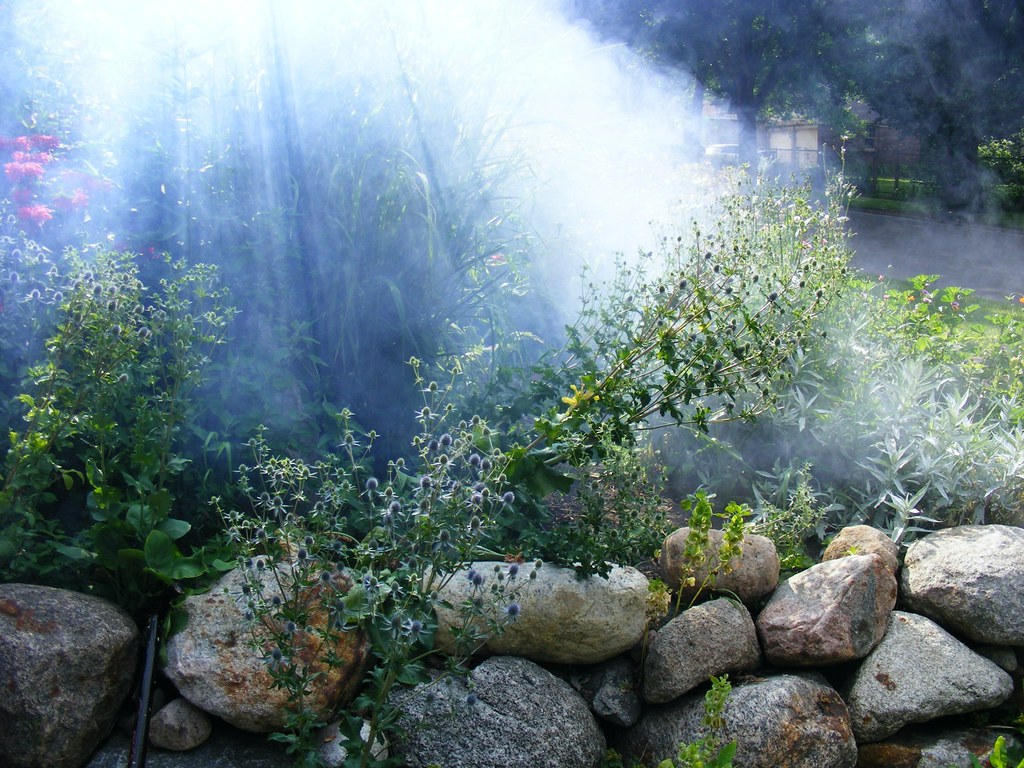
 Ok, you might have started wondering what this third shot is all about ... for those of you who saw the recent Smoke Bomb series, this is the tail end of the show ... I was hoping to catch those rays of sun, because speaking of otherworldly, that was definitely a unique perspective for a few minutes.
But the real reason I wanted to share this shot is because it captures the Eryngium, Miss Wilmot's Ghost engaged in some serious garden acts of profligate abandon ... and, as I've mentioned, it's gotten a bit out of hand this year, so I (regretfully and apologetically) had to just pull quite a few (6 or 7) to make space for other plants and re-introduce at least a bit of decorum to this particular spot out front. In fact, I've been working on a post about the changes we made last weekend with the weeding and new planting, but I haven't gotten the "after" shots to compare to before we got down to work.
Now, lest I be scaring off potential Eryngium growers, I'd like to emphasize that it is not an invasive plant. It's just overly exuberant this year and needed some serious thinning out, not just for the convenience of having more planting space, but for the general welfare of the plants themselves. When they get too profuse in too small a space, like most plants they will tend to be spindly, leggy and unable to reach their natural height (about 30-36 inches). This is for the betterment of the colony, I kept telling myself ....
What really hurt my plant feelings was having to pull two beautiful, foot tall blooming volunteers of Rue (Ruta graveolens). We tried all Spring to find homes for these two, who were growing closely together and totally shading out my struggling Maltese Cross plant, so they had to go. We had no takers, so out they went on Sunday, destined for the City Compost. Two more plants I extended apologies to as I was clearing out the rampant weeds we had come up after those recent heavy rains. I also pulled all the spent Pink Peony Poppies because they too had run rampant, and though I appreciate a few in this space, they were out of control this year. They also got a ticket to the compost ... as did a couple of wheelbarrows full of various and sundry weeds. My muscles are still aching from all that yanking and digging I did over the weekend, but it was really satisfying to get a good start on bringing less chaos and more color to the front Boulder Beds! Now, once I can get the rest of those perennials in, I'll breathe quite a bit easier because that will be the end of the new acquisitions for the year! Oh boy ... then I'll be able to focus entirely on pulling weeds for the rest of the summer! (And more time to take photos of what's going on in the garden, flower and critter wise!)

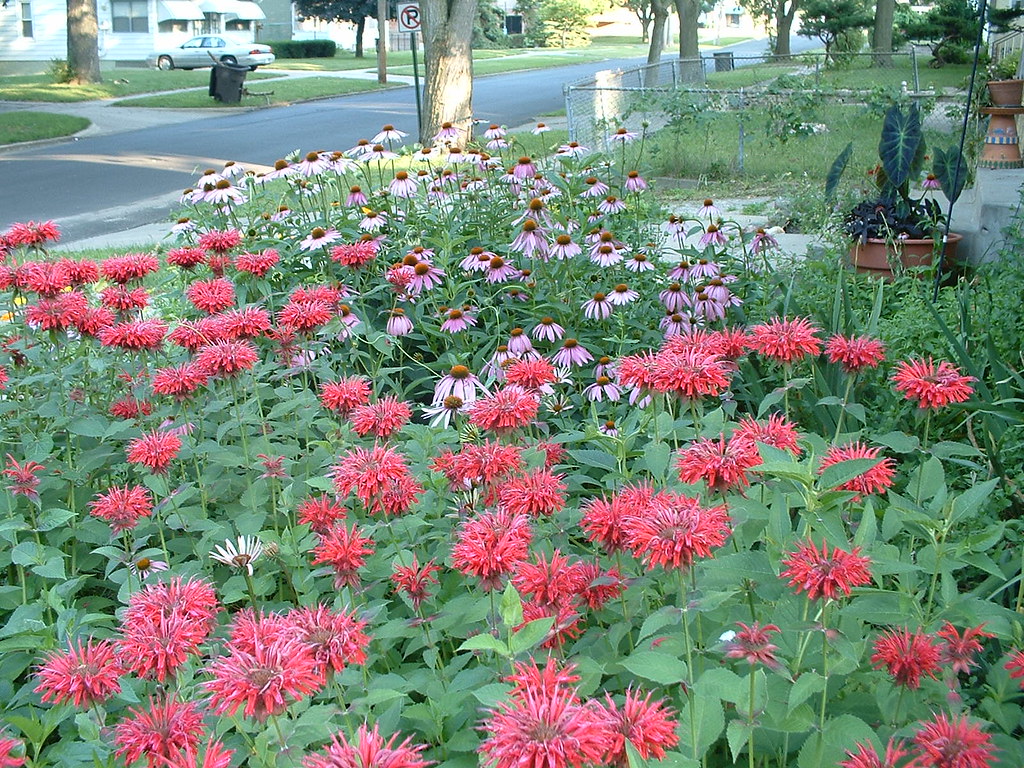
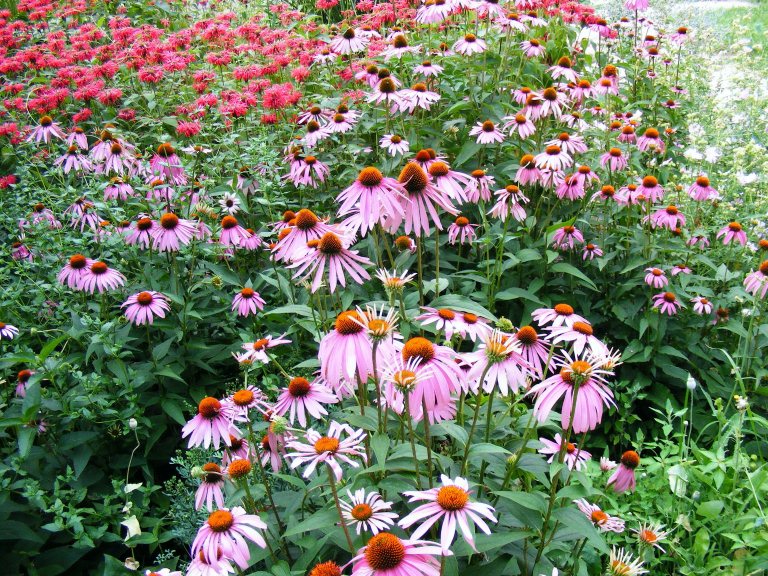
 Just a quick bonus post for tonight to show off some more perspective of the "field" of Bee Balm and Purple coneflowers, just to give you an idea of how they look in the larger garden scheme. The first shot was taken facing south (from the edge of the original bed. In the background of this one, you can see our new Black Elephant Ear in the large pot by the steps ... it's also the home to the 'Blackie' sweet potato vine I featured last week when it was blooming (and it still is).
The second shot faces north, which gives a sense of what lies beyond them in the newer corner bed where you can see the Porcupine Grass and just a glimpse of the yellow Lysimachia to the far left. To the right, you can see our infamous intersection, which floods regularly during heavy rain storms, and often strands fools silly enough to attempt to drive through what is often over a foot or two of water! Some people just never learn ....
 Purple coneflowers (Echinacea purpurea) have, over time, become garden staples at least here in our part of the country, where it is native to the midwest and prairie states. This stand took up residence here back in 1999 when we first started planting up the area out front, and if memory serves, I think we just planted three very small ones that year. They've spread rapidly since then and every year we either have to pull a lot of new ones growing in inopportune places or we just give them away to other gardeners.
We never go wanting for these splendid summer beauties and know we can always count on a good two months' bloom period before they start to wane in the fall. They're bee magnets (as you can see in the last two shots here today), butterflies love them and when the cones dry up in the fall, we're usually visited frequently by appreciative goldfinches who love the seeds. They also, I suspect, account for why there are always so many new seedlings coming up everywhere, given birds' messy ways of eating!
 Aside from their sheer beauty and food value for desirable garden visitors, Echinacea purpurea also is a splendid choice for many other reasons ... its reputed medicinal value among others. Its easygoing yet tough nature makes it an almost ideal perennial for those who want low maintenance colour in the garden, because once well established, they are very drought tolerant and thrive in the hot sun of the mid summer months. And with a bloom time from late June through September it's hard to fault these hard working plants on any count!
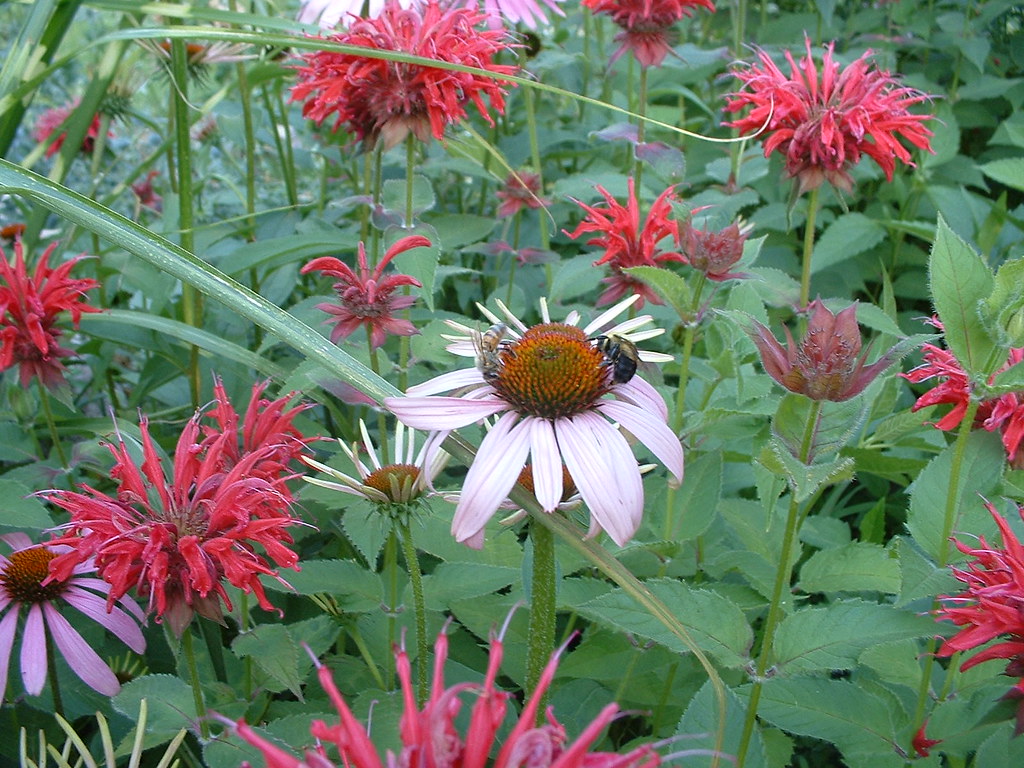
I took these shots early this evening, just as the bees were really getting going feeding on the coneflowers and neighboring bee balm, and just after I came inside to upload these photos, our friend the hummingbird was back working the bee balm as well. When I went back out after uploading these, the whole front bed was just buzzing with activity with dozens of bumblebees and honey bees busily visiting the area.
 The first shot is an angle I thought rather demonstrative of their growing space, along with the Bee Balm (which alas is starting to fade a bit when you get up close). The second is one of my favorite ways to get coneflowers up close ... with a bee! That's pretty easy to do usually, with our hive of bumblebees somewhere in the yard, so I can just about count on being able to capture at least a few if I bide my time. And in the third shot I even managed to get not one, but two kinds of bees ... a honey and bumblebee working separately on the same flower. There had been three on it at once but the other one flew away right before I got this shot. We really know summer has truly arrived when the scene out front takes on these wonderful hues of red and purple, and we can be assured that the blazing month of July is fully underway. Soon the hibiscus will be dazzling us ... and frankly, I can hardly wait!
 I suspect that by now, any gardeners who happen by here are already quite familiar with the good old Purple Coneflower, Echinacea purpurea, a native prairie flower to a wide swath of states ranging from Zones 3-8. Around Iowa, it's virtually a must have in most perennial gardens, and can even be seen growing wild along country roads, along with various Rudbeckias, a delightful sight to see when driving into the more rural areas.... There's been quite a bit of coneflower coverage on other gardening blogs I frequent recently and Gail had a great post earlier this month about her visit to a Cedar Grove, which included several great photos of the native Tennessee Coneflower, which I'm now itching to get and try out here.
  Joy! I think these two shots are pretty self-explanatory, given my recent obsessing about our sudden lack of bumblebees around here ... I do love how this almost captures the movement of the wings ... and as you should know by now, bee butt shots are a favorite around these parts ....
 Yep, more bee butt, but isn't he elegantly posed as he works away? I love the early phases of the Coneflower bloom cycle, when the cones positively glow orange and attract droves of bees and butterflies to them ... I've often wondered what butterflies really get out of Coneflowers, but going over some of the hi-res versions of these photos tonight at various levels of zoom revealed a whole nectary concoction among all those bristles (?) comprising the cone. There's a lot more going on down deep in these flowers that the ordinary eye doesn't begin to document or appreciate. If you grow Purple Coneflowers for no other reason, you should definitely have it in the sunny perennial bed as a great food source for our favorite garden denizens ...
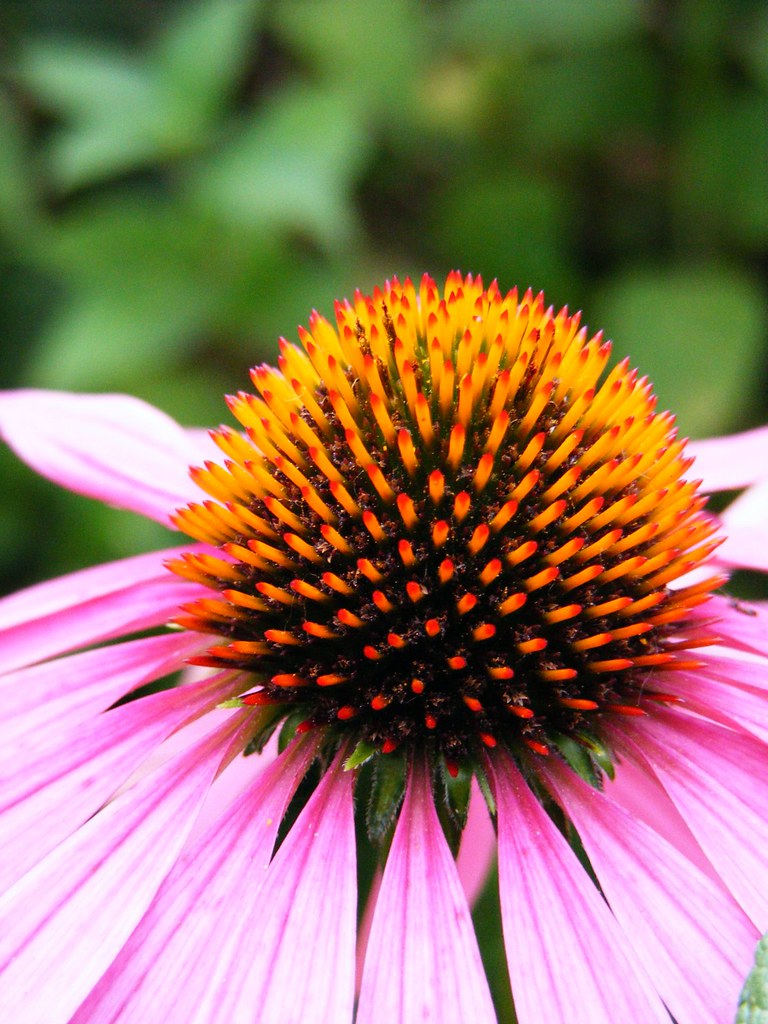 Here you can really see that glow ... those "bristles" remind me of birthday cake candles for some reason ... and you can begin to get an impression of the nectary concoction down further....
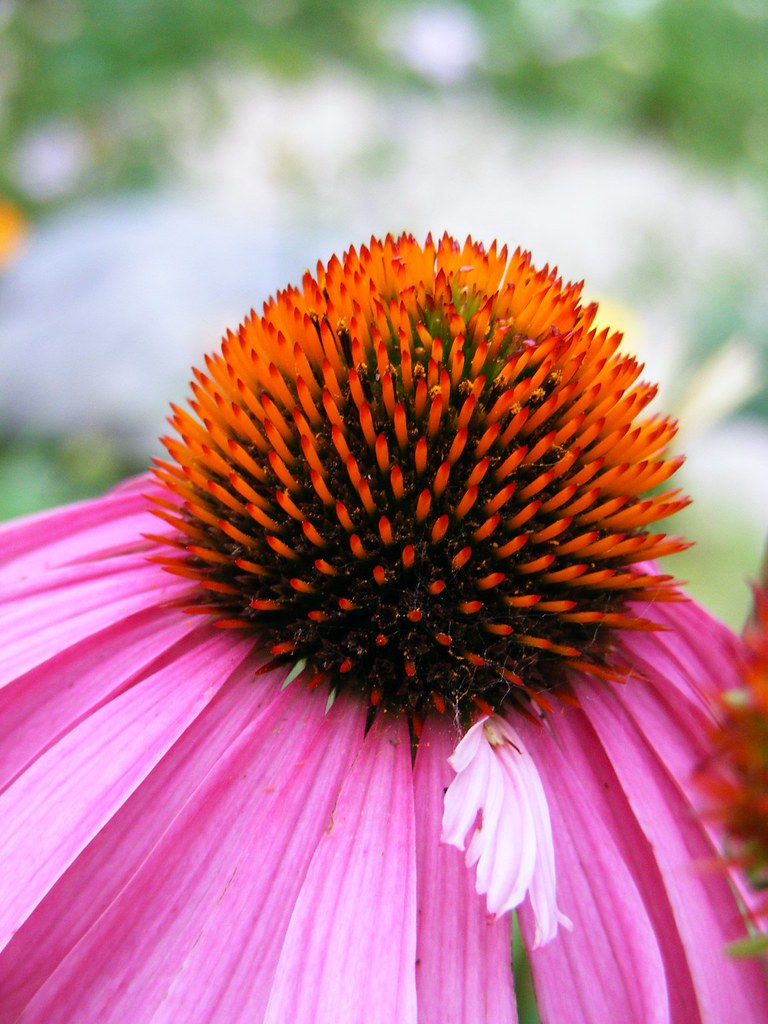 Here's a bit of a mutant that Fernymoss discovered among the throngs out front ... it has a small "fan" second row of petals emerging, and we'll have to keep an eye on this one to see if it continues to develop this way. Proof that they're ever evolving, even at the most basic level. I don't know about you other gardeners out there, but I'm pretty dubious about some of the newer Coneflower hybrids being developed over the past few years, and most leave me cold, except some of those true orange ones, but what's a Leo to do? Call me a purist or plant Luddite, I think sticking with the tried and true Echinacea is the way to go. Besides, we never lack in Coneflower stock, and have been pulling them lately ... the high price of success sometimes in the overall garden, alas.