 I suspect that by now, any gardeners who happen by here are already quite familiar with the good old Purple Coneflower, Echinacea purpurea, a native prairie flower to a wide swath of states ranging from Zones 3-8. Around Iowa, it's virtually a must have in most perennial gardens, and can even be seen growing wild along country roads, along with various Rudbeckias, a delightful sight to see when driving into the more rural areas.... There's been quite a bit of coneflower coverage on other gardening blogs I frequent recently and Gail had a great post earlier this month about her visit to a Cedar Grove, which included several great photos of the native Tennessee Coneflower, which I'm now itching to get and try out here.
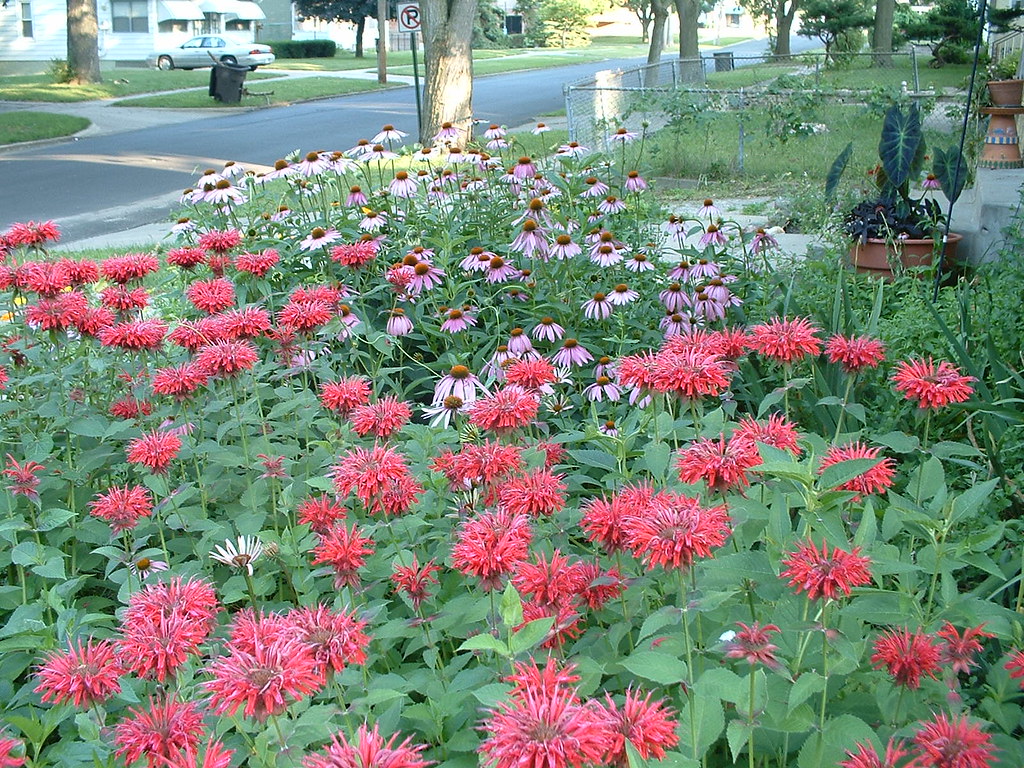
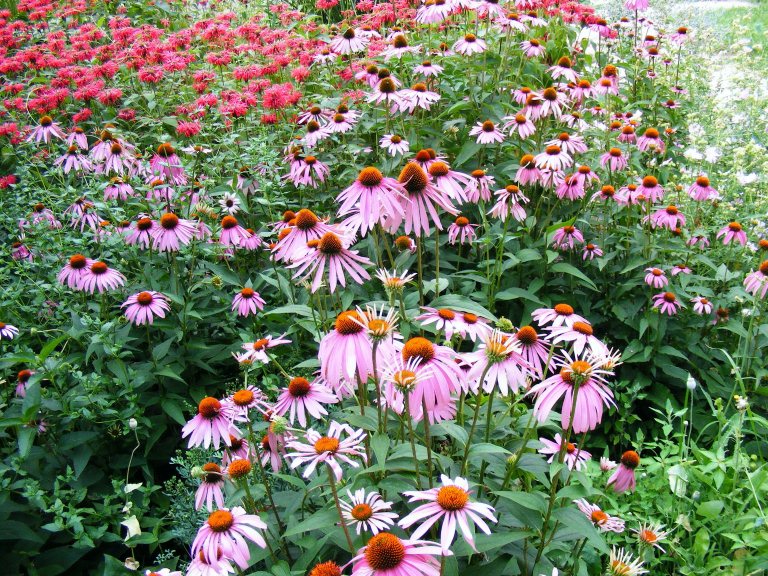
 This first shot is an overall view of the front boulder bed as seen facing North from the steps in the front of the door ... As you can see, the Monarda is still blooming, though looking a bit rattier for wear in the recent very hot and dry weather ... At least we're getting storms off and on all night and into tomorrow, so the garden will get a good watering. Oh boy, all those weeds I saw out there tonight will be loving that, and I'll be hating pulling them this weekend ....
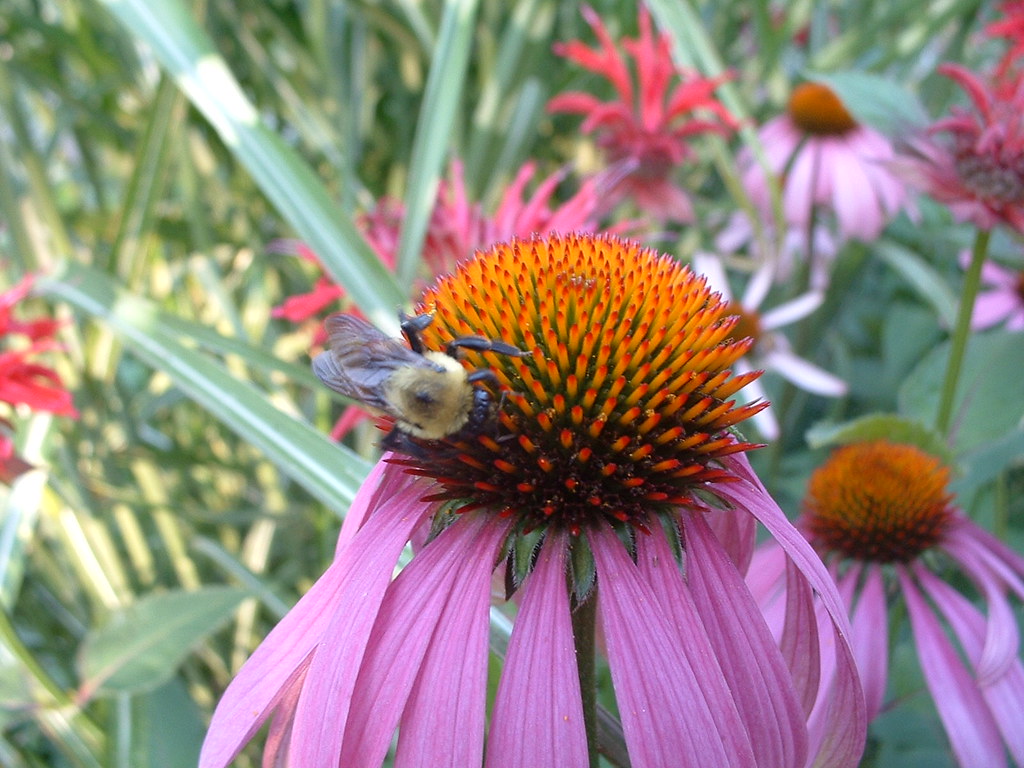
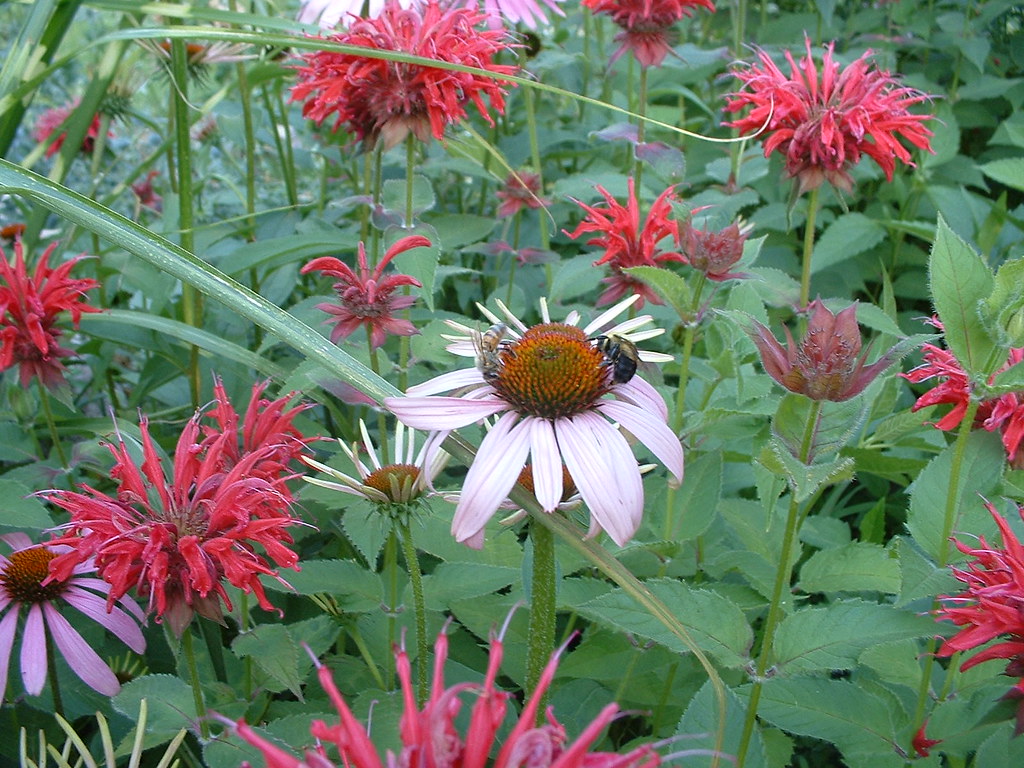
 Joy! I think these two shots are pretty self-explanatory, given my recent obsessing about our sudden lack of bumblebees around here ... I do love how this almost captures the movement of the wings ... and as you should know by now, bee butt shots are a favorite around these parts ....
 Yep, more bee butt, but isn't he elegantly posed as he works away? I love the early phases of the Coneflower bloom cycle, when the cones positively glow orange and attract droves of bees and butterflies to them ... I've often wondered what butterflies really get out of Coneflowers, but going over some of the hi-res versions of these photos tonight at various levels of zoom revealed a whole nectary concoction among all those bristles (?) comprising the cone. There's a lot more going on down deep in these flowers that the ordinary eye doesn't begin to document or appreciate. If you grow Purple Coneflowers for no other reason, you should definitely have it in the sunny perennial bed as a great food source for our favorite garden denizens ...
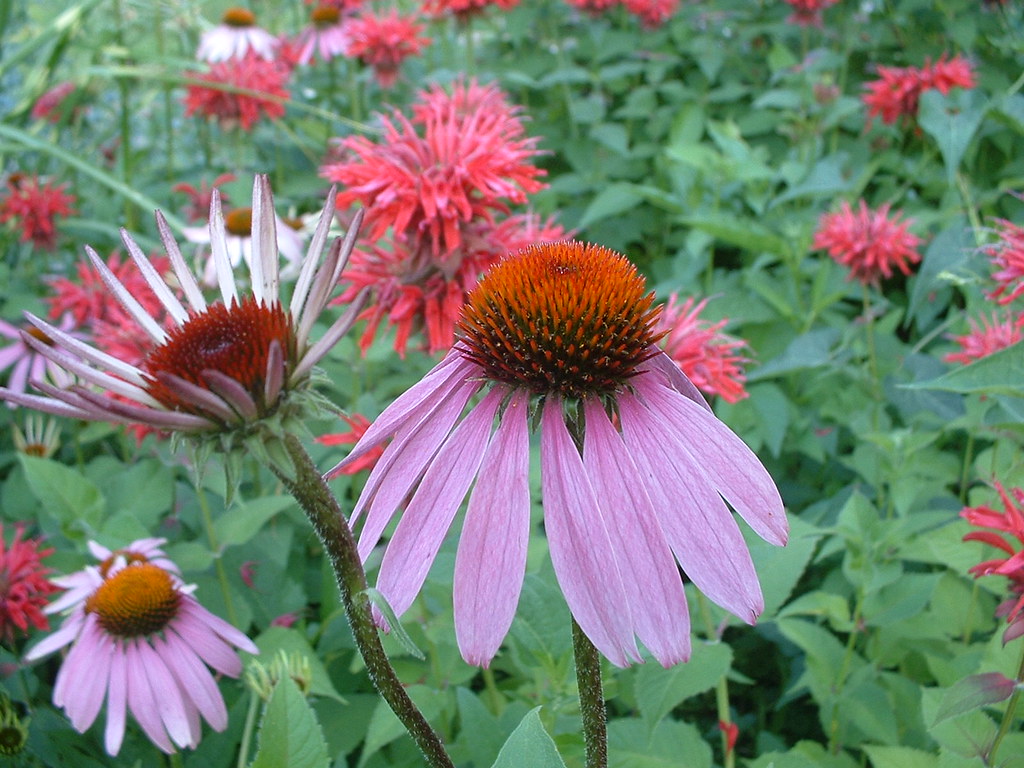
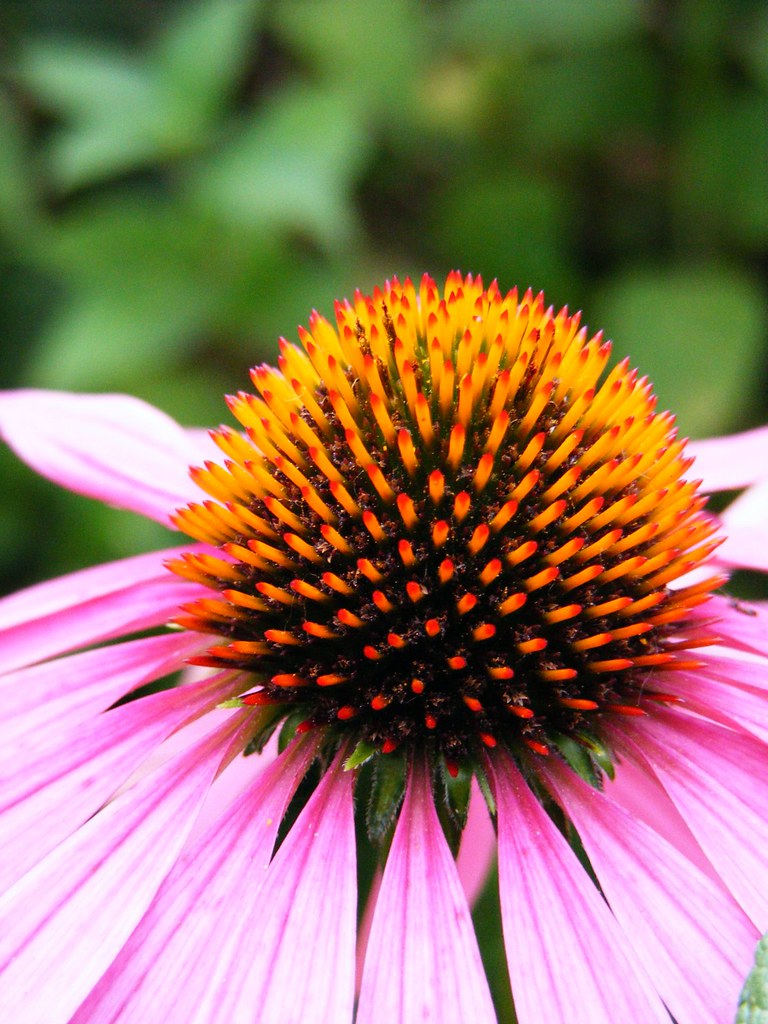 Here you can really see that glow ... those "bristles" remind me of birthday cake candles for some reason ... and you can begin to get an impression of the nectary concoction down further....
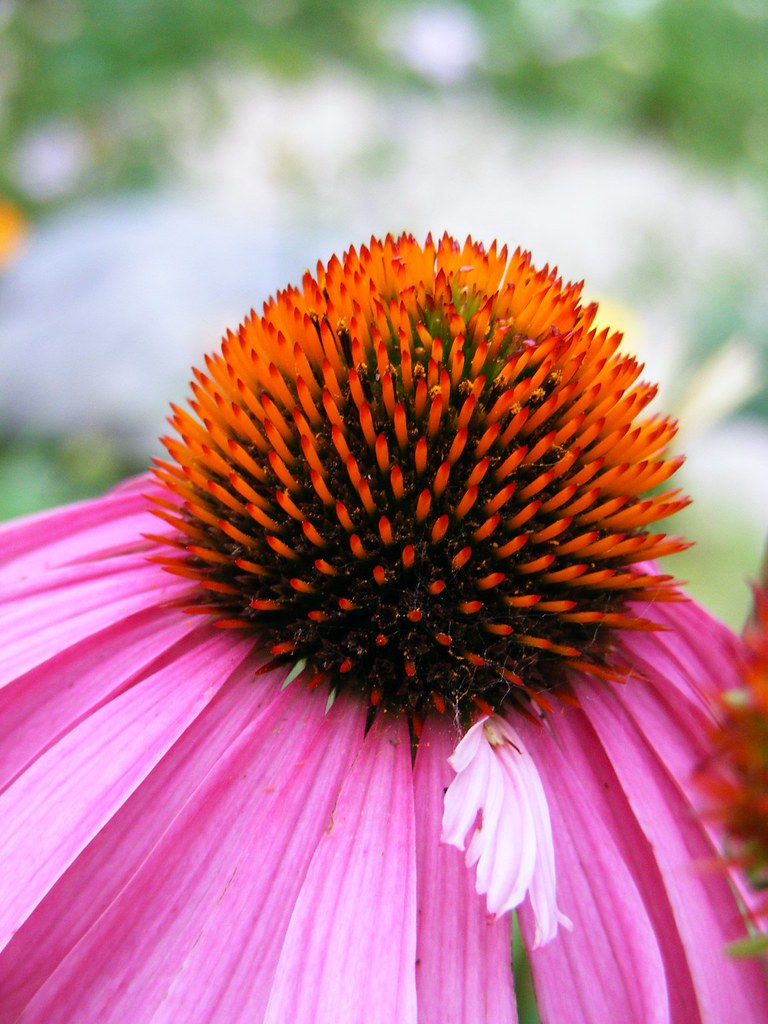 Here's a bit of a mutant that Fernymoss discovered among the throngs out front ... it has a small "fan" second row of petals emerging, and we'll have to keep an eye on this one to see if it continues to develop this way. Proof that they're ever evolving, even at the most basic level. I don't know about you other gardeners out there, but I'm pretty dubious about some of the newer Coneflower hybrids being developed over the past few years, and most leave me cold, except some of those true orange ones, but what's a Leo to do? Call me a purist or plant Luddite, I think sticking with the tried and true Echinacea is the way to go. Besides, we never lack in Coneflower stock, and have been pulling them lately ... the high price of success sometimes in the overall garden, alas.
So there you have it. The first blush of Coneflower lushness and glory currently in bloom. July is definitely here now: it's often intolerably hot and humid, yet dry. Tonight we're getting a much needed break with some rain, which ironically, was much needed. I think the garden is going to be looking much happier tomorrow (with more rain forecast), which is always a good thing. I think the corn is about 3-4 ft tall now, so with any luck we should have our own corn within a month, as well as the tomatoes, who have been enjoying the blast furnace heat of the last few days. And the pumpkin patch is growing like crazy and may try to engulf areas of the veggie garden ... but we'll put a detour in place, should that happen. Such is the state of things around Casa IVG today ... onward to weeding and planting this weekend. We swear those last few perennials are going in!
Photos by Fernymoss, taken July 17, 2008.