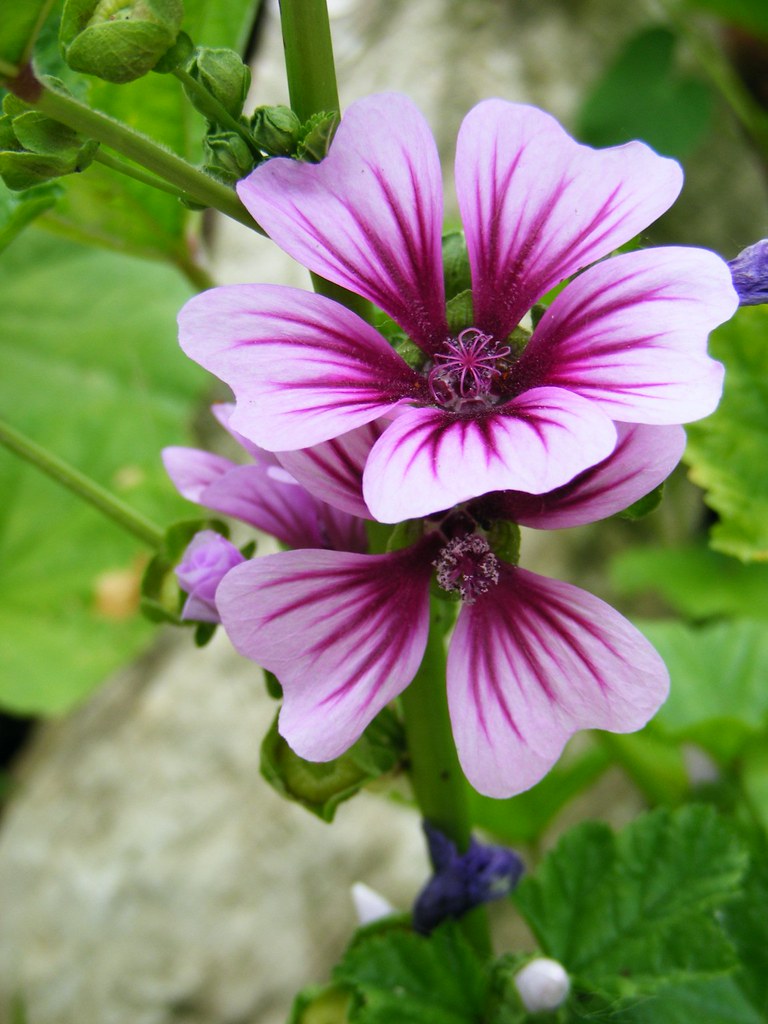
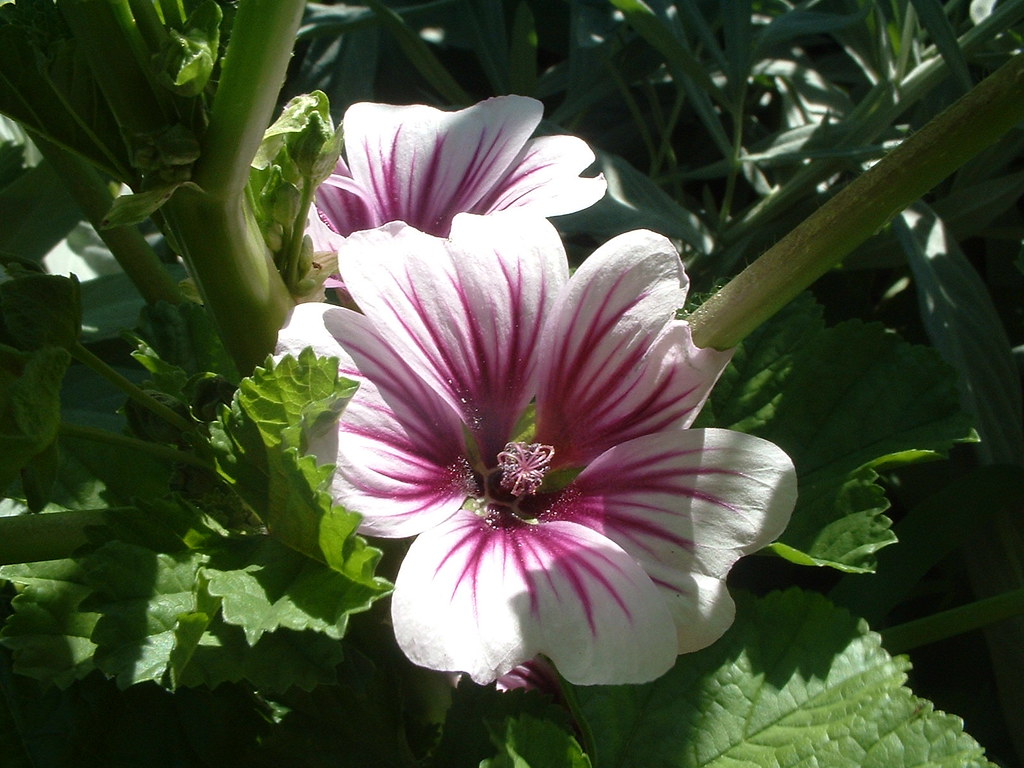
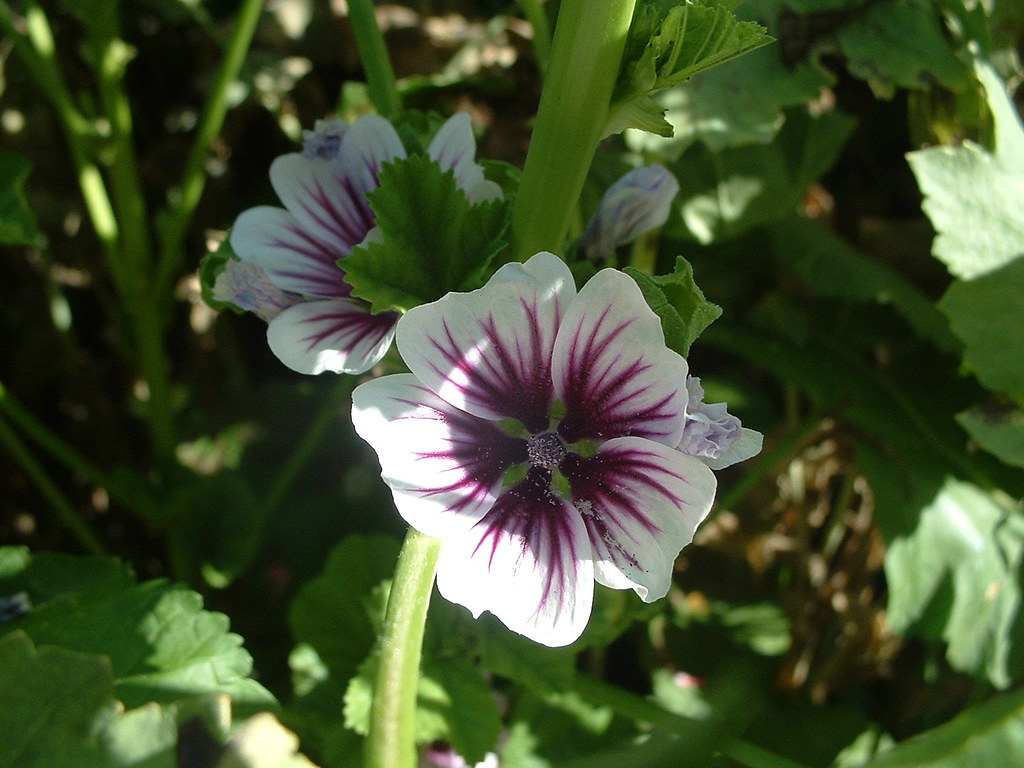
I mentioned last night that "some mallows just find us," and this was the precisely the one to which I referred, our Pink Prairie Mallow (Sidalcea malviflora). The ancestors of this carefree beauty arrived in our garden during its second year, long before the Boulder Bed was planned. At that point we had worked up most of the level area at the top of the front yard slope, and that small area was the garden at that point (1999). As we were doing our spring bed cleaning, we discovered a small seedling that sure didn't look like a weed, and in fact, it had leaves suspiciously reminiscent of some kind of Mallow, so we just let it go.
 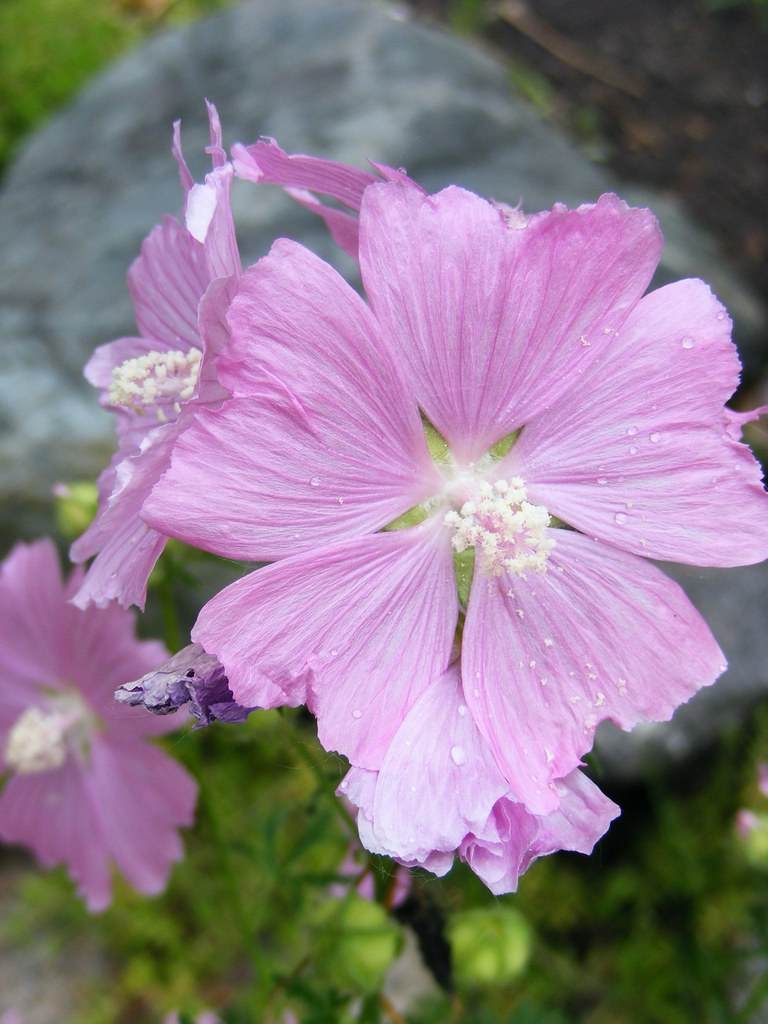 And, as you can see, this is what the mystery seedling grew up into over the course of the summer, a graceful and floriferous lovely that usually tops out at about 30-36 inches, and usually maintains its nice, bushy habit until late summer and early fall when it begins to decline inevitably. Of course, by the time it bloomed, we had determined that it was a Mallow, but not one of the more familiar ones we already knew. So we got out the plant books and went searching, only to find that it's commonly just called 'Prairie Mallow' a wildflower reputedly native to some of the upper Midwest states, Iowa included.
  In successive years, our once foundling Mallow returned faithfully with its friends, with a few more added to the party every year ... and now, some 9 years later, has officially earned 'Weed Status' in the front Boulder Bed. Prairie Mallow self-seeds with a vengeance, and if it has at least one good year in the garden, it will be back in greater numbers, and though it's not terribly invasive per se, it does tend to get a bit over-enthusiastic if not kept somewhat in check.
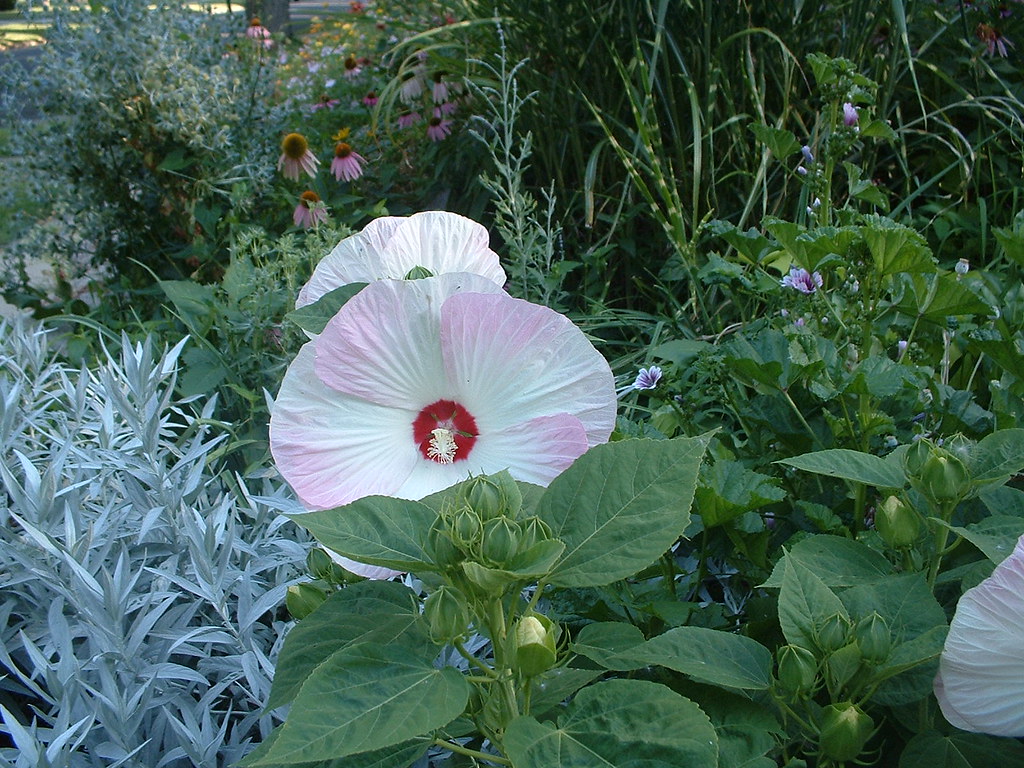
 If you grow it and you end up with too many small ones in the Spring, it's totally possible to dig the youngsters up carefully and transfer them to another location or pot them up to give to other interested gardeners, which is what I did for several years until no one asked for them anymore! I guess I tapped out the neighborhood gardeners, and who knows how many others are out there in the area multiplying, hehe. I don't recommend trying to move larger plants such as these, because they develop a very fibrous tap root, that if damaged, most likely will lead to the plant's death. We have moved larger ones in the past, but they really suffer from the uprooting and have to be watered constantly and pampered to make a go of it. Younger plants (say, up to 2-3 inches) haven't developed as much of a root, and thus suffer much less from transplanting ... so if you've got 'em and you want to move 'em, the younger ones are the only ones worth attempting to move. As much as I hate to do it, I'm going to have dig up or pull at least 6-7 more good sized plants to clear some space for other plants to go in, and to provide more sun and visibility to my second year 'Lord Baltimore' Hibiscus moscheutos.
If you're a fan of deadheading (believe it or not, some people are into that!), it will accomplish two good things for you: it will promote another flush of blooms once the first wave has faded, AND it will cut down drastically on the number of seeds dispersed elsewhere in the garden, thus reducing the number of volunteers you may get the following spring. I usually just lop large portions of the plants off about mid-summer before the seeds are fully ripened, but I inevitably miss some pods, so we always have many coming up in the spring. So, if you choose the path of least resistance, be prepared for a sea of pink come late May and June and throughout the summer months where you have them planted.
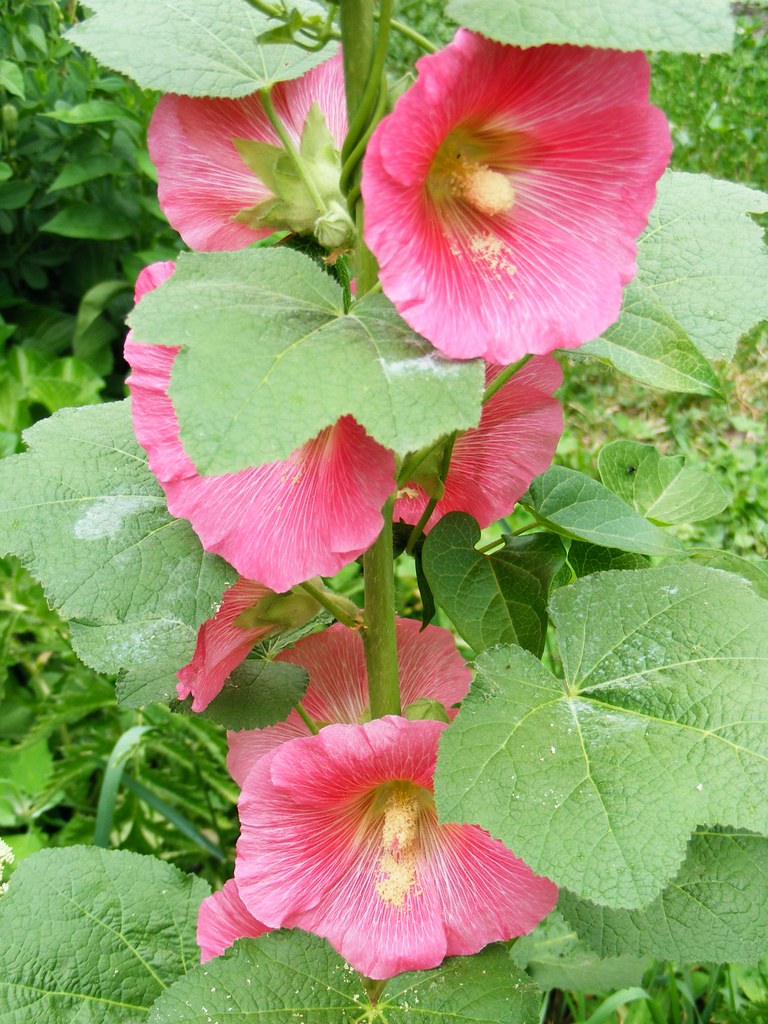
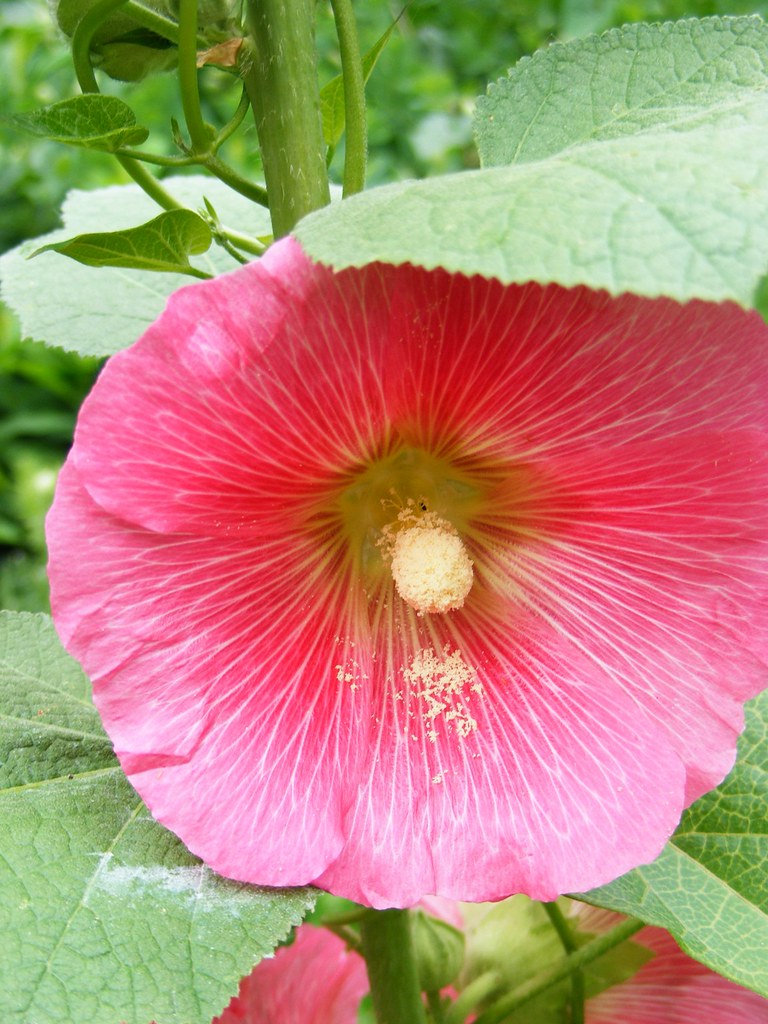
I've long thought that this would be a superb plant for "ugly poorish areas," such as along garages, or in somewhat gravelly soils, in much the same sorts of conditions that Hollyhocks prefer (along alleys and driveways). As long they have plenty of sun and attentive watering while they're getting established, they'll soon require little care, if any and will, if given the space, fill it in quite nicely in a couple of years. This is where the path of least resistance (e.g. doing nothing) actually will pay you dividends. In fact, we did just that for a friend's mother who had an ugly mess by her garage ... we sent a few small plants over, with a lot of seeds and several years later she has a nice patch of Prairie Mallow in what was once an ugly spot where nothing but weeds would grow. Once established, these tough little plants ask for virtually nothing but sun ... they're impervious to dry conditions, heat and humidity which could spell the doom of other plants, so in that way, they're a really fine plant!