skip to main |
skip to sidebar
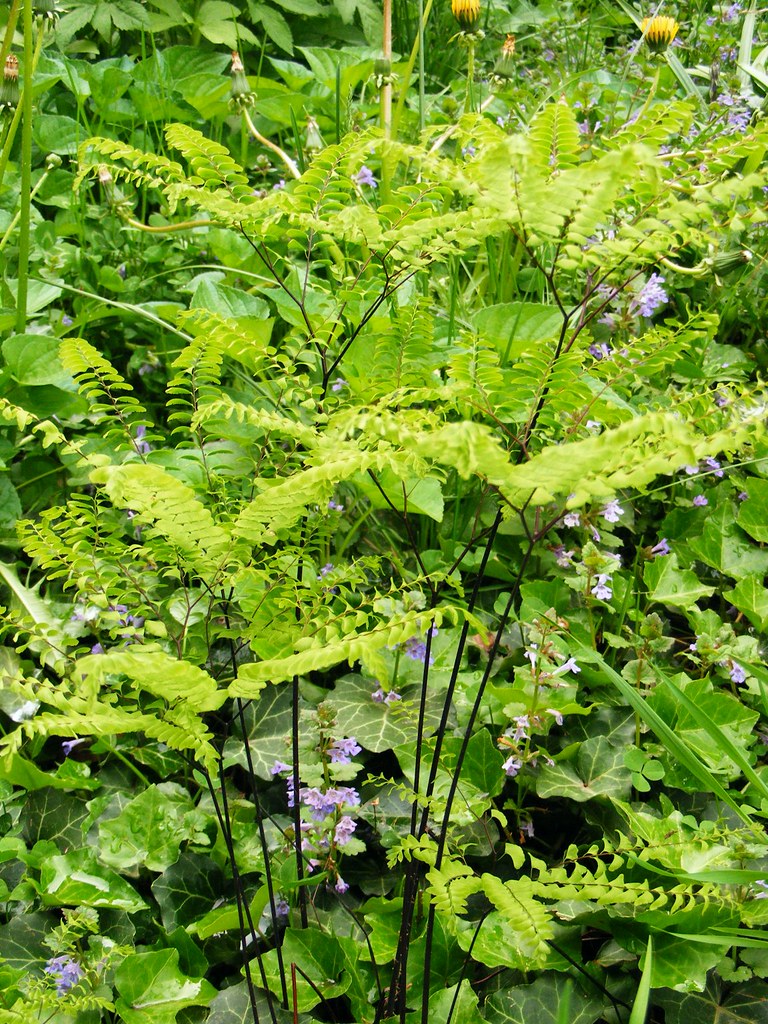
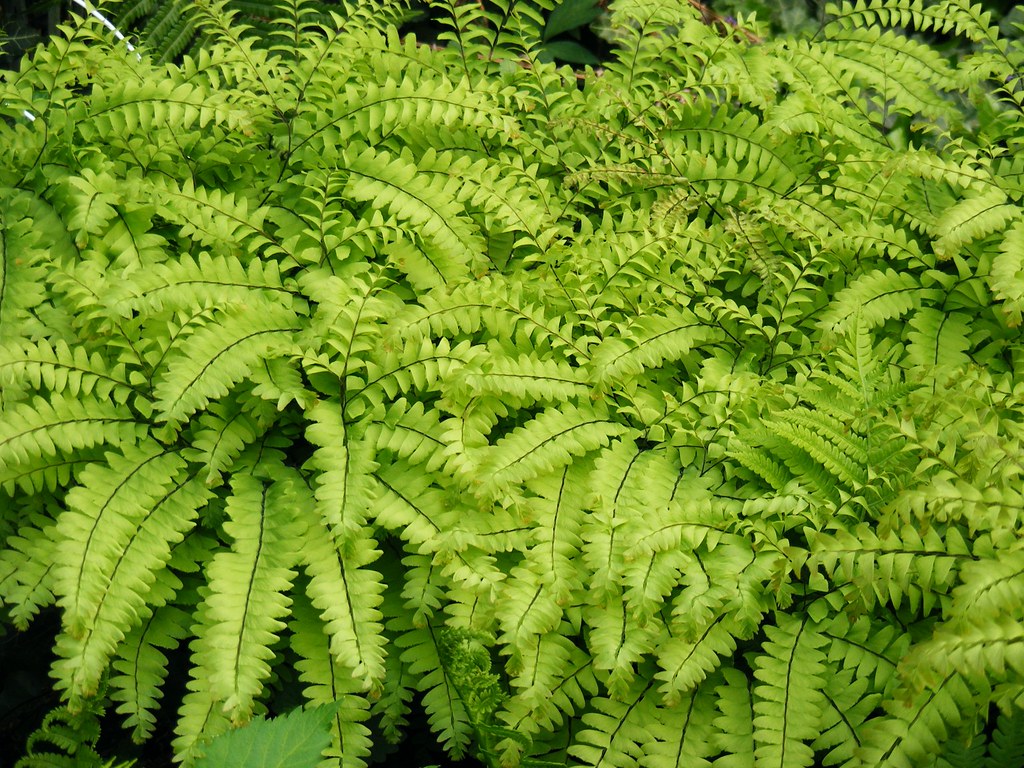
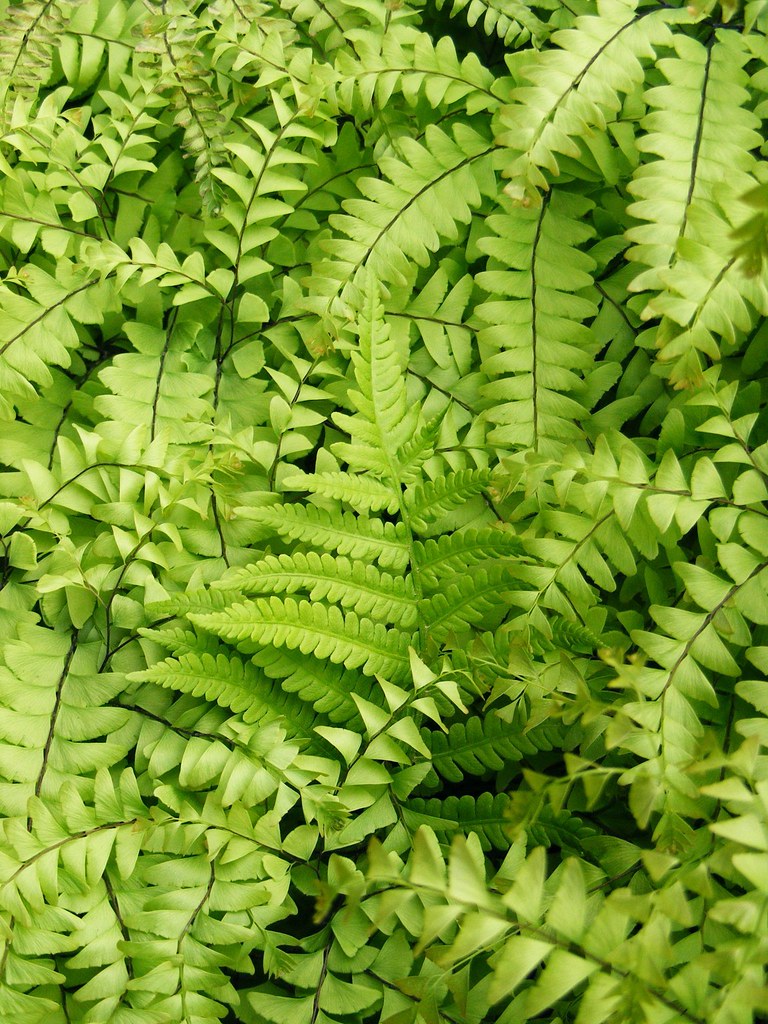 I left today's selection of photos up to Fernymoss and he chose these enthusiastic and burgeoning Maidenhair Ferns.
As regular visitors already know, we're quite the fans of ferns in our Woodland Garden area and we've gradually increased our Maidenhair (Adiantum pedatum) population over the years, and they've been steady colonizers around these areas, sharing space with the Leatherwoods and Ostrich Plume and other varieties of ferns we have planted.
I asked Fernymoss what he'd want to say about these ferns and he recalled his memories of traveling and camping in the Boundary Waters of Northern Minnesota, where he was indelibly struck by the image of going by ditches positively filled with Maidenhairs and wild Lupines.
From his perspective, the image conjured up these ferns, seejmingly floating a foot above the ground ... which I thought was a really good description because they do appear to float above anything planted below them (in this case the ivy and ground ivy --a weedy mint that we let bloom before we go after it).
For such a delicate looking fern, Maidenhairs are incredibly hardy, from sub-arctic North America to the far South across a pretty wide swath of the US. As far as cultivation, they've been really easy for us, but that's due in large part, I think, to sheer positioning. Most ferns want fairly bright shade at some point of the day, but will not tolerate blazing direct sun, without quickly giving up the ghost. They also demand a fairly organically defined (peaty, loamy) and consistently moist soil, such as woodland situations provide. Fulfill those very basic needs and anyone should be able to succeed quickly with Maidenhairs.
In successive years, they'll spread gradually out from the parent plant(s) by offshoots, as well as some of the spores that tend to move around the garden. At this point, we have so many that it's impossible to determine which ones were the original plants. We just delight in their (and our) success in making themselves at home in our shady areas ...
Photos by Fernymoss, taken 22 May, 2008.
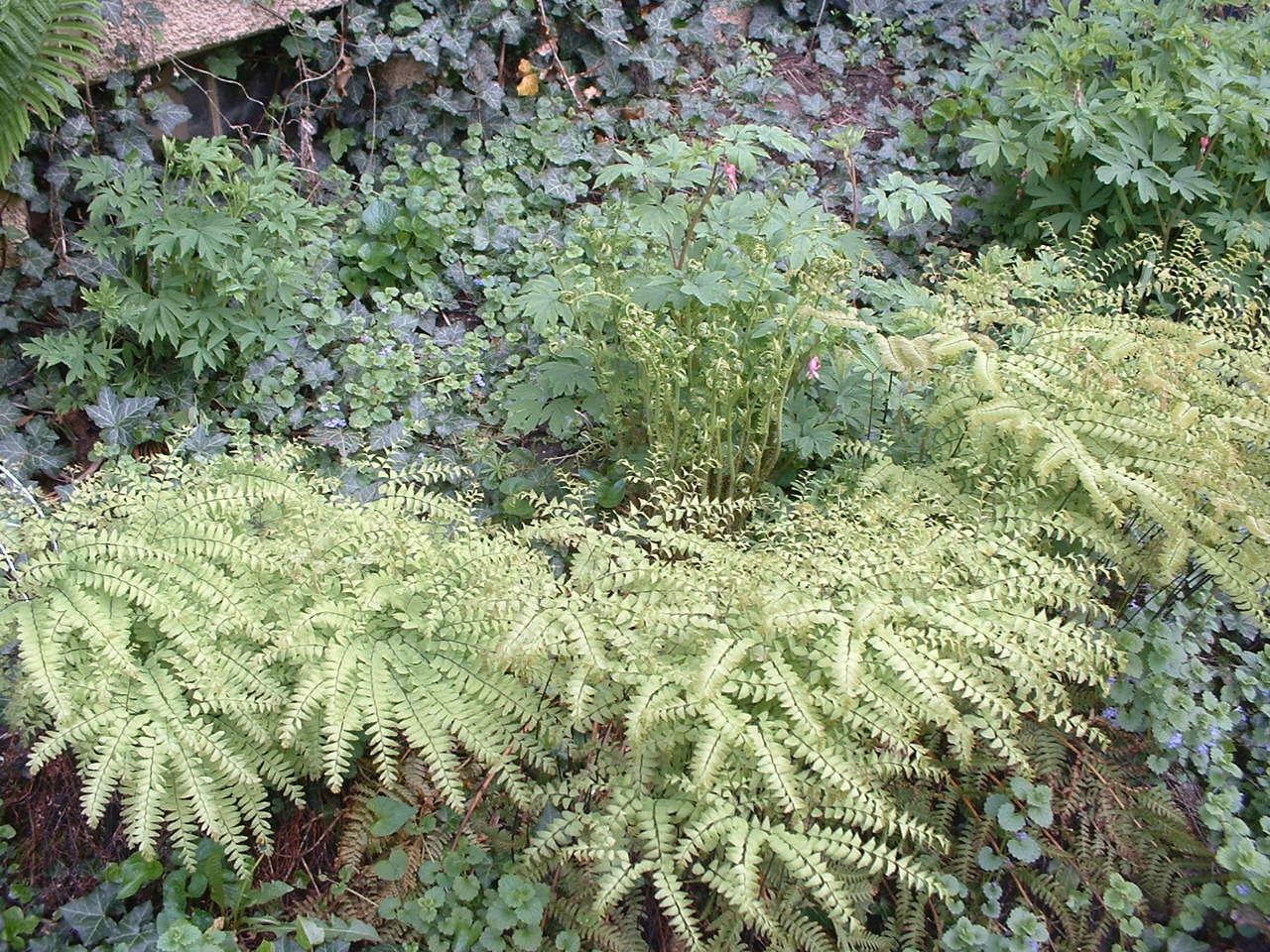 We're on a real fern kick around here lately, what with all the greenery shooting out of the ground in the woodland garden. So I thought I'd post a follow up on some of the ones I posted previously in their more emergent forms.
The most predominant species you see in this particular shot is the common woodland Maidenhair Fern (Adiantum pedatum) which is one of our favorites, due to its delicate architecture and unique growing habit. The fronds spread out fan-like, supported by a network of incredibly thin, yet sturdy stems, lifting it about a foot up from the garden floor. As long as they remain well watered throughout the hotter months, they just keep on going right up to frost, when they die back completely and disappear until the following spring. We've had these particular specimens in this location for about four or five years now, and they've really managed to spread out quite a bit in the intervening time. They're a great choice to mix in with other shade lovers, and ours share the space with Bleeding hearts, Ligularia, Holly, Ivy, Leatherwood ferns and a few stray Lupines. Like most ferns, they don't want a lot of direct sun during the course of the day, and do quite well where they are receiving morning and a bit of late afternoon sun. Of course, this part of the woodland garden stays pretty cool and moist most of the time (we do have to water in July and August though), which is pretty much all Maidenhairs require. For even more information on maidenhair ferns, here's the Wikipedia Entry.
Our second shot is of a Leatherwood fern -- previously seen as an emergent in my previous post. It has since unfurled even more than this photo reveals, but I really liked how the fiddles look all cork-screwy in this shot. 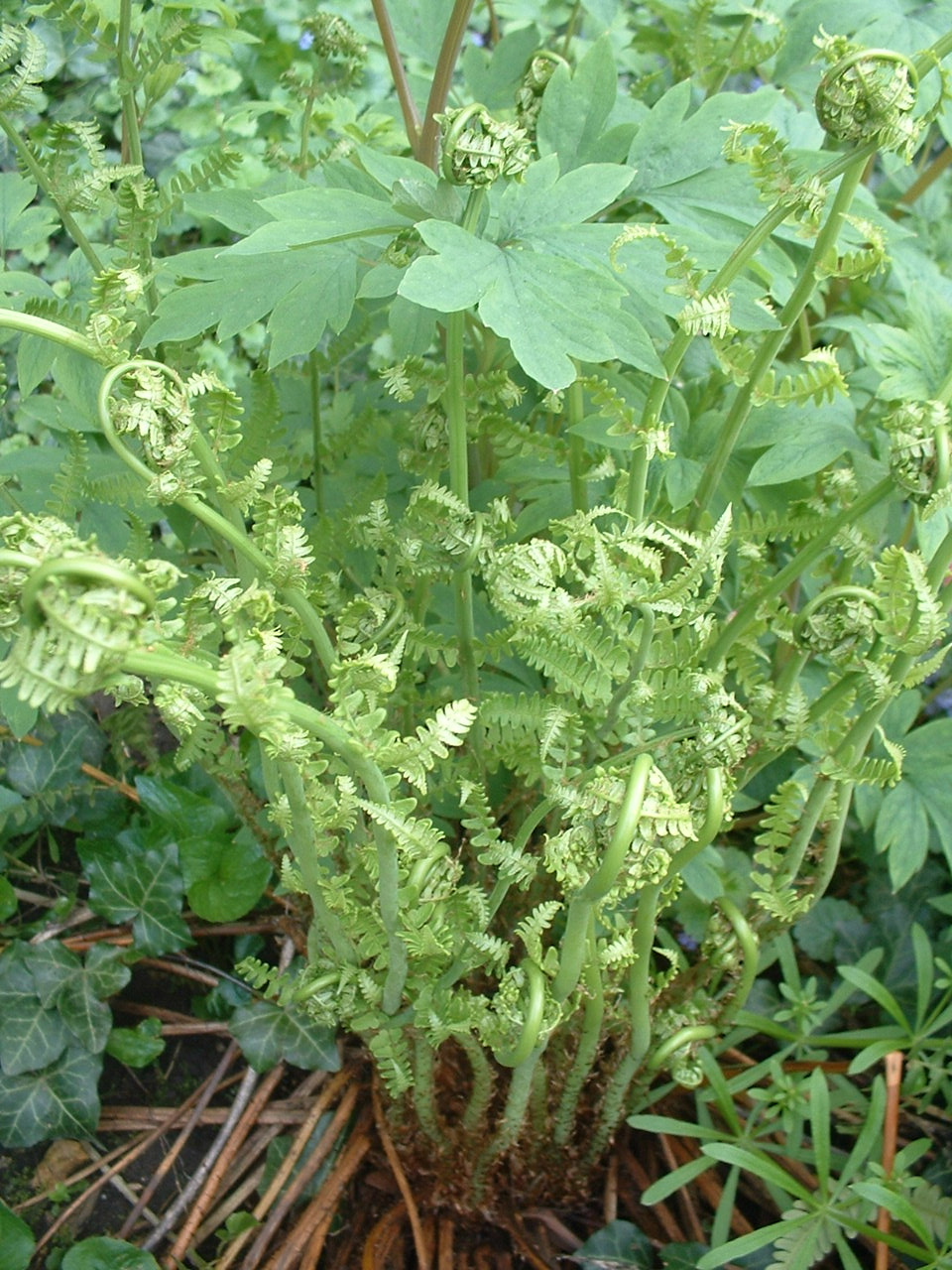
These are tough little guys, especially when they get all splayed out in their ferny glory, and definitely have earned their common name. With their tough fronds and woody stems, it's no wonder they're a stock item in many pricier floral arrangements. But as I said previously, there is no way they ever get cut from our garden ... that's just plain fern heresy! Leatherwoods can take more sun than most of the more delicate members of the family and in milder winters, they have even remained semi-evergreen. Once the ground really freezes though, they drop flat on the ground where they lie all winter until the center of the crown comes back to life in early spring. If you look at the base of the plant, you can still see the stems from last year ... we really don't bother to cut them back and they do just fine. Besides we like to allow them to gradually decompose back into where they came from, and the ground they do keep covered manages to fend off weeds ... always those nagging pests we can't keep up with in the garden!
Family Man commented the other day that he didn't normally think of ferns as particularly pretty plants (which of course shocked me, fern addict that I am), so I hope if I keep working on him a bit, I'll have won him over to the ferny side of the garden ....