Sunday, May 04, 2008

Dragon Arum Update!

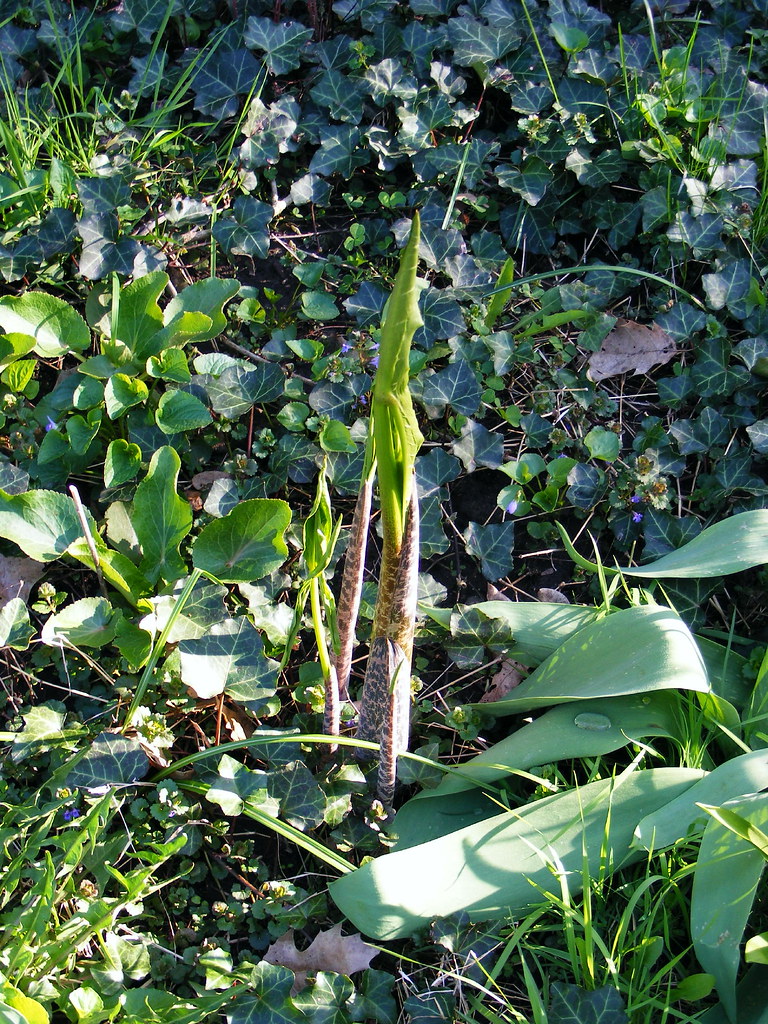
Here's a quick update on the progress of the Dragon Arum I posted here recently ... We were initially mistaken when I announced that there were three spears coming up this year, and as we discovered last week, there are now four! We doubt that all four will produce blooms, but we're hopeful that at least the two biggest ones will bloom this year. It's hard to tell at this point, but we're definitely encouraged that it does seem to be spreading a bit!

If things go like they did last year (the disastrous one), this should be blooming right around the time the Peonies are ... creating an odd confluence of stench from one (the Arum) and sweetness from the other (the Peonies) ... As all other indications from 2008 have been so far, who knows what we can expect this year!

One thing's for sure, the Arum in our garden is a floral super delegate for Obama! As much as we miss John Edwards ... AT LEAST, we can throw our support and votes to Ed Fallon, to defeat the tired, old, and fat Bluedog Democrat Leonard Boswell here in my district. If you're in the district, vote for Ed in the primary on June 3!! It's time for a sea change in Washington, and we can act to help bring this about and start cleaning house of the Bush enablers and get on to the task of building a more progressive majority!

Saturday, May 03, 2008

Hyacinth Evolution

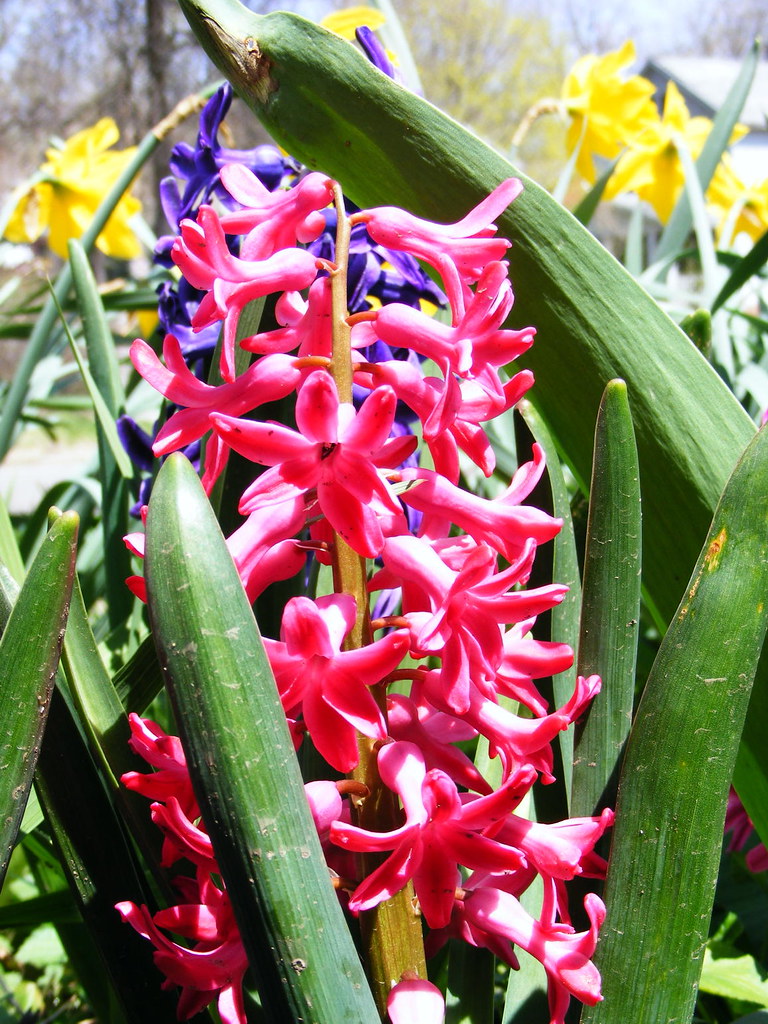
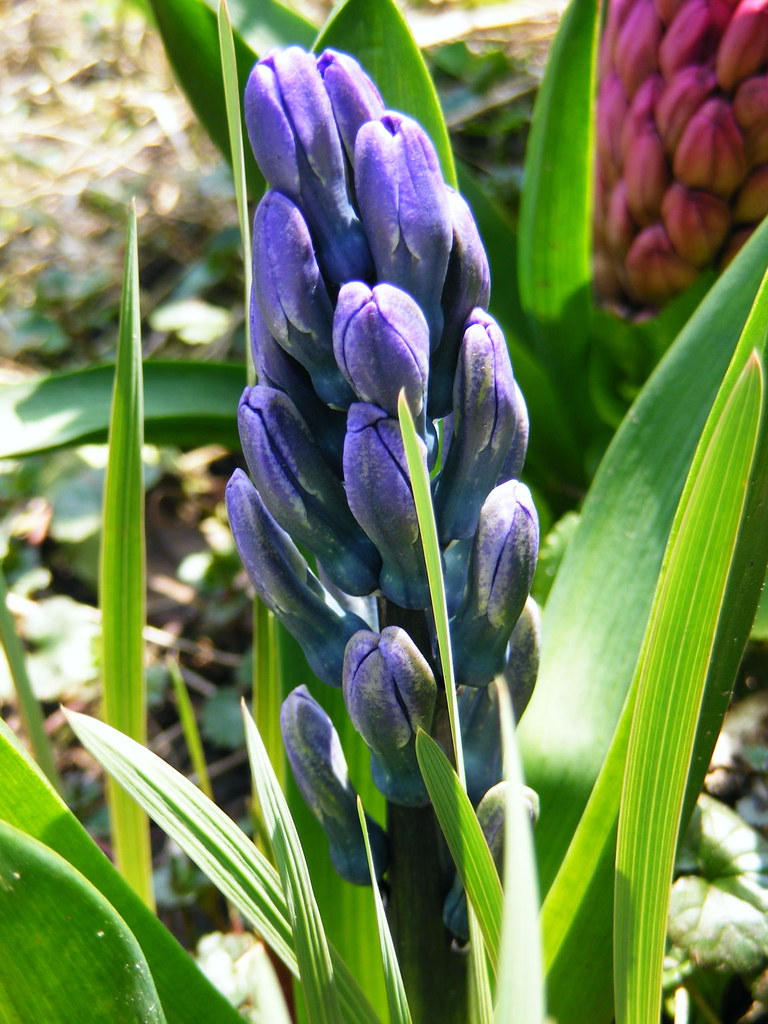
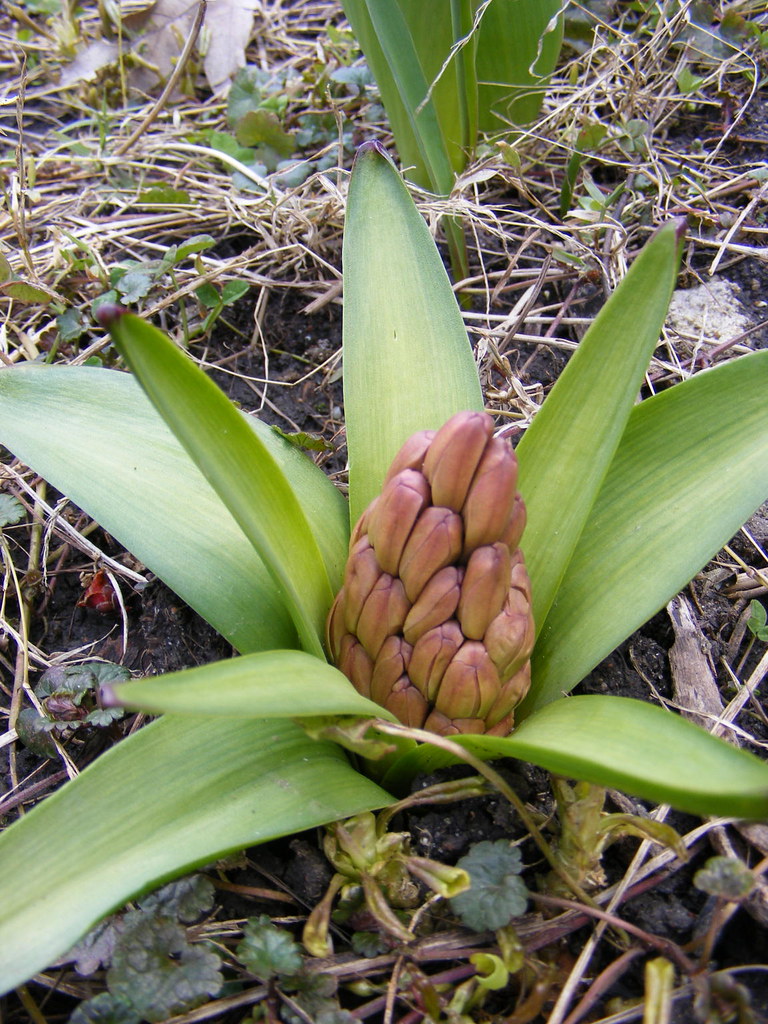
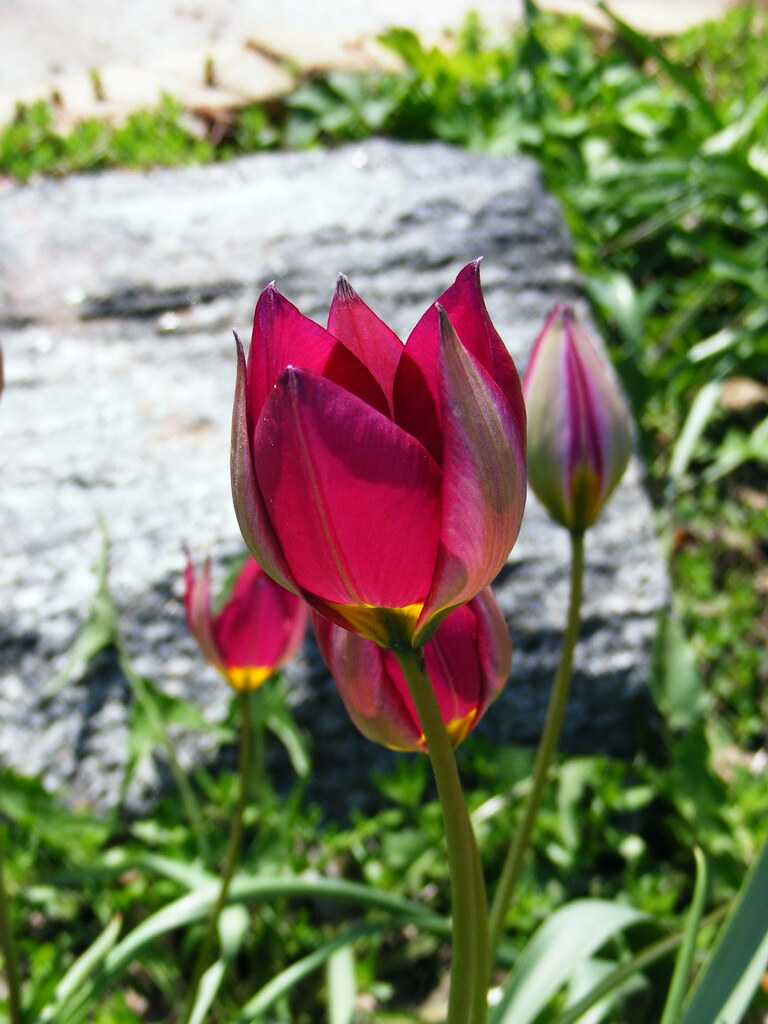
I've had these shots saved for a while because I wanted to write a post showing the emergence and development of some of the Hyacinths we have along the Woodland Walk, seen in this recent post.

In fact, you might well recognize those in the first shot, displaying them in full glorious bloom, as this is a 'behind the scenes view' of those in the post just cited. (This was taken on 26 April, 2008 by Fernymoss.)

I took the second and third ones on about 16 April as they further developed and prepared to bloom, and here you can see the true colors start to develop in these two specimens of Peter Stuyvesant and Jan de Bos.

And, finally, a first glimpse of the bloom stalk as it began to take form (taken about 9 April, I think?) shortly after the plant's emergence. At this early stage, Hyacinths always remind me of those Alien pods they first find on the original planet ... you know, the ones that just open up, leap and grab you ... It's probably unfair of me to ascribe such a sinister comparison to such a lovely, fragrant flower, but somehow they bring that imagery to mind! Never to fear, I've yet to be attacked by a Hyacinth, and I'm sure there are no such documented events ...

As for a general Casa IVG update, the last week has witnessed a lot of action in the floral world surrounding us ... lots of the perennials are up ... Columbines growing rapidly, the Bleeding Hearts are starting to bloom, the Trilliums are getting ready to do their thing, and we've even got a few Toad Lilies already up, though they are a long way from blooming at this point (think, late September for them!). There are also a lot of others up, too numerous to list, as well as seedlings of some of our now naturalized annuals, such as the Calendula, 'Imagination Verbena,' the Bells of Ireland and even more I'm sure I haven't noticed yet.

Oh yeah, and the annual lawn carpet of Dandelions is on its way to getting into full swing ... as I've probably said before, we really don't mind them at all, though I draw the line at them taking over in the perennial beds! They're actually quite beneficial plants in certain areas of the lawn and garden because they perform a useful function in terms of keeping the ground aerated and nourished, and as most of you probably know, they also can serve as a food source, using the young greens in salads or frying up the tender new blooms in a skillet. Fernymoss tells me that even the roots can be used as a coffee substitute (much like chicory, I suppose) when they are roasted slowly. And, after all, a whole mass of Dandelions is just plain pretty ... so if you don't have any other flowers coming up naturally, you should at least let these have their moment in the sun!

Friday, May 02, 2008

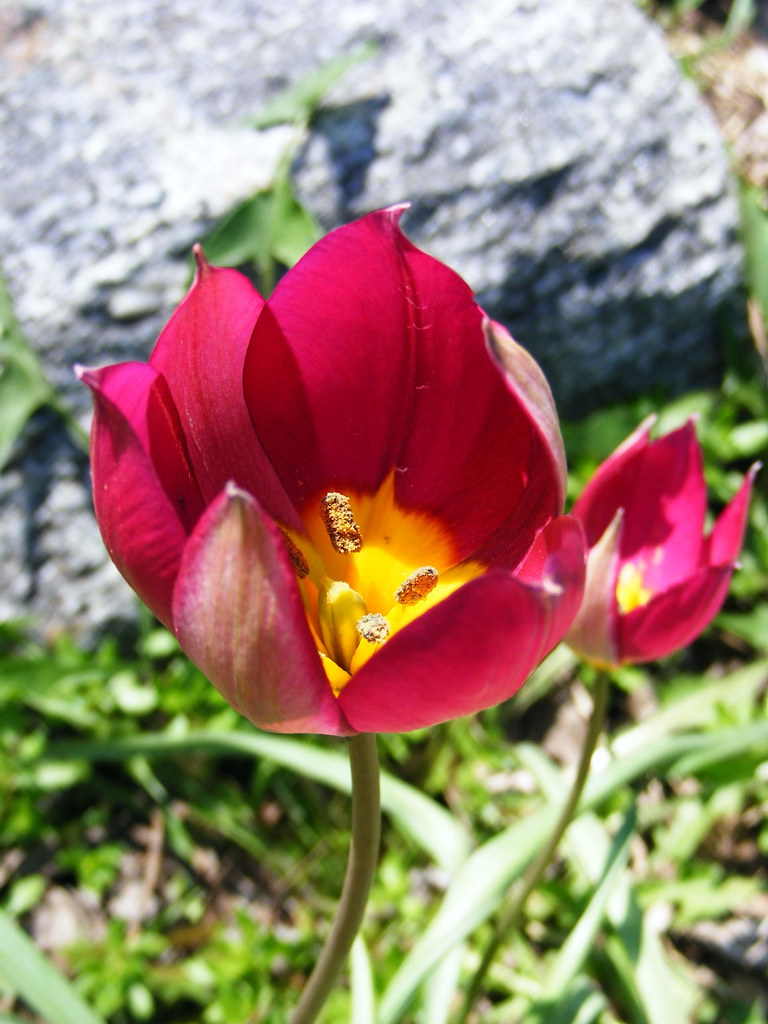
Persian Pearl Dwarf Tulips

These lovely dwarf tulips represent one of two varieties we have planted out front in the boulder bed near the sidewalk. Unlike some of our other, larger tulips, this particular variety Persian Pearl (Tulipa humilis) seems to have prospered despite all the cold weather we had last spring. They have definitely naturalized a bit and are forming a nicely defined clump near several of the Hyacinths among the rocks near the front steps of the house. With their luscious red petals, brilliant yellow centers and silvery highlights on the outside of the blooms, they make an outstanding companion to Hyacinths, Muscari armeniacum ('Grape Hyacinth') and later blooming spring crocus (such as the 'Dutch' varieties). In the spot where we have them planted, they offer an attractive contrast to the purples of Hyacinth Peter Stuyvesant (featured here in the previous post) and the Muscari which are currently blooming along with them.

We usually have another variety of T. humilis called Little Beauty that grows near them, but so far this year, they have failed to appear, and I'm wondering if they too have succumbed to the fate of their larger cousins, or if they are merely taking their time. At this point, though, I think we've lost them too, because they have in past years bloomed just after Persian Pearl has wrapped up its bloom period for the year. It also appears that we have lost the one red Hyacinth (Jan de Bos) which was planted nearby, however, one of the Stuyvesants is multiplying in its stead this year, so we still have roughly the same configuration of three Hyacinths in this area.

Tulipa humilis has been, so far, a fairly carefree variety to plant, and as long as they have well drained moist (loamy to average) soil in a sunny area in the spring, they have proven to be pretty reliable bloomers for us. I'd say that good light is essential to success with this variety, because on cloudy days they just pack it up and simply refuse to open. Apparently they are also more prone to naturalize freely if they get the requisite amount of sun they desire. If you are interested in growing them, I'd recommend making sure that where they are planted they consistently get at least 4-5 hours of sun a day. Though their bloom period is relatively short (alas, the one drawback of any tulip), they do last for at least 2-3 weeks on average, which is better than most of their larger cousins can boast. Once they're done for the year, just let the foliage die back naturally and disappear for the rest of the growing season. We usually just throw down some California Poppy seed or Moss Rose to take over for the summer, as they don't form deep enough root structures to disturb the bulbs sleeping beneath them. That way the annuals can fill in the space during the summer, die back in the fall and clear the space for them to return in the spring.

Photos taken by Fernymoss on 26 April, 2008, using the S700. Of course, the third shot is for that connoisseur of inner bits, Olivia. Hope you enjoy them!

Thursday, May 01, 2008

Peter Stuyvesant Hyacinth and Bonus Bug

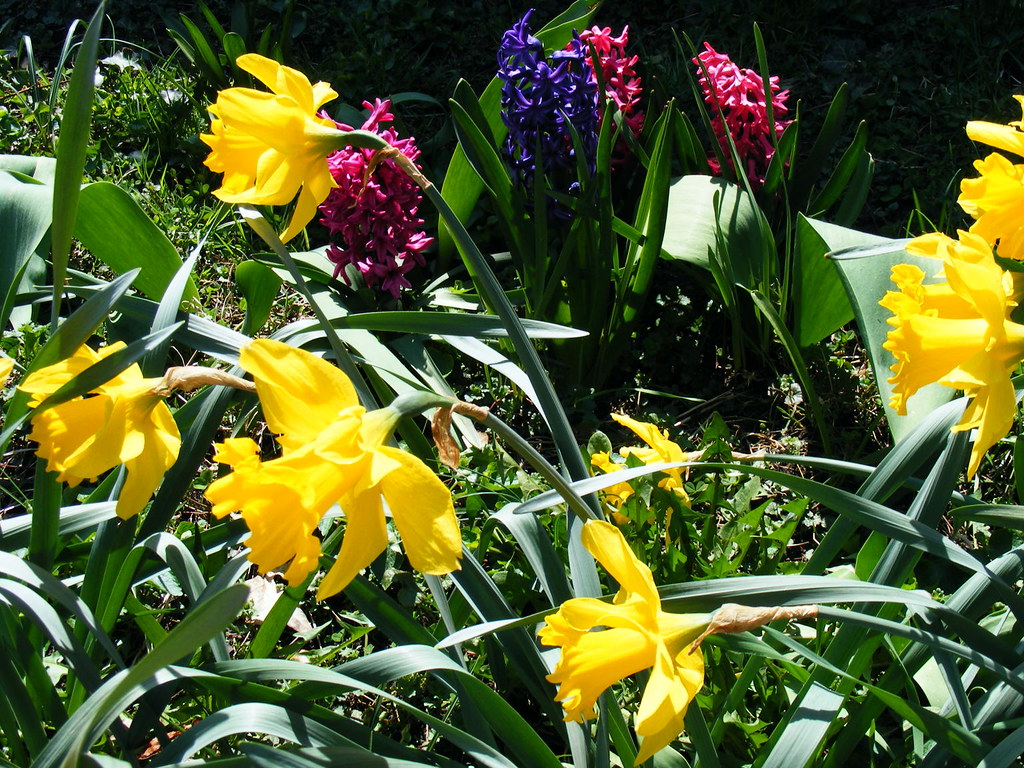
This planting of Hyacinths and daffodils is part of the area we call the Woodland Garden along the north side of our house adjoining Woodland Avenue. As you can see, this particular grouping is just popping with color right now (not to mention smelling quite nice too!).

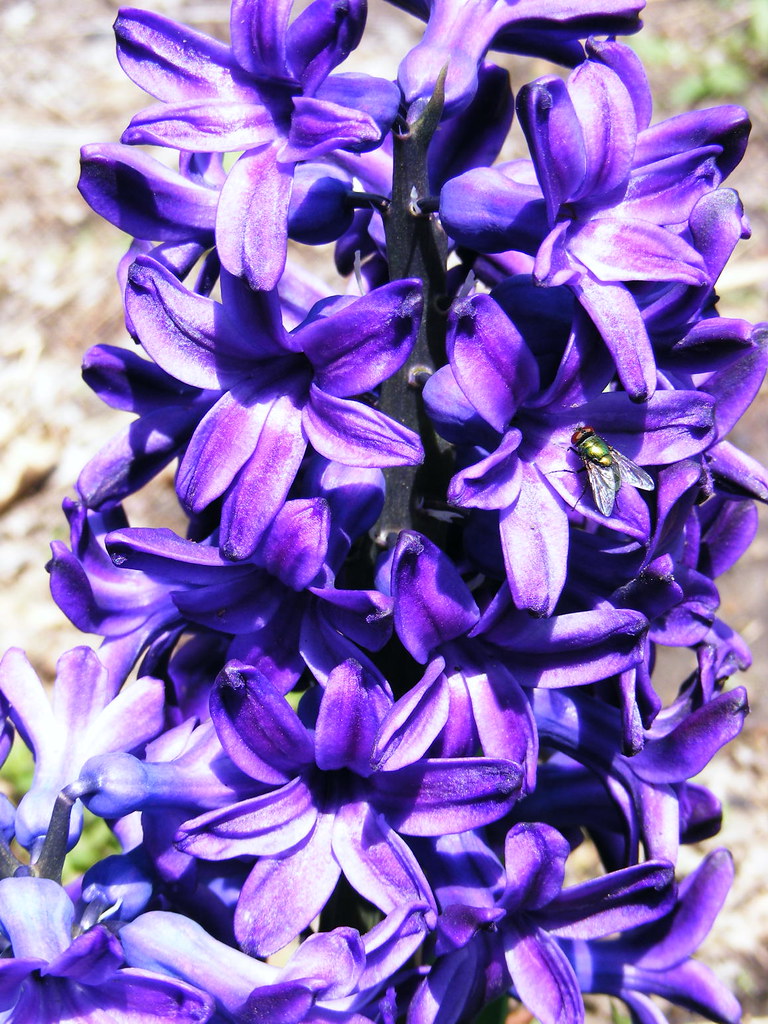
One interesting note about these Hyacinths is that when we originally planted them there were only two bulbs, and now, happily, there are three! The 'red' one is called Jan de Bos and the purple is the classic Peter Stuyvesant Hyacinth (perhaps my favorite of the many varieties available). Before we planted these, I used to pooh-pooh Hyacinths because so many one commonly sees planted are the plain old boring pink and white ones ... then we looked into them seriously and discovered they come in many brilliant hues as well. They're real show stoppers when planted among other bulbs such as Tulips and Daffodils, where they add a lot of dramatic flair, and of course, their heady fragrance to the mix ...

By the way, if you'd like to see what a difference a year has made since last year's disastrous spring, see this post for comparison.

These shots were taken by Fernymoss on 26 April, 2008 using the S700. The first is, of course, a wider shot, while the second is a very nice close up of one we have planted near the steps that lead up to the front porch. Of particular note is the 'Bottle Fly' he captured taking in the heady fragrance ...

Wednesday, April 30, 2008

(Faded) Glory of the Snow

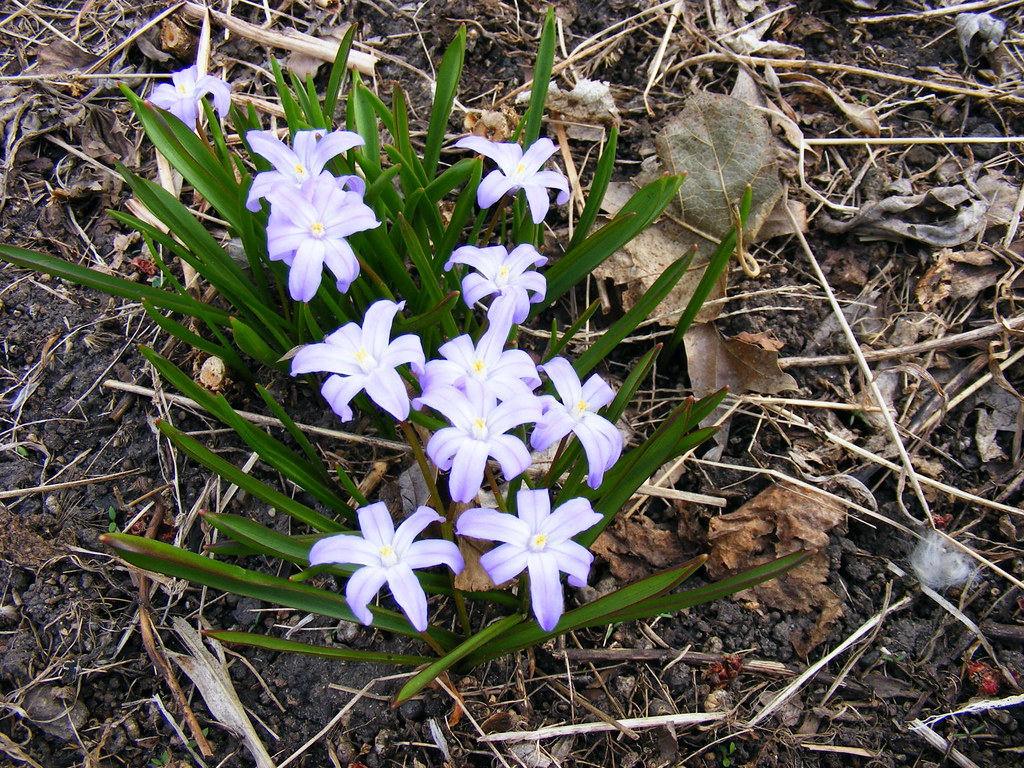
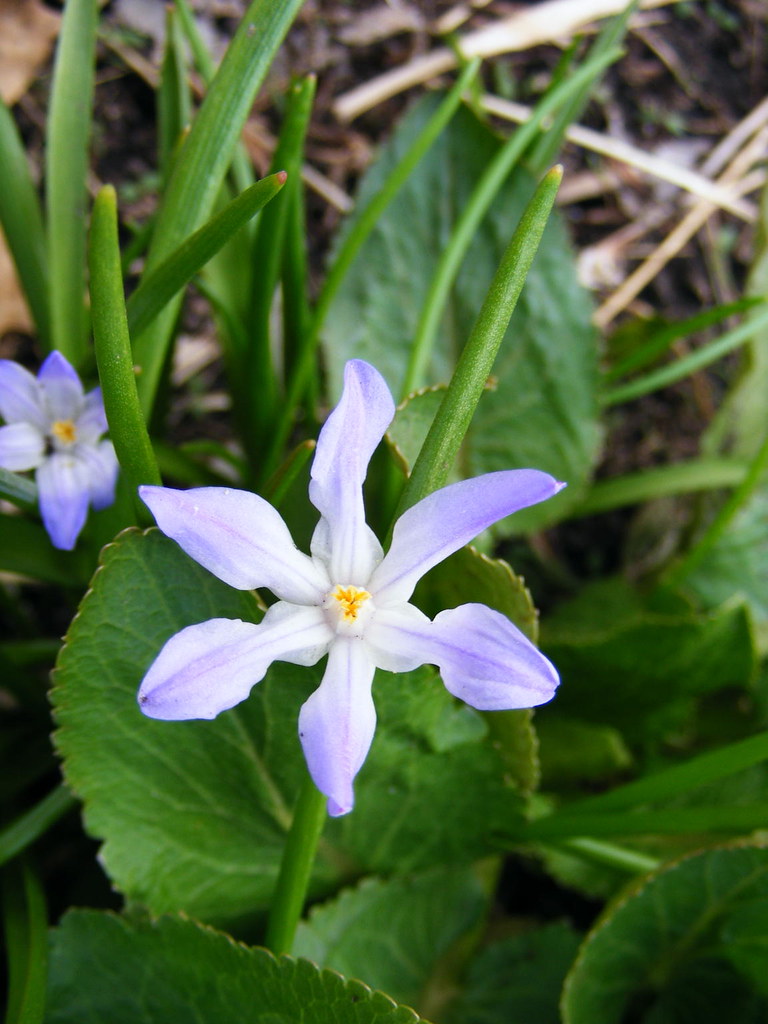
Chionodoxa forbesii 'Luciliae' (aka: Glory of the Snow, Star of Bethlehem, etc. ) is usually one of the first flowers to emerge along with Snowdrops and Crocus, though this year it was a bit tardy to appear because the spot they occupy in the main boulder bed stayed frozen much longer than sunnier areas out front ...

In any case, it appears that, like other small bulbs closer to the surface, it managed to escape the ravages visited upon the Tulips and Fritillarias due to the severity of last year's long, late freeze and this past winter's nastiness. In fact, it has definitely expanded its clump since last year, much to my delight. I definitely want to get some more of these planted this fall, as the original spots I planted only contained about 3-4 bulbs each (they're small), because they are definitely happy naturalizers. I think they'd make excellent companions for Snowdrops, Crocus and Squill, with their pale blue stars that gradually fade to almost a pale lavender (see second shot). They're not the easiest subjects to shoot (at least for me!) ... not enough light and they look 'muddy blue' and too much sun makes them look bleached out. Just one of those flowers that needs to be seen in situ to truly appreciate the delicate hues of blue they exhibit ...

Carefree and every bit as easy to grow (and prolific) as Crocus, Squill and Snowdrops, they're worthy additions to any garden area ... the border or even in the lawn, where they do quite well, and are gone before you need to mow. Add this one to your list, Boran2 ... you won't regret it!

Photos taken 16 and 23 April, 2008 using the S700. The first shot (4-16) was taken while these were at their peak of blooming, whereas the second, taken a week later, as they were inevitably winding down.

Tuesday, April 29, 2008

Daffodil Butts

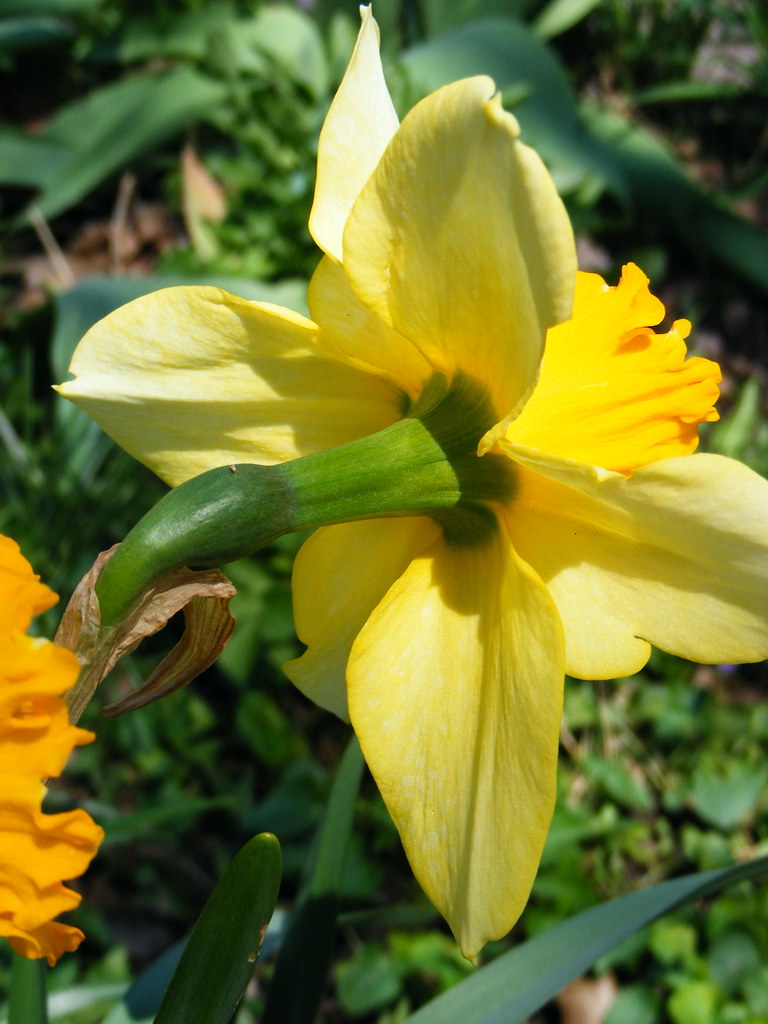
We (and I suspect most people) don't ordinarily tend to pay much attention to the backsides of flowers, but as these two shots demonstrate, there's still a lot of interest going on behind the front side of the early spring show. Fernymoss took these on a whim over the weekend just to see how they would look from this perspective, and I have to say, from a textural point of view, they are quite attractive in their own right! These angles also really show the structure of the mature flower and just how they're put together.

You can already see the (obviously pollinated) flower's ovary swelling, so I expect this bloom is on its way out and well into the next phase of
its reproductive cycle. I've never really let them go too far in this direction and once the flowers are done, I usually just cut them off so the leaves can spend their time storing up energy for next year's show. After last year's disaster when they barely bloomed at all, at least they appear to have weathered the winter relatively unscathed, unlike other gardeners' daffodils. Fernymoss asked his co-worker again about her bulbs today and it appears that most of her tulips perished as well, and those that did come up are doing poorly, just as ours are. *Sigh* I guess we're now resigned to having to replant a bunch in the fall, so we've already been looking at which ones we want to get ... mostly the Olympic Flame, Red, Yellow and Purple Darwins (pretty much what we had before). We'll know more when the ones that did survive manage to bloom, but they're looking really unhappy and stunted, so what usually is a really bright show in the front garden is going to be rather bittersweet this year.

One note about Daffodils: I have noticed in past years that a lot of people just mow them down once they're done blooming, which is a truly idiotic thing to do ... (People also do this to peonies, which really gets me wagging the finger and lecturing!). Just let them die back when they are ready and just pull them out of the ground when they've pretty much dried up. I once saw Martha Stewart suggest braiding the leaves to get them out of the way and still let them store up energy. Nice idea, Martha, but honestly, what gardener has the time to spend braiding them when there are more important things to be done in the garden! And when you have upwards of a couple hundred bulbs planted ... it would just become an absurdly impractical thing to do. We prefer to just let them complete their own natural cycle, which might be the lazy gardener's way, but it's always worked for us!

Photos by Fernymoss, taken on 26 April, 2008 using the S700.

Monday, April 28, 2008

A Headline I Was Glad to See Today ...

Just a quick update on a story I wrote about way back on 17 April in this post. Today, a lawsuit was filed by some 12 Environmental and Animal Rights groups to get Federal authorities to return the Gray Wolf to Endangered Species protection, after the government removed them from protected status back in February of this year. Good for them, and hopefully the Rocky Mountain Wolf packs as well! (Click on the headline to read the short update from USA Today.)

Now, I'm not a particularly litigious type ... in fact I tend to agree that all sorts of suits without much merit are filed every day, but this one I intend to follow closely as it proceeds (slowly, of course). The groups are also asking a judge to issue an injunction that would stop state management of the wolf populations in the Upper Rockies states. The net effect would be to halt the indiscriminate killing of Gray Wolves while this suit makes its way through the courts. That would buy the wolves some breathing space for now, but I'm sure we can expect a nasty battle to save them lies ahead. I'll plan to post periodic updates as I find out more, but if anyone runs into good links to more information about this, I'd appreciate you posting them in the comments section.

And while I'm at it, speaking of lawsuits without much merit, this headline also caught my eye tonight. Submitted, without further comment, as it pretty much speaks for itself ...
300-pound inmate complains Ark. jail doesn't feed him well.

Faerieland!

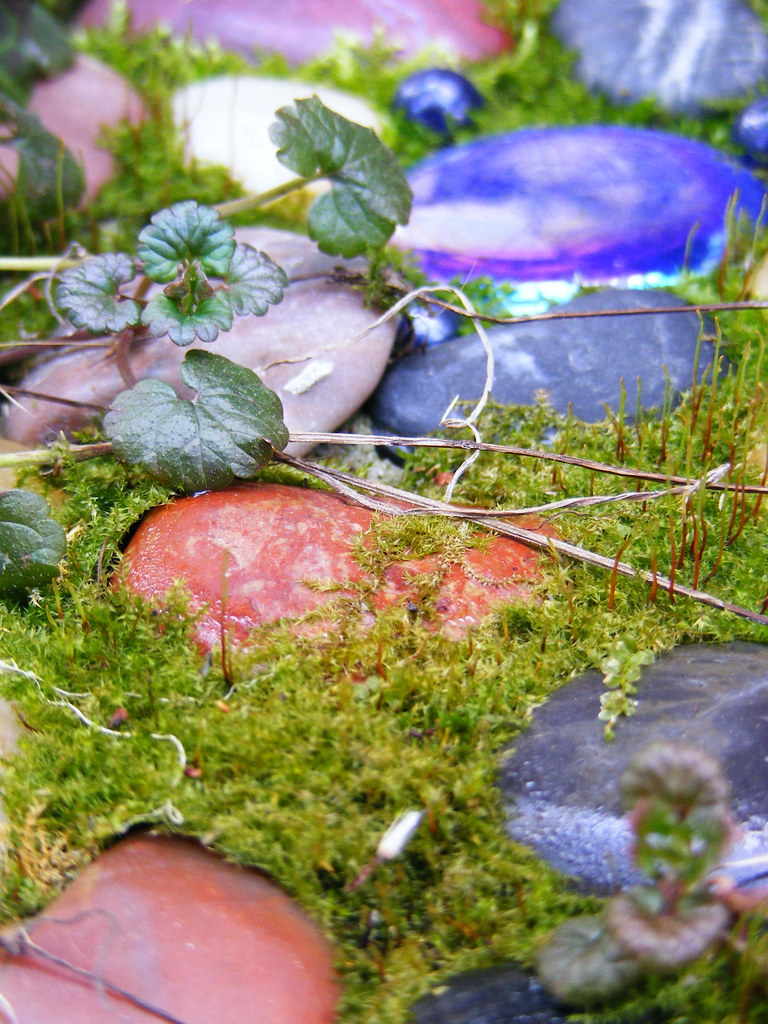
Here's a mossy landscape that just beckons you to take a long, leisurely and contemplative walk among the really little faerie people ... that's what this photo evokes for us. Fernymoss has for quite some time aspired to plant Faerie friendly areas in various spots in the garden and this stepping stone is one of them. (Yes, he's into making those as well!) We do try to encourage moss to take hold around the garden, just because we find it fascinating and really pretty and it lends a certain aged gravitas to wherever it prospers in the garden. For us, it connotes a sense of garden maturity ... that things have been around long enough that the moss has taken hold and incorporated itself into the landscape. And as the old saying goes, a rolling stone gathers no moss, it tends to convey a somewhat comforting aura of permanence ... it's taken a while to get where it is, and it's planning on sticking around for the long haul.

Mosses are bryophytes or non-vascular plants, and have a rather fascinating sex life of their own, as this entry in Wikipedia details quite well. Obviously I have some more homework to do and research to read before I can even begin to consider myself competently conversant in the ways of the mosses. Though an often overlooked (perhaps even considered bothersome) element of gardens, we're fully on board with having them in ours ... They make stellar companions to the various ferns which also tend to inhabit the same spaces as the mosses. We like 'em and want them to multiply freely!
Photo by Fernymoss, taken on 21 April, 2008 using the S700. Note the clearly visible sporophytes on the right side of this photo.

Sunday, April 27, 2008

IT Has Emerged!
And now, the moment you've all been waiting for ... the emergence of the fabled Dragon Arum who first bloomed last year, its second, in the Woodland Garden. Those of you who are regular readers probably recall this post from late last May when it unveiled itself in its full smelly glory to the world, much to the delight of flies from all over the neighborhood. (But if, by chance, you're not already acquainted with this florally bizarre member of the Arum family, I encourage you to use the tag links and check out just what this will eventually become.)

Astute observers (or merely awake ones) will note, that unlike last year when we posted its emergence, that there are now three spears piercing the ground where it's planted. This development has us really excited at the possibility of at least two, if not three blooms this year! The more, the stinkier, we say. And we are definitely planning on putting in at least 2-3 more of these bulbs in the fall, along with some other types of Arums that we have lusted after for a few years now (most notably Arum italicum). The Araceae are a fascinating family of plants, which among their relatives include the common Philodendron, Monstera Deliciosa ('Swiss Cheese Plant'), the various Jacks in the Pulpit, Anthuriums, the incredible Titan Arum, Calla Lilies and even the lowly aquatic duckweed, which I used to grow in my aquariums when I was a kid. I have to say that Wikipedia link is a great source of intriguing information about Arums, with links to some great pictures of the various species. I had never dreamed that one of the most common, easiest of houseplants, the Philodendrons and Nepthytis belonged to this extremely varied and often bizarre plant family!

Ain't Wikipedia grand?

Saturday, April 26, 2008

Friday Night Dog Blogging

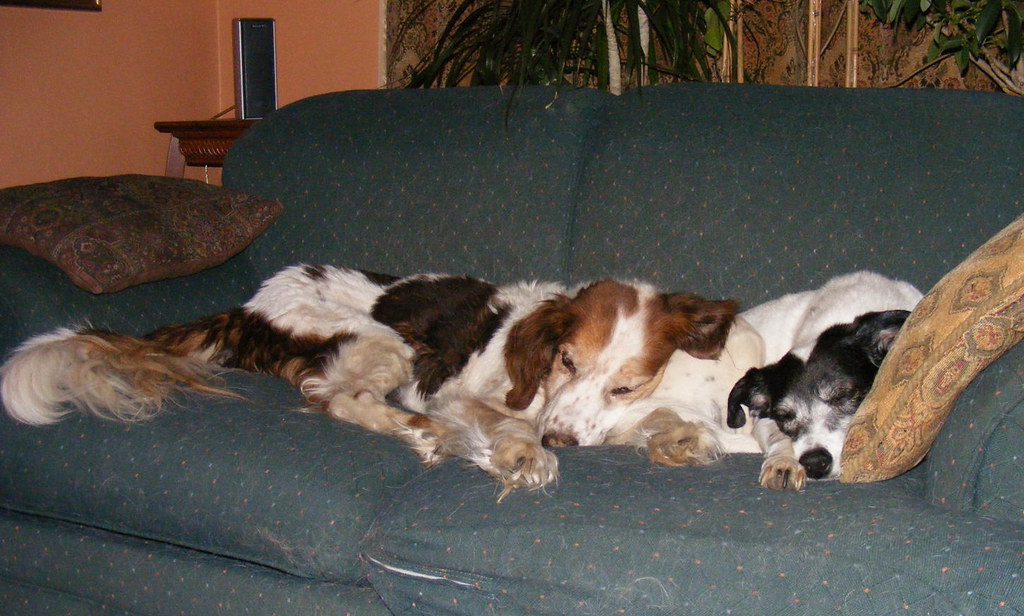
Posting too cute doggie pictures isn't something I do regularly here, but tonight afforded us an opportunity that we just couldn't resist. Pepa and Rolly often snuggle together on their couch, but we rarely are able to catch them like this because invariably one or the other will notice the camera and then hop down, thus ruining the cuteness factor ... but this evening, as we were watching a particularly exciting new episode from Season Four of Dr. Who, they decided not to share in our excitement and took a long nap instead. So we got lucky and took a series of them while we could ...

I was never a fan of the original Dr. Who series when I was younger because it was just too cheesy for me ... I couldn't get into it, no matter how I tried. Fernymoss, however, has been a long time fan and knows all the arcana regarding the history of the Doctor in many of his incarnations. As you may know, the BBC revived the series in an entirely re-imagined (with vastly improved production values, writers and actors) conception in 2005, and we've both been hooked since BBC America started showing it here in the US. Sure, the SciFi Channel throws us an episode here and there, but doesn't seem (at least to me) to show the episodes in their proper order. Anyway, Season Three concluded last week with a hum-dinger of an episode, and I'm already wanting to see Season Four, which is currently playing in the UK. Tonight was one of those lucky finds from SciFi and they broadcast the first (official) episode of Season Four. In a word, it was captivating for humans ... not so much for dogs, apparently.

Of course a Dr. Who episode always sets me to thinking about Space and everything that's out in there in its depths ... the wondrous beauty as well as the darker sides of the Universe. Earlier today on My Yahoo page, one of the featured photos caught my eye ... an image of two colliding galaxies called 'Arp 148' taken from the Hubbell Telescope ... so I obviously had to check that out. Wow, the Hubbell has been taking some breathtaking photos of galactic oddities! For those interested, I'm going to include a couple of links here ... the photos are really worth an admiring look! Here's the link to a gallery that displays some 59 incredible photos, each of which has a link to a more detailed page about its location and what is currently known about them.

And to think that a couple of years ago we heard talk that they wanted to just trash the Hubbell Telescope completely and de-fund it ... I'll try (and fail) to refrain from political diatribe here. The knowledge we've gained from it since it has been in orbit is almost unimaginable, except to those scientists who dedicate their lives to analyzing the data ... to my mind, it's a national treasure that attests to what we can attain when we aim for the stars. Instead of Middle Eastern oil deposits.

Friday, April 25, 2008

Squill Dreams vs. Squill Reality

Guest photo courtesy of Olivia in Ottawa.

The other night, my friend Olivia emailed me a shot she had taken earlier that day in one of the Public Gardens in Ottawa (where she captures a lot of great shots of flowers). She was pretty sure that it was a patch of the Squill she had seen recently in one of my posts. Sure enough, she had indeed discovered a lovely naturalized drift of this beautiful, yet ephemeral Spring Flower.

I think it's now safe to say that Spring has now (finally!) arrived in Ottawa, after a particularly snowy and brutal winter this year.
Yay! Let's hear it for Ottawa and for Olivia, who's been anxiously awaiting the banishment of the snow and the arrival of this year's flowers! And most gracious thanks for allowing me to use this photo on Urban Oasis.

It occurred to me that it might be fun to do a post contrasting what an obviously long established drift of Squill looks like compared to one of our (still) relatively young patches in our front parking grass. Obviously, Olivia's shot is what we dream of our parking looking like one day, but as you can see in the second shot, we've got a long way to go! Though, as I mentioned last night, since we're going to have to put in more bulbs this fall, we might as well get a large quantity of Squill to help "pad" our own drifts. I still suspect we will be waiting a few years for ours to even begin to rival that one Olivia captured so exquisitely ...

I mentioned last night that we are now sure that we lost some bulbs over the winter. With further observation around the neighborhood, as well as some anecdotal accounts, we don't appear to be the only ones who've had some bulbular losses in the garden. An avid gardener who works with Fernymoss told him the other day that she lost lots of daffodils planted on the south side of her house ... they just disappeared and not a one bloomed this year, or even came up. That got us to thinking about one of our neighbors who used to have daffodils and tulips planted on the south side of their house. Go figure, we haven't seen a single daffodil over there this year, and theirs always used to precede ours by a week or two. Nothing this year, and their tulips look pretty spotty as well. It will be interesting to see if this has happened to other gardeners in the area ... but I think it's safe to theorize that that horrible freezing spell we had last year must have had something to do with it. It's a sad reality every gardener faces with all sorts of plants, but losing bulbs has a particular sting to it. Not only are they not particularly "cheap," but they also demand some deep digging for the larger ones, such as tulips and daffodils, which can be challenging when the weather puts you under the proverbial gun in the fall when they need to be planted. Oddly enough, the bulbs that don't require deep digging seem to have really prospered since last year, namely the Squill and Crocus. I have no idea why that would be, given that we lost quite a few of our larger ones, but it does set one to wondering about possible causes ...

Thursday, April 24, 2008

More Daffodils and Bonus Bugs!

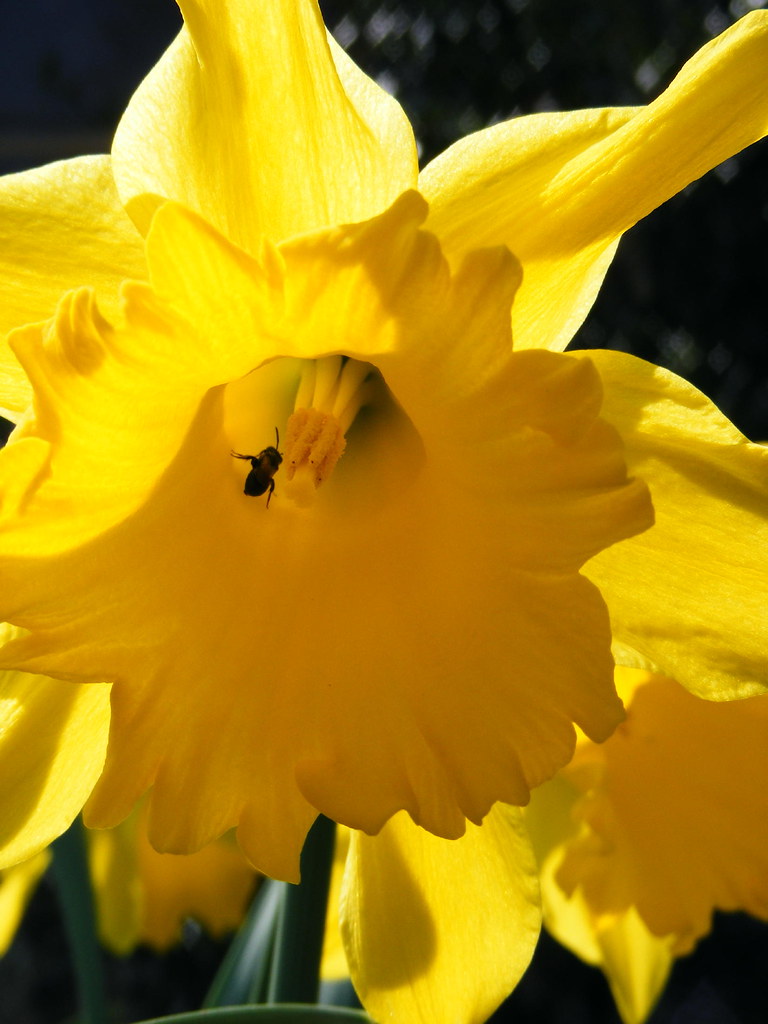
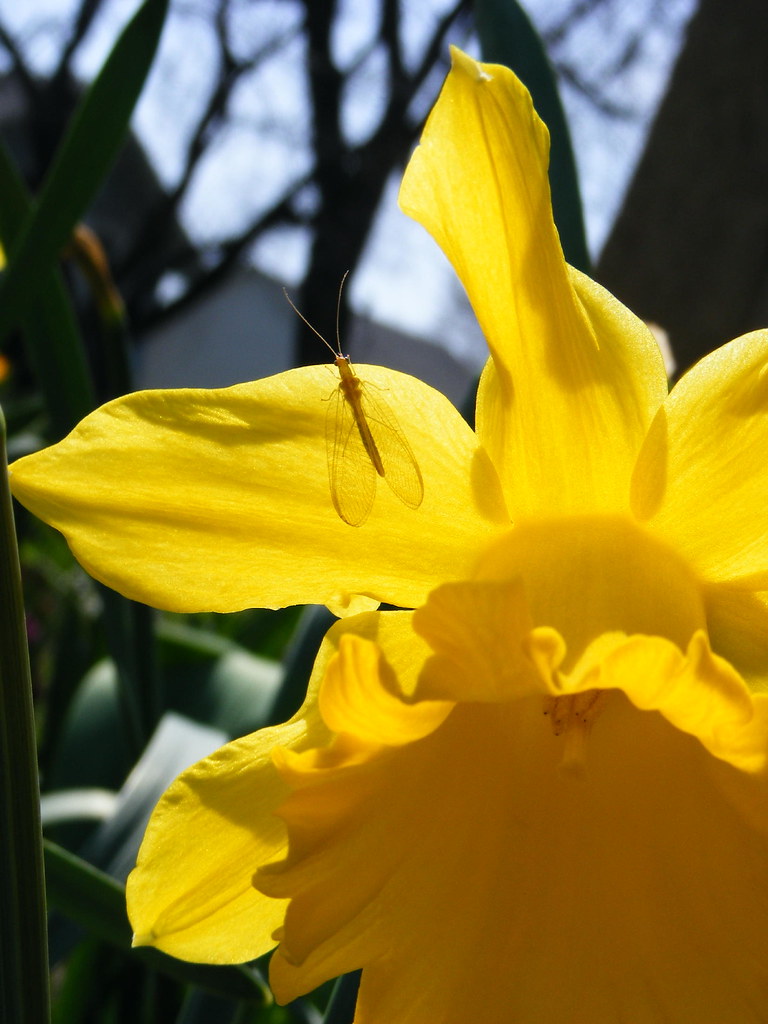
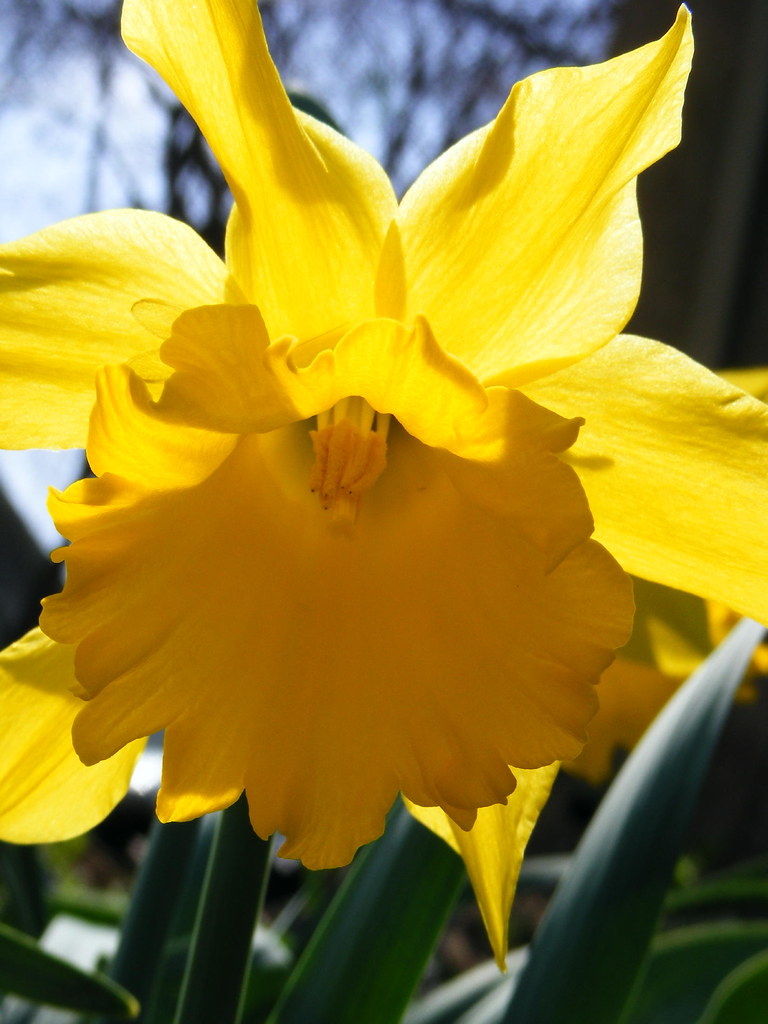
Here are some more of Fernymoss' shots of the daffodils currently blooming in the Woodland garden on the north side of our house. (Taken on 21 April, 2008) Today they were nearly in their full glory, although some plantings are a bit behind others --more in the shade-- but we like them to stick around a little longer, so we don't mind at all.

As for first picture in this series, it's obviously the bee venturing into the flower that commands the center of attention. It's good to see the bees coming back already ... I've seen a few bumblebees recently, as well as the occasional honey bee (of which we don't seem to see many).

In one of my recent posts about the Crocus, I talked about how I had inadvertently gotten a very small Lacewing in the shot. Now, we're not sure it's the same one (I have no idea how fast they grow), but in two of these shots you can see a Lacewing in pretty good detail ... the first and second ones show it in full view, and in the third you can see it off hiding behind one of the petals. And then it flew away, as winged insects are likely to do when the lens is focusing too intently upon them ...

I took a few pictures today after work, and though it was clouding up (rain is on the way tonight) and it was a bit on the breezy side, I did manage to get a nice couple of shots of the Hyacinths that have just opened up (last night). I'll soon be adding those to a post on Hyacinths I've been preparing for a week or so ... just to chronicle their progress from buds to blooms. Actually both Fernymoss and I went on an inspection tour out front when he got home from work, and as I had been suspecting, we both concluded that we've lost a significant number of tulips since that nasty, long freezing spell last year. We're hoping for the best but it now looks like we will have to be replenishing the tulip plantings again in the fall.

And I'm afraid those weren't the only casualties ... Unless something akin to a miracle happens, I fear we have lost both of our big Fritillarias as well. As I mentioned in an earlier post, they really got zapped last year ... came up early, froze off and disappeared. Add that to the list of bulbs we'll be replacing in the fall as well. (Sigh)

On a more positive note, it appears that other bulbs are taking it in stride and actually increasing their share of the real estate. The Purple Globe Alliums we have out front have definitely been multiplying ... from three original bulbs planted, we easily have 8-10 coming up this year, so those should be exciting when they bloom next month! We also have a Hyacinth that seems not only to have multiplied but mutated in color as well ... In short, there's a lot going on out there right now. I'm also planning a post or two documenting the emergence and growth of some of the perennials, because a lot of them have appeared and are gearing up for their moments in the spotlight. Things such as the Dicentras (Bleeding Heart), Columbines, Ferns and even one of the Toad Lilies ... And on a closing note, I should also mention that a bloom on one of my Primroses (Primula polyanthus) was open today! They too have been busy multiplying and what were once five plants now appear to be about 7 or 8! More on them later too ... But for now, enjoy the daffodils and bugs.

Wednesday, April 23, 2008

Reports of Our Demise Have Been Grossly Exaggerated ...

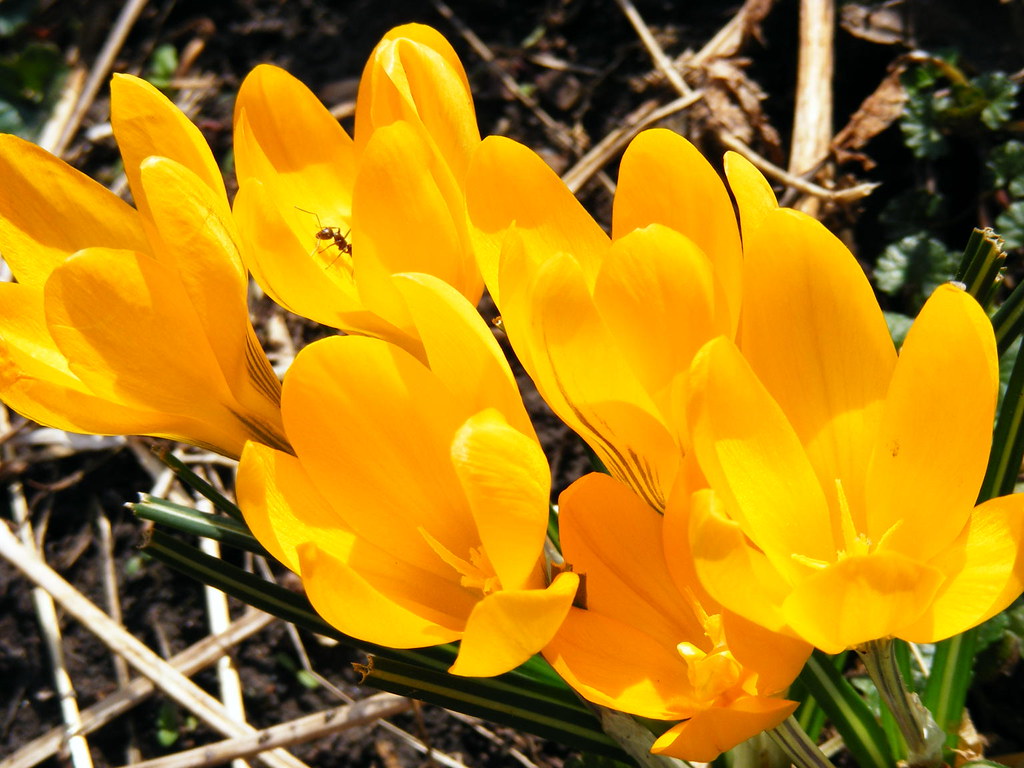
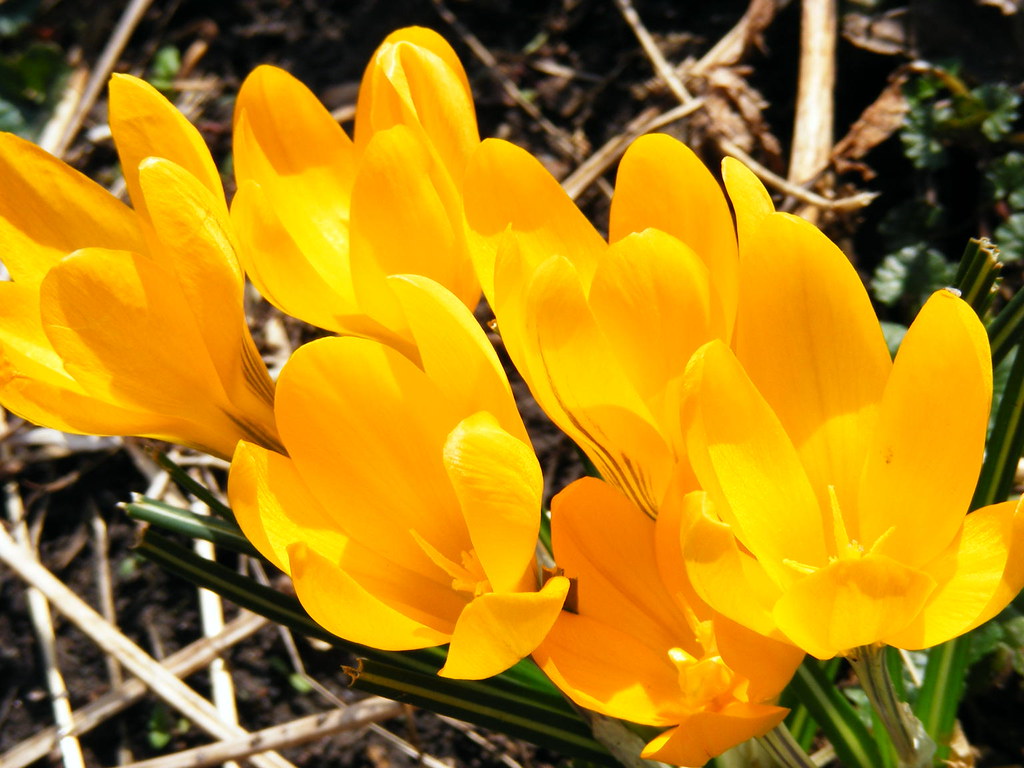
Despite all my recent predictions of the imminent departure of this year's Crocus, we were surprised to see these cheery ones springing up over the weekend. We don't recall planting these where they came up, but over the past few years (since we've been constantly working on the boulder bed out front) a lot of things have gotten displaced and are now resurfacing (much to our delight in this instance) in different spots in the garden. We definitely like this sort of surprise ....

There are a few other places out front where similar things have happened ... before we built the boulder bed, we used to have a variety of bulbs along both sides of the steps leading up to the house, (mostly tulips, daffodils, squill and crocus), but when we built up the bed along the steps, a lot just got buried under rocks and the soil we used to fill the bed. We lost most of what we didn't manage to dig up in the process, but a few things have managed to return ... there are a few Squill that peek out at the base of the rocks and there's one particular Grape Hyacinth (Muscari) that even pokes through a gap in the rocks and blooms every year. (I'll make sure to get a shot of it when it appears.) So that's testimony to the tenacity of the smaller bulbs ... they may get jostled around or moved inadvertently, but they still find some way to accomplish their purpose every spring and bloom no matter what ... that's floral dedication, I'd say!

Photos taken by Fernymoss using the S700 on 21 April, 2008. In the first shot you'll notice an ant exploring the flower (bug sightings are always welcome in our pictures, just wait until the next post to see a really great one!). The second shot, taken moments later (and essentially the same shot), s/he's gone! I had to post both just for fun ... besides we had a hard time deciding which shot to post, so I decided on both.

Tuesday, April 22, 2008

More Squill!

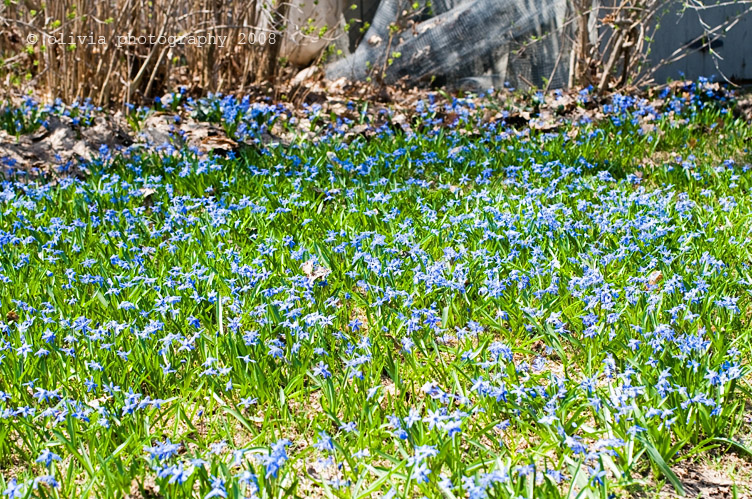
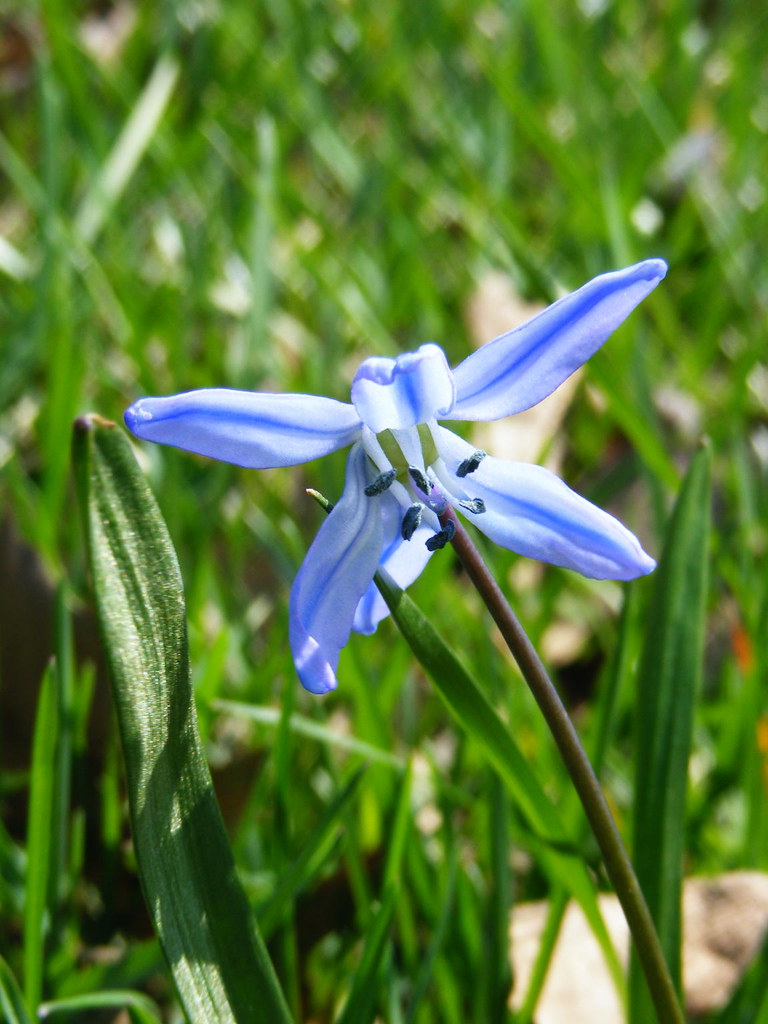
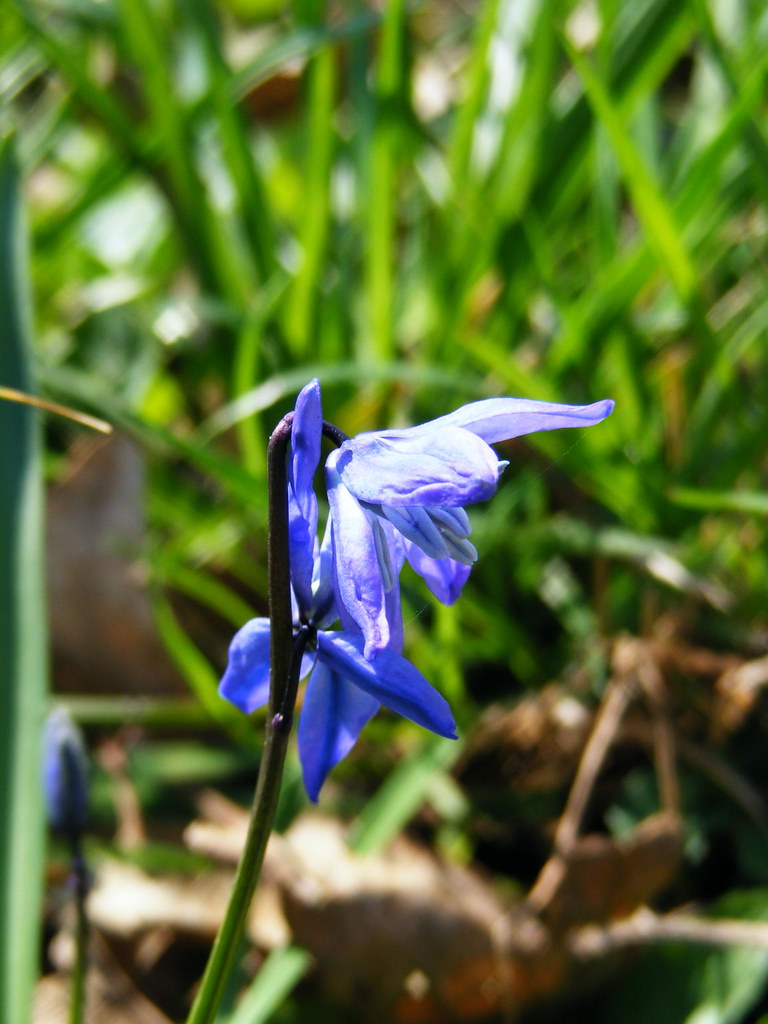
Today was another near classic Iowa Spring day in our neck of the woods with a bright sunny morning just perfect for gazing at and photographing the emerging flowers. Fortunately Fernymoss had the day off from work (I was diligently slaving away up in my cubbyhole.) So he went out with the S700 and started snapping away ... so here are a few more of the Squill (Scilla siberica) that are now popping up in all sorts of places in the yard.

The first two shots are examples of Squill growing out in the front parking by the sidewalk ... I think the first shot is one of Fernymoss' best so far, and he got some quite nice shots of them today. I chose these three examples to give them several representative views to give you an idea of how they grow and just how diminutive these little beauties really are. And to think they are originally native to the steppes of Eurasia ... these little expatriates seem to fit in just as naturally in our landscape!

Check out how deep blue the anthers are in that first shot, as well as the purplish hue of the stem leading up to the flower ... they're just positively regal in the range of hues that just one little flower displays! The second shot also really shows off the depth of color each bloom stalk contains and you can see the transition from green to purple stem much more closely in this picture. And the third shot is a volunteer that just popped up by one of the tulip plantings. I think Fernymoss did an astounding job on this one capturing not only the beauty of the flower itself but also the shadow, which, for some reason (combined with that 'alien eye' in the tulip leaf), seems vaguely sinister to me. (Maybe I've just been watching too much sci-fi lately?)

I can't laud the Scilla species enough, as they are, to my mind, one of the easiest and most carefree bulbs any (aspiring or not) gardener can have in the landscape. Of course, there's the initial planting, which can seem like a lot of work, but really, after getting them into the ground, they are virtually maintenance free (just like crocuses)! And since the bulbs are small, they only have to go down about 2-3 inches, so no huge trenches or holes as you have to do with the larger bulbs such as tulips and daffodils. Since they naturalize so freely (after three or four years or so), I'd recommend planting them right down there in the grass in the fall, where they'll return the following spring, bringing a brilliant blue to wherever they grow ... just what we need (along with the bright crocuses) when winter finally loosens its grasp in the garden. You'd be well advised to plant as many as you can the first year out (I have seen recommended that you should never start with less than 100!) and plant several at a time in an area to give them a preliminary 'stand' that they can expand upon in future years. They're very hardy (growing from Zones 2-8!) and reliable bulbs who return year after year to banish the blues of winter and herald the coming vibrant colors of Spring.

Boran2, do you have Squill envy too now? They'd be a dynamite combo planted near Crocus and will generally bloom at about the time the Crocus are at their peak, and then linger a bit longer (primarily to develop their 'bulblets') until disappearing entirely for the rest of the year. The nice thing about having them in the grass is that by the time the Squill are done they can be safely mowed over, where they recede into the ground until the next year's show ...

Photos taken by Fernymoss on 21 April, 2008, using the Fuji S700.

Monday, April 21, 2008

Nearly the Last of this Year's Crocus

As I've mentioned in a couple of recent posts, the crocus have been on the wane in the last week or so, and these shots (taken Wed. 16 April) are probably going to be the last we'll see for this year. We're sad to see them go, of course, but their time is always brief as the true harbingers of Spring, and they do a remarkable job of setting the stage for the bulbs to follow ... and now with the daffodils are taking over center stage, with the tulips soon to follow...

Though I didn't get any new shots taken today (household tasks again got in the way), I did notice that more and more daffodils are opening, and the hyacinths are starting to take on their true colors ... and that 'Spanish Squill' (which I've discovered recently was a misnomer, as they are really in the hyacinth family) are growing profusely and apparently have spread since last year.

And with certain exceptions (the cold and rainy last few days), the weather looks to be cooperating to encourage a quite showy display for the tulips this year. We can't wait to see the masses of red, yellow and purple tulips yet to come, and with any luck, this year they'll be blooming upright this year, unlike last year's disaster. As I said, so far, so good, but with fickle Iowa Spring weather, anything can happen but this year I'm fairly confident that the worst is finally behind us.

The first shot here is of what I call the 'Buttery Yellow' snow crocus, which the more I see them, I'm more and more admiring of their simple beauty. Though a bit more subtle than their bright yellow, orange, gold and purple cousins, I think they really add something different to the mix with their tulip like Inner Bits and diminutive, unprepossessing presence among their showier relatives. I'm thrilled they have done so well and appear to be spreading out each year. The second shot shows the 'Pickwick' variety that I featured in an earlier post (though unopened). The veining on this variety is just lovely and carries a lot of variation from flower to flower, which makes them an even more fascinating addition to the early spring garden. Enjoy them now because they won't be back before next year!

P.S. We're now on 'Arum Watch' for the Dracunculus to emerge. No signs yet, but given this Spring's tardy arrival, doesn't seem unusual yet. We'll have the first signs up here when it does break ground, and are really looking forward to the shots we can get of it this year with the new S700! Yes, we're getting impatient too, and hope that we might get two blooms this year instead of one ... so stay tuned!

Friday, April 18, 2008

Purple, Yellow and White Crocus

Well, as Crocus Explosion Week at Casa IVG draws to a close, I'll share some more shots Fernymoss took last Sunday when there was still lots of color bursting out of the ground all over.

Now, after a week of extremely windy and damp conditions (except for that glorious day yesterday), the crocus are pretty much done for this year. Their petals have been blown who knows where by the wind ... they've been pounded quite a bit by the rains that are still continuing tonight (and likely through Friday as well) ... and, well, their bloom time just isn't all that long in the larger scheme of the garden.

That doesn't mean we don't miss them (already), just that their role in the seasonal garden cycle this year is almost done. Now it's the Daffodils' turn to dazzle the stage while the Tulips progress off in their spaces ... they'll be along soon to complement the Daffodils, along with the Muscari ('Grape Hyacinths') and hyacinths. I've been trying to get some decent shots of the Chionodoxa ('Glory of the Snow'), but it was actually too bright yesterday and they got all bleached out a bit and I wasn't happy with the results. Hopefully they'll still be around on Saturday when it's supposed to be dry and sunny again, but given their rather ephemeral stay in the garden, I may have to post what I consider inferior views (hate it when that happens).

We're still apprehensive about the appearance of the 'Crown Imperial' Fritillaria, but we do think one is poking through now (the big orange one), so we still hold out hopes they'll do fine this year after being frozen and essentially banished by the cold April we had last year. The primroses, however, are really perking up and growing lushly now, and after all this recent rain, I don't think it will be long before they are blooming. They look like they're starting to spread a bit, which delights me to no end, because I can think of few things prettier than a big planting of mixed Primroses blooming! So ... stay tuned!

Thursday, April 17, 2008

This Is Just WRONG ...

I came across this article from USA Today this evening and it really got my hackles up in a big way. Wolves are being "gunned down" ... primarily in Wyoming where 13 of the recently killed 20 wolves lived. These fools actually allow sanctioned wolf hunting year round ... This is just wrong.

Apparently, a government ruling in February just decided that they should no long appear on the endangered species list.**

Here's the lead to give you a taste:
The killing of 20 wolves in the Rockies since the animals lost endangered status is an unprecedented death toll that must be stopped in court, environmentalists say.

"There's a great sense of urgency," says Michael Robinson, a wolf expert at the Center for Biological Diversity, one of several groups that plan to file a lawsuit this month. "The wolf population is being gunned down right now."

Now, go read the rest....

I should, by way of disclosure, say that I've been a defender of the Wolf for many years now, and have been fascinated by them since I was a child. Despite all those stereotypical childhood nightmares, wolves do not (or very rarely) attack humans. They are intelligent, elusive and shy. They are the progenitors of all modern dog breeds. They live in well-defined social structures, displaying an astounding degree of cooperation and attending to the community needs of the pack. I've often wondered if humans' fears of the wolf were founded, at least partially, on the fact that in our collective psyche, wolves subliminally function as a reflection of our own selves. They're just too much like us.

Well, why wouldn't they be? The practice of selective breeding of dogs dates back millennia, but the wolf (in whatever form it had in antiquity) is the prototypical ancestor of all the dog breeds currently in existence. Wolves became our partners, and inevitably, as humans do, we failed them. As much as we've bred most of the true wolf out of the common dog, there's still enough that remains ... fortunately for us. We dog lovers treasure the intelligent companionship and unconditional love of our dogs, but it's too easy to gloss over just how much the ancestor has been bred out of them. As one documentary I saw on National Geographic TV asserted, we've bred them down to be perpetual puppies, children as it were. And precisely in that way, we assert our superior dominance over them ... since we never really let the wolf mature, we're left with a mostly docile (and probably very affectionate) dog who is but a poorly realized hologram of its ancestor. A pale comparison, you might say.

My intent here is not to wring my hands and gnash my teeth at the state of the current dog (no matter which breed), and I've been the proud owner of some remarkable dogs over the years, most currently Queen Pepa (Approximately). I truly love dogs ... and their ancestors even more. We humans probably learned a great deal from the wolves back in the way way back days. But what have we given them in return for the Devil's Bargain they made with us? We've either bred them into creatures of our own design or driven them to the precipice of extinction, more than once.

Enough species are either now extinct or on the brink, just clinging to their ways ... Polar Bears are drowning, seals are losing their habitat in Alaska ... whales are beaching themselves ... the list goes on and on. I have to admit that wolves are a particular species of concern to me, however the larger, global picture has to be taken into consideration. The more we (or that inconvenient climate crisis) drive wildlife from their natural habitats, the more likely we are to eliminate them from the picture entirely. To my mind we cannot even begin to calculate the losses we will eventually maintain (as our own species, should it survive) as the consequence of doing nothing. Stopping the hunting of wolves in Wyoming would be a good start.

** I want to research this more and find out just who was behind this action, particularly because I suspect some possibly aggressive lobbying coming from the state of Wyoming. Hmmm........................

As Promised ... Daffodils!

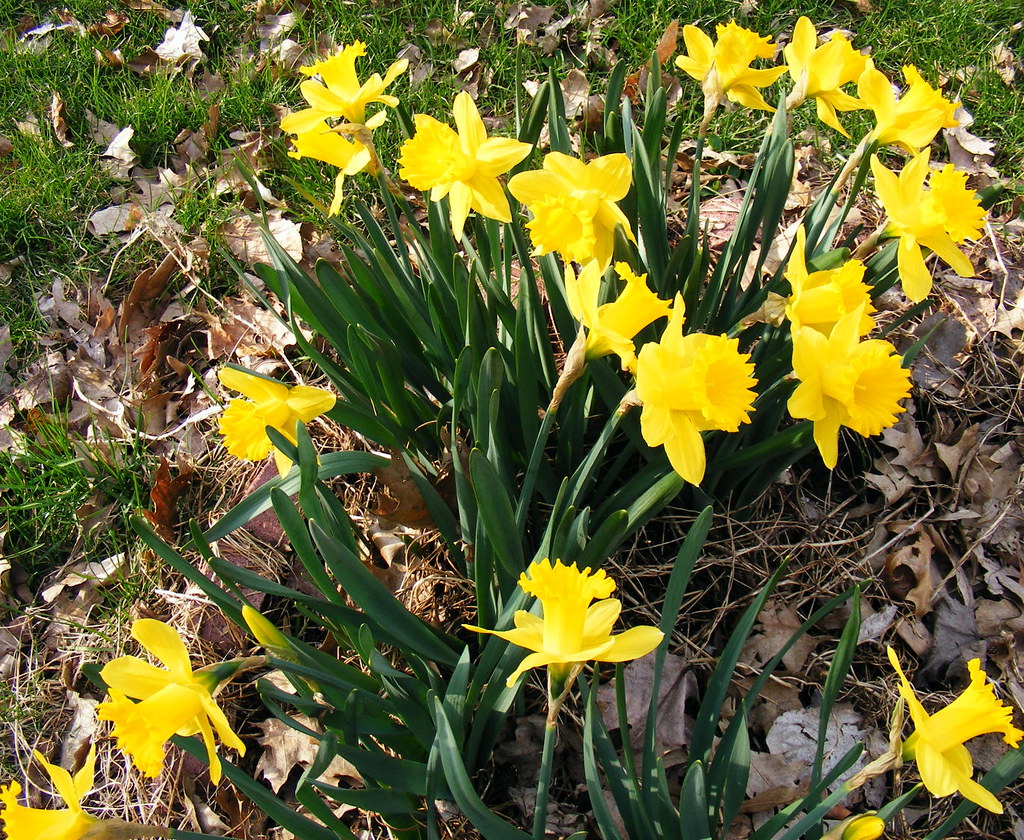
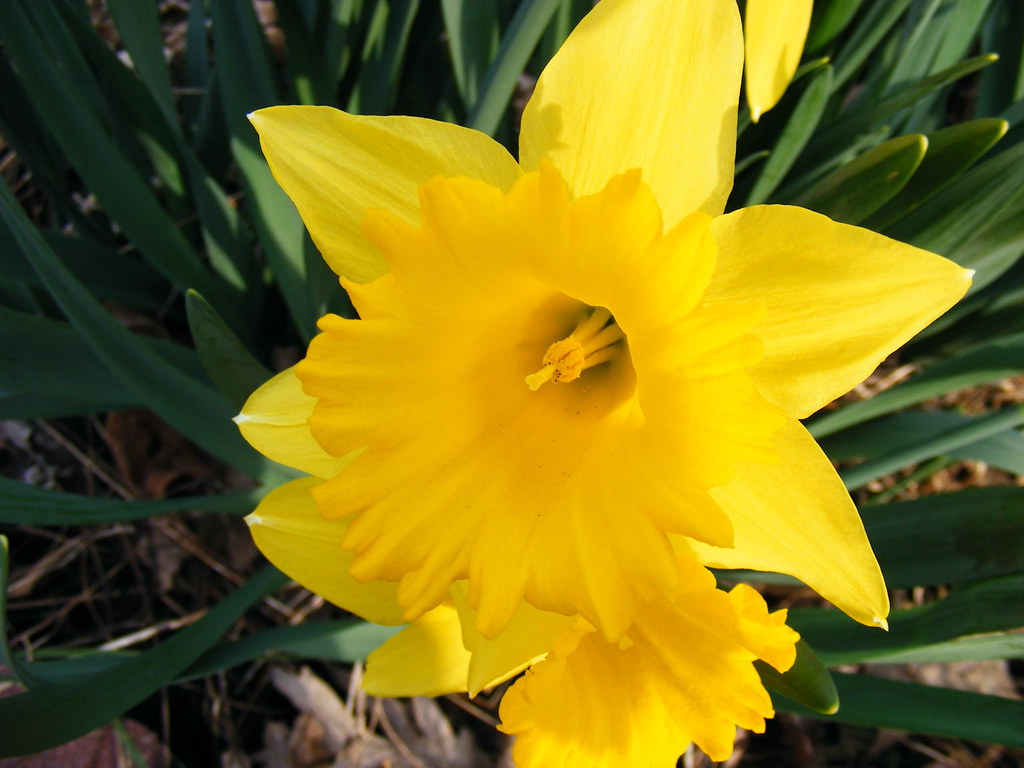
I finally was able to get out after work today and snap some more pictures around the front garden areas and managed to catch a nice sunny moment to take these shots. At least the wind calmed down today and these were only subject to occasional breezes. Finally, the first Daffodils of the year have arrived and much happier than they were last year after being frozen for almost a month during that cold spell!

These were some of the very first Daffodils we planted back in ... well, let's jus
t say they've been there for probably about eight (?) years. This variety is called 'Dutch Masters,' which is just about my favorite Daffodil of all time. With their brilliant yellows that positively radiate in the sun, a nice tendency to naturalize freely and carefree non-maintenance ... what more could you ask for? And unlike their 'fancier' hybridized cousins, they come back true to form every year no matter what. We've come to disdain the latest and greatest varieties constantly in development because they just don't have the reliable longevity of the simpler, classic varieties. And the others just don't naturalize like you (well, WE) want them to ... usually after about 3-4 years they devolve and then just disappear. That's the same reason we tend to avoid the fancier tulips as well and stick with the tried and true Darwin varieties.

I also got some nice shots of the rapidly declining crocus --*sigh*-- and some of the perennials now emerging ... I may post some of those soon while we await the big tulip parade. As of today most of the columbines are up, as are the bleeding hearts and I also noticed that the Ligularia is poking through the ground. And with a high temperature of 78 today I'm sure more things are beginning to wake up ... unfortunately we're due to another few days with rain and cooler temperatures, but nothing in the freezing range and no mention of the 'S' word to be seen!

Wednesday, April 16, 2008

The Gentle and Lovely Lacey ... (and Queen Pepa too!)

Consider this your bonus pup pic for the day! I've been taking care of this sweetheart for a couple of days while Fernymoss and his parents (she belongs to them) had to go out of state to attend a family funeral. We always just love having Lacey visit because she's so pleasant to have around and gets along famously with Pepa and Rolly ... they even seem to enjoy each other's company and there's never a snarl or snap to be heard, she's that delightful.

Admittedly, having a 100 pound barrel of wiggling red furry love barreling at you can be a bit intimidating sometimes, but her overall demeanor is so kind and loving you get over that really quickly! She's back home with Mom and Dad now and was overjoyed to see them return to get her tonight. Her visits are always too brief and we hate to see her go, but she'll be back again at some point ....

While on the subject of all things doggie, Olivia tipped me off a while back to a great photo blog by a great photographer named Anna Kuperberg, who specializes in (among other things) taking amazing portraits of dogs. If you need a (near) daily dose of puppy love, I highly encourage you to visit Slobberspace ... you'll be glad you did!

More Shades of Lavender

I'd better have something yellow by the end of this week or I'm going to burn everyone out on shades of purple! I was hoping to get some shots of the newly opened Daffodils today, but a powerful low pressure system literally BLEW through the state today and winds were fierce until after sundown. I did see the Daffodils waving at me in the wind though...

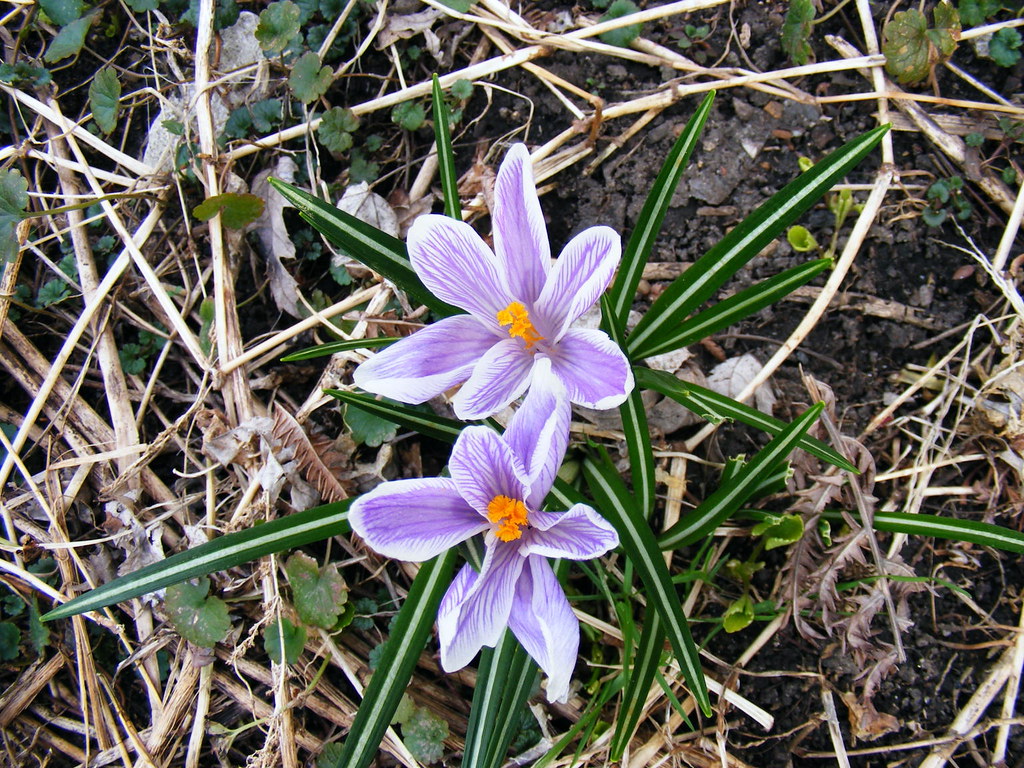
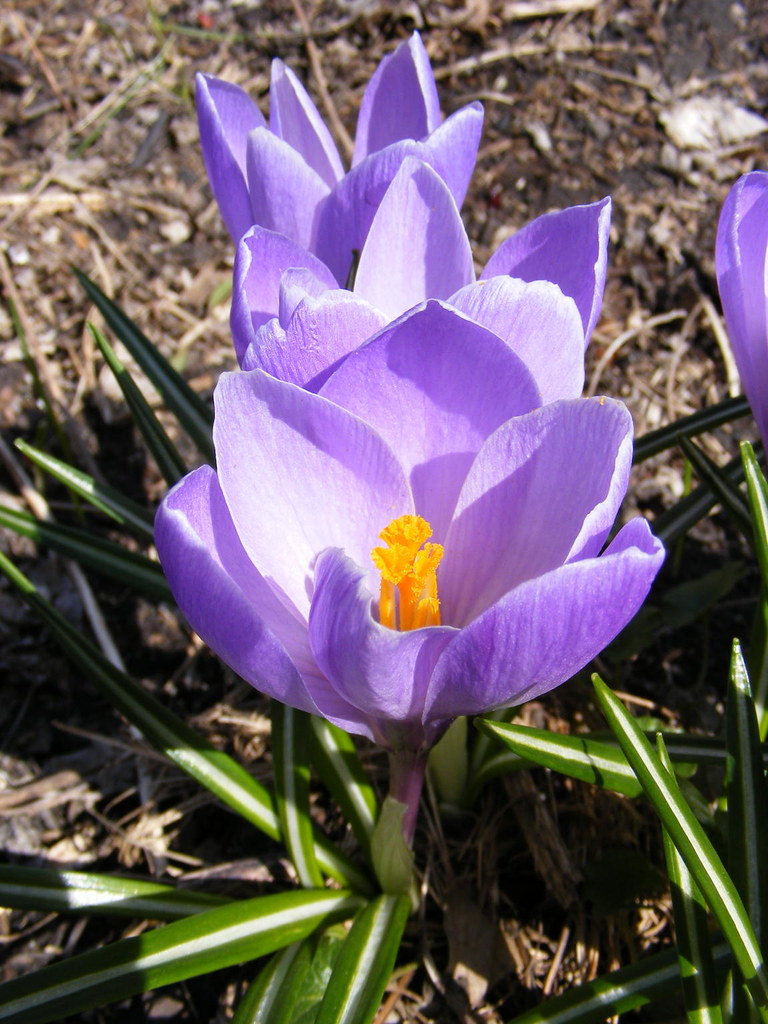
These are two varieties of the 'Giant Dutch' crocus, which are later blooming species (but not by much!) than the Snow Crocus and much larger (at least in crocus terms!). I can't remember what the first variety (the lavender one) is called, but the second flower I know is called 'Pickwick.' (Always easy to remember due to the Dickens reference.)

We have some others blooming currently (including some gorgeous white ones) that I hope to shoot before they're done, but the last few days have been so windy and/or gloomy I haven't gotten to them yet. Anyway, Fernymoss took these on 13 April, 2008 during his photographic garden inspection.

In other bulby news ... we think the 'Crown Imperial' Fritillarias are breaking through, and we think we'll know for sure later this week. The Hyacinths are up and looking all 'Alien-y' ... squill are popping up all over and a few of the Globe Alliums are also up ... seems like there's something new to discover every day. Too bad I don't have the time to inspect every day ... seems that lately all the nice days during the week are work days and I don't always get out at that point in the day. We'll get in the groove more regularly once the chilly days are gone for the season. Ack, so much clean up still to be done!