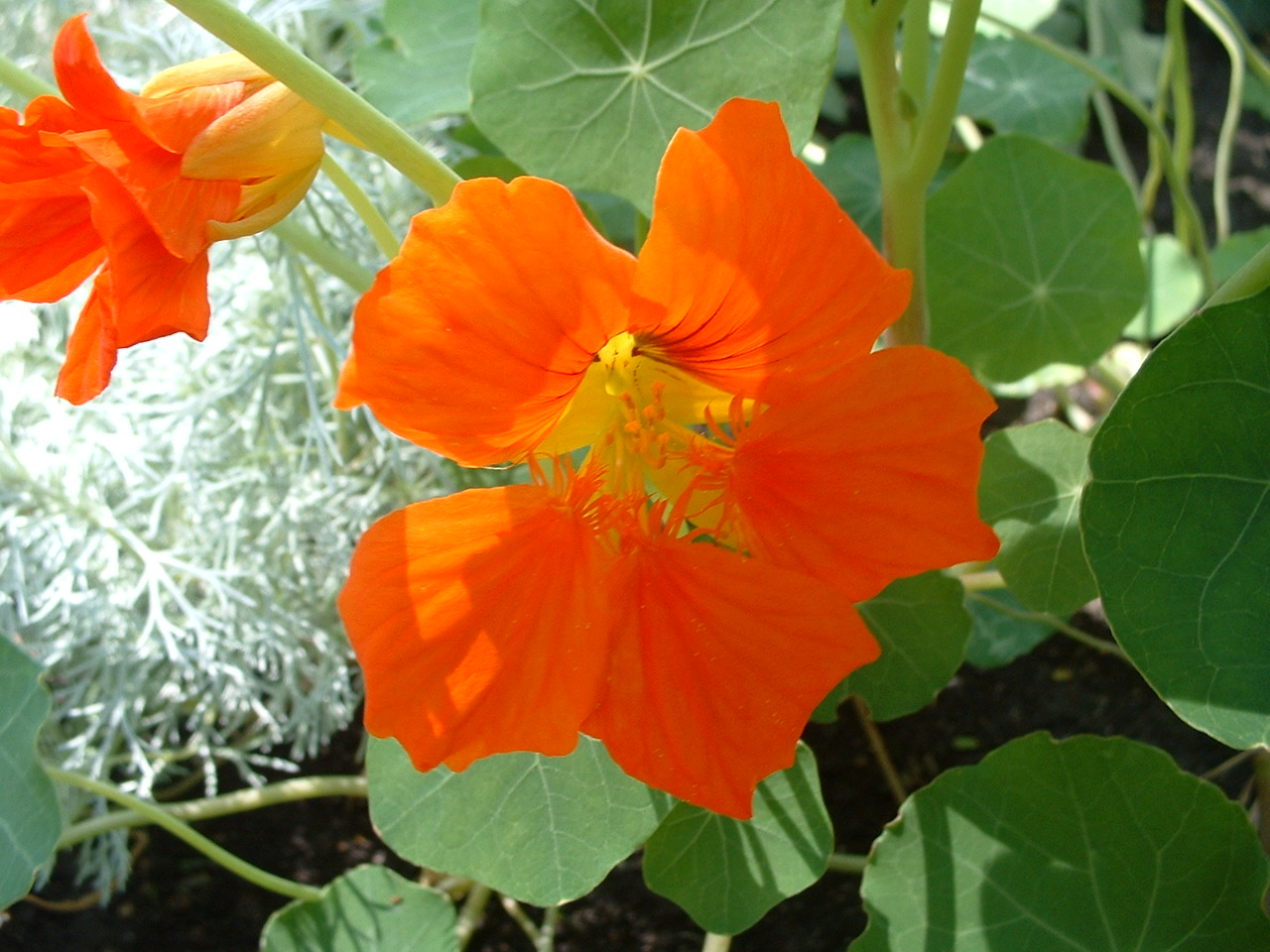
 Ok, confession here: we got our Nasturtiums in a bit late this year and the ones that came up haven't started blooming yet, but this one from 5 August 2006 still is. So, I decided to pluck it from the archives to provide a little mid-summer firepower for the end of the week.
If you've never grown Nasturtiums (Tropaeolum majus), they're really worth trying because they're fairly easy to grow and when they start blooming they keep on going until frost. I'm sure I've mentioned this before, but I'll say it again -- they make fantastic additions to salads where they provide a nice peppery contrast to the greens. And all parts of the plant (unlike Daturas and Castors!) are perfectly edible. The leaves should be used when they're smaller and more tender, however the peppery flavor in them is more pronounced than in the flowers. I even discovered tonight (see the Wikipedia link) that the unripe seeds can be used as a caper substitute. I'd like to try that, but wonder if one should soak them in some kind of brine solution first ... something to check into.
All you really need to provide Nasturtiums is some average to poorish soil in a full sun position (they will tolerate some shade), adequate water and some space, because they will spread out quite a bit by the end of the season. Just plant the pea-like seeds early on (our big mistake this year!) in mid May or when weather conditions permit in your area. (FAR, you could plant these really early where you are, say April or even late March.) The two only really important facts you need to know are that 1) they do not like being transplanted, so sow them where they are to grow and 2) NEVER EVER fertilize them! Like Morning Glories, if you fertilize them you will be rewarded with rich, huge foliage and few, if any, blooms. So don't even go near them with the Miracle Grow! One other note: they make an excellent companion plant to many flowers, and especially certain vegetables. Nasturtiums are known to provide protection for such plants as the Cucurbita family (Cucumbers and squash) to the Brassicas (cabbages, broccoli and Brussels sprouts) by either luring the bad bugs away from the plants or attracting said bugs' predators to the area. And they make a lovely fiery border around the vegetable bed ... again, just keep them away from the fertilizers!
This year we planted Nasturtiums among the rocks to let them crawl around and out (hopefully), so when we've got some blooms later on, I'll probably be posting more of them as they arrive. Oh yeah, the reason I liked this shot so much was because I managed to get the sun shining through the flower, which really illuminates its details, I think. Though Nasturtiums come in a wide range of colours and hybrids, I still prefer the old fashioned orange, yellow and red ones. These were Burpee's Fordhook Favorites, a supposedly climbing variety though we've never had them actually climb ... they just meander around and fill the empty spaces of the bed where they're planted. But wherever you might decide to plant them, they'll bring you lots of summer colour and tasty treats as well if they suit your palate. They're just an old-fashioned, easy annual that really doesn't ask much of you for what they give in return!