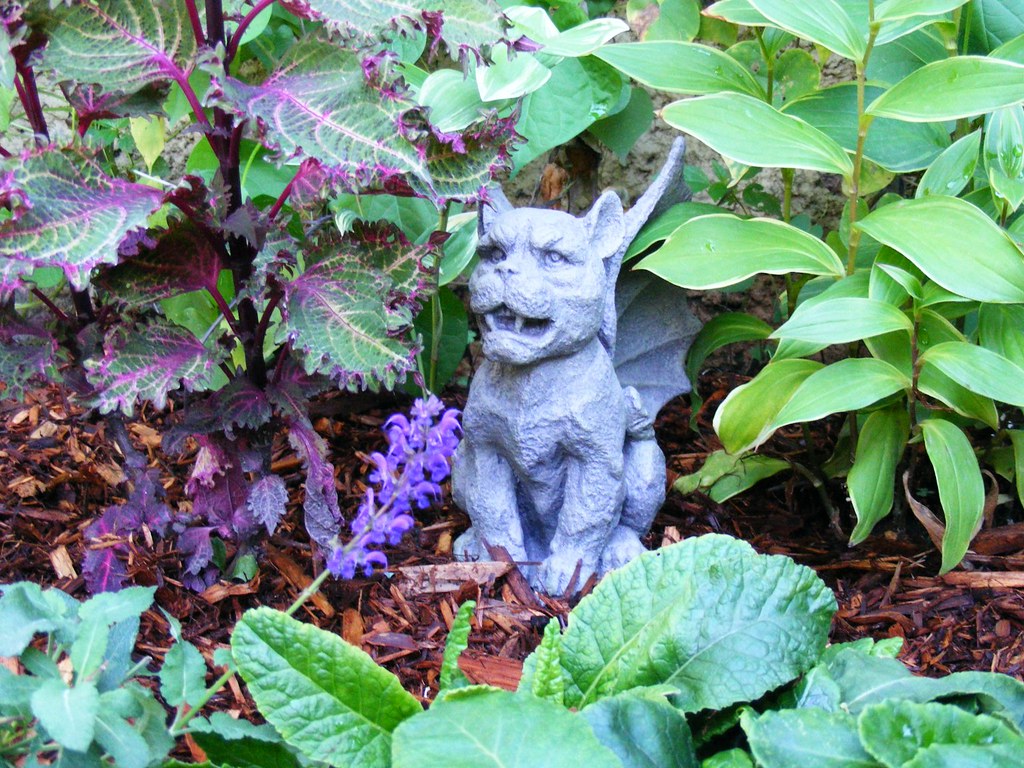
 Well folks, you knew this was coming eventually didn't you? One of the Gargoyles has landed in the Primrose Bed next to the steps of the entrance to the house. This is the bed I weeded, planted and mulched in yesterday, and it's looking pretty good at the moment, and this little guy certainly does add some long awaited whimsy and a bit of implied menace to those who approach ... but ultimately, he's pretty friendly. He ought to be, surrounded by such outstanding plants as the Variegated Solomon's Seal I just planted yesterday and the delectable 'Gilt Edge' Toad Lily I discussed previously.
 This Coleus, 'Peter's Wonder' is really what I'd really like to point out here. This was a new variety we had never seen before this year, and I think it's obvious why this one just screamed Buy Me! As Coleus go, this one has it all ... rich colors (even the stems!) and deep veining over ruffled leaves ... what more could you ask of a Coleus? I think 'Peter's Wonder' even goes one step further, in that this is one of the few Coleus I've ever grown that didn't require regular pinching to keep it from blooming (which, if allowed usually sends the plant into decline as it puts on seeds). It's been a relatively slow but steady grower over the course of the summer, but it still has time to put on some size, before fall when we will either take cuttings or just dig the entire plant, pot it up and bring it inside, because this variety is a real keeper, I think!
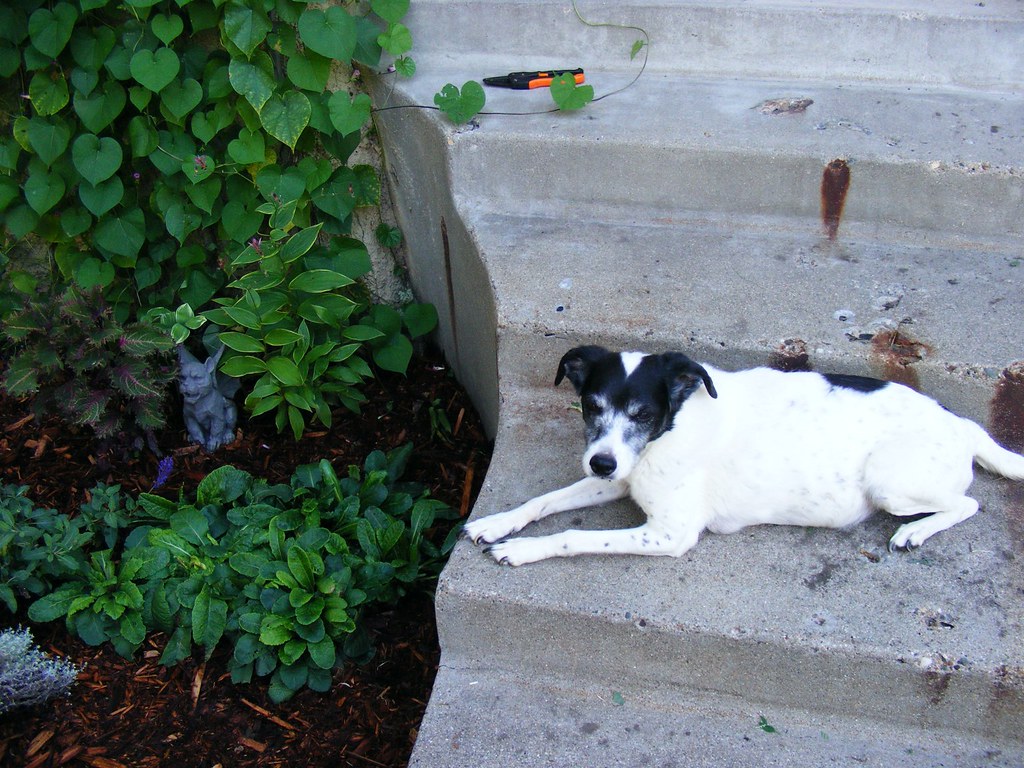 Here Queen Pepa (Approximately) is again showing off just how good her supervisory skills are, not to mention how good she is about sticking around when we allow her (this is a special moment for her) to come out when we are working in the front boulder beds, something she was able to enjoy both yesterday and today... She was a happy pup.
 This shot also shows a bit more context of where all the various plants are placed with reference to our Gargoyle friend. Have you ever seen such happy and lush Primroses in Late Summer? I'm continually amazed by how tough and profuse they have become in just three short years, but I must admit that I pamper this bed and these flowers more than I do any others around the place, because I want continued success with these specimens. Three years ago I started with 6 spindly and wispy plants I got from Springhill Nursery, and now they have more than doubled in number to about 13 or 14! What's more, they've grown into a nice tight mound all their own (and seem intent on increasing it over time) and stay so lush all through the summer. They may be "just" the garden variety mix of hardy Primrose (Primula polyanthus), but as you saw in spring, they have a nice range of colors represented. This is very close to what I've always dreamed of for a Primrose planting, though my ideal one would be much larger and have more purples and blues in it ... but for now, I'm just thrilled these continue to thrive.
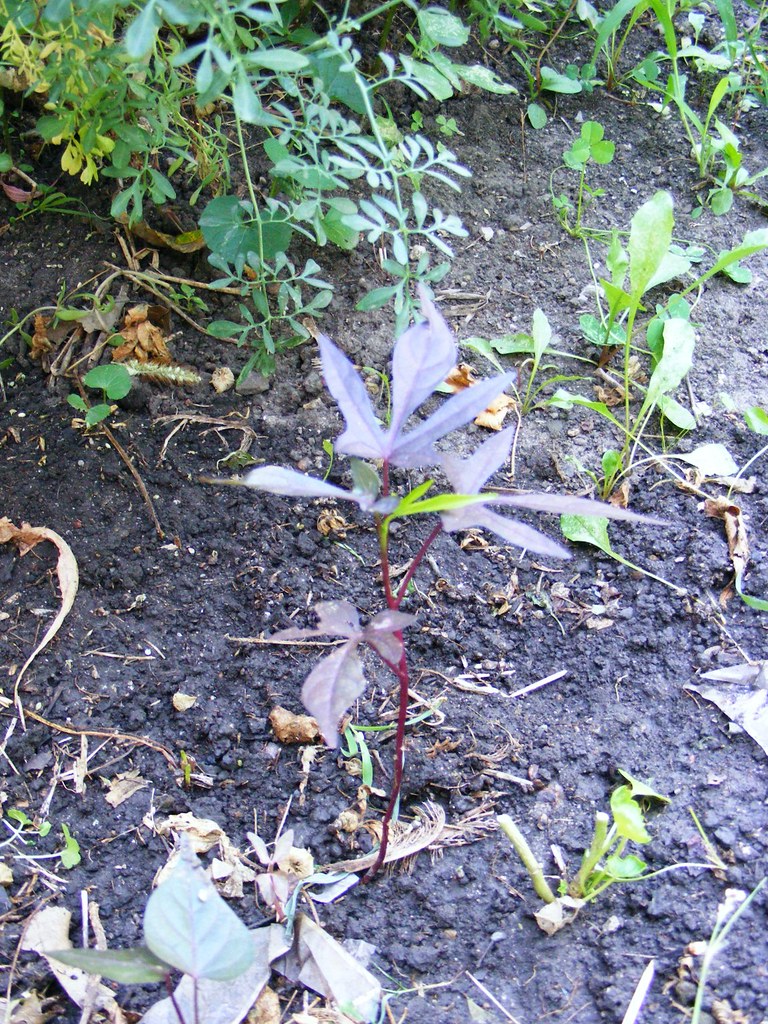 Here we snapped a shot just to show that Purple Sweet Potato Vine seedling Fernymoss discovered yesterday ... and today, he also noticed that in the pot where we have Carmencita Castors planted this year, that they are popping up in various places! We didn't find any satisfactory purple ones to buy this year, so we just skipped them (regretfully), but thanks to these little guys, we're still going to have some for the rest of the season, and they too may eventually come inside if we can find enough sunny windowsills for them! We never dreamed that even though the parent bloomed frequently last year, that we'd ever see the offspring! And, to the left foreground (not in terribly clear focus, alas) you can see one of the purple ornamental pepper seedlings he also discovered yesterday. We are definitely going to pot up a few of these and try to overwinter one, just to see how it does.
 This is one tenacious Giant Blue Lobelia (Lobelia siphlitica) that, amazingly enough was one of the first plants we set out in the far away Spring of 1999, the first gardening year here at Casa IVG. The space where it was originally planted was, ironically enough, near the front of the existing bed that was here when we moved in (in 1998), but now has been forced to the near back by the expansion of the Coneflowers over the years. This poor guy is in dire need of moving to a sunnier, more hospitable position where he doesn't have to do battle with the spearmint and other weedy things that grow rampantly when we don't get this part of the bed weeded regularly (and this year, face it, nothing got weeded regularly with this season we've had!). There might still be one other on the Woodland side that also struggles under the shadow of the Angelica, Ostrich Plume Ferns and Holly, but I've not seen it this year, and have just figured they'd petered out. I'll have to give it a look and if it's still there, it would make an excellent companion for this one in a different location.
So, from the title, you should have deduced by now that we undertook more major weeding in the boulder beds out front, and I went on the warpath against the rogue Zebrina Mallows, and much to the bumblees' chagrin, there are now dozens who have disappeared, especially those who were shadowing out my poor Disco Belle Hibiscus, who I hope recovers enough to resume blooming with the others soon. Between yesterday and today, we filled up 3 big city compost bags, and could have filled more, but alas, we ran out of bags. I'll collect some seed from the remaining ones to sow in the back with the other bigger hollyhocks, but one thing's for sure ... next Spring I'm going to be ruthless about pulling new seedlings! Of course we'll leave some so they can have their area, but honestly, they ran so rampant this year, they became a major embarrassment, that we've yet to mitigate completely. We made huge progress today, and though I was really perturbing the poor bumblebees, I only got buzzed a couple of times in a pretty friendly way, all things considered! I just kept telling them, hey, there's plenty to go around elsewhere, so if you lose a few (well, quite a few) here, we've amply provided for you elsewhere. I think they understood, and nobody got stung. Happy ending, so to speak....