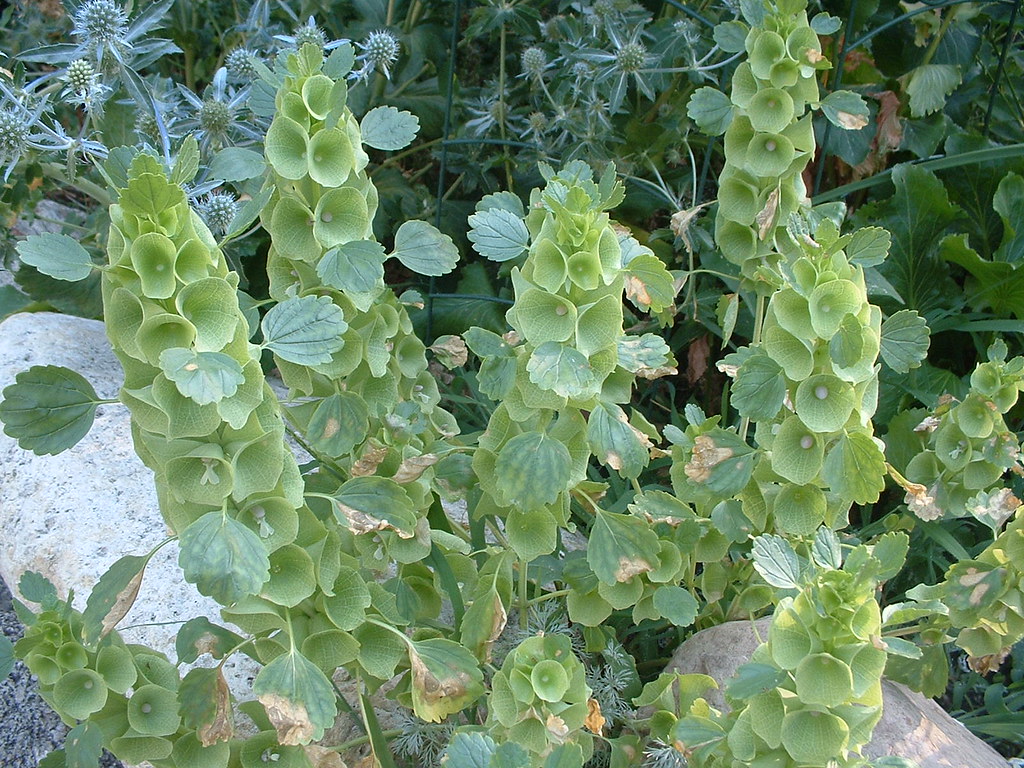
 Bells of Ireland (Moluccella laevis) aren't something you see in many gardens, at least around here. You will often see them in pricey bouquets at the florist's, but given our firm belief that if you're going to have cut flowers, you should at least grow them yourself, the only money I've ever spent on them was purchasing the seeds. We found a few packs of seeds way back in about 2000 I think, and thought we'd give them a shot, due to their unusual shape and colour (and as regular visitors know, we tend to seek out the "odd" plants for our garden!). We were relatively successful with them the first year, though the spot where I planted them wasn't exactly ideal ... it got a fair amount of sun, and they grew to about ten inches tall, but they clearly signaled to me that they'd do much better in a full sun position. So I decided to start trying other areas in the following years.
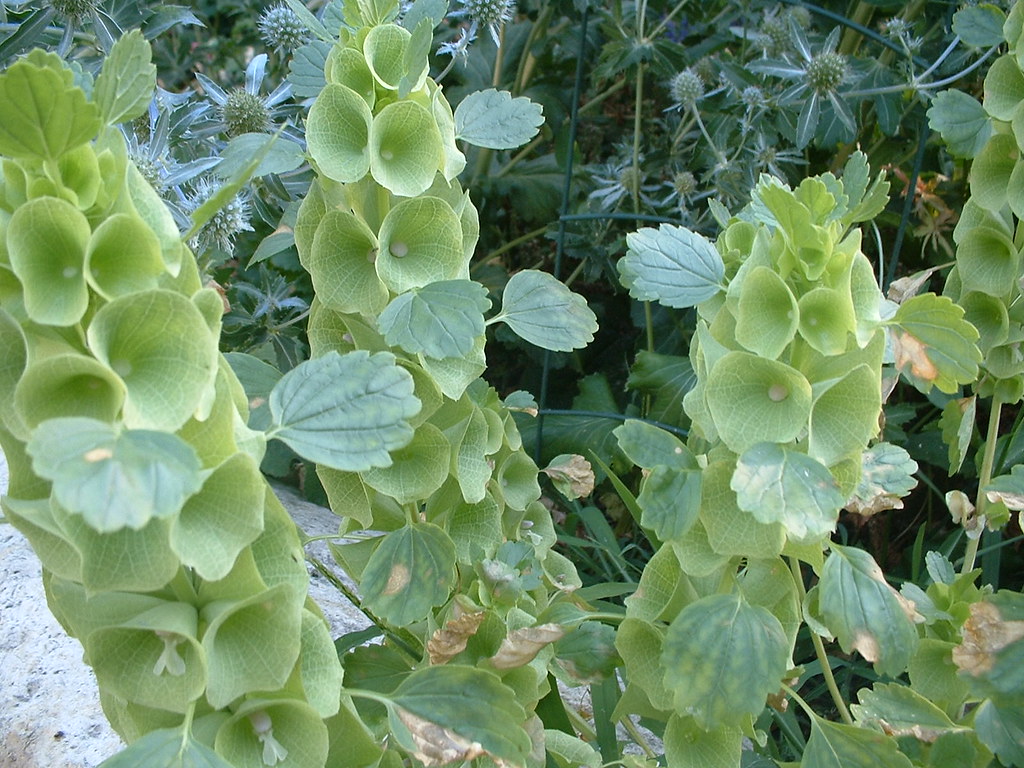 When we built the boulder bed in front (back in 2003) we thought they'd make excellent annuals to come up in various spots, especially between the rocks, where they could grow upright or twine around as much as they wanted ... so we planted several packs of seed in a full sun area near the corner and we've had them coming back faithfully ever since. Though an annual, they self-seed profligately and if you just let them die back and dry up in place they will drop ample seed and return in the same basic area where you started them. If you're courageous, you can collect the seed and store it, but a bit of warning ...those lovely, faintly green apple scented "bells" conceal a prickly underside (especially when dried) ... nearly invisible needle-like thorns that guard each of the "bells." (You just have to be careful when cutting them for arrangements or gathering seed, but really, they're a lot less dangerous than your garden variety rose thorn.) My philosophy (the slacker's naturalist at work here) is to just let them go through their annual cycle and self-seed at will where they, nature or the birds may take them, and when conditions are right in the spring, you'll see them popping up all over the place. The seedlings are very easy to identify, as the first true leaves look exactly like the adults and are of such an unusual green colour, they can't be mistaken for weeds (well at least by the experienced gardener's eye).
 They're not fussy at all (which was my initial misconception due to their delicate appearance), and as long as they get ample sun, average soil, adequate water and are kept well weeded, they will shower you with dozens of bloom stalks. You can feel relatively guilt-free about cutting a few for arrangements (they look smashing in with Zinnias, by the way!), just as long as you leave a few to put on seed for the next year's show. And the more you plant, the more you will have for cutting ... besides, you'll get no end of admiring questions from passersby wondering how on earth you got them to grow. That's the time to chuckle inwardly and either share the secret of how easy they are to grow, or if you feel a bit less generous, just offer some non-committal, Gee I don't know, they just like me I guess, sort of response! I have given some away as small seedlings for transplanting which have done well in their new homes, but you need to do that pretty early in the spring, because once they get established, they generally don't like being moved.
They make excellent companions for many different flowers of just about any colour (annual and perennial) and where we usually have them, they're surrounded by Sea Holly (seen in the background here), Moss Rose, Artemisia 'Silver Mound' and other front of the border flowers. They're definitely one of those plants you want to highlight in the garden so not only you, but other visitors can admire their unique shape, texture and growing habit. According to the Wikipedia article I linked above, they're native to Turkey! Whenever I learn that sort of thing about something we have planted in the garden, I always marvel that we can grow something that comes from so far away and yet does well in our midwestern climate. But, even so, as you can see in these shots, the heat and dryness of July can stress them a bit ... note the browning of some of the leaves, because they were really wanting a drink yesterday when I took these pictures.
In fact, yesterday a lot of things were looking really stressed in the heat, and since we hadn't watered in a few days, they were telling us in no uncertain terms they needed a good soaking (well, except those carefree troopers the Coneflowers!). Fortunately, we had a surprise round of thunderstorms move through very early in the morning on Monday which gave them about an hour's respite of steady rain. We did, however, given today's oppressive heat and sun, give the whole front bed a good watering with the sprinkler this evening, which we're hopeful will tide them over for a few days. But given the forecast, we can't count on Mother Nature to provide it for them, so we'll likely be back out there watering in the next day or so.
One last bit of trivia ... the actual flower of Bells of Ireland is not the attractive calyx commonly mistaken for the flower ... it's that odd bit of white "fluff" in the center that, when pollinated (as they will be by your friendly neighborhood bees), will produce one to three seeds, depending on the individual blooms. As I've been mentioning in some posts recently about annuals, they're another excellent candidate for a fall sowing, so they can over winter in place and get a head start in the spring ... so keep that in mind ... how about poppies, calendulas and Bells of Ireland together? Sounds great to me! We like how it works out here at Casa y jardín IVG!!