Spring is a season full of surprises and discoveries in the garden, whether they be pleasant or less so ... but today was filled with excellent ones! As I took Hanna out when I was done working today, I glanced back at the area I've been featuring in the last few posts, and to my astonishment, I saw little masses of purple! After she was done with her end of business, we both strolled back to the corner bed to see what was going on ... lo and behold, there were several small clumps of Specie crocus 'Tricolor' just blooming away where just a day ago there were none! Apparently I had forgotten that I had planted these back there in 2005 (though Fernymoss assures me that I did) because I wasn't expecting any more crocus to be showing up there ... and, as a really pleasant bonus, I discovered yet another blue Iris reticulata in bloom! Maybe we're not such failures with these after all! Now I'm encouraged to buy more of these in the fall and try a bunch in various other places in the garden ... so perhaps my earlier discouragement was unfounded after all....
 Here's a closer shot of these little charmers blooming bravely into the late afternoon on a rainy and overcast day ... unlike the yellow crocus who close up shop the minute the sun wanes, these little guys were still showing off for me, even if the light wasn't optimum for capturing their true colors ... but never fear, we have plenty of these out front as well, so you'll be seeing them in sunnier conditions sometime soon! Note the prolific Monarda (Bee Balm) surrounding these beauties ... fortunately they'll be at rest before the Monarda shoots up and shades them out completely from the sun....
 We're still in the savage back corner here (we need another couple of nice days like last weekend to get this cleaned up!) where I discovered some more of our original bulb plantings from way back in 2000. At that time, we were aiming for the "natural surprise" effect of Tulips and Daffodils in apparently random spots ... silly us, that was before we discovered the real benefit of planting these bulbs in masses for a more dramatic effect! We've changed out ways and now are firm believers in group plantings of Tulips, Daffodils, Crocus and Muscari, and as the Spring progresses, we hope some of the Tulip masses will make a comeback ... it remains to be seen, but all my lamenting about the Iris reticulata seemed to do the trick, so I'm going to keep our Tulip expectations low and hope for the best!
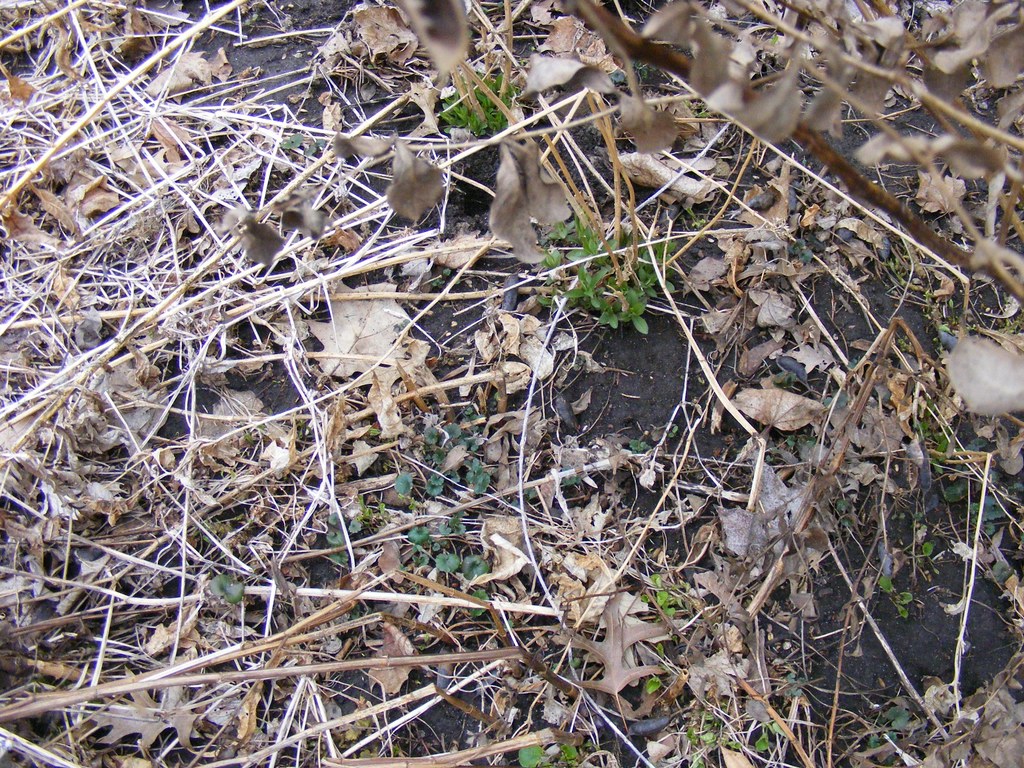 I'm sure Gail at Clay and Limestone will immediately recognize these emerging perennials ... it's Phlox paniculata (I'm not sure what variety because this was a gifted plant from another gardener), which we've really come to appreciate over the past couple of years as it has aggressively come to dominate the back corner bed ... last year it was so prolific that it crowded out a few things we may have lost (including a couple of hibiscus), so this spring we plan on digging up quite a few of these to move to the back fence line, where we hope our neighbor won't object too much ... they're so pretty (even if they are pink!), such long bloomers and are so fragrant that we think she'll be fine with having these lining her driveway. We have great ambitions for this back bed this year, after neglecting it the past two or three years ... we want to thin out the Monarda, Phlox and Coneflowers, move our Oriental Poppies from this area and get more Hollyhocks going back here again. This will also give our Black-Eyed Susans a bit more breathing room to spread as well, so wish us well on this project! It's going to involve a lot of digging and moving plants, and some will probably go to new homes too, if there's interest in adopting some of our more enthusiastic growers....
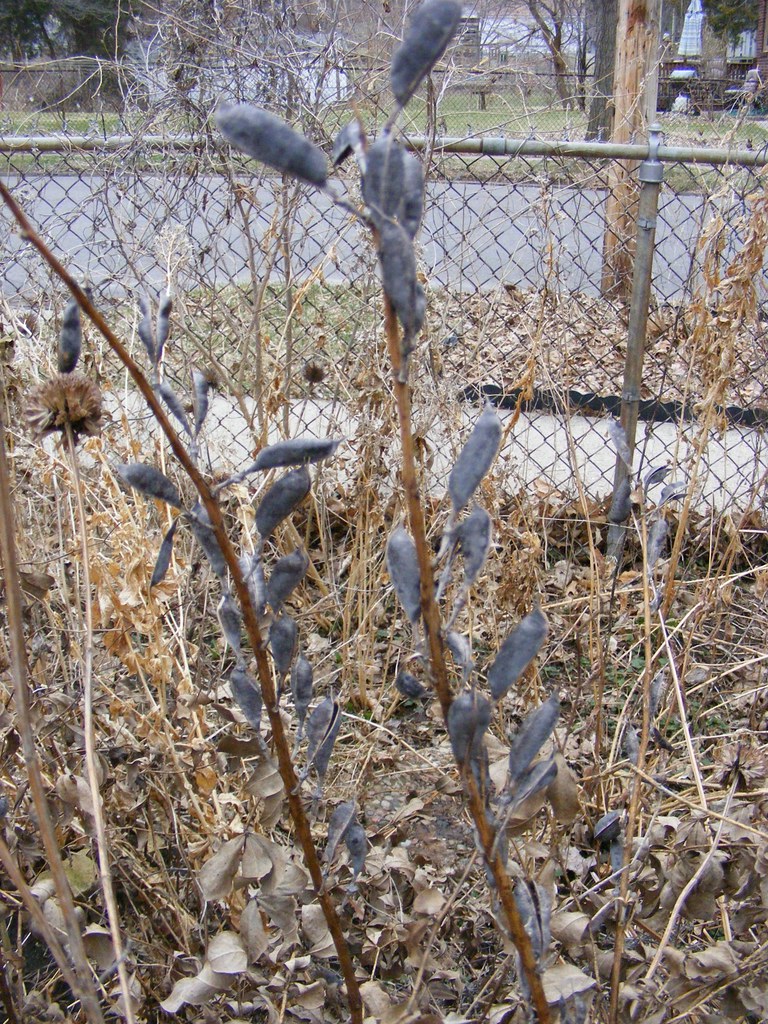 Well, these look mighty dead don't they? Actually there's great potential for beauty hiding in these pods! For anyone who grows this plant -- Baptisia australis aka: 'False Indigo' -- these will be easy to ID, and for the uninitiated, we can't recommend this amazing perennial highly enough! They're incredibly hardy from Zones 3-9 and though they take a couple of years to get established enough to bloom, they're very carefree from that point on. Aside from their striking long stalks of blue sweet pea like flowers, they have lovely grey-green foliage that remains attractive throughout the season (we often use it as filler in bouquets) and produce these pods in late summer and fall. I've read that some people dry the pod stalks for use indoors in the winter, but honestly, unless you do something like spray paint them, or prefer black pods, we've never seen much use for them as "everlastings." We just let the seeds fall where they may, and when we find volunteers in the spring, we find them new homes to inhabit ... they are truly striking and quite dramatic when they bloom in late May or early June and every year someone inevitably stops us to inquire just what they are. We don't see a lot of these around town and wonder why, because they are such an easy plant to grow ... they just require a hard pruning in the spring (they only bloom on new wood) before the new shoots emerge ... which, by the way, look like huge stalks of asparagus! If you're not familiar with Baptisia, you owe it to yourself to get acquainted and find one a nice sunny spot in the garden. We're going to move a second year seedling to the front this spring as soon as it emerges so we can have another spectacular display out in the boulder bed....
 I know, I know, these guys look pretty bedraggled don't they? But imagine you just spent the entire winter buried under nearly 5 feet of snow, covered with leaves and only got to see the light of day just recently and you might not be looking so chipper either! These are my prized Primula polyanthus, the ones I was waxing rhapsodically about last week ... though they don't look real happy just yet, look closer and you'll see there's a ton of new growth happening at the center of each clump. All they need now is some sunshine, milder weather and about another month to grow and they'll be blooming in all their wonderful jewel toned colors ... I can't wait, but guess I'll have to after all! Remarkably, these Primula tend to stay pretty green throughout the winter, even if they do look like wilted spinach. I'd venture to guess that for those of you in milder climes where the winters aren't as harsh, they would probably be evergreen throughout the winter. Their main enemy is too dry of a planting position, and I tend to pamper these during the hotter months and water them nearly every day if we're not getting regular rains. They're worth the extra effort for the show they put on every spring and sometimes even fall (when it doesn't get cold too soon).
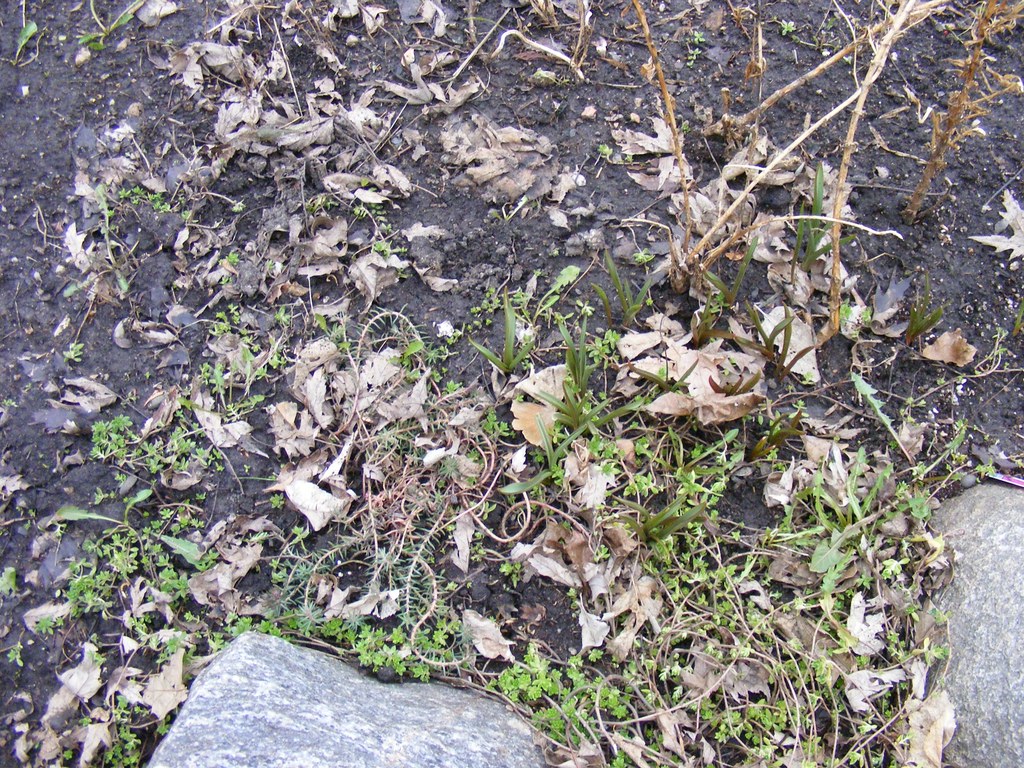 Finally, we've come full circle from the far back corner to the front of the boulder bed where we discovered these delightful additions I planted back in 2005 ... look at the enlarged version and see if you can spot what I'm talking about ... these are Tulipa humilis v. 'Persian Pearl,' one of the many varieties of "wild" or Species Tulips. They're one of two varieties we have planted and I look forward to seeing them every year ... they're tiny dwarf tulips with every bit of the attraction of their larger cousins and make excellent additions to rock gardens or the front of a border where you want to show off something unusual and colorful ... so be patient and when they bloom you'll see them again in their full glory!
After our wonderful sunny and warm weekend, we're now heading into several rainy and gloomy days (in fact there's a thundershower going on as I write this) where it's forecast to be much cooler, with a few nights down into the lowest 30s, so that's bound to slow down the arrival of some of the other bulbs (such as those in the Woodland Garden), but unless we sustain long periods of sub-freezing weather (such as we did in 2007, which caused the great die off of many tulips and other bulbs), what's up so far should fare pretty well. At least I hope so ... one never knows with these wacky winters we've been having the past few years ... there was another huge tulip and daffodil die off again last year, though our Daffodils were spared and we had a good show ... and it seems the tulips are making somewhat of a comeback, so we're keeping all appendages crossed at this point! Of course, the chronicle will continue, so keep stopping back to see what's going on....